
BLOG
The Ultimate Clinic Guide to NPI Gates: EVT, DVT, and PVT
2026年6月25日
Introduction: The High-Stakes Journey of Medical Aesthetic Device Development
In the competitive landscape of medical aesthetics, bringing a new device to market is a complex, high-investment endeavor. The journey from concept to clinic is fraught with technical, regulatory, and financial risks. For clinic owners, medical directors, and procurement specialists, understanding the rigorous product development lifecycle is crucial—not just for evaluating new technology, but for ensuring the long-term safety, efficacy, and profitability of their investments. At the heart of this process are the critical NPI (New Product Introduction) gates: EVT, DVT, and PVT. These stages are the unsung heroes of device reliability, ensuring that a machine like a top-tier diode laser (e.g., operating at 755nm, 808nm, and 1064nm wavelengths) delivers consistent clinical outcomes and a strong ROI.
This comprehensive guide is designed for B2B decision-makers, from med spa owners to dermatology clinic chains, looking to demystify the device development process. We will dissect each phase—Engineering Validation Test (EVT), Design Validation Test (DVT), and Production Validation Test (PVT)—explaining their specific objectives, technical milestones, and why they are non-negotiable for compliance with standards like Medical CE, FDA 510(k) clearance, and ISO 13485. By understanding the ‘why’ and ‘how’ behind these gates, you can make smarter purchasing decisions, confidently differentiate between high-quality and subpar equipment, and ultimately, maximize your clinic’s profitability.
Understanding the NPI Lifecycle: From Concept to Clinic
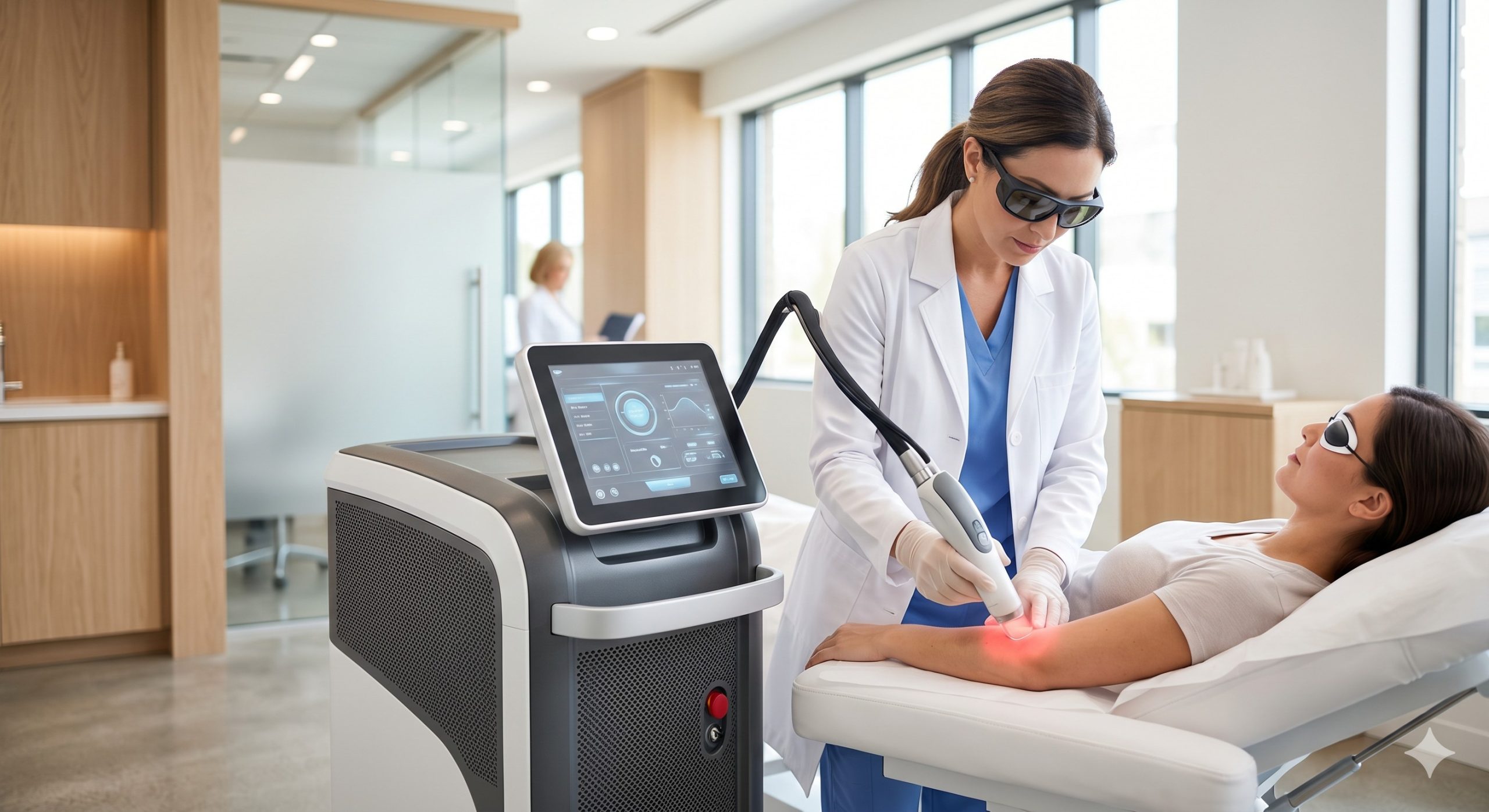
The New Product Introduction (NPI) process is a structured framework used by medical device manufacturers to transform an engineering concept into a validated, mass-producible, and market-ready product. It is a phased approach designed to systematically identify and mitigate risks. In the medical aesthetics sector, where devices must deliver precise energy doses—measured in Fluence (J/cm²)—with exact Pulse Widths (ms) and integrated safety features like Sapphire Contact Cooling, skipping or shortcutting these phases is a recipe for disaster. The consequences can range from poor clinical efficacy and high return rates to serious patient burns or regulatory actions that can cripple a manufacturer’s reputation and your clinic’s operations.
Navigating this lifecycle requires a deep understanding of each gate. EVT, DVT, and PVT are not just boxes to tick; they are critical stress tests that ensure the device’s hardware and software work in harmony. For instance, the laser bars—often imported from top-tier suppliers—must be rigorously tested for output consistency at various Spot Sizes (e.g., 12x12mm, 18x18mm) and energy densities. The journey is as much about perfecting the user experience as it is about the underlying technology, impacting everything from treatment speed and patient comfort to the device’s total cost of ownership (TCO).
Gate 1: Engineering Validation Test (EVT) – Proving the Concept
The Engineering Validation Test, or EVT, is the first major milestone in the NPI process. At this stage, the engineering team has moved from theoretical design to building the first physical prototypes. The primary objective of EVT is to validate that the core architecture of the device works according to the initial specifications and that the fundamental physics—for example, the principles of Selective Photothermolysis—can be effectively harnessed. This is the ‘lab bench’ phase where the team asks, ‘Does the engine work?’
Technical Objectives of EVT
- Core Architecture Verification: Engineers test the primary functional blocks. For a diode laser, this means verifying the electrical power delivery to the laser bars, the efficiency of the thermal management system (e.g., water pumps and heat sinks), and the basic software logic for controlling energy output. They will measure the actual Output Energy (Joules) against the theoretical specifications.
- Laser Source Characterization: The heart of any aesthetic laser is its gain medium. During EVT, the specific laser diodes are characterized for their wavelength accuracy (e.g., 755nm for superficial melanin, 808nm for deep hair follicles, and 1064nm for vascular targets), peak power, and pulse shape. This is where the manufacturer confirms that the Imported Laser Bars meet stringent quality and consistency criteria.
- Risk Assessment & Root Cause Analysis: The initial prototypes are deliberately pushed to their limits to identify failure modes. If the cooling system fails at a high fluence setting (e.g., 45 J/cm²), engineers must diagnose and rectify the issue. This phase is iterative; multiple ‘spin cycles’ of design tweaks and re-testing are common.
From a clinic buyer’s perspective, a manufacturer that is thorough in EVT demonstrates a commitment to engineering excellence. A device that passes EVT with a large margin for error is far more likely to be durable and reliable in the long run, directly impacting the Lifetime Cost of Ownership through reduced downtime and service calls.
Gate 2: Design Validation Test (DVT) – Refining for Reality
Design Validation Test, or DVT, is the bridge between a working prototype and a market-ready product. If EVT proves the internal engine works, DVT ensures that the entire ‘car’ is safe, drivable, and comfortable. The primary objective here is to validate the final design against all product requirements and regulatory standards. This is the most rigorous and comprehensive testing phase, where the device is evaluated for performance, safety, and usability in simulated real-world conditions.
Key Aspects of DVT
- Regulatory & Compliance Testing: This is where the device must prove it meets the requirements for Medical CE and FDA clearance. This involves passing a battery of EMC (Electromagnetic Compatibility) and electrical safety tests (e.g., IEC 60601-1). The device’s safety interlocks, such as the emergency stop button and the skin temperature sensors that control the cooling system, are verified. Compliance with ISO 13485 for quality management is integral to this process.
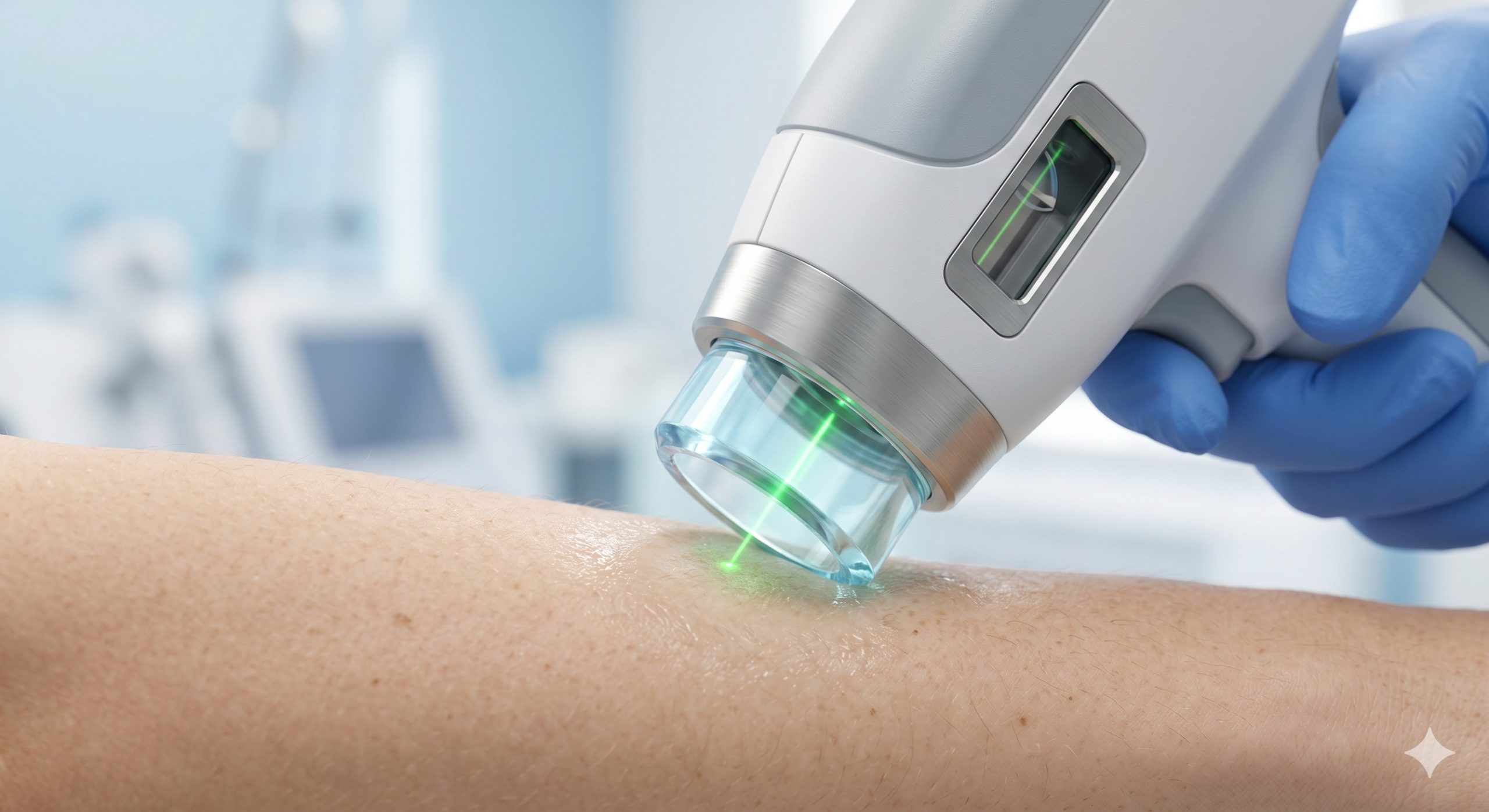
- Cooling System Efficacy & Safety: The Sapphire ICE Cooling Systems are a critical safety and comfort feature. During DVT, engineers meticulously measure the contact plate’s temperature uniformity and stability during long treatment sessions. They test the system’s ability to protect the epidermis, especially when treating darker skin types (e.g., Fitzpatrick Skin Type IV-VI), at high fluences. The goal is to confirm the cooling system’s performance against the specified parameters to prevent thermal injury.
- Usability & Clinical Workflow Validation: The user interface (UI) is put to the test. Does the Smart UI guide the clinician intuitively through parameter selection (e.g., Spot Size, Fluence, Pulse Width) based on different indications like hair removal, skin rejuvenation, or pigmentation? Is the handpiece ergonomic and easy to maneuver for high-throughput treatments? This is often tested with real clinicians to ensure a seamless integration into the medical workflow.
| NPI Gate | Primary Focus | Key Technical Metrics & Outcomes | Regulatory Impact |
|---|---|---|---|
| Engineering Validation Test (EVT) | Prove core architecture and fundamental physics. | Wavelength accuracy, peak power, pulse shape, baseline energy output. | Identifies fundamental safety and design risks. |
| Design Validation Test (DVT) | Validate final design against all requirements. | Sapphire cooling efficacy, EMC/Safety (IEC 60601-1), UI/Workflow, full Fluence range testing. | Data package for FDA 510(k) and Medical CE submission. |
| Production Validation Test (PVT) | Validate mass-production process and supply chain. | Manufacturing process repeatability, handpiece shot lifespan, output consistency (e.g., ±5%). | Ensures ongoing compliance with ISO 13485 manufacturing standards. |
Gate 3: Production Validation Test (PVT) – Scaling for Success
Production Validation Test, or PVT, is the final gate before full-scale market release. The objective is to validate the manufacturing process itself, ensuring that the factory can produce hundreds or thousands of devices that are identical in quality and performance to the DVT-tested units. This phase is about transitioning from building a perfect device in a lab to building a perfect device on a production line. It is the definitive step to proving that the supply chain and assembly processes are robust.
Focus of PVT
- Manufacturing Process Validation: The entire assembly line is run at a slow, controlled rate, typically producing a pilot batch. This validates every step, from soldering laser diodes to mounting the sapphire windows and calibrating the optics. All key processes are checked against established acceptance criteria to ensure repeatability and consistency.
- Consumable & Hardware Durability: In this phase, the Handpiece Shot Lifespan is rigorously tested. Manufacturers will stress the handpiece to its cycle limit (e.g., millions of shots) to guarantee the performance of the high-voltage capacitors and the durability of the mechanical shutter or trigger switch. This is critical for understanding the long-term TCO and replacement cycles.
- Quality Assurance (QA) and Final Test: PVT establishes the final test procedures that will be used to inspect every unit coming off the line. This includes a final output verification, ensuring the device meets its energy density and pulse width specifications with a defined tolerance (e.g., ±5%). It also marks the point where the manufacturer refines the packing and shipping process to guarantee that the equipment arrives at your clinic in pristine condition.
For a clinic, PVT certification from a manufacturer is a key indicator of their commitment to quality. A well-executed PVT process reduces the risk of receiving a ‘lemon’ device and ensures that if you expand to a second or third location, the new machine will perform identically to the first, allowing for standardized treatment protocols and consistent patient outcomes.
Clinical Implications: Why EVT, DVT, and PVT Matter for ROI
The journey from EVT to PVT is not merely an engineering exercise; it directly translates to your clinic’s bottom line. A device built on a solid NPI foundation offers a substantial return on investment (ROI) through several key channels:
- Superior and Predictable Clinical Efficacy: Rigorous testing ensures the device delivers consistent energy (Fluence) and light distribution, resulting in higher clinical clearance rates for hair removal or pigmented lesions. This leads to higher patient satisfaction and retention.
- Enhanced Safety Profile: A robust DVT phase that certifies the cooling system and safety features minimizes the risk of adverse events like burns, protecting your clinic from malpractice claims and reputation damage.
- Reduced Downtime and Maintenance Costs: High-quality components and a validated manufacturing process, hallmarks of a successful PVT, translate to a more reliable device. Fewer unscheduled service calls mean the device is generating revenue, not collecting dust.
- Efficient High-Throughput Treatments: A well-designed system, validated for its large spot sizes and high frequency, allows clinicians to treat patients faster, increasing the number of daily appointments and maximizing revenue per session.
- Faster Regulatory Approval: An NPI process built around compliance from the outset expedites FDA and CE clearance, enabling manufacturers to bring innovations to market more quickly, ultimately giving your clinic a competitive edge.
Conclusion: The Expert Verdict
In the dynamic world of medical aesthetics, the allure of ‘new technology’ must be tempered with a rigorous evaluation of the device’s development pedigree. The NPI gates—EVT, DVT, and PVT—are the invisible guardians of clinical safety and device performance. They represent the manufacturer’s commitment to quality, compliance, and, ultimately, your success as a clinical partner.
As a B2B clinic buyer or consultant, your due diligence should always include asking about the manufacturer’s NPI process. A transparent manufacturer who can articulate the details of their EVT, DVT, and PVT phases, and the metrics they used to validate the critical parameters (like spot size, fluence, and cooling efficiency), is demonstrating a level of expertise and quality control that directly contributes to your clinic’s profitability. By prioritizing devices that have successfully navigated this rigorous journey, you are not just purchasing a machine; you are investing in a predictable, safe, and highly profitable future for your medical aesthetics practice.