
BLOG
The Ultimate Clinic Guide to IPL Hair Removal: Efficacy, Wavelengths, and ROI
2026年6月17日
Introduction: The Evolution of IPL in Clinical Aesthetics
For medical spa owners and dermatology practices, offering effective, safe, and profitable hair removal solutions is no longer optional—it is a foundational service. While traditional methods like electrolysis and waxing have their place, Intense Pulsed Light (IPL) hair removal has emerged as a dominant, high-demand treatment. However, the market is saturated with devices ranging from questionable consumer gadgets to high-end, medical-grade systems. This guide cuts through the noise, offering a clinical, business-focused deep dive into what constitutes a legitimate, high-performance IPL system for a professional clinic. We will dissect the physics, the safety protocols, the key performance metrics, and the return on investment (ROI) that makes this technology a cornerstone of aesthetic practice.
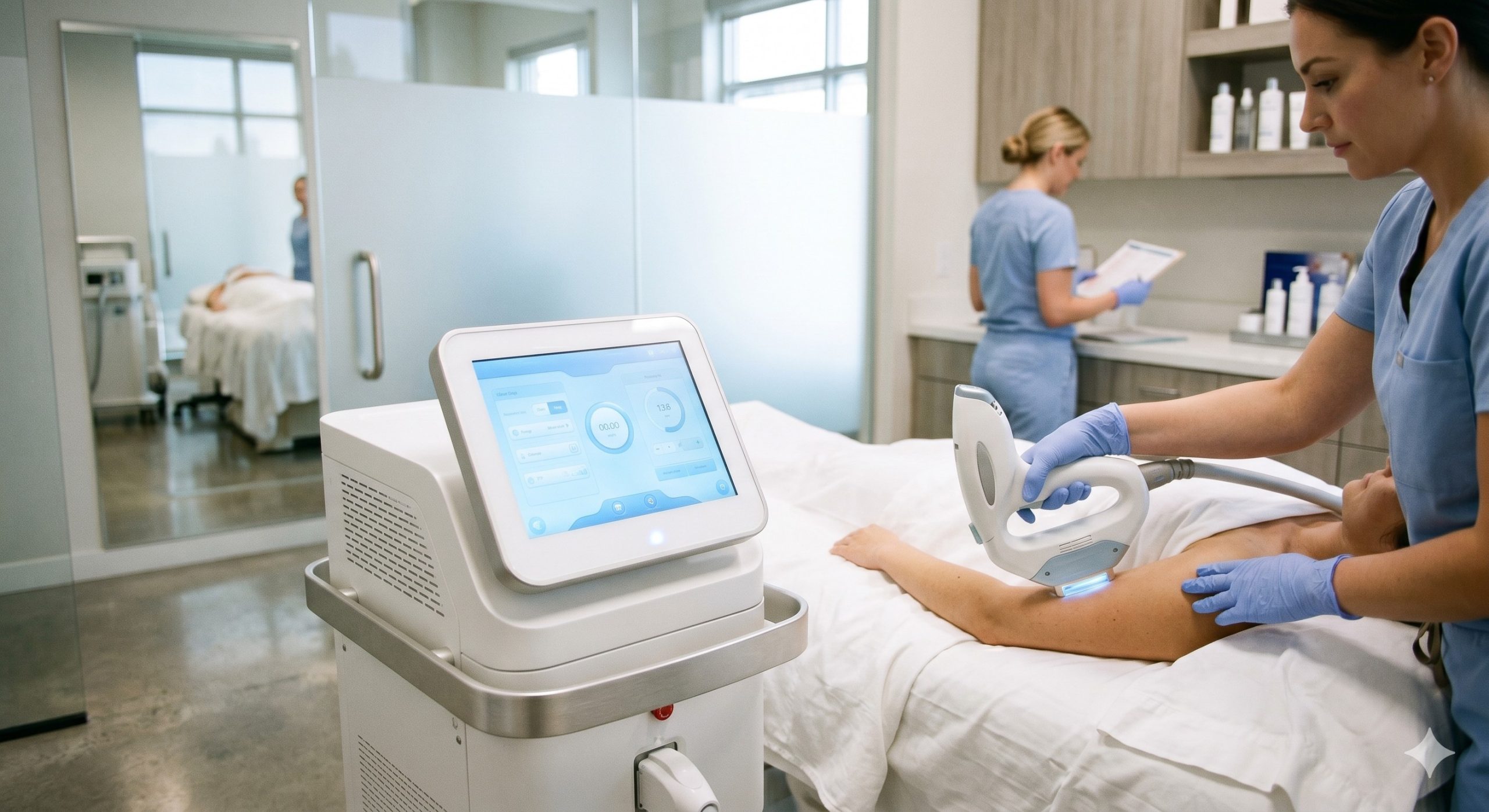
The Physics of IPL: Selective Photothermolysis and Tissue Interaction
To understand what makes professional IPL effective, one must first understand the principle of selective photothermolysis. Unlike a single-wavelength laser, IPL emits a broad spectrum of light, typically ranging from 500nm to 1200nm. This broad spectrum is both a versatility advantage and a technical challenge. The goal is to deliver sufficient light energy to the chromophore—in this case, melanin in the hair shaft and bulge—to heat it to a temperature that coagulates the surrounding follicular stem cells, thereby preventing regrowth, without damaging the epidermis.
Optical Penetration and Chromophore Targeting
The effectiveness of IPL hair removal depends heavily on the wavelength spectrum used. Shorter wavelengths (500-600nm) are strongly absorbed by melanin, making them ideal for targeting superficial, fine, and light-colored hair, but they carry a higher risk of epidermal burns, especially in darker skin types. Longer wavelengths (600-1200nm) penetrate deeper into the dermis, targeting the deeper bulb and bulge of the follicle while being less absorbed by epidermal melanin. This makes them safer for darker skin types (Fitzpatrick IV-VI). High-end clinical systems address this by using cut-off filters and advanced lamp technology to tailor the emitted spectrum for safety and efficacy.
| Key Parameter | Professional IPL Specification | Clinical Relevance |
|---|---|---|
| Wavelength Range | 500nm – 1200nm (with cut-off filters) | Versatile targeting for various skin/hair types |
| Energy Density (Fluence) | 3 – 20 J/cm² (adjustable) | Customizable energy output for safe, effective treatment |
| Pulse Duration (Width) | 2 – 20 ms (adjustable) | Precise targeting to match hair follicle thermal relaxation time |
| Spot Size | 15×50 mm or larger (large aperture) | Deeper light penetration and faster treatment sessions |
| Cooling System | Sapphire Contact Cooling with TEC Chip (0-5°C) | Superior epidermal protection, enhanced comfort, and safety |
| Lamp Lifespan | 100,000 – 200,000+ shots | Lower long-term operating costs and consistent performance |
| Energy Stability | ±5% or better (with closed-loop feedback) | Consistent results and reduced risk of hot spots or under-treatment |
| Certifications | Medical CE, FDA Cleared, ISO 13485 | Validates safety, efficacy, and manufacturing quality for clinical use |
Clinical Parameters: The Science of Setting
With the physics in mind, the clinical translation of this technology relies on three core, adjustable parameters: Energy Density (Fluence), Pulse Duration (Pulse Width), and Spot Size. These are the clinician’s primary tools for customizing a safe and effective treatment.
Energy Density (Fluence) – J/cm²
This is the concentration of light energy delivered per unit area. For hair removal, effective fluence typically ranges from 3 to 20 J/cm². Higher fluence yields better results but increases the risk of side effects like burns and post-inflammatory hyperpigmentation. The precise fluence selection is a delicate balance dictated by skin type, hair color, and the cooling system in place. Professional systems allow for precise, stepwise adjustment of fluence to allow for a ‘test spot’ protocol, ensuring a safe therapeutic window for each patient.
Pulse Duration (Pulse Width) – Milliseconds
Pulse width is the duration of the light pulse. This parameter is critical for confining the thermal effect to the target. The concept of ‘thermal relaxation time’ (TRT) dictates that the pulse duration should be equal to or shorter than the TRT of the hair follicle (approximately 10-100ms) to prevent heat diffusion to surrounding tissues. A pulse width that is too long will result in inefficient heating and potential collateral damage. For IPL hair removal, typical pulse widths range from 2 to 20ms. Advanced systems may also offer sub-pulse or ‘stacking’ technologies to deliver energy in multiple, controlled bursts, enhancing comfort and efficacy.
Spot Size – mm²
The spot size, or the aperture of the handpiece, dictates the treatment area per pulse. A larger spot size, such as 15x50mm or similar, allows light to penetrate deeper into the tissue, as the scattering of light is reduced. This is a key differentiator of high-performance professional devices. Large spot sizes not only improve treatment depth but also significantly reduce overall treatment time, increasing clinic throughput and patient comfort.
Epidermal Protection: The Key to Safety and Inclusivity
The greatest challenge with IPL is the competing absorption between epidermal melanin and follicular melanin. Without adequate protection, the epidermis can absorb dangerous levels of heat, leading to burns. This is why modern, professional IPL devices have moved beyond simple gels and integrated sophisticated cooling systems. The industry gold standard is Sapphire Contact Cooling, often integrated with advanced Thermoelectric Cooling (TEC) chips.
Sapphire Contact Cooling Technology
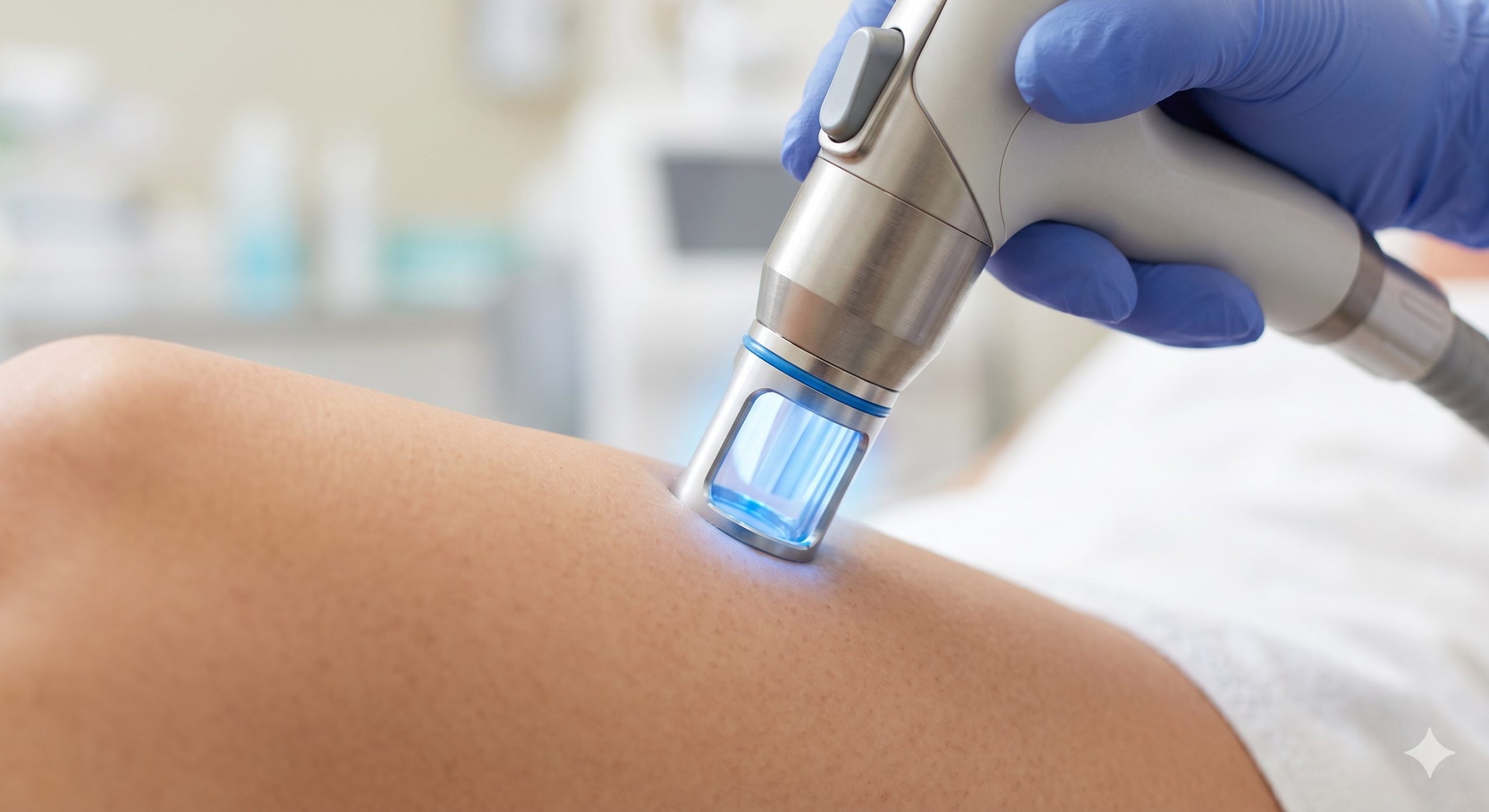
A sapphire crystal window at the tip of the handpiece directly contacts the skin. This window is actively cooled to a low temperature (typically 0-5°C). When the IPL pulse is delivered, the sapphire window cools the epidermis both before and after the pulse. This dual-action cooling protects the skin surface, allowing the clinician to use higher fluence levels safely, thereby improving results, and it significantly enhances patient comfort by numbing the skin’s nerve endings.
Defining Performance: Core Technical Specifications for Clinics
When evaluating an IPL system for a medical aesthetic clinic, the ‘spec sheet’ is the first point of scrutiny. Here is a breakdown of the critical technical metrics that separate a professional-grade investment from an inferior device.
Lamp Technology and Lifespan
The light source in an IPL device is a high-energy xenon flashlamp. The lifespan of this lamp, typically measured in shots, is a significant operating cost. Professional systems offer lamps with lifespans from 100,000 to over 200,000 shots. Look for systems that feature robust, medical-grade power supplies to ensure that the light output remains stable and consistent throughout the lamp’s life, not just at peak performance.
Energy Stability and Calibration
A device must deliver consistent fluence shot-to-shot. Fluctuations in energy output can lead to ‘hot spots’ and inconsistent results. High-quality systems utilize advanced feedback and calibration systems to maintain output stability within a small tolerance (e.g., ±5%). This reliability is essential for reproducible clinical outcomes and patient safety.
Business Considerations: ROI and Clinical Implementation
Integrating a professional IPL system is a significant capital expenditure (CapEx). The business case, however, is compelling. The demand for permanent hair reduction is high across a diverse demographic, making it one of the highest-volume, most profitable services a clinic can offer.
Maximizing Clinic Throughput
Time is the clinic’s most valuable asset. A modern IPL system with a large spot size and fast repetition rate can treat a full leg and underarm in under 15 minutes. This high throughput, combined with a low consumable cost per patient (essentially, the cost of a disposable filter or a fraction of the lamp life), translates to exceptional profit margins and rapid amortization of the device.
Compliance and Credibility
In the aesthetic market, trust is currency. A clinic using devices with medical-grade certifications, such as FDA clearance and CE marking, signals a commitment to safety and efficacy. This elevates the clinic’s brand, allowing it to command premium pricing and attract a higher-value clientele. When presenting the business case, highlight not just the clinical outcomes but also the competitive advantage gained through superior technology and patient safety protocols.
Conclusion: The Strategic Choice
IPL hair removal is a science-driven, highly effective, and profitable aesthetic treatment. However, its success in a clinical setting is entirely dependent on the choice of technology. A device with a strong engineering foundation—featuring precise parameter control, robust energy stability, and advanced cooling—is not just a purchase; it is a strategic investment in a clinic’s reputation, patient safety, and financial success.
For practice owners and dermatologists, the decision should not be based solely on price. Instead, conduct a thorough evaluation of the technical specifications, safety certifications, and total cost of ownership. By choosing a device that delivers superior, consistent results with a high safety profile, you are not merely offering a service; you are solving your patients’ long-term aesthetic needs while building a resilient and profitable pillar for your practice.