
Blog
Market Readiness Packs: The Shortcut to EU Product Launches – A Global Regulatory Blueprint for Medical Aesthetic Devices
2026年11月17日
Why EU Market Entry Is a Compliance Marathon, Not a Sprint
Launching a medical aesthetic device in the European Union is rarely a matter of shipping hardware and printing brochures. Under the Medical Device Regulation (EU MDR 2017/745), a laser or energy-based platform must demonstrate conformity through Medical CE marking, a documented Quality Management System (ISO 13485), clinical evaluation, and post-market surveillance. For B2B distributors and clinic chains, the friction is not the technology itself—it is the regulatory dossier, labeling, language localization, and technical file completeness that delay commercialization by 9–18 months.
Market Readiness Packs are pre-assembled, audit-ready documentation and configuration bundles that compress this timeline. Rather than treating compliance as an afterthought, a readiness pack embeds regulatory evidence into the product launch workflow. This guide examines the technical, clinical, and commercial logic behind readiness packs for diode laser platforms operating at 755nm, 808nm, and 1064nm, and how they de-risk EU deployment for clinics and distributors alike.

The Regulatory Architecture: What EU MDR Actually Demands
Classification and Conformity Routes
Most professional aesthetic laser systems fall under Class IIb under MDR Annex VIII, requiring Notified Body involvement, a Technical File, and a Declaration of Conformity. A readiness pack pre-maps each requirement to a deliverable: risk management file per ISO 14971, usability engineering per IEC 62366, and electrical safety per IEC 60601-1 and IEC 60601-2-22 for laser equipment. For distributors, this means the difference between a six-month dossier compilation and a six-week verification.
Language and Labeling Obligations
MDR requires labeling and instructions for use in the official language(s) of the member state of deployment. Readiness packs typically include pre-validated IFU templates, symbol libraries per ISO 15223-1, and translation-ready content blocks. This eliminates the common bottleneck of retrofitting multilingual labeling after device shipment.
Clinical Evaluation and PMCF
A Clinical Evaluation Report (CER) must be supported by literature review and, where applicable, clinical investigation. Readiness packs bundle predicate device evidence, parameter rationale (fluence, pulse width, spot size), and a Post-Market Clinical Follow-up (PMCF) plan template aligned to the device’s intended indications.
Technical Specifications: What Belongs in the Readiness Dossier
The readiness pack is not a marketing brochure. It is a structured evidence set. The table below illustrates the core technical parameters that must be traceable across the technical file, labeling, and clinical evaluation.
| Key Parameter | Technical Specification |
|---|---|
| Wavelength / Laser Type | 755nm / 808nm / 1064nm Diode Laser |
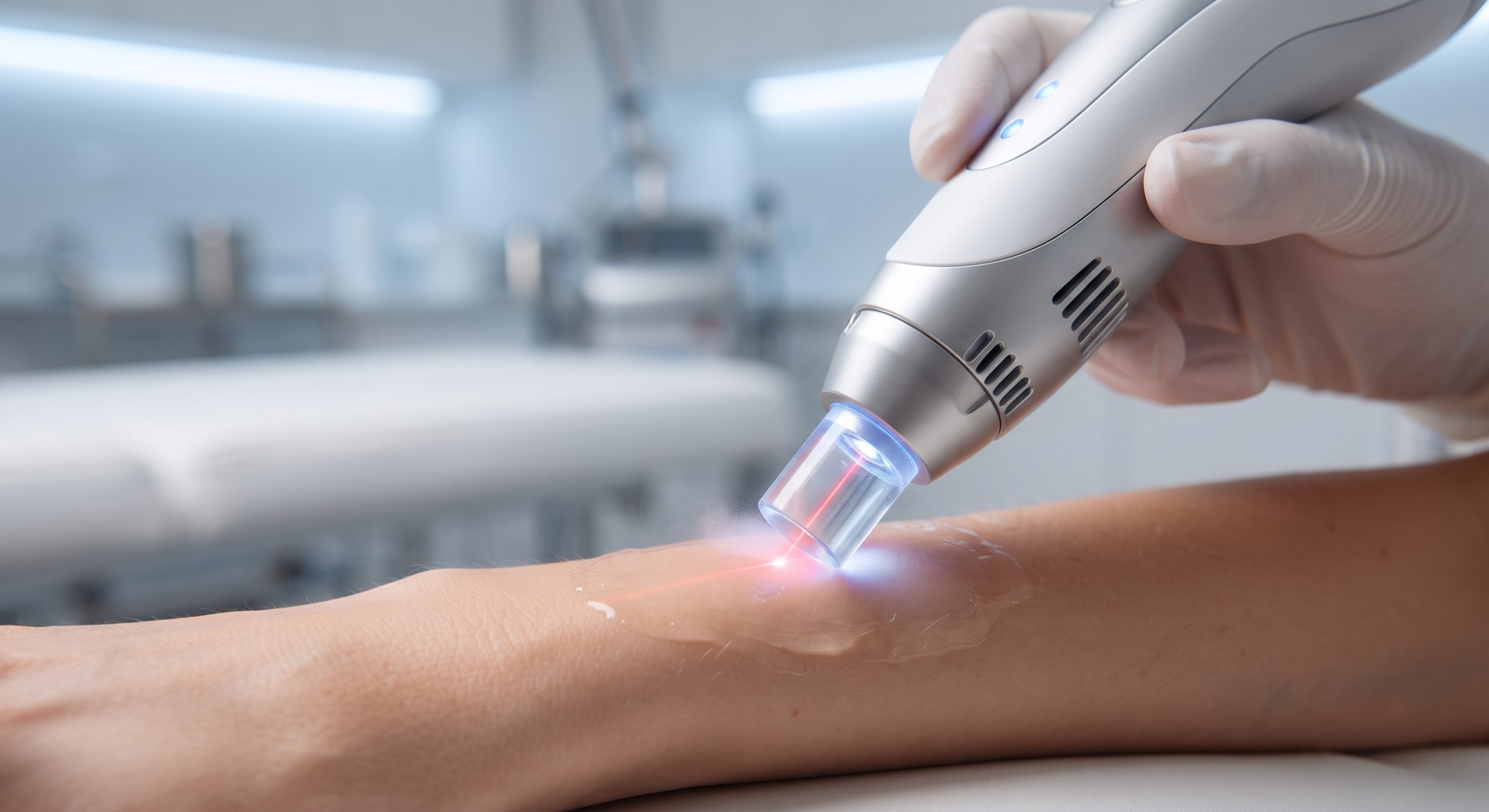
| Cooling System | Sapphire Contact Cooling (ICE) with TEC |
| Spot Size | 12 × 12 mm to 22 × 35 mm (handpiece-dependent) |
| Energy Density / Fluence | 5–120 J/cm² (adjustable per indication) |
| Pulse Width | 5–400 ms |
| Repetition Rate | 1–10 Hz |
| Regulatory Conformity | Medical CE (EU MDR 2017/745), ISO 13485 QMS |
| Risk Management | ISO 14971 compliant risk file |
| Electrical Safety | IEC 60601-1 / IEC 60601-2-22 |
From Documentation to Deployment: The Turnkey Advantage
Operator Training and Competency Records
MDR and national regulations increasingly scrutinize operator competence for Class IIb energy devices. Readiness packs include training curricula, competency assessment checklists, and parameter-setting protocols mapped to Fitzpatrick skin types I–VI. For clinic chains, standardized training assets reduce variability across sites and support insurance underwriting.
Spare Parts, Servicing, and Downtime Planning
A launch-ready device requires a documented service and maintenance schedule, consumable lifespan data (e.g., handpiece shot counts), and calibration procedures. Readiness packs pre-define these intervals so that distributors can commit to service-level agreements without guesswork.
Post-Market Surveillance Infrastructure
MDR Article 83 requires an active Post-Market Surveillance (PMS) system. Readiness packs supply adverse event reporting templates, complaint handling workflows, and periodic safety update report structures—critical for maintaining CE marking after launch.
Commercial Impact: Compliance as a Speed-to-Revenue Lever
The business case for readiness packs is straightforward. A delayed EU launch carries direct costs: warehousing, lost distributor confidence, and missed tender windows. By front-loading regulatory deliverables, clinics and distributors can shorten the path from purchase order to first patient treatment. In practical terms, a readiness pack converts a regulatory liability into a commercial asset—a verified dossier that accelerates Notified Body review, simplifies customs and importation, and supports premium positioning in tender submissions.
For B2B buyers evaluating laser platforms, the presence of a comprehensive readiness pack is itself a procurement signal. It indicates that the manufacturer has invested in ISO 13485 governed design controls, maintains traceable technical documentation, and understands that EU market access is a continuous obligation—not a one-time certificate.
Executive Outlook
Market Readiness Packs are not a shortcut around regulation; they are a shortcut through it. For medical aesthetic device manufacturers, distributors, and clinic groups targeting the EU, the strategic priority is to treat compliance documentation as a product feature—engineered, version-controlled, and validated alongside the hardware. Organizations that embed readiness into their launch methodology will consistently outpace competitors still assembling dossiers after the device has shipped.