
BLOG
The Ultimate Clinic Guide to Preventing Corrosion During Extended Ocean Freight Lanes: Efficacy, Wavelengths, and ROI
2026年9月20日
Introduction: The Hidden Threat to Your Aesthetic Laser Investment
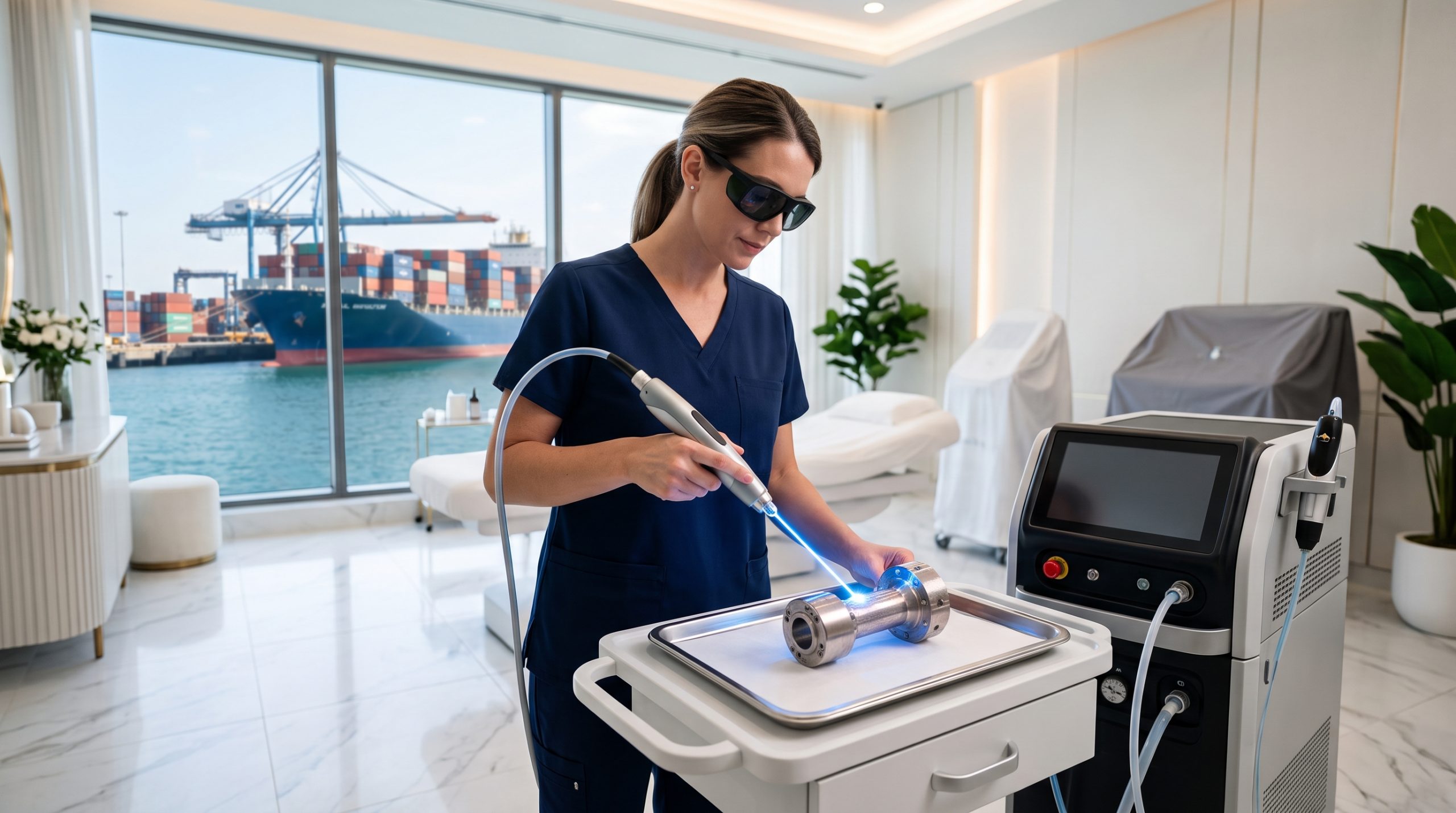
For clinic owners and medical device procurement specialists, the journey of a high-performance aesthetic laser system does not end at the manufacturing facility. It begins a perilous voyage across extended ocean freight lanes. While the clinical efficacy of devices utilizing 755nm, 808nm, and 1064nm wavelengths is well-documented, the silent degradation of internal components due to corrosion during transit remains a critical, yet often overlooked, factor in lifetime cost of ownership (TCO) and ROI.
This technical guide, grounded in ISO 13485 quality management principles and real-world clinical logistics, provides an authoritative framework for preventing corrosion during extended ocean freight lanes. We will dissect the electrochemical mechanisms at play, evaluate the impact on laser bar integrity, and establish a data-driven protocol for safeguarding your assets from port to clinic.
Understanding the Corrosive Environment of Ocean Freight
Ocean freight exposes medical aesthetic devices to a uniquely aggressive environment that far exceeds the challenges of air freight or domestic ground transport.
The Marine Layer & Humidity Paradox
The primary antagonist is the marine aerosol—a suspension of microscopic salt particles in the air. These chloride ions are highly electronegative and aggressively attack the passivation layer of stainless steel components, including cooling circuit fittings and the chassis of the laser power supply. When relative humidity exceeds a critical threshold of 60% within the shipping container, a microclimate of condensation forms on cold surfaces, creating an electrolyte bridge that accelerates galvanic corrosion.
Temperature Fluctuations & Dew Point Cycling
A vessel traversing from a temperate manufacturing hub to a tropical clinic location will experience extreme thermal cycling. As the container heats up during the day and cools at night, the internal dew point fluctuates. This diurnal cycle causes moisture to repeatedly condense and evaporate on sensitive optical coatings and electronic control boards, leading to dendritic growth and short circuits long before the device is ever plugged in.
Critical Components at Risk: From Laser Bars to Cooling Systems
The impact of corrosion is not uniform; it targets specific high-value components with surgical precision.
The Heart of the Device: Laser Bars & Optics
The imported laser bars within a diode stack are micro-engineered for maximum photon emission. Even minute oxidation on the facets of these bars can lead to Catastrophic Optical Damage (COD). When the anti-reflective coatings degrade due to moisture ingress, the energy density (Fluence) drops precipitously, rendering the device incapable of achieving the required selective photothermolysis for effective hair removal or vascular treatment.
Sapphire Cooling Windows & Handpiece Assemblies
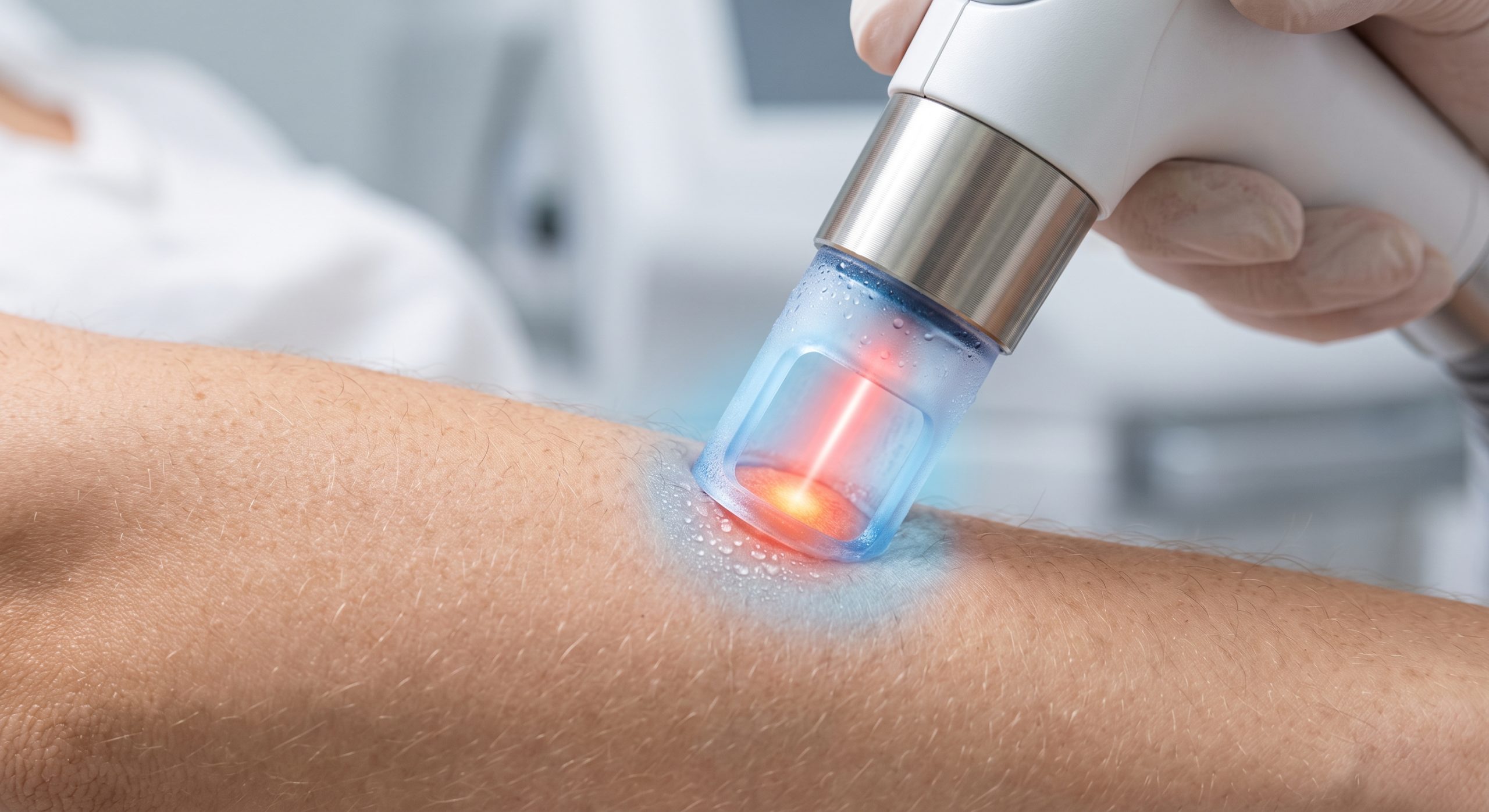
The sapphire contact cooling system is the cornerstone of painless treatments. However, the thermal interface between the sapphire window and its metallic housing is often a site for crevice corrosion. As the metal housing oxidizes, the thermal conductivity drops, forcing the TEC (Thermoelectric Cooler) to work harder. This not only reduces patient comfort but also shortens the lifespan of the handpiece.
| Key Parameter | Technical Specification |
|---|---|
| Wavelength / Laser Type | 755nm / 808nm / 1064nm Diode |
| Cooling System | Sapphire Contact Cooling with TEC |
| Energy Density / Fluence | 10-120 J/cm² (Adjustable) |
| Spot Size | 12mm x 12mm to 24mm x 24mm |
| Pulse Width | 10ms – 400ms |
| Corrosion Protection | Nitrogen Purged MBB / 316L Steel / Conformal Coating |
Prevention Protocols: A Multi-Layered Defense Strategy
Preventing corrosion requires a systems-engineering approach, integrating material science, packaging engineering, and environmental monitoring.
1. Material Selection & Surface Treatment
For any device expected to endure extended ocean freight, the internal chassis and cooling manifolds should be constructed from 316L marine-grade stainless steel rather than standard 304. Additionally, conformal coating of all PCBs is not optional; it is a mandatory ISO 13485 risk mitigation step. This acrylic or silicone layer acts as a barrier against chloride ions and condensing humidity.
2. Active Packaging: The Desiccant & Barrier Equation
Passive packaging is insufficient. A robust protocol involves a vacuum-sealed barrier bag (MBB) with a calculated amount of silica gel desiccant and a humidity indicator card. The desiccant quantity must be calculated based on the surface area of the device, the water vapor transmission rate (WVTR) of the barrier film, and the expected transit duration. For a 45-day ocean lane, this often exceeds 2kg of desiccant for a large console system.
3. The Nitrogen Purging Standard
The gold standard for high-value medical CE devices is nitrogen purging. By displacing oxygen within the barrier bag, you eliminate the primary electron acceptor in the corrosion reaction. This is particularly critical for protecting the laser cavity and optical fibers from oxidation and subsequent power degradation.
Post-Arrival Audit: Clinical Validation After the Voyage
Upon arrival at the port, the device is not immediately ready for the treatment room. A rigorous post-transit audit is required to ensure patient safety and device efficacy.
Visual & Mechanical Inspection
Inspect all cooling circuit connections for weeping or discoloration. Check the handpiece for any signs of pitting on the sapphire retainer ring. Any sign of white rust (zinc oxide) or red rust (iron oxide) on the chassis is a red flag for potential internal damage.
Functional & Parameter Verification
Before any patient contact, use a laser power meter to verify that the energy density (Fluence) and pulse width are within the FDA-cleared or Medical CE specifications. A corroded laser bar will often show a significant drop in output or an unstable pulse shape. If the spot size is compromised due to misalignment from thermal expansion and contraction, the penetration depth will be inaccurate, leading to poor clinical outcomes.
Conclusion: Protecting Your ROI Through Logistics Excellence
The ROI of a medical aesthetic device is not solely determined by its wavelengths or spot size. It is fundamentally protected by the integrity of its supply chain. By implementing a rigorous corrosion prevention protocol—encompassing nitrogen purging, MBB packaging, and ISO 13485-compliant component selection—clinic owners can ensure that their investment arrives with the same energy density and cooling efficiency as the day it left the factory.
For high-throughput clinics and distributors managing extended ocean freight lanes, the cost of prevention is infinitesimal compared to the cost of a failed laser bar or a compromised sapphire cooling system. Prioritize logistics engineering as a clinical parameter; your patients and your balance sheet will benefit.