
BLOG
Why Photographic Evidence Outperforms Legacy Documentation in Freight Damage Claims for Aesthetic Laser Devices
2026年10月26日
The Hidden Cost of Freight Damage in Medical Aesthetics
For clinic owners and device procurement managers, the arrival of a high-value aesthetic laser system—whether a 755nm/808nm/1064nm diode platform or a sapphire-cooled handpiece—is a moment of operational anticipation. However, the freight journey introduces variables that can compromise the integrity of sensitive optical components, laser bars, and cooling circuits. When a shipment arrives with compromised packaging or internal damage, the difference between a swift resolution and a costly dispute hinges entirely on the quality of photographic evidence captured at the moment of delivery. Carriers and insurers operate on strict evidentiary standards; without visual proof that ties specific damage to a specific shipment, claims are routinely denied, leaving clinics to absorb repair costs that can exceed $10,000 to $30,000 for handpiece replacements or laser bar realignment.
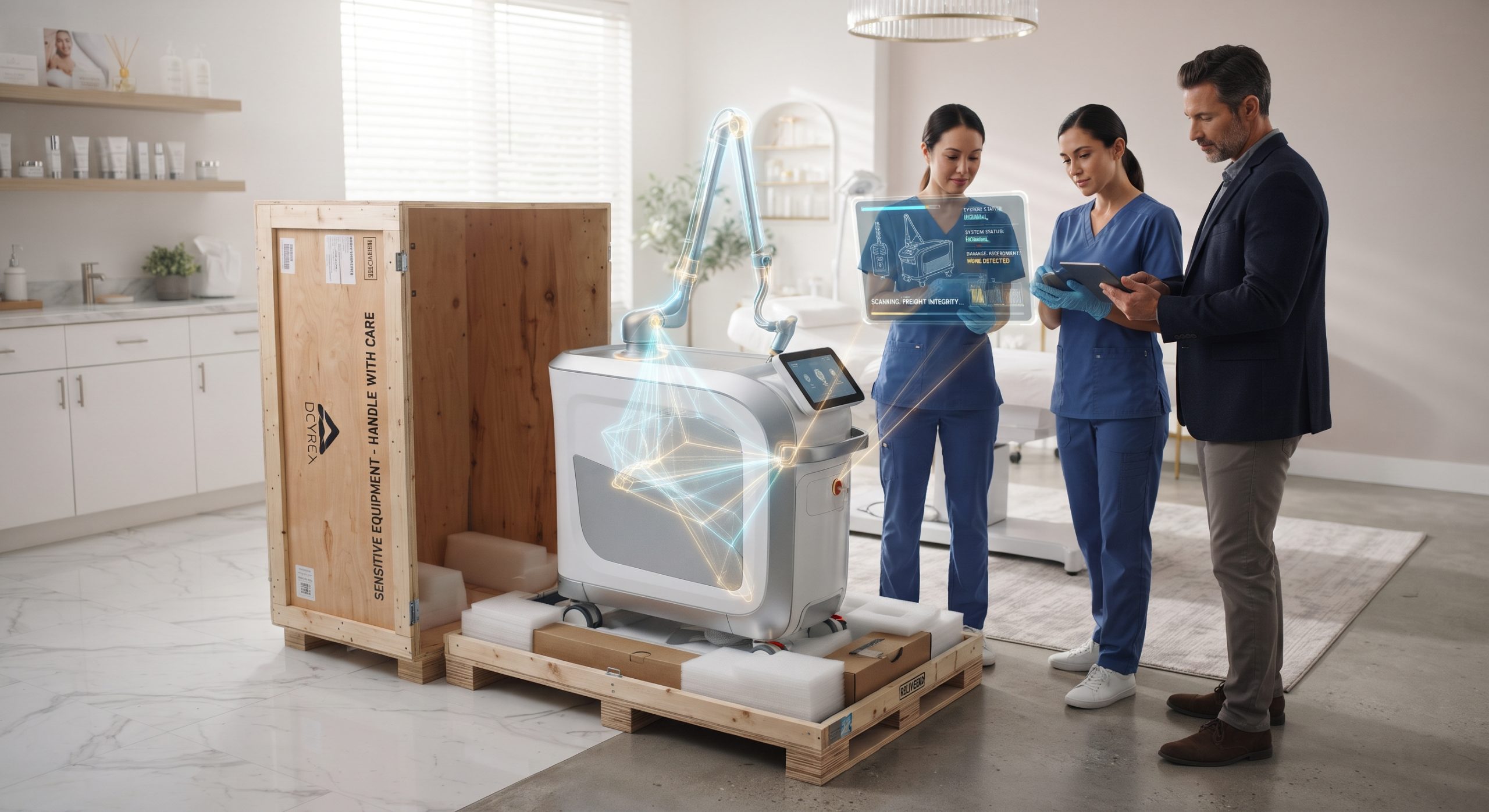
The Evidentiary Hierarchy: Why Photos Outperform Written Descriptions
Traditional freight documentation—bill of lading notations, delivery receipts, and written inspection reports—provides a textual record but fails to convey the spatial and structural reality of damage. A notation reading “crate crushed” does not communicate whether the internal shock-absorbing foam remained intact, whether the handpiece connector was bent, or whether the sapphire contact cooling window sustained microfractures invisible to the unaided eye. Photographic evidence fills this gap by providing objective, timestamped visual data that carriers and adjusters can evaluate without ambiguity.
Regulatory and Carrier Expectations for Visual Proof
Major carriers including DHL, FedEx, and DB Schenker explicitly require photographic documentation for damage claims, specifying that images must capture both the external packaging and the internal contents in their as-received condition. The purpose is two-fold: to establish that damage existed prior to unpacking, and to demonstrate the nature and extent of the compromise. For high-value medical devices, insurers frequently waive physical adjuster inspections for claims supported by comprehensive photo sets, relying instead on the visual record to adjudicate liability.
The Concealed Damage Challenge
Concealed damage—defects not visible until the device is fully unpacked and powered on—presents the most challenging claim scenario. Carriers defend against concealed damage claims by arguing that the damage occurred post-delivery, shifting the burden of proof to the consignee. In these cases, photographs taken before any unpacking become the critical differentiator. A photo showing an intact exterior box followed by images of internal foam compression or displaced optical components tells a narrative that written descriptions cannot replicate. Industry best practices mandate that clinics photograph the sealed packaging, the inner cushioning materials, and the device serial label before proceeding with functional testing.
Technical Specifications: What Photographic Evidence Must Capture for Laser Systems
Generic damage photography is insufficient for aesthetic laser devices. The specific failure modes of these systems require targeted visual documentation of components that directly impact clinical performance and regulatory compliance. The following table outlines the critical parameters and the corresponding photographic evidence required to substantiate a freight damage claim.
| Critical Parameter | Photographic Evidence Requirement |
|---|---|
| Wavelength / Laser Type | Photo of device label showing 755nm/808nm/1064nm specifications and serial number |
| Cooling System | Close-up of sapphire handpiece window and cooling line connectors for cracks, leakage, or crimping |
| Laser Bar / Optical Assembly | Interior packaging photos showing displacement, foam compression, or loose components |
| Spot Size / Fluence Calibration | Documentation of any visible misalignment or damage to optical lenses or fiber bundles |
| Regulatory Markings | Photo of Medical CE, FDA clearance, and ISO 13485 certification labels intact on device |
Photographic Protocols for Different Damage Categories
External Packaging and Shock Indicators
The first photo set must document the exterior condition of all crates and cartons before the driver departs. For laser systems, this includes capturing any TiltWatch or ShockWatch indicators that may have activated during transit. An activated shock indicator provides prima facie evidence of mishandling and significantly strengthens the claim position. Photographs should be taken from multiple angles, with at least one image clearly showing the shipping label and PRO/BOL number to establish an unbroken chain of custody.
Internal Cushioning and Component Displacement
Once the exterior is documented, the clinic must photograph the internal packaging arrangement before removing the device. For diode laser systems, the laser bar assembly and optical fiber bundles are particularly vulnerable to shock-induced misalignment. Photographs showing compressed foam, displaced mounting brackets, or loose internal accessories provide evidence that the packaging system failed to protect the contents. These images should be taken with the device still in its original position within the crate.
Handpiece and Cooling Circuit Integrity
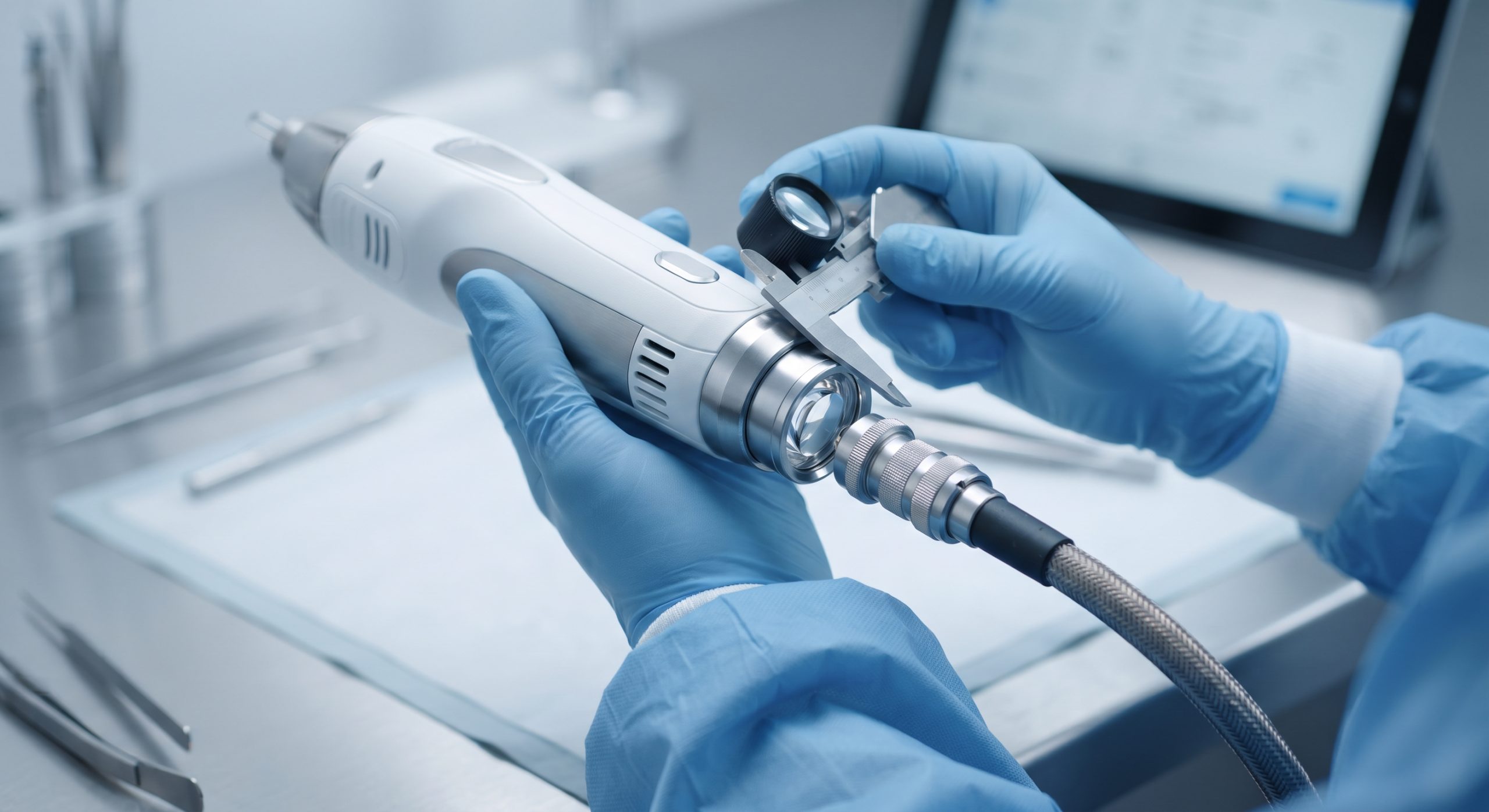
The handpiece represents the most clinically sensitive and financially significant component of any aesthetic laser system. Photographic evidence should focus on the sapphire contact window for cracks or chips, the cooling line connectors for crimping or fluid leakage, and the electrical contacts for bending or contamination. For systems utilizing TEC (Thermoelectric Cooling) or sapphire contact cooling, any visible fluid residue or frost accumulation at connectors indicates a breach of the sealed cooling circuit, which can compromise epidermal protection during patient treatments.
Fitzpatrick Considerations and Clinical Risk from Compromised Devices
Freight damage that affects energy output consistency or cooling efficiency introduces direct clinical risk. A laser system with a compromised cooling circuit may deliver inadequate epidermal protection, increasing the risk of post-inflammatory hyperpigmentation (PIH) or blistering, particularly in patients with Fitzpatrick skin types IV-VI. Similarly, misaligned optical components can cause fluence (energy density) inconsistencies across the spot size, leading to unpredictable treatment outcomes for indications ranging from hair removal to vascular lesion clearance. Photographic evidence of cooling line damage or handpiece window compromise supports not only the financial claim but also the clinical justification for rejecting the device pending inspection and recalibration.
Building a Claim-Ready Evidence Package
A successful freight damage claim for an aesthetic laser system requires more than a few smartphone photos. The evidence package must include: (1) timestamped exterior and interior photographs with the shipping label visible; (2) specific images of the damaged component in context; (3) photographs of the serial number label matching the device to the invoice; (4) written notation on the delivery receipt specifying the nature of the damage; and (5) a repair estimate or replacement quotation from the manufacturer or authorized service provider. Clinics should retain all packaging materials until the claim is fully resolved, as carriers reserve the right to inspect the original shipping materials.
Conclusion: Evidence as a Clinical and Financial Safeguard
For B2B aesthetic device procurement, photographic evidence functions as both a financial safeguard and a clinical quality control mechanism. A disciplined approach to delivery inspection and image capture transforms a potentially adversarial claims process into a straightforward documentation exercise. Clinics that implement standardized photographic protocols—capturing the crate, the internal packaging, the device serial label, and any visible component damage before unpacking—protect their investment while ensuring that only devices meeting Medical CE, FDA clearance, and ISO 13485 manufacturing standards enter their treatment rooms.