
BLOG
The Ultimate Clinic Guide to Laser Hair Removal Raw Material Traceability: Efficacy, Wavelengths, and ROI
2026年7月20日
Introduction: The New Frontier of Medical Device Integrity
In the high-stakes world of medical aesthetics, the provenance of raw materials is no longer just a supply chain concern—it is a critical patient safety and clinical efficacy issue. For clinic owners and dermatologists utilizing high-powered laser platforms such as the 755nm Alexandrite, 808nm Diode, and 1064nm Nd:YAG, the traceability of metals used in laser bars, cooling systems, and handpieces directly correlates with treatment outcomes, device longevity, and compliance with stringent standards like Medical CE, FDA 510(k) clearance, and ISO 13485. This comprehensive guide addresses the multifaceted challenges of metal raw material traceability, providing a roadmap for clinics to ensure superior performance and robust ROI.
The Physical Mechanism: Why Material Purity Dictates Clinical Results
The Science of Selective Photothermolysis and Component Integrity
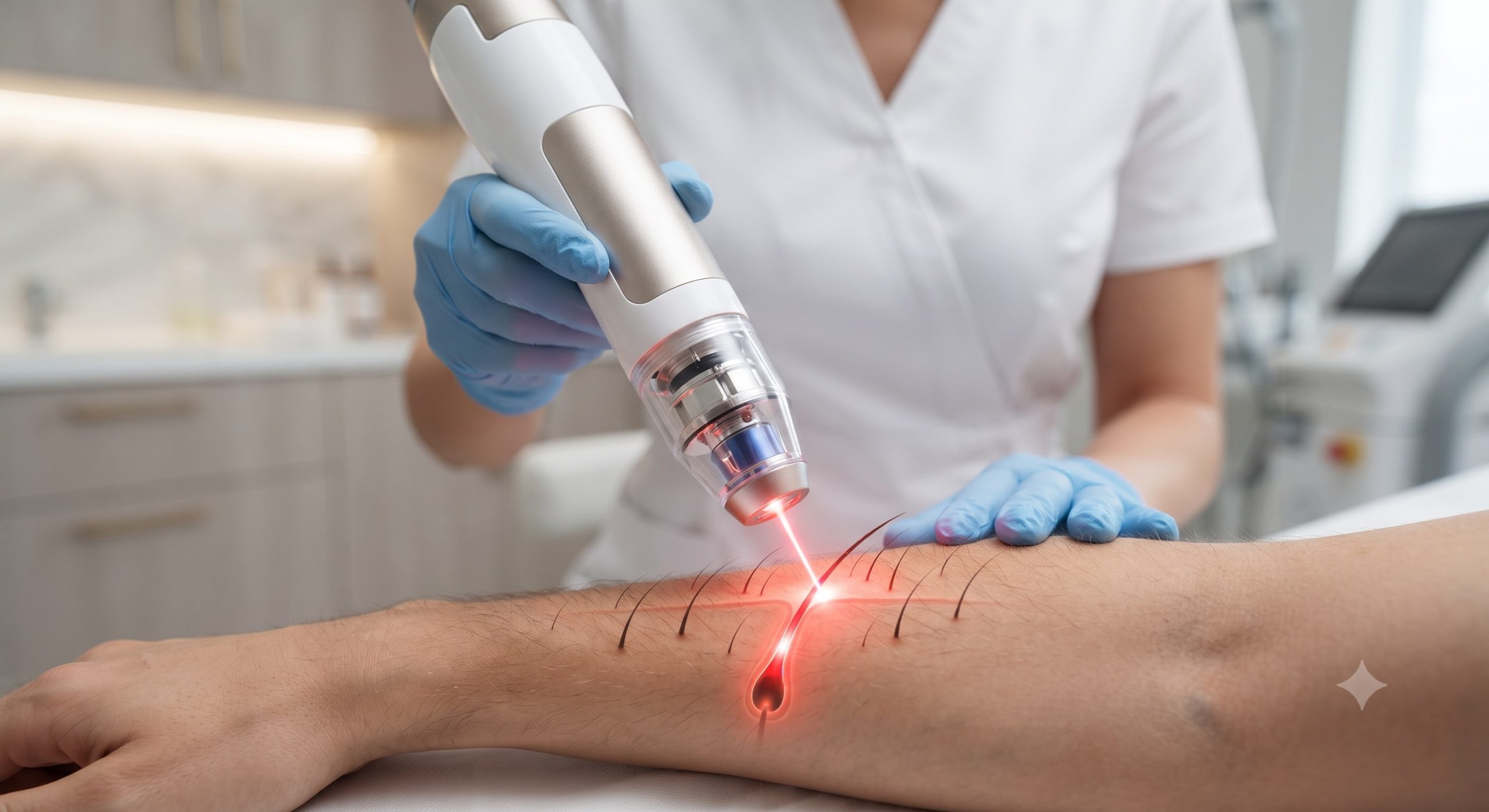
The efficacy of any aesthetic laser system hinges on the principle of selective photothermolysis, where specific wavelengths—such as 755nm for melanin-rich superficial targets, 808nm for deep dermal absorption, and 1064nm for enhanced penetration with reduced epidermal interaction—are absorbed by chromophores to achieve controlled thermal damage. However, this precision is entirely dependent on the quality of the laser medium and optical components. Metal raw material traceability ensures that the semiconductor substrates and mirror coatings within the laser bar contain precisely the right doping concentrations of materials like Gallium Arsenide (GaAs) or Indium Gallium Arsenide (InGaAs). Impurities at the parts-per-million (PPM) level can lead to output instability, fluctuating Fluence (J/cm²), and inconsistent Pulse Widths (e.g., 10ms to 400ms), directly compromising treatment safety and clearance rates.
Thermal Management and Epidermal Protection
Modern high-power devices, often classified as Class IV medical lasers, generate significant thermal energy. The efficacy of Sapphire ICE Cooling Systems is paramount for epidermal protection, particularly when treating Fitzpatrick Skin Types IV-VI. The cooling efficiency—measured in terms of thermal conductivity (W/m·K)—depends heavily on the purity of the metal alloys in the thermoelectric coolers (TEC) and the heat sinks. Inferior metal alloys with high thermal resistance can result in inadequate cooling, leading to epidermal burns or paradoxical hyperpigmentation. Thus, traceability of raw metals like Copper (Cu) for heat sinks and Bismuth Telluride (Bi₂Te₃) for TEC modules is not merely a manufacturing detail; it is a clinic’s first line of defense against adverse events.
Technical Specifications and Core Performance Metrics
When evaluating a device’s potential, clinical operators must focus on measurable output parameters. The interplay between Spot Size, Energy Density, and Pulse Width defines the therapeutic window. Larger Spot Sizes (e.g., 24mm x 30mm) allow for faster treatment throughput and deeper tissue penetration, while Energy Density must be carefully titrated to achieve the critical temperature of 45°C-50°C in the hair follicle bulb without causing epidermal damage. The consistency of these parameters is a direct function of the laser’s power supply and the quality of its raw materials. A device built with fully traceable, high-grade components ensures that the listed Fluence is what is delivered at the tissue interface, eliminating the performance degradation seen in devices with non-traceable, substandard raw materials.
| Key Parameter | Technical Specification | Clinical Impact |
|---|---|---|
| Wavelength / Laser Type | 755nm (Alexandrite) / 808nm (Diode) / 1064nm (Nd:YAG) | Targets melanin (755nm), hemoglobin/water (1064nm) for multi-indication versatility. |
| Cooling System | Sapphire Contact Cooling (5°C – 10°C) + TEC | Prevents epidermal burns; allows for higher Fluence settings in darker skin types. |
| Energy Density (Fluence) | 1 – 40 J/cm² (Adjustable) | Achieves critical follicle temperature (45-50°C) for irreversible damage. |
| Pulse Width | 2ms – 400ms (Adjustable) | Matches thermal relaxation time (TRT) of target chromophores (hair follicles, vessels). |
| Spot Size | Up to 24mm x 30mm (Rectangular) | Deepens tissue penetration; increases treatment speed for large areas (back, legs). |
| Frequency | Up to 10 Hz | Reduces overall session duration; maximizes clinic throughput. |
Regulatory Compliance: Navigating FDA and Medical CE Audits
ISO 13485 and the Traceability Imperative
Global regulatory bodies mandate stringent quality management systems (QMS) for medical devices. Compliance with ISO 13485 requires manufacturers to maintain a documented traceability system that records the origin, batch number, and certification of all raw materials used in the production of critical components. For the clinic, this translates to a guarantee that the device you are using meets the rigorous standards for electrical safety and electromagnetic compatibility (EMC). When a device undergoes a regulatory audit, the absence of metal traceability can result in severe penalties, product recalls, and reputational damage. Therefore, when selecting an aesthetic laser platform, clinic investors must demand documented proof of material provenance to safeguard against regulatory non-compliance.
Ensuring Clinic Audit Protection
Beyond the initial purchase, maintaining compliance involves operational due diligence. Clinics must ensure that replacement handpieces and consumables come with certification of conformance (CoC) that verifies the traceability of their internal components. Non-traceable components can alter the device’s output characteristics, potentially voiding its CE marking or FDA clearance. This has direct implications for malpractice insurance and patient safety protocols. A robust traceability chain essentially acts as a shield for the clinic, protecting against liability in the event of an unforeseen clinical complication linked to device malfunction.
Clinical Deep Dive: Parameters and Optimization Protocols
Wavelength Synergy and Fitzpatrick Scale Strategies
Optimizing parameters for diverse patient demographics is the cornerstone of a successful aesthetic practice. The choice of wavelength should be guided by the Fitzpatrick Skin Type. For lighter skin types (I-III), the 755nm wavelength offers high melanin absorption, requiring shorter pulse widths and moderate fluence (e.g., 20-30 J/cm²) to avoid epidermal injury. In contrast, for darker skin types (IV-VI), the 1064nm wavelength provides a longer penetration depth and lower melanin absorption ratio, allowing for safer treatment with higher fluence settings (e.g., 30-40 J/cm²) and longer pulse widths to mitigate the risk of burns. The ability to toggle between these wavelengths without performance drift is a testament to the quality of the internal metal components and the precision of the diode laser bars.
Treatment Throughput and High-Throughput Clinics
For high-volume clinics, treatment speed and handpiece durability are critical drivers of profitability. A large spot size (e.g., up to 15mm x 15mm) combined with a high frequency (e.g., 10Hz) can drastically reduce session times, allowing for up to 50% more appointments per day. However, this high-frequency operation generates substantial heat. Devices equipped with efficient heat sinks made from traceable, high-purity aluminum or copper can dissipate this heat effectively, maintaining the epidermal cooling system’s temperature at a consistent 5°C-10°C. This not only ensures patient comfort but also prolongs the lifespan of the laser handpiece, reducing the Total Cost of Ownership (TCO).
Overcoming Raw Material Traceability Challenges
The Imported Laser Bar Advantage
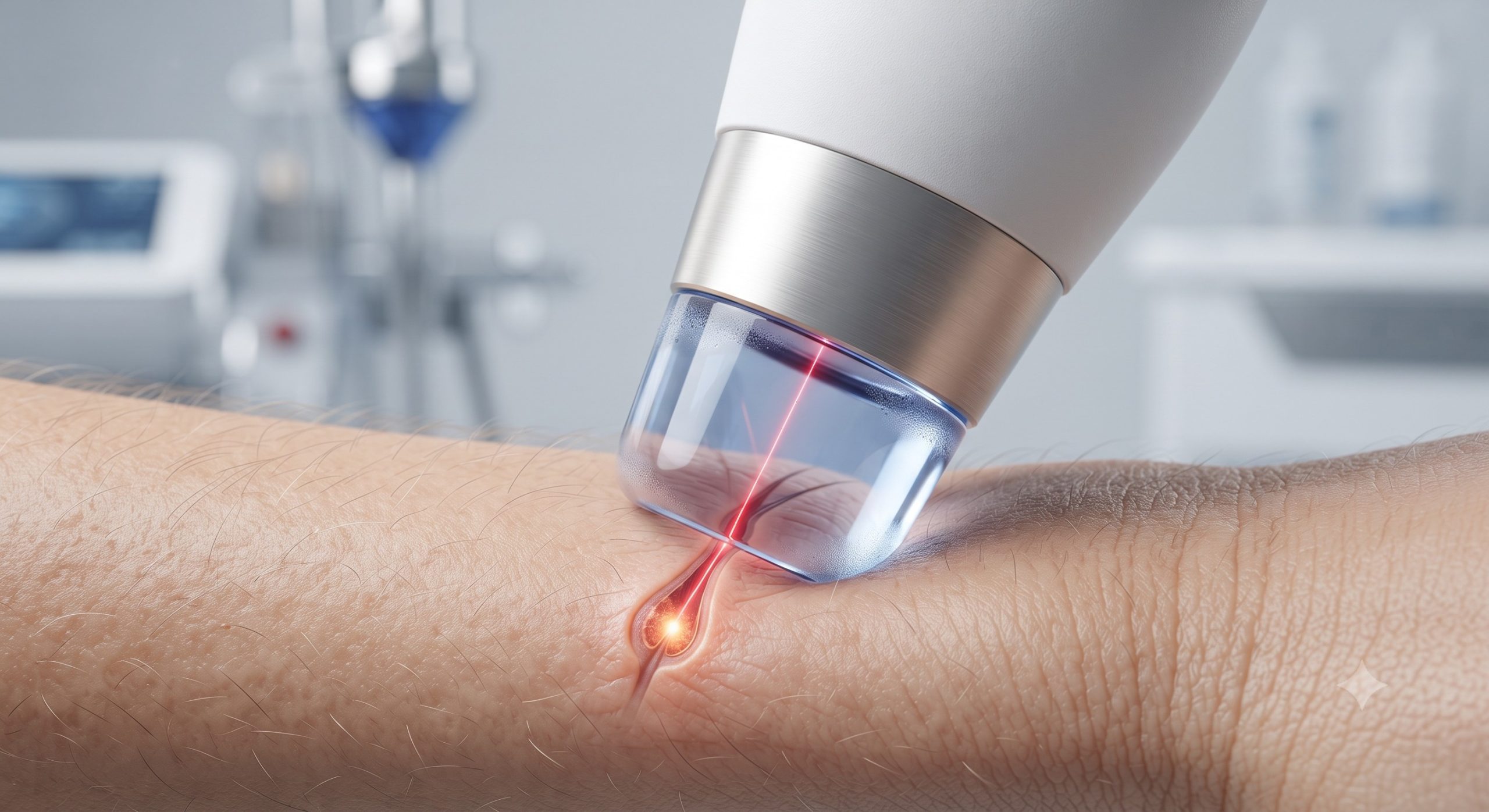
One of the primary challenges in achieving consistent clinical outcomes lies in the origin of the laser bars. High-quality devices often utilize imported, military-grade laser bars from renowned manufacturing hubs. These bars undergo rigorous testing, including accelerated aging tests, to certify their lifetime shot counts (often exceeding 20 million shots). The metal alloys used in these bars are subject to strict quality controls, ensuring high electrical-to-optical conversion efficiency (often >50%). Lower-cost devices may utilize domestic or uncertified materials, which can lead to a significant drop in laser power output—sometimes as high as 20% within the first year of use—necessitating early and expensive replacements.
Consumable Costs and Long-Term Profit Margins
Evaluating the lifespan of consumables is a critical factor in ROI analysis. Handpieces with non-traceable components often have a shorter lifespan, leading to frequent downtimes and increased CapEx on replacements. Conversely, devices built with certified, traceable metals and optics maintain their performance over hundreds of thousands of pulses. This reduces the cost-per-shot and minimizes the financial burden of servicing. Clinics should always request lifetime cost analysis reports from vendors that break down the projected longevity and cost of replacement parts. A device with a higher initial price but lower TCO is almost always the more profitable long-term investment.
Conclusion: The Executive Verdict on Device Procurement
The challenges of metal raw material traceability extend far beyond the manufacturing floor, directly impacting clinic profitability, patient safety, and treatment efficacy. In a market saturated with competitive aesthetics devices, the ability to verify the provenance of critical components is the ultimate differentiator between a reliable, high-performance asset and a costly, liability-laden liability. For the discerning clinic owner, investing in a device that demonstrates full compliance with ISO 13485, utilizes imported laser bars, and provides verifiable documentation of its internal architecture is not just a purchase—it is a strategic commitment to clinical excellence and long-term commercial success. As the medical aesthetics industry continues to evolve, the transparency of the supply chain will become the benchmark by which devices are judged.