
BLOG
The Ultimate Clinic Guide to Redacted Quality Documents: Efficacy, Wavelengths, and ROI
2026年8月7日
Introduction: The Critical Role of NDAs in Medical Aesthetic Acquisitions
In the high-stakes world of medical aesthetics, acquiring a new laser platform or energy-based device is a significant capital investment. However, before a clinic can evaluate technical specifications like 755nm, 808nm, or 1064nm wavelengths, or assess energy density (Fluence) and pulse width, they must navigate the ‘Redacted Quality Documents’ phase. These redacted documents, often shared under a Non-Disclosure Agreement (NDA), are not merely legal formalities—they are the clinical and technical blueprint of the device. This guide provides a comprehensive roadmap for clinicians and practice administrators to decode these documents effectively.
Understanding these documents is paramount to ensuring you are acquiring a device that meets Medical CE, FDA clearance, and ISO 13485 standards, safeguarding your practice from both clinical failure and regulatory penalties. We will dissect the NDA process, the key technical data that should never be redacted, and how to use this information to make a profitable, evidence-based purchasing decision.
Part 1: Demystifying the NDA and the Redaction Process
Why Redactions Occur in the Pre-Contract Phase
Manufacturers redact sensitive information in technical documents to protect intellectual property, proprietary cooling mechanisms, and trade secrets related to their laser bars and power supplies. However, a redacted document is not a ‘black box.’ It should still contain all the clinical metrics necessary for a Fitzpatrick Skin Type analysis. Clinics must push back if critical safety and efficacy data are hidden. The NDA facilitates an honest dialogue; it does not permit the obfuscation of essential performance data.
Part 2: The Technical Blueprint: Decoding Non-Negotiable Parameters
When reviewing a redacted Quality Document, specific technical metrics must be visible. These parameters form the core of the Selective Photothermolysis principle and dictate the device’s clinical viability. If these are missing, it is a red flag regarding the manufacturer’s transparency.
Wavelengths and Target Chromophores
The spectrum of light utilized is non-negotiable. For multi-wavelength devices, you must see the output for 755nm (Alexandrite) for melanin-rich targets, 808nm (Diode) for deep dermal penetration and melanin absorption, and 1064nm (Nd:YAG) for deeper vascular lesions and darker skin types. The document should specify the spot size available for each wavelength, as this directly impacts the fluence (J/cm²) and treatment speed. A larger spot size (e.g., 15mm x 15mm) allows for deeper penetration and faster treatment times, which is crucial for high-throughput clinics.
Pulse Width (Duration) and Energy Density
The pulse width, measured in milliseconds (ms), determines the thermal confinement. For hair removal, pulse widths typically range from 10ms to 400ms, depending on the hair caliber and skin type. The document must clearly outline the range of Fluence (Energy Density) available for each spot size. For instance, a device offering a maximum fluence of 50 J/cm² with a 15mm spot size is a significantly different clinical tool than one offering a 5mm spot size at the same energy. This data is essential to treat Fitzpatrick Skin Types I-VI safely.
Sapphire Contact Cooling: The Epidermal Guardian
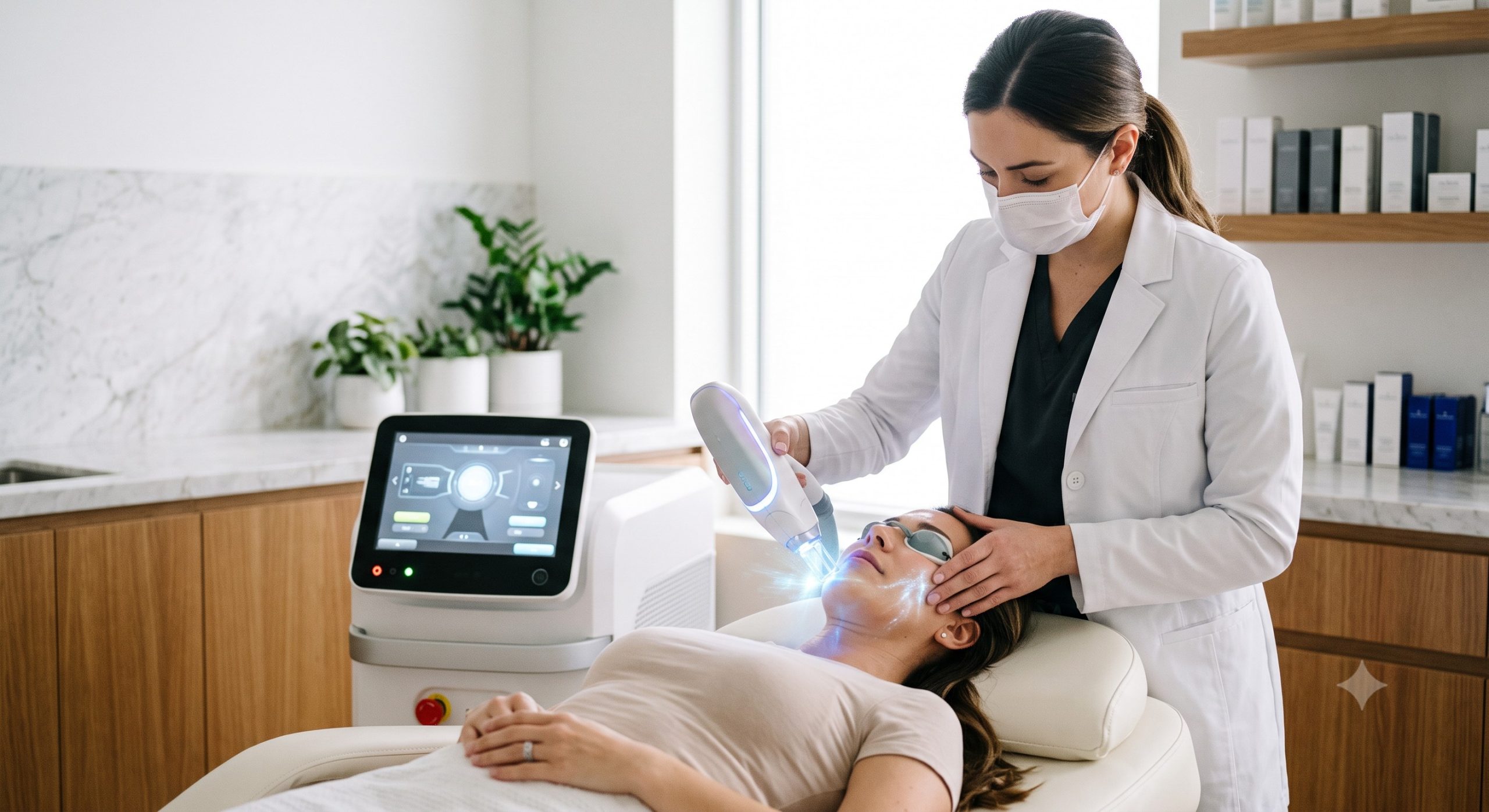
Advanced cooling systems are a prerequisite for safe and comfortable treatments. The documents should specify the type of cooling—typically Sapphire ICE Contact Cooling. This technology reduces epidermal temperatures to 0°C to 5°C, ensuring the dermis reaches therapeutic temperatures (40°C–60°C) while minimizing burns. The specifics regarding the TEC (Thermoelectric Cooler) performance and the cooling temperature range are critical components of the device’s safety profile.
| Key Parameter | Technical Specification | Clinical Significance |
|---|---|---|
| Wavelength / Laser Type | 755nm (Alexandrite) / 808nm (Diode) / 1064nm (Nd:YAG) | Targets melanin and hemoglobin; depth of penetration; safety for Fitzpatrick IV-VI. |
| Spot Size | Up to 15mm x 15mm (or 18mm) | Larger spot size = deeper penetration, faster treatments, and improved throughput. |
| Pulse Width (Duration) | 10ms – 400ms (Adjustable) | Thermal Relaxation Time (TRT) tuning for hair follicles and vessels. |
| Energy Density (Fluence) | 5 – 50 J/cm² (Variable) | Delivers therapeutic energy while maintaining epidermal safety. |
| Cooling System | Sapphire ICE Contact Cooling (TEC) | Reduces epidermal temperature to 0-5°C; ensures painless, safe treatments. |
| Shot Lifespan / Durability | 1,000,000+ Shots | Reduces total cost of ownership and ensures long-term device reliability. |
| Regulatory Compliance | ISO 13485, Medical CE, FDA 510(k) | Verifies manufacturing quality and patient safety standards. |
Part 3: Industry Standards and Regulatory Compliance
An NDA and redacted documents are the first line of defense in verifying compliance. Ask for the specific certificate numbers for ISO 13485 (Medical Devices Quality Management) and evidence of FDA 510(k) clearance or Medical CE Mark. A legitimate manufacturer will provide these details clearly. These aren’t just logos; they represent a rigorous audit of the manufacturing process, ensuring the device’s energy output consistency and safety.
Consumable and Handpiece Lifespan
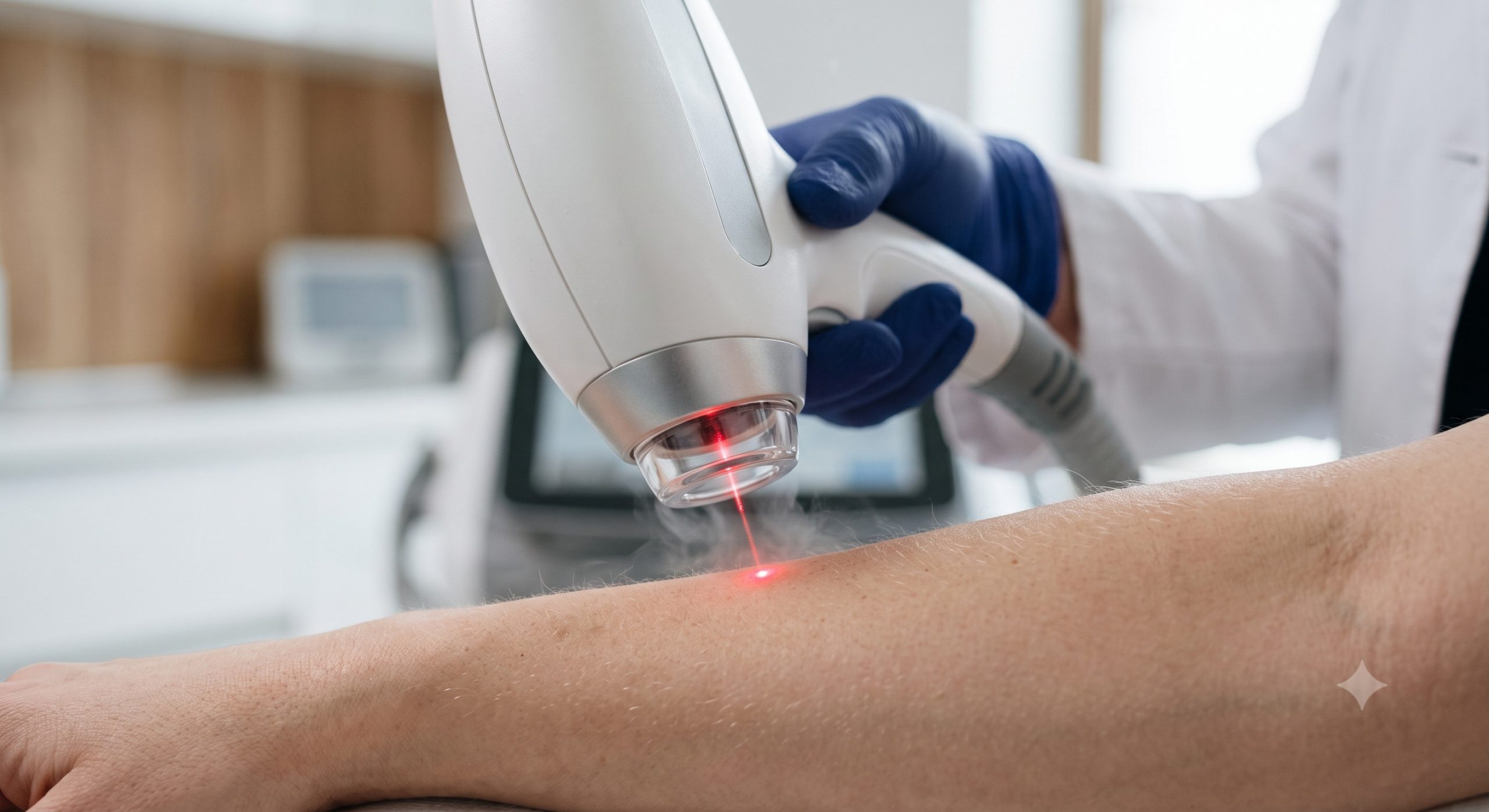
Redacted documents often hide the cost of ownership. Look for the handpiece shot lifespan. A standard imported laser bar should last for at least 1 million shots. Understanding the Lifetime Cost of Ownership and the cost per shot is crucial for calculating your Return on Investment (ROI). A low initial cost with a high cost per shot will rapidly eat into your Med Spa profitability.
Part 4: Clinical Integration and ROI: From Data to Dollars
Once the technical data is verified and the NDA is executed, the focus shifts to clinical integration. The redacted quality document should provide a basis for predicting Treatment Efficacy. You can model your annual revenue by estimating the number of sessions per day, the average charge per treatment ($300-$1,000), and the device’s expected lifespan. For example, a device with a large spot size and high frequency reduces session duration, allowing you to treat 4-6 patients per hour versus 2-3, effectively doubling your revenue potential.
Conclusion: Your Checklist for NDA Success
Navigating NDAs and redacted quality documents is a skill that separates successful clinics from those that accumulate obsolete tech. Key takeaways for your practice:
- Verify Clinical Metrics: Ensure wavelength, fluence, pulse width, and spot size are clearly stated.
- Confirm Cooling Technology: Sapphire Contact Cooling is the gold standard for painless treatment.
- Check Regulatory Status: Require ISO 13485, FDA clearance, and Medical CE details.
- Calculate Lifespan and TCO: Demand the shot count and analyze the cost per treatment.
- Validate Clinical Efficacy: Review the expected clearance rates for various skin types.
By holding vendors to these rigorous standards during the NDA phase, you protect your practice from technological and financial risks. Remember, if a document is redacted past the point of clinical utility, it compromises your ability to ensure patient safety and achieve optimal clinical outcomes.