
BLOG
1927nm Laser Clinical Deep Dive: Selective Photothermolysis & Parameter Optimization
2026年6月22日
Introduction: The Evolution of Precision in Aesthetic Dermatology
In the rapidly advancing field of medical aesthetics, the 1927nm fractional thulium laser has emerged as a pivotal technology for clinics seeking to offer cutting-edge, non-ablative solutions. As patient demand grows for effective treatments with minimal downtime, understanding the specific clinical applications of this wavelength is essential for any B2B aesthetic device purchaser. This comprehensive guide provides a deep dive into the mechanisms, indications, and technical specifications of the 1927nm laser, drawing on the latest clinical evidence and regulatory standards .
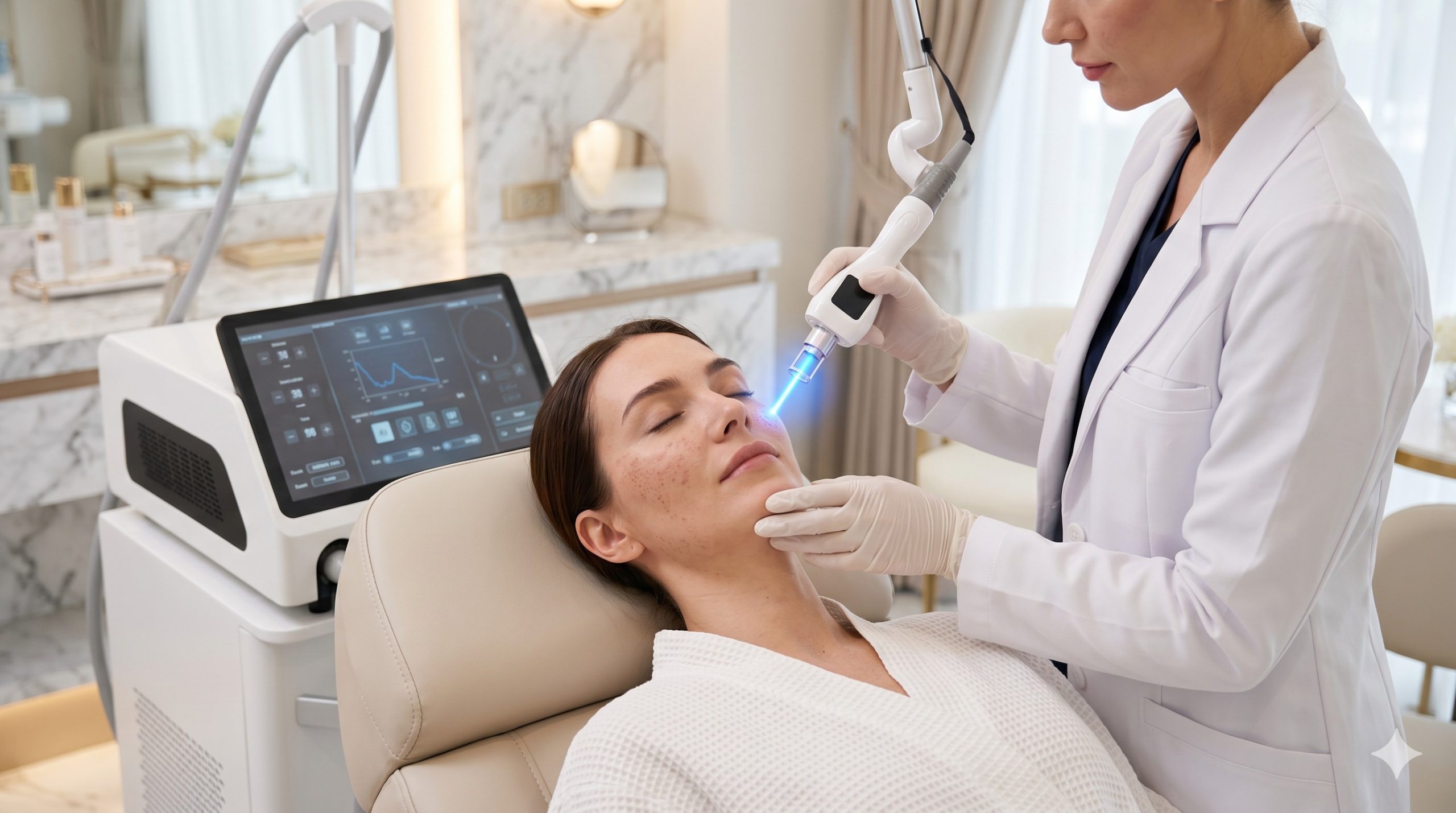
The Physics of 1927nm Wavelength: Selective Photothermolysis and Water Affinity
The efficacy of the 1927nm laser is rooted in the principle of selective photothermolysis, targeting water as its primary chromophore. With an intermediate water absorption coefficient, this wavelength sits uniquely between non-ablative lasers (e.g., 1550nm) and ablative lasers (e.g., 2940nm). This allows the 1927nm laser to create precise zones of thermal injury known as microscopic treatment zones (MTZs) within the epidermis and superficial dermis while largely sparing the stratum corneum .
This characteristic makes it exceptionally versatile. Studies using high-resolution imaging have shown that the 1927nm FTL can be adjusted to produce effects ranging from non-ablative subepidermal coagulation to semi-ablative epidermal disruption, depending on the pulse energy and spot size . For instance, key parameters such as pulse duration (0.2-20ms), repetition rate (45Hz-445Hz), and power output (up to 10W) can be optimized to treat specific conditions . This precise control is critical for clinicians to achieve superior clinical outcomes while ensuring patient comfort and safety.
FDA-Cleared and CE-Marked Indications: A Clinical Toolkit
The 1927nm laser is not merely a device for general rejuvenation; it boasts a wide array of specific, evidence-based indications. Regulatory clearances provide a strong framework for its clinical use. According to a recent FDA 510(k) clearance (K252732), the 1927nm thulium laser system is indicated for dermatological procedures requiring:
- Coagulation of soft tissue
- Treatment of actinic keratosis
- Treatment of benign pigmented lesions (lentigos, solar lentigos, and ephelides)
Beyond these core indications, clinical research has expanded its utility. It has demonstrated significant efficacy in skin rejuvenation, improving rhytides, skin texture, dyschromia, and radiance, often when used in combination with a 1440nm wavelength . Furthermore, the 1927nm laser has shown promise as a novel treatment for androgenic alopecia, stimulating hair regrowth through wound healing pathways and activation of the Wnt/β-catenin signaling pathway . It has also been used effectively to treat acne vulgaris, disrupting the upper portion of hair follicles and sebaceous glands .
Technical Specifications and Parameter Optimization
Understanding the technical metrics of the 1927nm laser is crucial for clinic owners evaluating different systems. While the treatment tip and energy settings can vary between manufacturers, the underlying physics of the laser dictate its clinical performance. The table below outlines the key performance parameters of a representative 1927nm thulium laser system .
| Key Parameter | Technical Specification (Representative System) |
|---|---|
| Wavelength | 1927nm (Thulium-Doped Fiber Laser) |
| Maximum Power Output | Up to 10W |
| Pulse Duration | 0.2 – 20 ms |
| Repetition Rate | 45 Hz – 445 Hz |
| Spot Size | ~300 µm (variable based on tip) |
| Cooling System | Advanced Contact Cooling (e.g., Sapphire) |
| Regulatory Compliance | FDA 510(k) K252732, CE Mark, ISO 13485 |
Key Parameter Specifications
Optimizing these parameters is key to achieving consistent, safe, and effective results. For instance, a pulse duration of 300 µs has been used successfully to promote hair regrowth, delivering energy efficiently to the dermal papilla without anesthesia . The ability to vary spot size (e.g., 200μm or 350μm) and energy per pulse is critical for treating different body areas and skin conditions. Higher pulse energies (15-20 mJ) create deeper, wider MTZs, which are more effective for ablative-like epidermal resurfacing, whereas lower settings (3 mJ) are used for gentler, non-ablative procedures .
Sapphire Cooling and Patient Comfort: A Non-Ablative Advantage
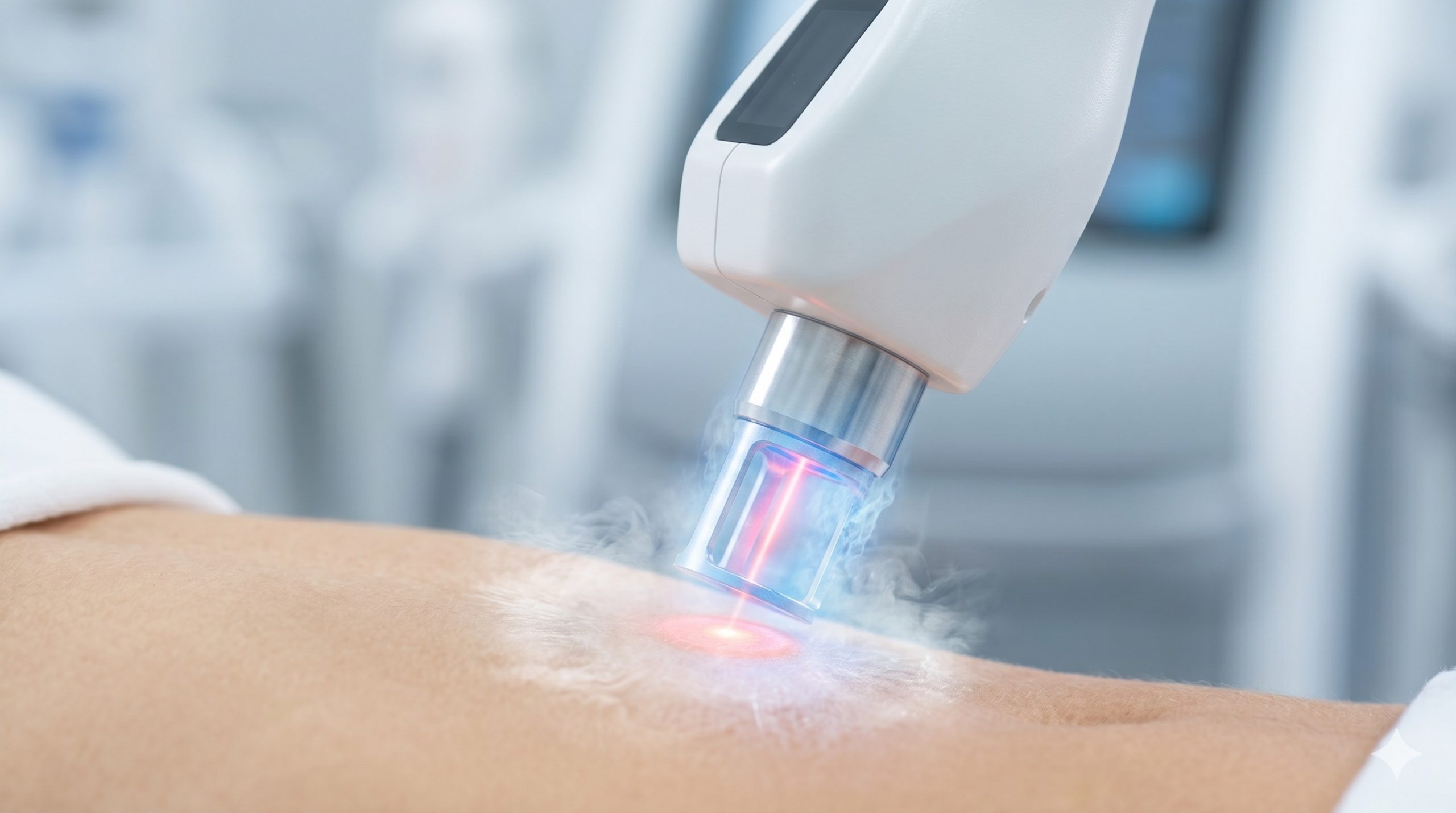
One of the primary benefits of the 1927nm laser is its excellent safety profile and patient comfort. The technology, often integrated with advanced sapphire contact cooling or dynamic cooling devices (DCD), protects the epidermis during treatment. This minimizes the risk of adverse events like post-inflammatory hyperpigmentation (PIH), making it a safe option for a broader range of patients, including those with Fitzpatrick Skin Types IV-VI .
Studies consistently report minimal pain levels, often between 3.4 and 4.89 on a 10-point scale, with transient erythema and edema that typically resolve quickly . This high degree of tolerability, combined with minimal downtime, is a significant driver of patient satisfaction and clinic profitability.
Clinic ROI and Strategic Integration
For a clinic, investing in a 1927nm laser system represents a strategic move. The device’s versatility allows clinics to offer a high-volume menu of services—from pigment correction and skin resurfacing to hair restoration and acne therapy—maximizing the utilization of a single capital investment. As a non-ablative technology, it fits seamlessly into a clinic’s portfolio, appealing to patients who desire effective results without the extended social downtime associated with ablative procedures.
When evaluating systems, clinic owners should consider not only the upfront capital expenditure (CapEx) but also the lifetime cost of ownership (TCO), including handpiece durability and consumable costs. Compliance with international standards such as ISO 13485 and FDA or Medical CE certification is non-negotiable, ensuring both clinical safety and a long-term, reliable investment .
Conclusion: The Future of Precision Aesthetics
The 1927nm laser is a cornerstone technology in modern aesthetic medicine, offering a robust combination of clinical efficacy, safety, and business profitability. By harnessing the principle of selective photothermolysis and employing sophisticated engineering like sapphire cooling, this technology allows practitioners to address a diverse spectrum of skin concerns with high patient satisfaction. As the clinical evidence continues to grow , the 1927nm wavelength solidifies its position as an indispensable tool for the forward-thinking aesthetic clinic aiming to deliver superior, data-driven patient care.