
Resource
Selective Photothermolysis Architecture Reference Document: Picosecond Lasers
SELECTIVE PHOTOTHERMOLYSIS ARCHITECTURE REFERENCE DOCUMENT: PICOSECOND LASERS
EXECUTIVE SUMMARY
The evolution of cutaneous laser therapy has been fundamentally redefined by the advent of picosecond (10⁻¹² seconds) pulse duration technology. This document delineates the clinical architecture, operational physics, and performance specifications of the next-generation picosecond aesthetic platform. By shifting energy delivery from the nanosecond to the picosecond domain, the device exploits a novel biophysical mechanism: Laser-Induced Optical Breakdown (LIOB) and the generation of a pressure wave, which disrupts targeted chromophores into smaller particles with significantly reduced thermal collateral damage. This results in superior clearance rates for benign pigmented lesions, multicolor tattoos, and the induction of dermal remodeling for non-ablative skin rejuvenation. The system integrates a proprietary high-peak-power solid-state laser engine with an advanced beam delivery system, ensuring uniform fluence and maximum patient safety across Fitzpatrick skin types I-VI.
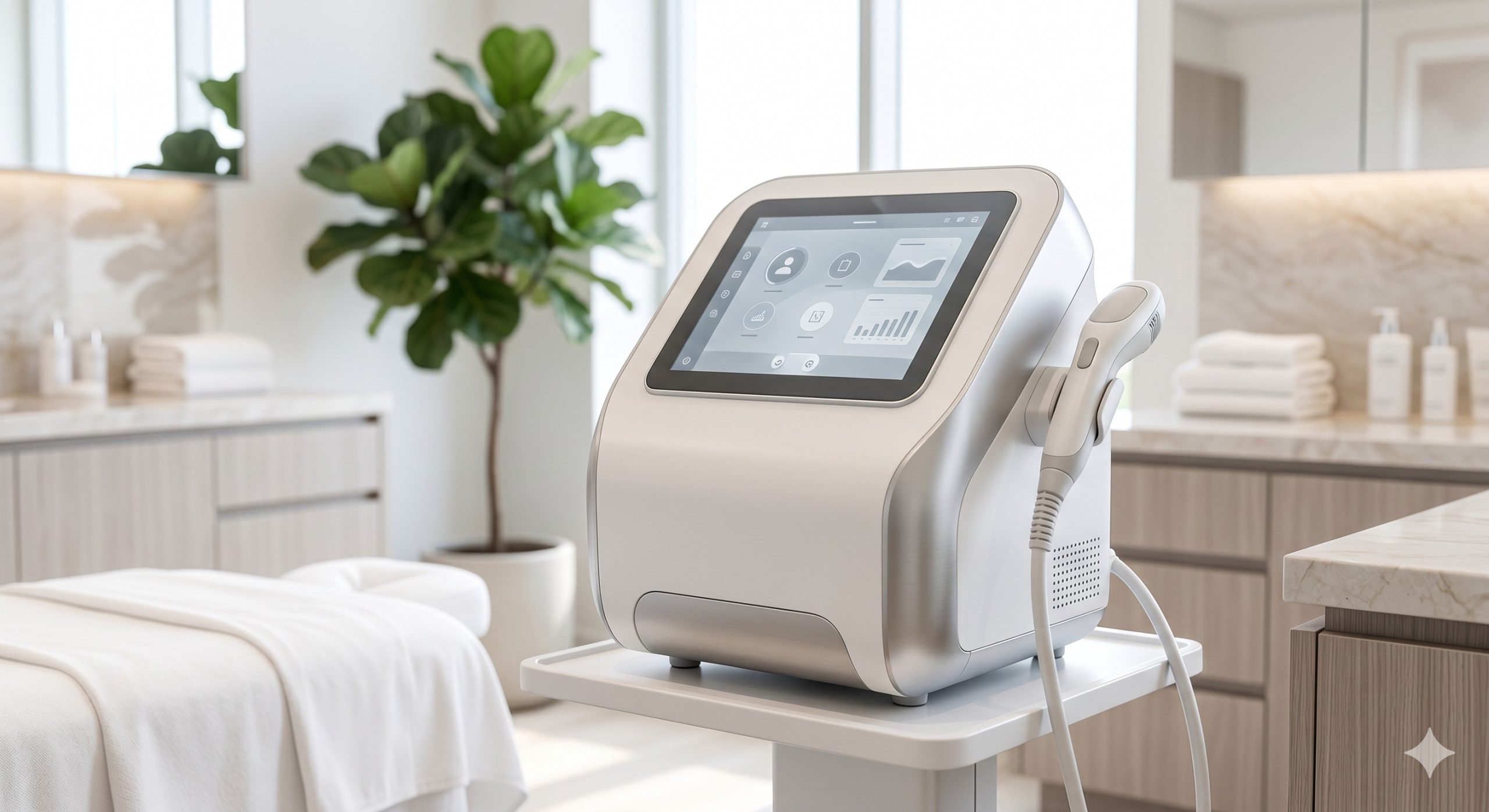
CLINICAL ARCHITECTURE & DESIGN
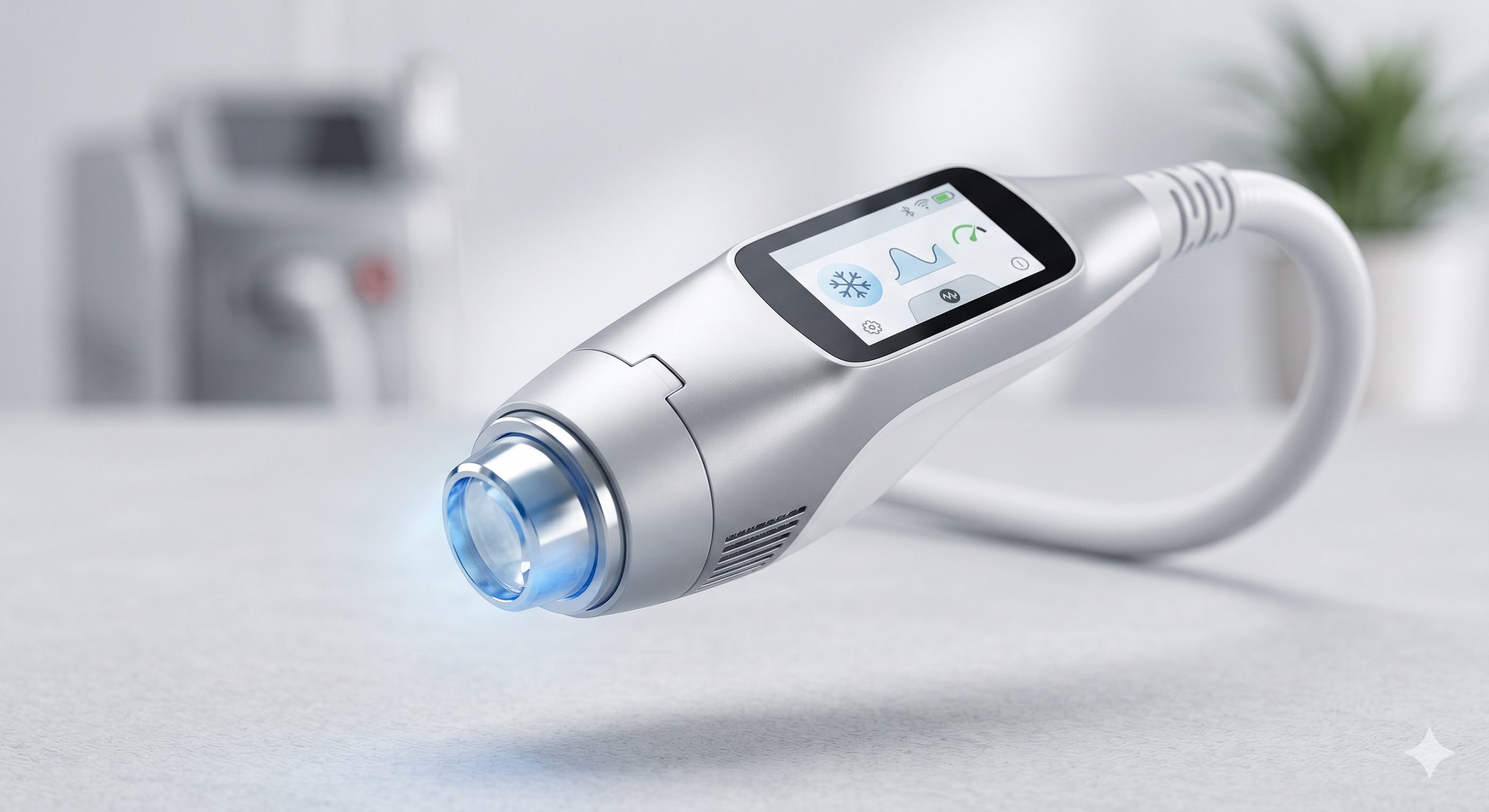
The platform is engineered around a compact, high-energy Nd:YAG/KTP optical oscillator capable of generating pulses at 1064 nm and 532 nm wavelengths, with optional 785 nm Alexandrite emulation via wavelength conversion modules. The core architecture is predicated on a Master Oscillator Power Amplifier (MOPA) configuration, which ensures temporal pulse stability and a near-Gaussian beam profile. A high-voltage power supply charges a proprietary pulse-forming network (PFN) to deliver consistent electrical excitation to the laser cavity, generating pulse energies up to 800 mJ at a repetition rate of 1-10 Hz. The optical train is hermetically sealed to prevent environmental contamination, with active temperature stabilization using a closed-loop chiller system to maintain frequency stability and optical alignment. The handpiece assembly incorporates an adjustable spot size optic (2-6 mm) and a dynamic diffractive beam homogenizer to ensure flat-top beam profiles, eliminating hot spots and minimizing the risk of epidermal injury.
KEY INDICATIONS & CAPABILITIES
The picosecond platform demonstrates superior efficacy in the following clinical applications:
– Tattoo Clearance: Targeting multi-colored ink particles (black, blue, green, yellow, red) through acoustic photoacoustic shockwave fragmentation, reducing treatment sessions by up to 50% compared to nanosecond Q-switched lasers.
– Benign Pigmented Lesions: Rapid clearance of epidermal and dermal pigment (lentigos, ephelides, solar lentigines, and café-au-lait macules) via selective photomechanical disruption with minimal thermal diffusion.
– Acne Scars and Wrinkles: Induction of dermal micro-injury and neocollagenesis through the formation of Laser-Induced Cavitation Bubbles (LICB) within the dermis, leading to architectural remodeling without epidermal ablation (non-ablative fractional effect).
COMPLIANCE & STANDARDS
The device adheres to the highest global regulatory standards. Certification encompasses FDA 510(k) clearance for tattoo and pigmentation removal, CE marking (Class IIb) under the European Medical Device Regulation (MDR) 2017/745, and compliance with ISO 13485:2016 for quality management systems. Laser safety features include a built-in interlock system, a precise aiming beam (635 nm), and an optical shielding mechanism integrated into the handpiece to prevent stray beam exposure. Electrical safety is verified to IEC 60601-1 and IEC 60601-2-22 (particular requirements for laser equipment).
TECHNICAL SPECIFICATIONS
The core system metrics are validated under rigorous quality control protocols to ensure treatment reproducibility. The laser engine is optimized for a duty cycle supporting high-volume clinical operations, with an integrated water-to-air heat exchanger providing passive cooling for sustained peak power output. The system is calibrated for ambient temperature operation (15-30°C) with a relative humidity non-condensing up to 80%.
| Parameter | Specification |
|---|---|
| Laser Type / Wavelength | Solid State Nd:YAG / KTP / 1064 nm, 532 nm |
| Pulse Duration | < 450 ps (typical 350 ps) |
| Maximum Pulse Energy | Up to 800 mJ (1064 nm) / 400 mJ (532 nm) |
| Repetition Rate | 1 Hz, 2 Hz, 5 Hz, 10 Hz |
| Spot Size Range | 2 mm, 2.5 mm, 3 mm, 4 mm, 5 mm, 6 mm (interchangeable) |
| Cooling System | Integrated thermoelectric (TEC) + Sapphire contact cooling + Active air/water heat exchanger |
| Beam Delivery | Articulated arm with fixed optic handpiece and diffractive beam homogenizer |
| Dimensions (W x D x H) | Main Console: 40 cm x 50 cm x 110 cm |
| Weight | Approx. 65 kg (system + handpiece + umbilical) |
CLINICAL PROTOCOLS
Treatment protocols are guided by an integrated Chromophore-targeted User Interface (CT-UI), which calculates real-time fluence recommendations based on skin type, lesion depth, and chromophore color. Operators are advised to initiate treatment at lower fluence (0.5-1.0 J/cm²) for darker skin types (Fitzpatrick IV-VI) to mitigate the risk of post-inflammatory hyperpigmentation (PIH), utilizing the device’s proprietary ‘PainShield’ contact cooling tip (sapphire window at -5°C to 4°C) to protect the epidermis. Standard operating procedure mandates the use of appropriate eye protection (OD5+ at 532 nm and OD4+ at 1064 nm) for both patient and operator. Post-treatment care includes application of a high-SPF physical sunscreen and antimicrobial ointment as needed. The device automatically logs treatment parameters (pulse count, total energy delivered, and system hours) for comprehensive clinical audit trails.
📥 Download Technical Specification
Click the button below to view or download the full official PDF datasheet.