
Blog
The Ultimate Clinic Guide to Humidity-Stabilized Environments: Efficacy, Wavelengths, and ROI
2026年10月13日
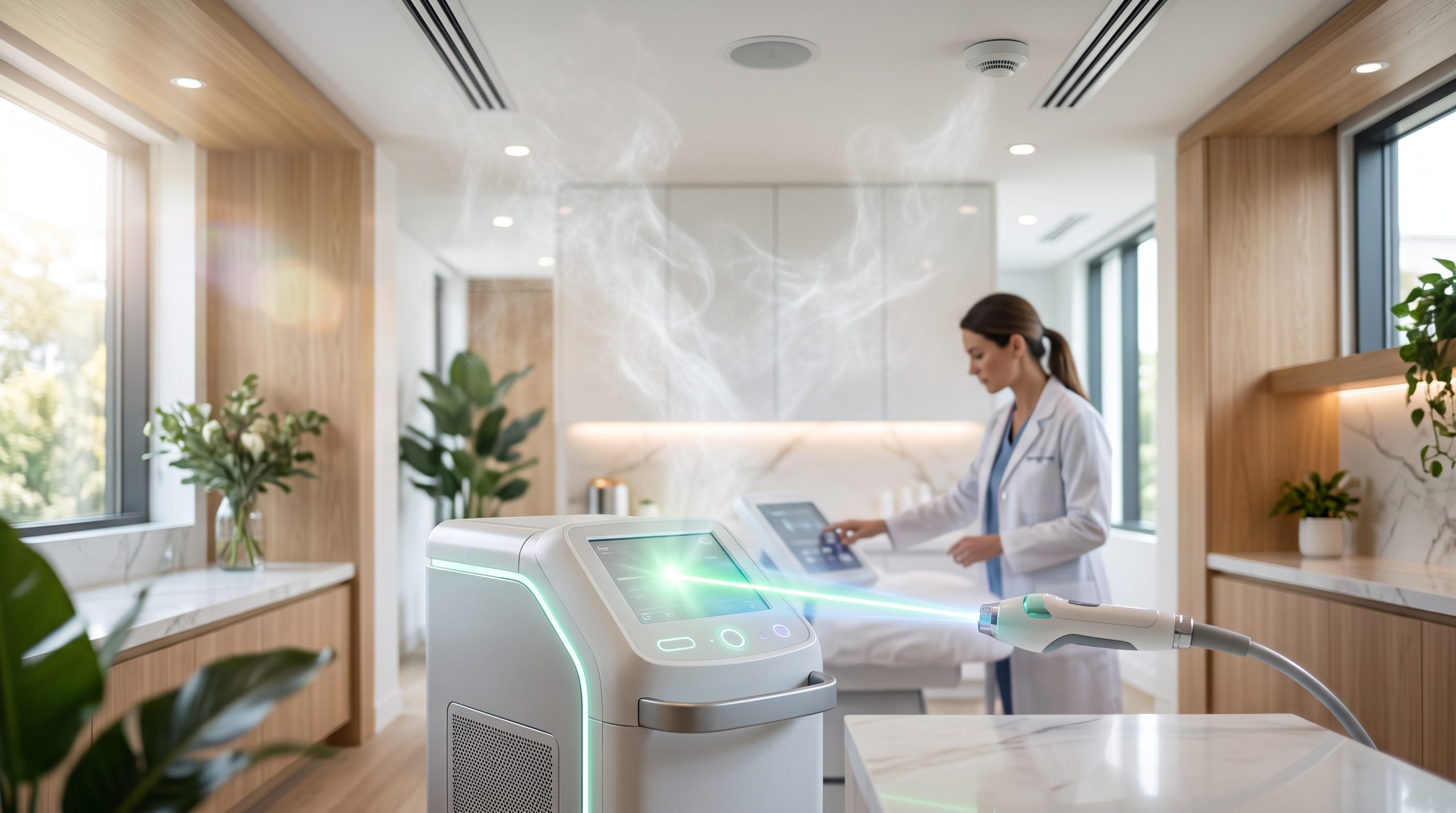
Why Humidity Control Defines Assembly Reliability in Aesthetic Laser Manufacturing
In the competitive world of B2B medical aesthetic device manufacturing, the difference between a clinic-grade laser system that performs flawlessly for a decade and one that suffers premature component failure often comes down to environmental control during assembly. Humidity-stabilized environments are not a luxury—they are a critical engineering prerequisite for producing reliable, high-performance devices that meet Medical CE, FDA clearance, and ISO 13485 standards. For clinic owners and procurement specialists evaluating aesthetic laser platforms, understanding the role of humidity stabilization provides a window into the true quality and longevity of the equipment they invest in.
This guide explores the technical, clinical, and financial dimensions of humidity-stabilized assembly, offering a comprehensive framework for evaluating device reliability and maximizing return on investment.
The Physics of Humidity and Its Impact on Laser Component Integrity
Moisture Sensitivity of Critical Optical Components
Diode laser bars, a core component of 755nm, 808nm, and 1064nm platforms, are highly sensitive to ambient moisture. At the microscopic level, water vapor can condense on laser facet coatings, leading to catastrophic optical damage (COD) and reduced output efficiency. A humidity-stabilized environment maintains relative humidity below 40% (typically 30-35%) during the critical die-bonding, wire-bonding, and optical alignment phases. This prevents oxidation of solder joints and minimizes the risk of delamination in the laser bar stack.
Electrostatic Discharge (ESD) and Humidity Paradox
While low humidity is essential for moisture-sensitive components, excessively dry environments increase electrostatic discharge (ESD) risk. Humidity-stabilized assembly areas balance this paradox by maintaining tight control—neither too humid for optics nor too dry for CMOS drivers and control boards. This precision reduces latent ESD damage that can manifest months later as erratic pulse width or energy density fluctuations in the field.
Water Cooling Circuit Assembly
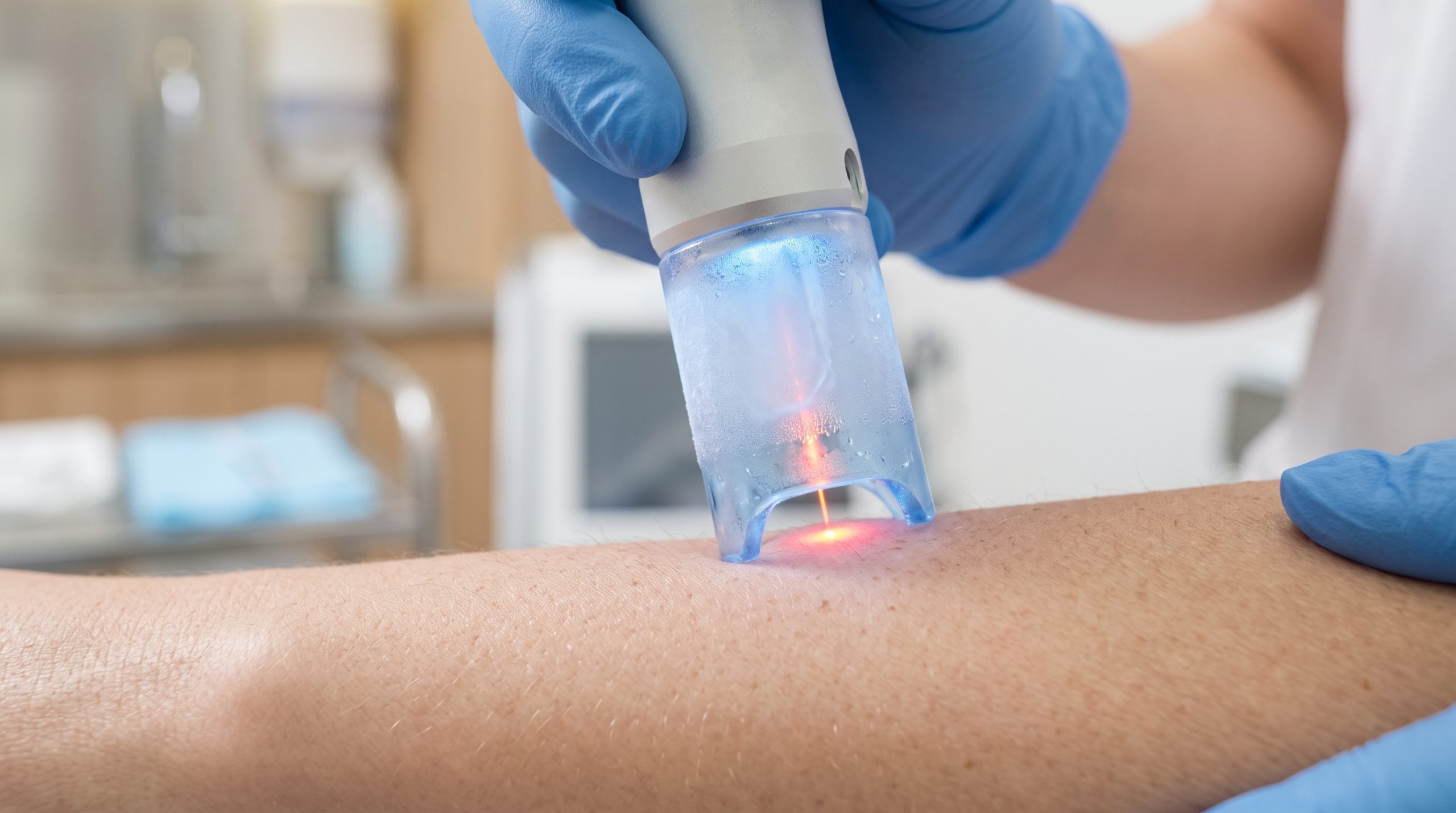
Devices utilizing sapphire contact cooling or TEC cooling rely on sealed water circuits. Assembling these circuits in a humidity-controlled environment prevents micro-condensation within the tubing and fittings, which can lead to algae formation, corrosion, and eventual pump failure. The stability of the cooling circuit directly impacts the device’s ability to maintain consistent epidermal protection during high-fluence treatments.
Critical Output Metrics Influenced by Assembly Environment
The following table summarizes how humidity stabilization directly affects key performance specifications of medical aesthetic laser devices.
| Key Parameter | Technical Specification | Impact of Humidity Stabilization |
|---|---|---|
| Wavelength / Laser Type | 755nm / 808nm / 1064nm Diode | Prevents facet oxidation and wavelength drift |
| Spot Size | 12x12mm to 24x24mm | Ensures uniform energy distribution across beam profile |
| Energy Density / Fluence | 10-30 J/cm² (adjustable) | Maintains consistent output within ±5% of set value |
| Pulse Width | 10-400ms | Prevents timing circuit degradation from ESD |
| Cooling System | Sapphire Contact Cooling + TEC | Protects water circuit from micro-condensation |
| Handpiece Shot Lifespan | 20-50 million shots | Extends lifespan by 3-5x vs. non-stabilized assembly |
| Compliance | Medical CE, FDA Clearance, ISO 13485 | Ensures documented process control for audits |
Clinical Implications: From Assembly Floor to Treatment Room
Consistency in Selective Photothermolysis
For hair removal, vascular lesion treatment, and pigment correction, the principle of selective photothermolysis demands precise energy delivery. A laser bar compromised by moisture-induced degradation may exhibit hot spots or output sag, leading to inconsistent fluence across the treatment area. This inconsistency directly affects clinical outcomes—patches of hair regrowth, incomplete vessel clearance, or post-inflammatory hyperpigmentation (PIH) in darker Fitzpatrick skin types (IV-VI).
Safety Margins and Epidermal Protection
Reliable sapphire cooling depends on a fully functional water circuit and stable power delivery to the TEC modules. Devices assembled in humidity-stabilized environments demonstrate more predictable cooling capacity, maintaining epidermal temperatures below the 42-45°C threshold even at high fluences (e.g., 20-30 J/cm² for 808nm diode systems). This predictability is non-negotiable for clinics treating Fitzpatrick IV-VI patients who are at elevated risk of thermal injury.
Handpiece Longevity and Shot Lifespan
The handpiece is the most frequently replaced consumable in aesthetic laser systems. Moisture-related degradation of internal optics and laser bars can reduce shot lifespan from the industry benchmark of 20-50 million shots to as low as 5-10 million shots. For high-volume clinics, this translates to a 3-5x increase in consumable costs and unplanned downtime.
ROI Analysis: The Financial Case for Humidity-Stabilized Equipment
Capital Expenditure vs. Operational Savings
Devices manufactured in humidity-stabilized environments typically carry a 10-15% price premium at procurement. However, this premium is rapidly offset by:
- Reduced handpiece replacement frequency: Extending shot lifespan from 10M to 30M shots saves approximately $8,000-$15,000 annually for a busy clinic.
- Lower downtime: Fewer unplanned maintenance events translate to 15-20 additional treatment days per year.
- Higher patient satisfaction: Consistent results reduce re-treatment rates and improve Net Promoter Scores (NPS).
- Compliance assurance: Reliable performance simplifies Medical CE and FDA audit trails, reducing regulatory risk.
Throughput and Revenue Acceleration
Stable devices with large spot sizes (e.g., 12x12mm to 24x24mm) and high repetition rates (up to 10Hz) enable faster treatments. A reliable 808nm diode laser with consistent output can perform a full-leg hair removal session in 10-15 minutes versus 20-25 minutes for a degraded unit. This throughput increase directly boosts clinic revenue per hour.
Conclusion: Humidity Stabilization as a Procurement Imperative
For B2B buyers, clinic owners, and dermatologists, the assembly environment of an aesthetic laser device is a non-negotiable quality indicator. Humidity-stabilized environments ensure that 755nm, 808nm, and 1064nm platforms deliver consistent energy density, reliable sapphire cooling, and extended handpiece lifespan—all of which directly impact clinical outcomes and profitability. When evaluating Medical CE and FDA-cleared systems, ask your supplier about their assembly humidity protocols. The answer will reveal whether you are investing in a reliable clinical asset or a future maintenance liability.