
Blog
FDA & Medical CE Compliance: Ensuring Patient Safety with Notified-Body Guidance
2026年8月11日
Introduction: The Critical Role of Notified Bodies in Medical Aesthetic Device Safety
In the rapidly evolving field of medical aesthetics, the regulatory pathway to market is as critical as the clinical efficacy of the device itself. For manufacturers of high-powered aesthetic lasers, IPL systems, and energy-based devices, navigating the complex landscape of Medical CE marking and FDA clearance is non-negotiable. At the heart of the European compliance framework lies the Notified Body—an independent organization designated by an EU Member State to assess the conformity of medical devices before they can be placed on the market . This blog provides an authoritative, technical overview of Notified-Body Guidance, detailing what manufacturers must know to achieve and maintain market access while ensuring the highest standards of patient safety.
Unlike Class I devices, which may be self-certified, the majority of aesthetic medical devices—particularly those emitting laser energy for hair removal, skin rejuvenation, or tattoo removal—fall into higher risk classes (IIa, IIb, or III). These require mandatory intervention by a Notified Body to verify compliance with the Medical Devices Regulation (MDR) 2017/745 .

The New Regulatory Landscape: EU MDR and Implementing Regulation 2026/977
Understanding the Shift from Directives to Regulations
The transition from the Medical Devices Directive (MDD) to the MDR has significantly heightened the scrutiny on clinical evidence and post-market surveillance. The MDR mandates a more rigorous approach to clinical evaluation, requiring manufacturers to provide robust clinical data that demonstrates safety and performance for their specific indications . For aesthetic device manufacturers, this means clinical investigations must be meticulously designed to assess parameters like energy density (Fluence), pulse width, and spot size across various skin types.
New Procedural Requirements: Implementing Regulation (EU) 2026/977
Effective February 25, 2027, the European Commission has introduced Implementing Regulation 2026/977 to harmonize and streamline Notified Body assessments across Europe. This regulation addresses historical inconsistencies between Notified Bodies, providing manufacturers with greater procedural certainty . Key aspects include:
- Standardized Quotations: Notified Bodies must now provide clear, detailed quotes based on a standardized set of information from the manufacturer. They are required to pre-notify manufacturers of any cost increase above 10% .
- Mandatory Maximum Timelines: The regulation sets strict, legally binding timelines for conformity assessments. For example, the Quality Management System (QMS) audit must be completed within 120 days, and product verification within 90 days .
- Structured Dialogue: Manufacturers now have a legal basis for a ‘structured dialogue’ with Notified Bodies, allowing for pre-submission discussions to clarify requirements and avoid costly delays .
These changes are designed to mitigate the risk of non-compliance and reduce the time-to-market for innovative aesthetic technologies, provided manufacturers prepare thoroughly.
Technical Dossier: Documenting Efficacy and Safety Parameters
A successful conformity assessment hinges on a comprehensive technical dossier that demonstrates, with objective evidence, that the device meets the General Safety and Performance Requirements (GSPRs) of the MDR. For aesthetic lasers, this involves detailed documentation of both hardware and clinical performance.
Core Technical Metrics for Aesthetic Lasers
Notified Bodies will scrutinize the engineering and clinical data to ensure the device operates within safe and effective parameters. Key technical specifications include:
| Key Parameter | Technical Specification |
|---|---|
| Wavelength / Laser Type | Value (e.g., 755nm Alexandrite, 808nm Diode, 1064nm Nd:YAG) |
| Energy Density (Fluence) | Value (e.g., 5-30 J/cm²) |
| Pulse Width | Value (e.g., 3-30 ms) |
| Spot Size | Value (e.g., 10-24 mm) |
| Cooling System | Value (e.g., Sapphire Contact Cooling, -5°C to 5°C) |
| Peak Power | Value (e.g., 4000W) |
| FDA Clearance / CE Mark | Yes/No, Class (e.g., IIb) |
Quality Management Systems: ISO 13485 Certification
Compliance with ISO 13485:2016 is a foundational requirement for CE marking under the MDR . This international standard specifies requirements for a QMS specific to medical devices. For manufacturers, an ISO 13485-certified QMS demonstrates a commitment to consistent design, development, production, and post-market surveillance . Notified Bodies will audit the manufacturer’s QMS to ensure it effectively manages risk and maintains product safety and efficacy.
Clinical Evaluation: The Heart of Notified Body Assessment
Clinical evaluation is perhaps the most scrutinized area during Notified Body review. The MDR requires a systematic approach to demonstrating clinical benefit and safety, as outlined in Annex XIV . The clinical evaluation must include:
- Clinical Evaluation Plan (CEP): A detailed plan outlining the scope, methodology, and rationale for the clinical evidence.
- Clinical Evaluation Report (CER): A comprehensive report analyzing and appraising clinical data to confirm the device meets safety and performance claims.
- Post-Market Clinical Follow-up (PMCF): A proactive plan to collect clinical data after market release to confirm the device’s long-term safety and performance .
For aesthetic devices, clinical data must address specific endpoints, such as hair reduction rates (e.g., >80% clearance at 6 months) or lesion clearance rates, correlated with specific device settings (e.g., fluence and pulse duration).
Safety and Cooling: Protecting the Epidermis
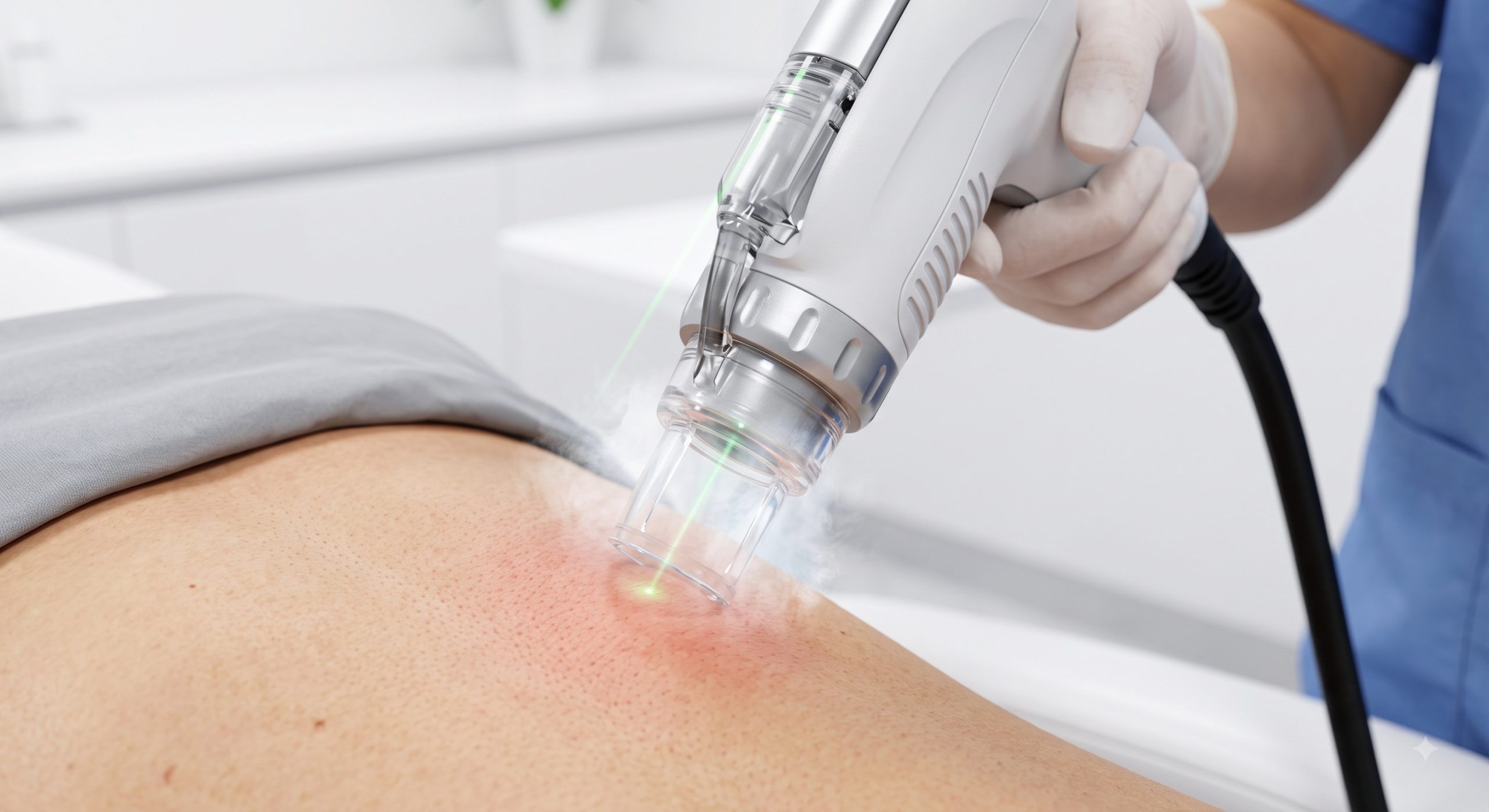
Patient safety is paramount, and Notified Bodies place a strong emphasis on measures to prevent adverse events like burns, scarring, or dyspigmentation. Advanced cooling technologies are critical for ensuring safe treatments, particularly across diverse skin types . Manufacturers must provide data on the efficacy of their cooling systems (e.g., Sapphire contact cooling) in protecting the epidermis during high-fluence treatments. This data should quantify the cooling rate and equilibrium temperature, demonstrating a clear safety margin. Clinical data should also show safety across the Fitzpatrick scale.
FDA Compliance and Post-Market Surveillance
While the CE mark is mandatory for Europe, many manufacturers also seek FDA clearance (e.g., 510(k) or PMA) for the US market. The FDA’s requirements, particularly under 21 CFR 820 (Quality System Regulation), share commonalities with ISO 13485 but also have specific demands for post-market surveillance . Electronic Medical Device Reporting (eMDR) is a key requirement, requiring manufacturers to submit adverse event reports via the FDA’s ESG NextGen portal . A robust post-market surveillance system that integrates FDA and MDR requirements is essential for maintaining global market access and protecting patient safety.
Conclusion: Preparing for a Successful Notified Body Interaction
Navigating Notified-Body Guidance requires a proactive, data-driven strategy from the earliest stages of device development. Manufacturers must invest in a comprehensive QMS, generate robust clinical evidence, and meticulously document all technical parameters. The new EU regulations provide a more transparent and predictable framework, but they also demand a higher level of rigor. By focusing on clinical safety, technical excellence, and adherence to standards like ISO 13485, manufacturers can not only achieve compliance but also build a foundation of trust with clinicians and patients alike.