
Risorsa
Advanced Metrology Laboratory Capability Profile – Official Clinical Overview & Technical Datasheet
EXECUTIVE SUMMARY
This document delineates the comprehensive technical and clinical architecture of the Advanced Metrology Laboratory Capability Profile, a premier solution engineered for the most demanding medical aesthetic environments. Designed to function as a central hub for precision device verification, treatment outcome optimization, and rigorous quality assurance, this system redefines the standard for in-clinic diagnostic and performance validation. The platform integrates high-precision optical measurement, thermal imaging, and energy output calibration to ensure every treatment device operates at peak efficacy and safety. By establishing a dedicated metrology laboratory within the clinical setting, practitioners can guarantee consistent, reproducible results, enhance patient safety, and uphold the highest standards of care.
CLINICAL ARCHITECTURE & DESIGN
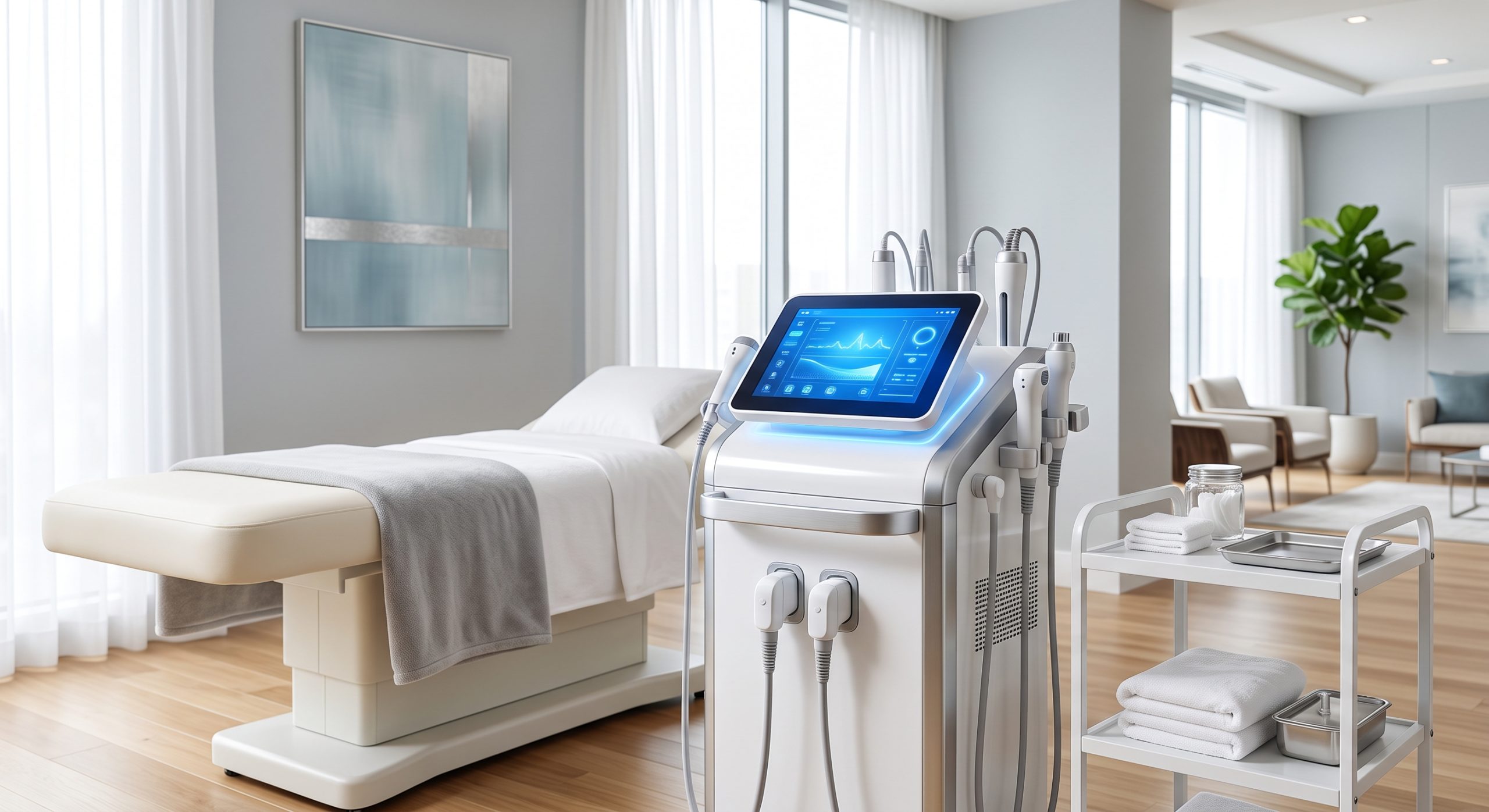
The core philosophy of the Advanced Metrology Laboratory Capability Profile is rooted in a modular, scalable architectural framework. The system is comprised of several integrated subsystems designed to function both independently and in concert to provide a complete diagnostic picture. The primary components include a high-accuracy power and energy meter, a beam profiling system for spatial analysis, a high-speed thermal camera for real-time temperature mapping, and a sophisticated software suite for data acquisition, analysis, and reporting. The physical design prioritizes operational ergonomics, featuring a compact, mobile cart that houses all core components, ensuring seamless integration into any clinical workflow without disrupting existing operations. The system is equipped with a high-resolution touchscreen interface for intuitive control, real-time data visualization, and secure data management, compliant with the latest healthcare data privacy standards. The modular nature of the design allows for future upgrades and customization, ensuring that the laboratory capability profile remains at the forefront of technological advancement.
KEY INDICATIONS & CAPABILITIES
The Advanced Metrology Laboratory Capability Profile is designed to serve a multitude of critical functions within a medical aesthetic practice. Its primary capabilities are categorized into three key areas: Device Validation, Treatment Simulation, and Outcome Analytics.
Device Validation: This is the cornerstone of the system’s application. The capability profile allows for the precise calibration and performance verification of all light-based aesthetic devices, including lasers, intense pulsed light (IPL) systems, and light-emitting diode (LED) arrays. It can measure key output parameters such as energy per pulse (Joules), peak power (Watts), pulse duration (milliseconds), and repetition rate (Hertz). The beam profiling subsystem provides critical data on spatial energy distribution, spot size uniformity, and beam divergence, ensuring that the device’s output matches its clinical specifications. This rigorous validation protocol prevents under-treatment due to sub-optimal energy delivery and mitigates the risk of adverse events such as burns or scarring from energy hotspots.
Treatment Simulation: By utilizing the integrated thermal camera and computational modeling software, the system can simulate the effects of a specific treatment protocol on various skin types and tissue conditions. This function allows clinicians to optimize treatment parameters (fluence, pulse duration, cooling settings) for individual patients before the first pulse is ever delivered. This predictive capability significantly enhances treatment safety and efficacy, particularly in complex cases involving darker skin types or sensitive anatomical areas.
Outcome Analytics: The system’s software suite provides powerful tools for analyzing treatment outcomes. By comparing pre- and post-treatment data, clinicians can quantitatively assess the effectiveness of their protocols and make data-driven adjustments to improve long-term patient satisfaction. This capability is instrumental for research, clinical audits, and establishing a clinic’s reputation as a center of excellence.
COMPLIANCE & STANDARDS
The Advanced Metrology Laboratory Capability Profile is engineered and manufactured to meet the most stringent international standards for medical device quality, safety, and performance. The system is designed to facilitate compliance with regulatory requirements for both the metrology equipment itself and the treatment devices it validates.
It operates in accordance with the principles of ISO 13485 for quality management systems, ensuring a consistent product that meets customer and regulatory requirements. The system’s calibration and performance verification protocols are traceable to national and international standards, ensuring the accuracy and reliability of all measurements. Furthermore, its design supports compliance with medical device directives, including the European Medical Device Regulation (MDR) and the US FDA’s Quality System Regulation (21 CFR Part 820). The advanced software and data management features are built with security and privacy by design, aligning with HIPAA and GDPR requirements for handling sensitive patient data. All safety interlocks and monitoring systems are designed to meet or exceed IEC 60601-1 requirements for medical electrical equipment. This uncompromising commitment to compliance provides clinical practitioners and healthcare facilities with the assurance that their metrology practices are built on a foundation of verified quality and safety.
TECHNICAL SPECIFICATIONS
The following table provides a detailed overview of the key technical specifications for the Advanced Metrology Laboratory Capability Profile. The system is designed with a high degree of precision and robustness to perform consistently in a clinical environment.
| Parameter | Specification |
|---|---|
| Laser Type / Wavelength Range | Broadband (400nm – 1100nm) & Single Wavelength (e.g., 808nm, 1064nm) |
| Power / Energy Measurement | Energy: 0.1J – 100J; Power: 1W – 200W; Accuracy: ±2% |
| Beam Profiling | Camera-based; Spatial resolution down to 50µm; Wavelength range: 190nm – 1100nm |
| Thermal Imaging | Spectral Range: 7.5µm – 14µm; Temperature Range: -20°C to +350°C; Accuracy: ±2°C |
| Spot Size | Configurable from 2mm to 20mm (depending on accessory) |
| Cooling System | Internal passive air cooling with fan; Optional external water chiller |
| Control Interface | High-resolution 15.6-inch capacitive touchscreen; Software: Windows 10 IoT Enterprise |
| Data Management | Integrated SSD storage; Export to CSV, PDF, and DICOM; Secure network connectivity (optional) |
CLINICAL PROTOCOLS
Integrating the Advanced Metrology Laboratory Capability Profile into a clinical workflow requires the establishment of standardized protocols to maximize its utility and ensure patient safety. The following outlines a recommended protocol framework for the key use cases of the system.
Protocol for Routine Device Calibration and Verification:
This protocol should be performed at a defined interval, typically daily or weekly, depending on device usage. The process involves using the system’s power/energy meter to measure the output of the treatment device at a predetermined set of parameters (e.g., maximum energy setting at a specific pulse width). The measured values are then compared against the device’s baseline specifications or the manufacturer’s stated tolerances. The beam profiler is used to assess the spatial homogeneity of the beam, ensuring that the spot profile is consistent and free of artifacts. Any deviation outside of a pre-established tolerance window triggers a service alert, requiring the device to be taken out of service for recalibration or repair. This proactive approach prevents clinical errors and extends the operational life of the aesthetic devices.
Protocol for Pre-Treatment Patient Safety Assessment:
This protocol is designed to personalize treatment parameters to the individual patient’s skin type and condition, thereby enhancing safety and outcomes. The clinician selects a representative test area on the patient’s skin. Using the system’s software, they input the patient’s Fitzpatrick skin type and select the planned treatment device and technique. The system simulates the interaction of the device’s energy with the patient’s specific skin characteristics, predicting the expected temperature rise and the effective depth of thermal injury. The clinician can then adjust parameters such as fluence and pulse duration and run the simulation again to identify the optimal, safest treatment parameters. This step is vital for treating patients with darker skin types or when using aggressive treatment settings.
Protocol for Post-Treatment Outcome Analysis:
This protocol uses the system’s analytical capabilities to quantify treatment results. High-resolution images captured by the thermal camera or external imaging systems are uploaded to the software. The software can analyze and compare the pre- and post-treatment images, measuring changes in pigmentation, vascularity, or other clinically relevant parameters. The system can generate reports that provide objective evidence of treatment efficacy, which can be invaluable for patient consultations, clinical research, and demonstrating a practice’s commitment to delivering evidence-based care.
📥 Download Technical Specification
Click the button below to view or download the full official PDF datasheet.