
BLOG
Why Electrostatic Discharge (ESD): Risks and Mitigation in Assembly Outperforms Legacy IPL and Older Aesthetic Lasers
2026年9月22日
Limitations of Legacy Assembly Environments and the Hidden Cost of Static
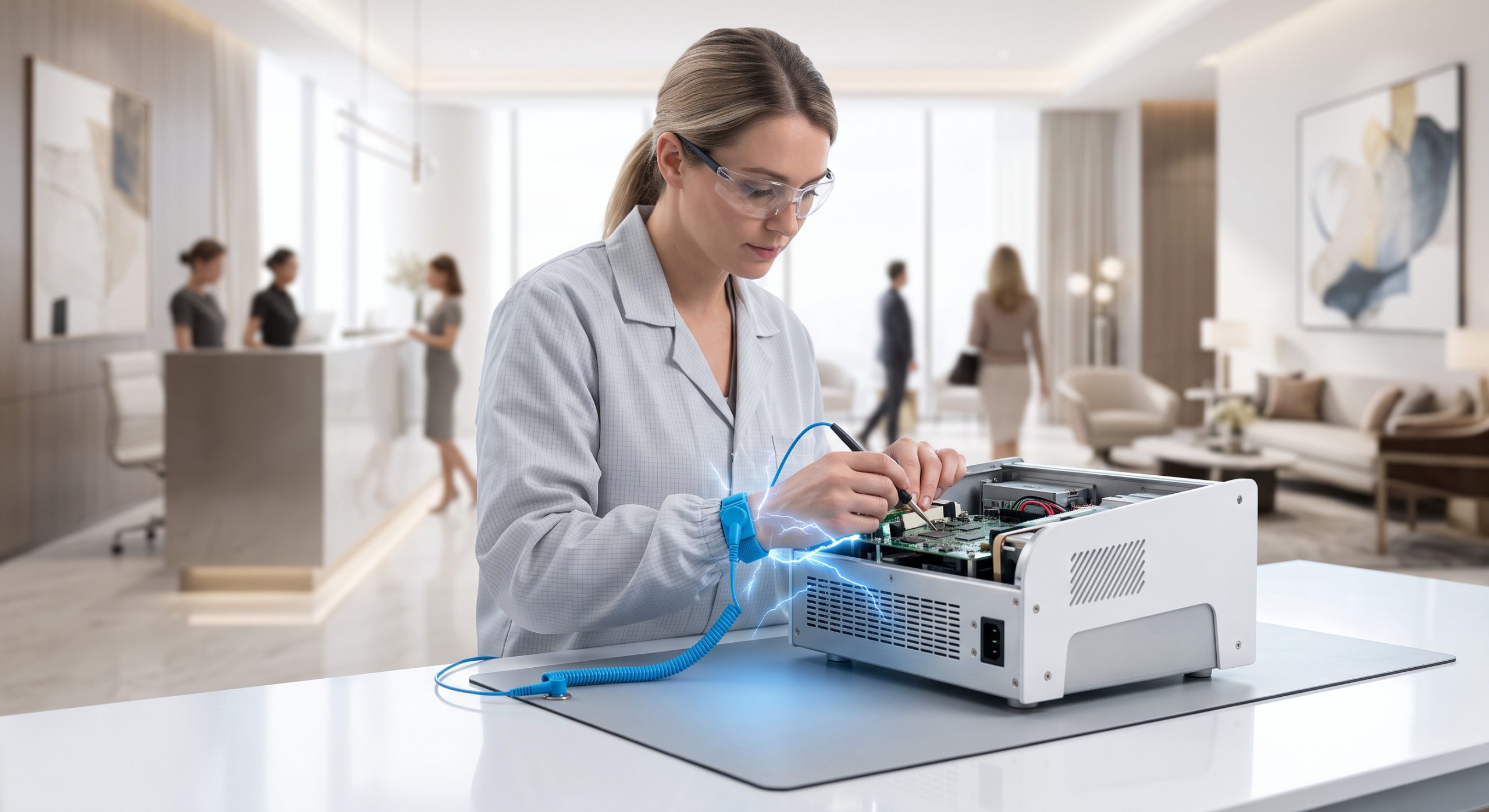
In the highly competitive world of medical aesthetic device manufacturing, the difference between a market-leading laser platform and a recalled unit often comes down to microscopic events invisible to the naked eye. For years, clinics have focused on clinical parameters like 755nm, 808nm, and 1064nm wavelengths, spot sizes, and fluence. However, a silent killer lurks on the production floor: Electrostatic Discharge (ESD). While legacy assembly lines focused primarily on mechanical fit and finish, modern production of devices requiring Medical CE and FDA clearance must treat ESD as a critical process parameter, not an afterthought. A single static event during the assembly of a diode laser stack or sapphire cooling window can degrade the laser bar efficiency, leading to premature handpiece failure and a compromised Return on Investment (ROI) for the clinic.
Breakthroughs in ESD Mitigation: The New Standard for Device Reliability
The aesthetic industry is witnessing a paradigm shift. Just as Selective Photothermolysis revolutionized skin treatment, Advanced ESD mitigation protocols are revolutionizing manufacturing. Unlike legacy assembly where a simple wrist strap was considered sufficient, modern ISO 13485 compliant facilities employ comprehensive Electrostatic Protected Areas (EPA). This involves ionized air blowers, dissipative work surfaces, and continuous ground monitoring. The goal is to protect sensitive microchips and laser diodes that control the pulse width and peak power. Without this, a device might pass initial testing but fail prematurely in the clinic due to latent defects caused by ESD, leading to costly downtime and patient dissatisfaction.
Component Superiority: Protecting the Heart of the Laser
The most critical component at risk during assembly is the laser bar and its associated driver circuitry. These components are highly sensitive to static discharge as low as 10 volts—far below human perception. High-quality manufacturers utilize ESD-safe packaging and automated handling equipment to eliminate human contact during the critical bonding process. This ensures that the energy density and beam profile remain consistent across the entire lifespan of the handpiece.
Spec Data Matrix: Assembly Standards vs. Clinical Outcomes
The following table outlines the critical relationship between assembly environment specifications and clinical device performance.
| Key Parameter | Technical Specification |
|---|---|
| Wavelength / Laser Type | 755nm / 808nm / 1064nm Diode |
| Cooling System | Sapphire Contact Cooling (ICE) |
| ESD Control Standard | IEC 61340-5-1 (EPA Compliant) |
| Assembly Humidity Control | 40-60% RH (Anti-Static) |
| Quality Management | ISO 13485 / Medical CE / FDA Cleared |
| Handpiece Lifespan | >20 Million Shots (ESD Protected) |
Consumable Savings and Long-Term Stability
Clinics often evaluate Total Cost of Ownership (TCO) based on handpiece shot lifespan. An ESD-damaged laser bar may exhibit a gradual drop in output power, requiring technicians to increase the fluence settings to achieve the same clinical endpoint. This not only reduces the shot count per handpiece but also increases the risk of epidermal burns due to inconsistent pulse durations. By investing in equipment manufactured in a strict ESD-controlled environment, clinics can expect a 20-30% increase in handpiece longevity, directly improving profit margins.
Real Clinic Results: Reliability as a Marketing Asset
When a device is manufactured with rigorous ESD mitigation, the clinical results speak for themselves. Consistent fluence delivery means predictable hair removal and pigment clearance rates. For a med spa, this translates to fewer cancellations due to device failure and higher patient trust. A device that performs reliably session after session becomes a cornerstone of the clinic’s reputation, justifying a premium price point for treatments.
Final Advice: Procurement Checklist for Clinic Owners
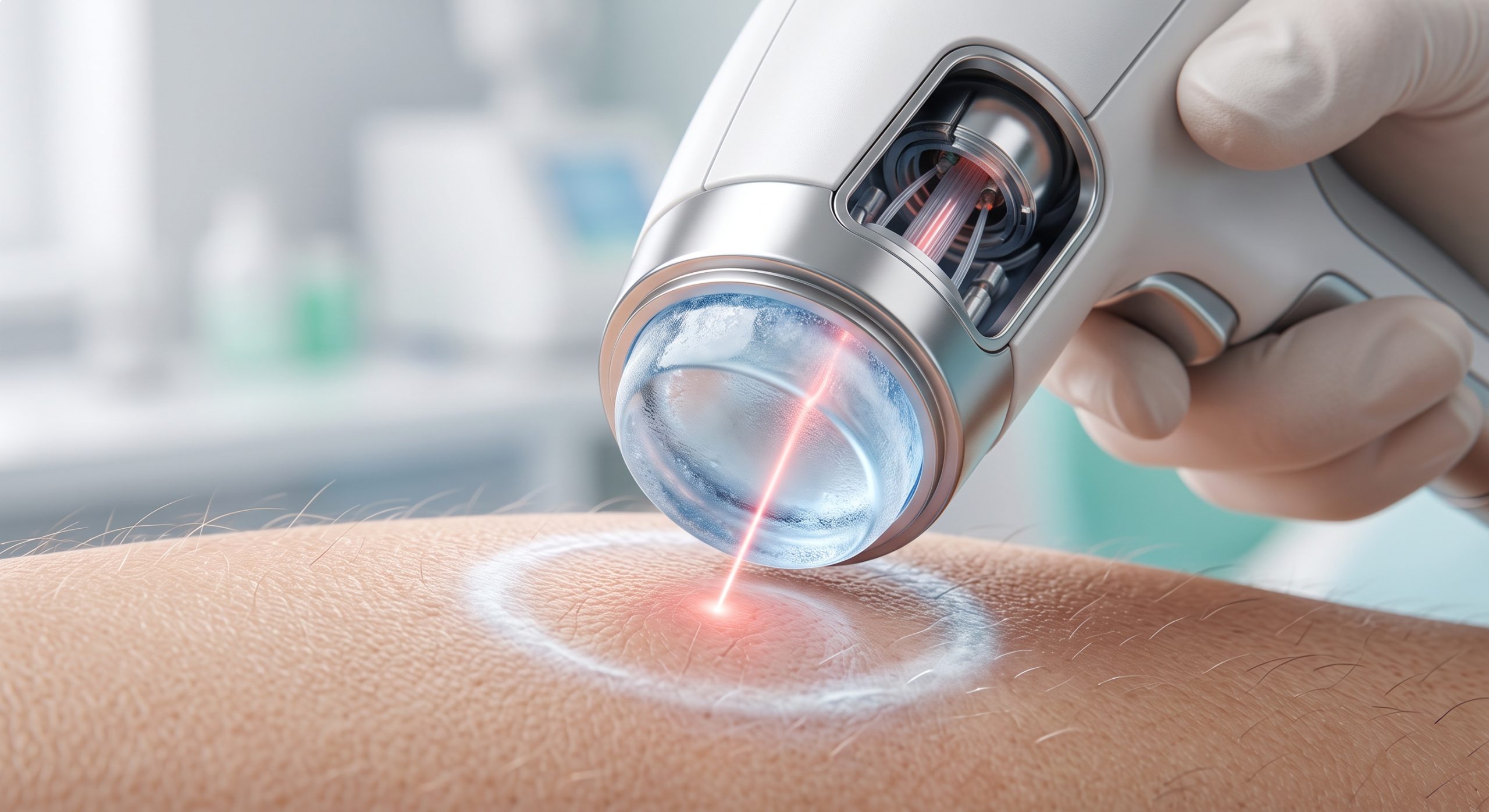
When evaluating a new aesthetic laser platform, do not just ask for clinical data. Ask about the manufacturing process. Ensure your supplier adheres to ISO 13485 and can provide documentation on their ESD control program. This due diligence protects your investment and ensures that the 755nm, 808nm, and 1064nm wavelengths you rely on are delivered with the precision and power required for safe, effective treatments.