
BLOG
The Ultimate Clinic Guide to Supply Chain Resiliency Through Tight-Tolerance Frame Agreements: Efficacy, Wavelengths, and ROI
2026年7月21日
Introduction: The Critical Need for Supply Chain Resiliency in Medical Aesthetics
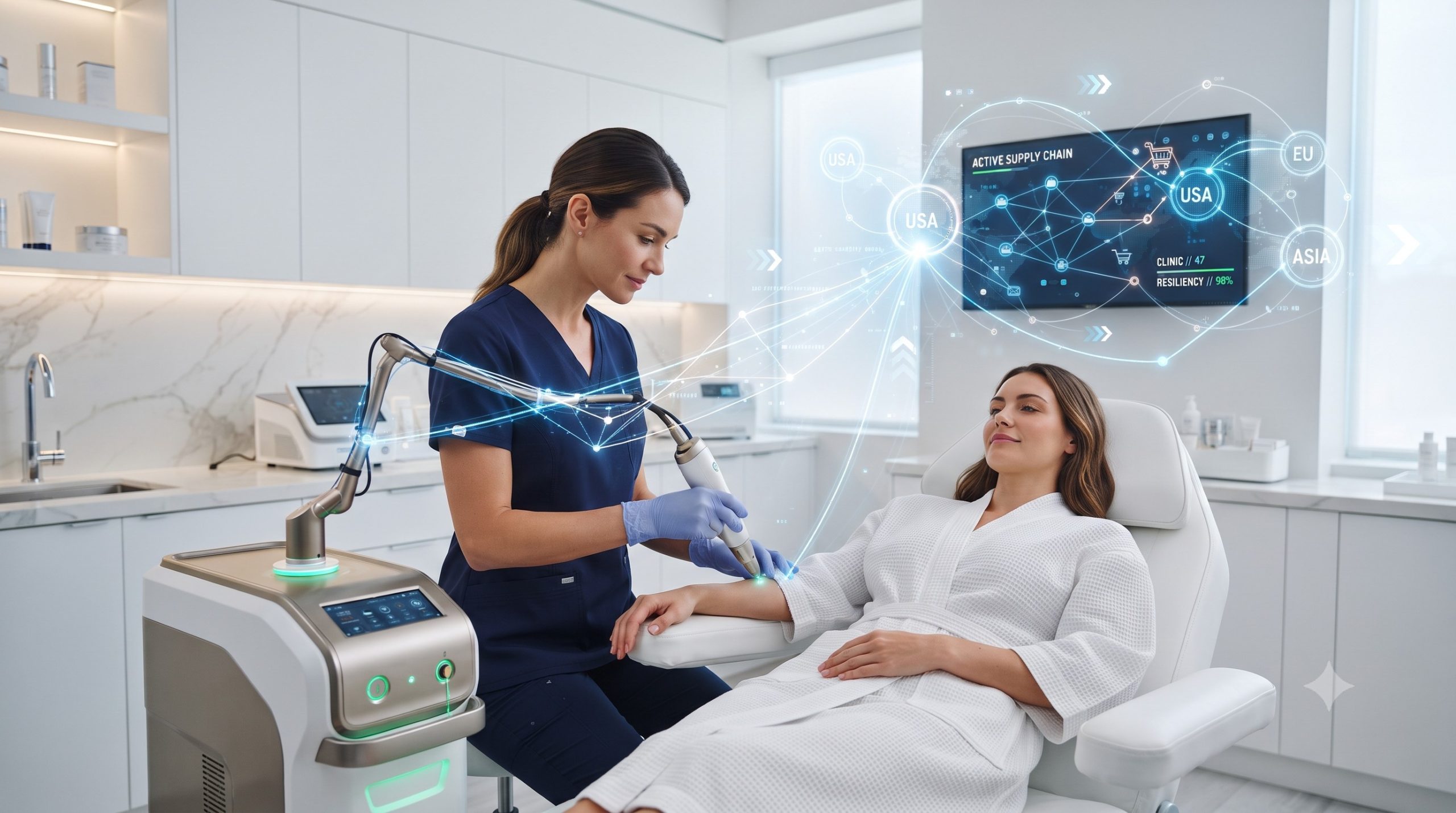
In the high-stakes world of medical aesthetics, the reliability of your equipment directly impacts patient outcomes, safety, and your clinic’s bottom line. A single point of failure in the supply chain can lead to treatment delays, compromised clinical efficacy, and a tarnished reputation. For clinic owners, moving beyond transactional purchasing to a strategic partnership model is no longer a luxury—it is a necessity for sustainable growth. This guide explores how tight-tolerance frame agreements with device manufacturers ensure supply chain resiliency, directly impacting everything from treatment outcomes with devices operating at 755nm, 808nm, and 1064nm wavelengths to the long-term ROI of your aesthetic practice.
Understanding the Stakes: Why Resiliency Matters for Your Aesthetic Devices
The core of any successful aesthetic treatment lies in the consistency and precision of the laser or energy-based device. When we discuss parameters like Energy Density (Fluence), measured in J/cm², and Pulse Width, measured in milliseconds, we are discussing variables that require exacting control. A supply chain that introduces variability—whether through inferior replacement components, inconsistent laser bars, or unreliable cooling systems—directly undermines this precision. Supply chain resiliency, therefore, is not just about logistics; it is about guaranteeing the clinical performance your patients expect.
The Clinical Impact of Component Consistency
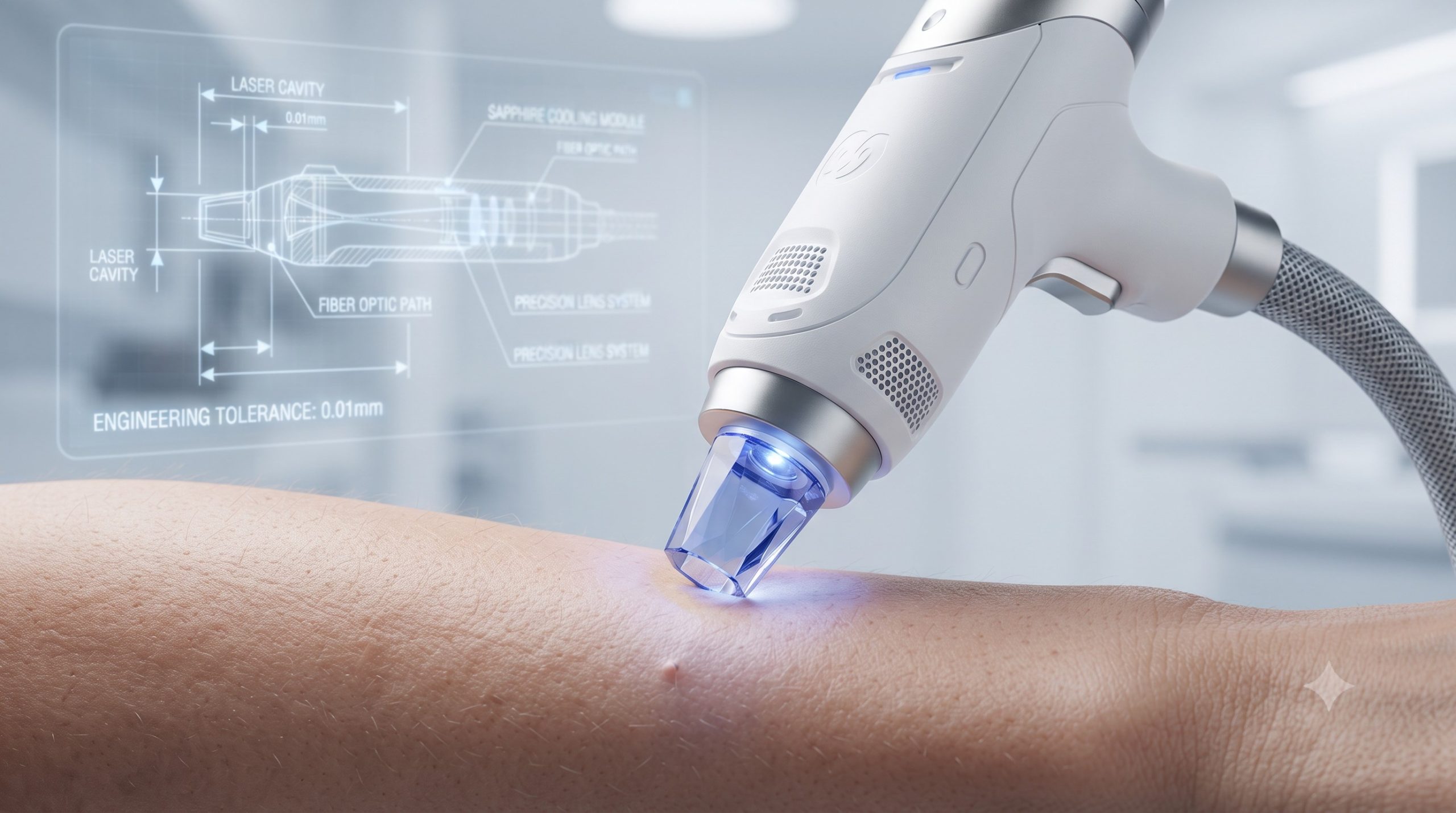
Consider a diode laser system. Its efficacy in treating unwanted hair or vascular lesions is predicated on the principle of Selective Photothermolysis. This requires a specific wavelength—such as 755nm for lighter skin or 1064nm for deeper penetration in darker Fitzpatrick skin types—to be delivered at a precise fluence and pulse duration to destroy the target (e.g., hair follicle or chromophore) without damaging the surrounding epidermis. A variance in the laser bar’s output due to poor manufacturing tolerances can result in sub-optimal fluence, leading to either ineffective treatments or increased risk of burns and hyperpigmentation. Tight-tolerance frame agreements ensure that every critical component, from the laser bar to the sapphire cooling plate, meets stringent specifications, adhering to ISO 13485 quality management standards.
Strategic Sourcing: The Role of Frame Agreements in Guaranteeing Quality
A frame agreement is a long-term contract that establishes the terms and conditions for future purchases, including pricing, delivery schedules, and, crucially, quality specifications. For aesthetic devices, this is a cornerstone of a resilient supply chain. These agreements codify the technical requirements, ensuring that you receive parts and devices that comply with Medical CE and FDA clearance standards.
| Key Parameter | Technical Specification & Impact |
|---|---|
| Wavelength / Laser Type | 755nm (Pigment), 808nm (Hair), 1064nm (Deep / Vascular). Tolerances ensure precise targeting. |
| Cooling System | Sapphire Contact Cooling with TEC. Maintaining tolerance (-4°C) is critical for epidermal protection. |
| Energy Density (Fluence) | Up to 120 J/cm². Tight tolerances ensure accurate energy delivery, preventing under or over-treatment. |
| Pulse Width | Adjustable (e.g., 5ms-400ms). Consistent pulse duration is essential for Selective Photothermolysis. |
| Regulatory Compliance | Medical CE, FDA Clearance, ISO 13485-certified manufacturing for quality assurance. |
Technical Excellence Through Hardware Durability and Advanced Cooling
Modern aesthetic devices are engineering marvels, combining powerful laser technology with sophisticated thermal management. The integration of a Sapphire ICE Cooling System is a prime example of how hardware durability and patient comfort are intertwined. This system, often leveraging thermoelectric coolers (TECs), rapidly cools the sapphire contact window to temperatures as low as -4°C to 0°C. This epidermal protection allows practitioners to use higher fluences for better clinical outcomes with less discomfort. A supply chain built on tight tolerances ensures that these cooling systems maintain their performance over the device’s lifespan, preventing performance degradation that could lead to patient injury or reduced efficacy.
Business Advantage: Protecting Your Investment and Maximizing ROI
For the clinic owner, the financial benefits of a resilient supply chain are clear. A Tight-Tolerance Frame Agreement mitigates the risk of unexpected price hikes, which often occur in volatile supply markets. It also ensures the availability of genuine, high-quality replacement parts, minimizing costly downtime. For example, a standard handpiece is rated for a specific number of shots (e.g., 1 million pulses). Purchasing a cheap, non-OEM alternative that fails after 100,000 pulses not only damages your ROI but also introduces the risk of inconsistent energy output. With a frame agreement, you are guaranteed the lifespan and performance of the component, allowing for accurate calculation of your Cost of Ownership (TCO) and per-treatment consumable costs.
Conclusion: A Clinical and Business Mandate
Integrating Supply Chain Resiliency Through Tight-Tolerance Frame Agreements is a strategic imperative for any successful aesthetic clinic. It is the bedrock upon which you can guarantee consistent, safe, and efficacious treatments to your patients, build a reputation for clinical excellence, and ensure the long-term profitability of your practice. By focusing on the clinical metrics—wavelength accuracy, fluence consistency, cooling efficiency—and protecting these through robust supply chain contracts, you transform your clinic into a resilient, high-performing business that can adapt to any market challenge.