
BLOG
The Ultimate Clinic Guide to Standardizing Technical Files Across Multiple Product Lines: Efficacy, Wavelengths, and ROI
2026年9月8日
Introduction: The Hidden Administrative Burden Hampering Clinic Growth
For multi-clinic operators and high-throughput medical spas, maintaining a cohesive Quality Management System (QMS) is often overshadowed by the pursuit of the latest aesthetic laser technology. However, the chaos of managing disparate technical files for a portfolio that may include 755nm Alexandrite, 808nm Diode, and 1064nm Nd:YAG devices creates significant operational friction. Disorganized documentation threatens ISO 13485 certification, complicates Medical CE audits, and ultimately delays new device integration. This guide provides a clinical roadmap to standardize your technical documentation, ensuring that your administrative infrastructure supports—rather than hinders—your practice’s profitability and clinical excellence.
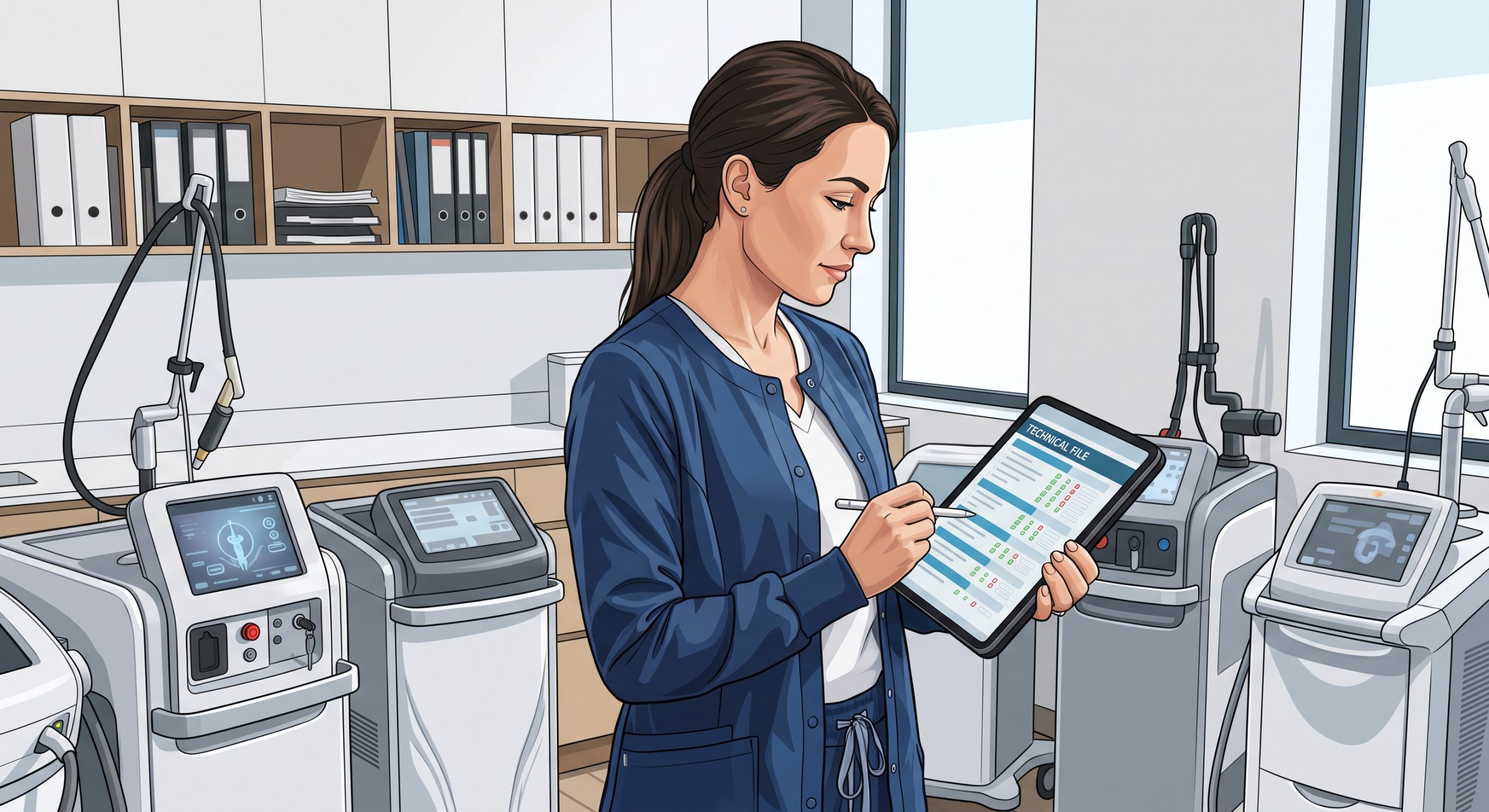
Why Standardization is a Clinical Imperative, Not Just an Administrative Task
The decision to standardize technical files directly impacts patient safety and treatment efficacy. When files are inconsistent, the risk of misconfiguring energy density (Fluence) or pulse width across different laser platforms increases exponentially. Standardized files create a single source of truth for critical parameters, ensuring that whether a clinician is operating a diode laser for hair reduction or a Q-switched laser for pigmentation, the underlying protocols for calibration and safety checks are uniform.
Meeting Stringent Regulatory Demands
Regulatory bodies like the FDA and Notified Bodies for Medical CE mandate rigorous technical documentation. Standardizing your approach simplifies the process of Technical File (TF) updates and Design Dossiers. A unified structure allows your compliance team to efficiently map evidence of Risk Management (ISO 14971) and clinical evaluation reports to each specific product line, reducing audit preparation time by up to 40%.
Streamlining Clinical Training and Operator Competency
High staff turnover is a reality in the aesthetics industry. Standardized technical files allow for modular training modules. Instead of training clinicians on the idiosyncrasies of each device’s file structure, you train them on a universal layout. This accelerates the learning curve for the treatment speed, spot size, and handpiece durability specifications relevant to each device, ensuring consistent patient outcomes from Day 1.
Core Components of a Standardized Technical File System
To build a robust framework, your standardized file must encompass several critical layers, from hardware specifications to software validation.
Hardware and Performance Specifications
This section forms the technical backbone of the file. It must detail the exact output metrics for each device. For example, a comparison table outlining the different wavelengths—755nm (Alexandrite) for melanin absorption, 808nm (Diode) for deeper penetration, and 1064nm (Nd:YAG) for vascular or deeper tissue targets. Include specific metrics such as maximum Fluence (J/cm²), Pulse Width (ms), and repetition rates. This data is essential for engineers to verify performance consistency and for clinicians to select the right device for specific Fitzpatrick skin types.
| Key Parameter | Standardization Requirement | Clinical Impact |
|---|---|---|
| Wavelength / Laser Type | A uniform naming convention (e.g., ‘Diode 808nm’ vs ‘808 Diode’) | Eliminates confusion in treatment protocol selection across clinics. |
| Energy Density (Fluence) | Specified in J/cm² with clear measurement tolerances (+/- 5%) | Ensures consistency in treatment outcomes and patient safety. |
| Pulse Width | Standard units (ms) and clear definitions for Pulsed vs. Quasi-CW modes | Essential for precise selective photothermolysis targeting. |
| Spot Size | Standardized representation of spot size and shape (e.g., Round 10x10mm) | Critically impacts penetration depth and treatment speed. |
| Cooling System | Uniform description of Sapphire Contact Cooling with temperature setpoints | Manages epidermal protection and patient comfort across devices. |
Software, User Interface, and Cybersecurity
Modern aesthetic devices are networked, requiring rigorous attention to software version control and cybersecurity. Standardized technical files must include provisions for software validation protocols, cybersecurity risk assessments, and update histories. This ensures that patches for vulnerabilities are applied consistently across your fleet, protecting patient data and device integrity in line with ISO 13485 guidelines.
Creating an Effective Standardization Strategy for Your Med Spa
Conduct a Gap Analysis on Current Documentation
Begin by auditing the existing technical files across all product lines. Identify missing elements, such as post-market surveillance reports or updated risk analyses. Inconsistencies in the use of technical terminology (e.g., ‘energy’ vs. ‘fluence’) must be resolved to ensure clarity.
Develop a ‘Master Template’ with Modular Sections
Create a master document that includes mandatory sections: Device Description, Intended Use, Safety & EMC (Electromagnetic Compatibility), Performance Data, and Clinical Evaluation. Use modular subsections that can be swapped in and out depending on the device type. This saves significant time when adding a new device to your portfolio.
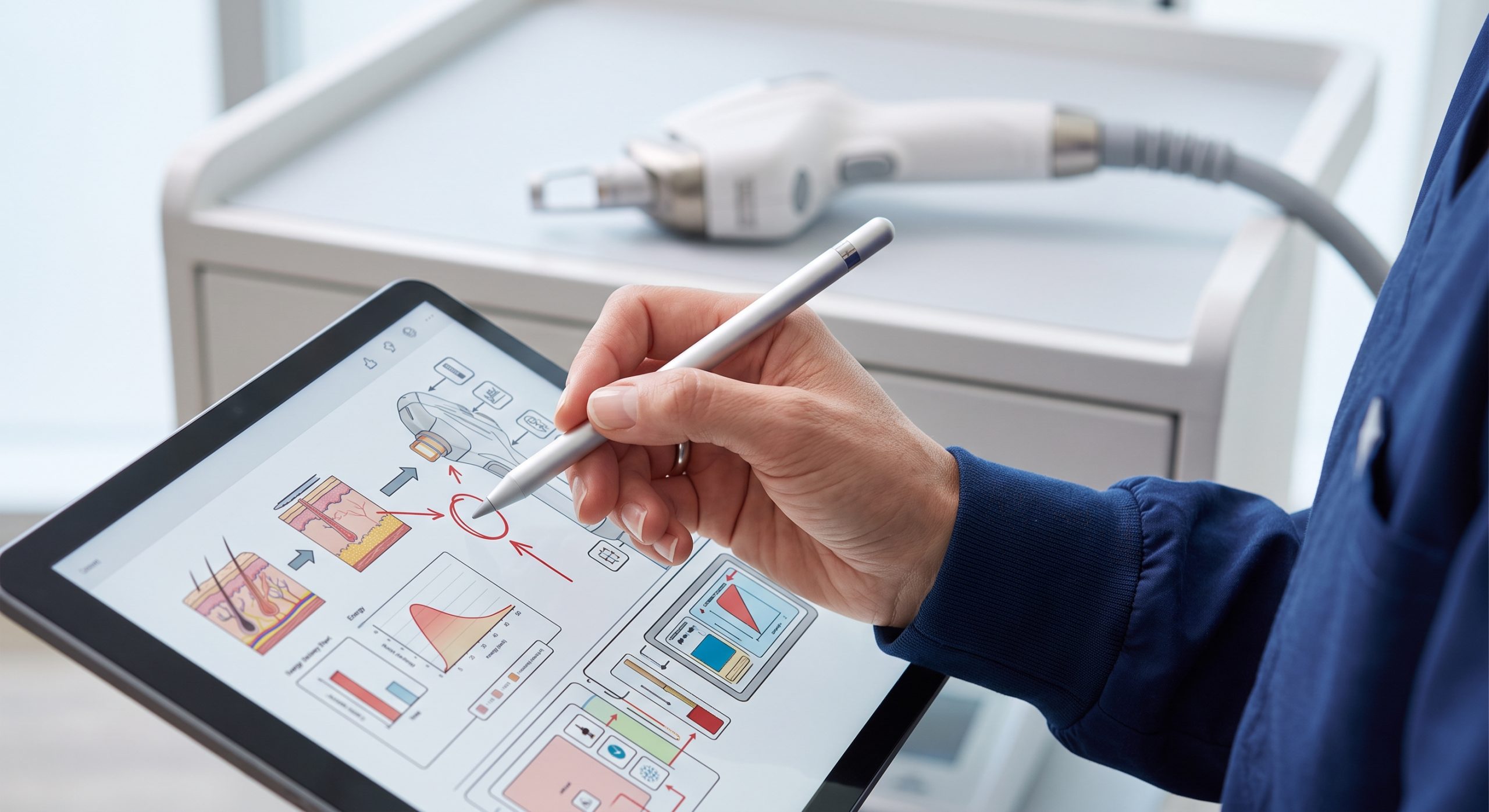
Leverage a Document Control System (DCS)
Implement a digital DCS to manage version history, access rights, and approval workflows. This is non-negotiable for FDA clearance and Medical CE compliance. A centralized system ensures that only the current version of each technical file is accessible to your team, preventing costly errors.
Clinical ROI: The Tangible Benefits of Standardization
Investing time in standardizing technical files yields a measurable return on investment (ROI) for any clinic or distributor. This goes beyond compliance; it touches every aspect of the business.
Accelerating Device Procurement and Integration
When you have a standardized approval pathway, adding a new device to your clinic is faster. Your team knows precisely what documentation is required for FDA and CE audits, cutting the administrative component of new technology adoption by weeks. This allows your clinic to quickly capitalize on emerging treatment trends.
Reducing Downtime and Maintenance Costs
Standardized maintenance logs make it easier to track handpiece shot lifespan and cooling system efficiency. By having a uniform reporting structure, biomedical engineers can more efficiently analyze data to predict maintenance needs, reducing unexpected downtime and extending the useful life of your capital equipment.
Enhancing Resale Value and Disposal Planning
A well-maintained, standardized technical file history is a significant asset when upgrading equipment. Buyers are willing to pay a premium for devices that come with complete, organized, and standardized documentation, viewing them as lower-risk investments.
Conclusion: The Future of Clinic Administration
Standardizing technical files across multiple product lines is the hallmark of a mature, scalable, and profitable aesthetic business. It transforms technical documentation from a regulatory burden into a strategic asset that improves patient safety, streamlines operations, and accelerates growth. By adopting the strategies outlined in this guide—from comprehensive gap analysis and master templates to robust document control systems—your clinic can achieve a level of operational excellence that stands out in the increasingly competitive medical aesthetics market.