
BLOG
The Ultimate Clinic Guide to Carton Labeling Aligned to Strict North American Importer Rules: Compliance, Specs, and ROI
2026年9月14日
Why Carton Labeling Compliance Dictates Clinic Profitability and Import Success
For medical aesthetic device importers, distributors, and clinic owners, the phrase Carton Labeling Aligned to Strict North American Importer Rules is not a back-office formality; it is a critical gateway to market access. A single mislabeled carton can trigger customs detention, FDA import alerts, and costly rework or destruction of high-value laser systems. Under U.S. Customs and Border Protection (CBP) and FDA regulations, the carton serves as the first physical touchpoint for compliance verification. This guide provides an elite, technically deep analysis of how to align carton labeling with North American importer rules while maintaining the clinical integrity of advanced aesthetic platforms such as 755nm, 808nm, and 1064nm diode lasers.

Physical Mechanism and the Compliance Chain: From Factory to Clinic
The Importer’s Legal Burden
The Importer of Record (IOR) is legally responsible for ensuring that every carton entering North America meets labeling requirements set forth by the FDA, FTC, and CBP. This includes the Country of Origin (COO) marking, FDA product codes, Medical CE and FDA clearance references where applicable, and ISO 13485 manufacturing traceability. For aesthetic devices, the carton must also reflect the device’s classification, such as Class II for most laser systems.
Technical Metrics That Must Appear on the Carton
While clinical parameters like 755nm/808nm/1064nm wavelengths, spot size, energy density (fluence), and pulse width are typically found in the user manual, high-end importers now include a subset of these on the carton for rapid customs and biomedical review. This practice, known as technical carton labeling, reduces the risk of shipment holds. For example, a carton may state: ‘Diode Laser System, 808nm, 10-100 J/cm², 10-400 ms, Sapphire Contact Cooling.’
Cooling Systems and Labeling Accuracy
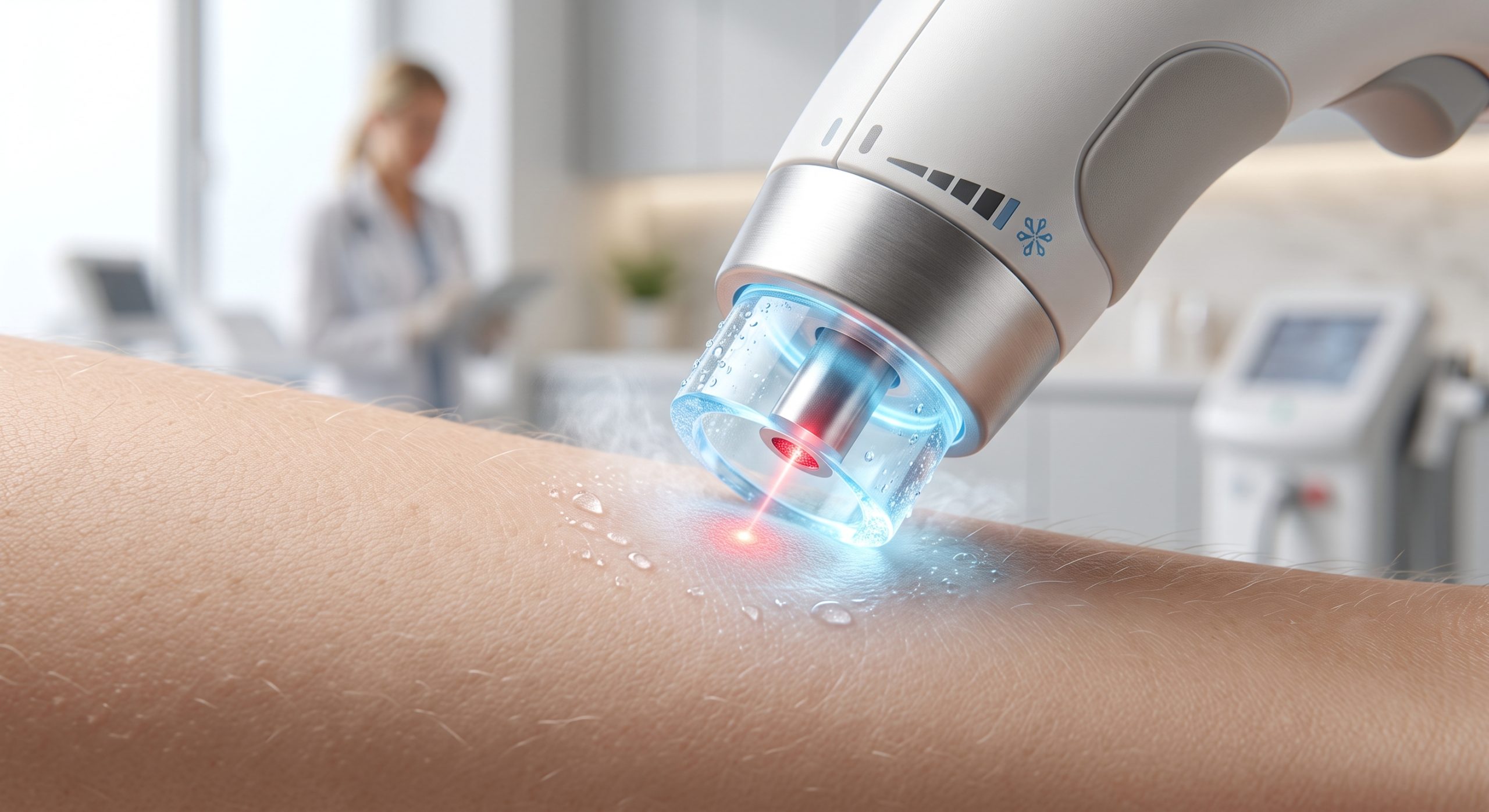
Advanced Sapphire ICE Cooling and TEC cooling systems are often listed on the carton as part of the device’s safety profile. This is not merely marketing; it is a regulatory signal that the device meets IEC 60601-2-22 safety standards for laser equipment. Misrepresenting cooling capabilities on the carton can lead to FDA Form 483 observations during facility inspections.
| Key Parameter | Technical Specification |
|---|---|
| Wavelength / Laser Type | 755nm Alexandrite, 808nm Diode, 1064nm Nd:YAG |
| Cooling System | Sapphire Contact Cooling / TEC |
| Spot Size | 2-20 mm (adjustable) |
| Energy Density / Fluence | 10-100 J/cm² |
| Pulse Width | 10-400 ms |
| Compliance Standards | Medical CE, FDA Clearance, ISO 13485 |
| Country of Origin Marking | Permanent, legible, English/French |
| FDA Product Code | GEX (Laser System) |
| Importer of Record | Name and address required |
| Lot/Batch Traceability | Required for recalls |
North American Importer Rules: A Technical Specification Matrix
The following table outlines the mandatory and recommended carton labeling elements for medical aesthetic devices entering the U.S. and Canada. These specifications are derived from 21 CFR Part 801, CBP marking rules (19 CFR Part 134), and Health Canada’s Medical Devices Regulations (SOR/98-282).
Key Labeling Parameters for Aesthetic Laser Cartons
- Country of Origin: Must be legible, indelible, and in English (and French for Canada).
- FDA Establishment Registration Number: Required for the manufacturer and importer.
- Device Description: Must include the generic name (e.g., ‘Diode Laser System’) and model number.
- Wavelength and Power Output: Recommended for customs classification and clinical safety.
- Medical CE Mark and FDA Clearance Number: Where applicable, with the corresponding product code (e.g., GEX for laser systems).
- ISO 13485 Certification Mark: Demonstrates quality management system compliance.
- Lot/Batch Number and Expiration (if applicable): For traceability and recalls.
Treatment Areas and Clinical Indications: Aligning Labels with Intended Use
Carton labeling must align with the device’s FDA-cleared intended use. For a multi-wavelength aesthetic laser, the carton should clearly indicate the cleared indications, such as hair removal, vascular lesion treatment, pigmented lesion treatment, and skin rejuvenation. This alignment prevents off-label promotion risks and ensures that the importer’s labeling strategy supports the clinic’s marketing claims.
For Fitzpatrick Skin Types I-VI, the carton should not make specific efficacy claims but may reference the device’s suitability for all skin types when supported by clinical data. This is particularly important for 755nm Alexandrite and 1064nm Nd:YAG systems, which are often marketed for their safety across diverse skin types.
Importance of Accurate Labeling for Clinic ROI
Clinics that import devices directly or through distributors must ensure that the carton labeling supports insurance reimbursement and liability protection. A well-labeled carton with clear technical specifications and compliance marks can reduce the time required for biomedical equipment approval in hospitals and surgery centers, accelerating the device’s path to revenue generation.
Clinic ROI and Conclusion: Turning Compliance into Competitive Advantage
Strict adherence to North American importer rules for carton labeling is not a cost center; it is a strategic investment. Importers and clinic owners who master this discipline benefit from faster customs clearance, reduced regulatory risk, and enhanced credibility with patients and partners. By integrating Medical CE, FDA clearance, and ISO 13485 references directly into the carton design, you create a verifiable chain of trust from the factory floor to the treatment room.
As the aesthetic device market becomes increasingly regulated, the ability to align carton labeling with importer rules will distinguish elite clinics and distributors from the competition. Prioritize compliance, specify technical parameters accurately, and treat every carton as a clinical and legal document. This approach will maximize ROI, minimize downtime, and ensure that your advanced 755nm/808nm/1064nm platforms deliver safe, effective, and profitable treatments.