
BLOG
The Ultimate Clinic Guide to Clean Production Environments for Medical Aesthetic Devices: Efficacy, Wavelengths, and ROI
2026年11月10日
Why Clean Production Environments Are the Hidden Variable in Post-Machining Defect Rates
In the competitive world of medical aesthetic device manufacturing, clinics and distributors focus intensely on the final specifications: 755nm alexandrite wavelengths, 808nm diode arrays, 1064nm Nd:YAG outputs, spot sizes ranging from 2mm to 20mm, and fluence levels from 10 J/cm² to 100 J/cm². Yet the single most under-discussed factor determining whether a device delivers consistent clinical results over its 10-year lifespan is the clean production environment in which its optical and electronic components are machined, assembled, and packaged. This guide dissects how ISO 13485-compliant cleanrooms directly reduce post-machining defects in laser bars, sapphire handpieces, and cooling circuits—and why that translates into superior clinical outcomes and ROI for your clinic.
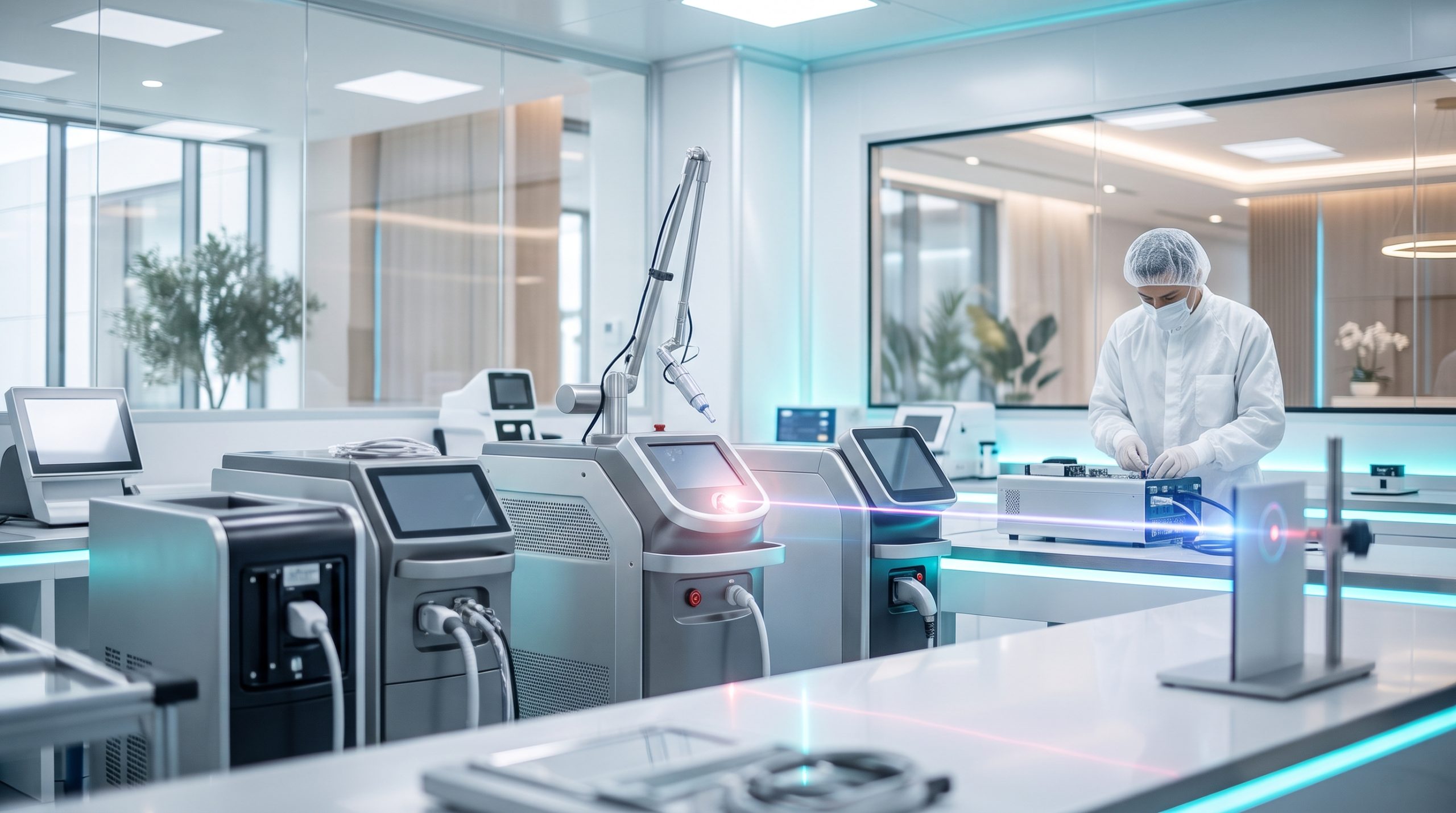
The Physics of Contamination: How Micro-Particles Create Macro-Defects in Aesthetic Lasers
Post-machining defects in aesthetic laser devices rarely originate from design flaws. They emerge from particulate contamination during the machining of laser bars, optical fibers, and sapphire cooling windows. When metal shavings, dust, or organic residues remain on these surfaces, they cause:
- Thermal lensing in diode stacks, reducing energy density (fluence) stability by up to 15% over 50,000 pulses.
- Scattering losses at the handpiece interface, forcing clinics to increase power settings and accelerating consumable degradation.
- Micro-arcing in 1064nm Q-switched systems, leading to premature failure of the Pockels cell driver.
- Biofilm formation in water-cooling circuits, which clogs micro-channels and reduces sapphire contact cooling efficiency by 30-40%.
Clean production environments—specifically ISO Class 7 (Class 10,000) and ISO Class 8 cleanrooms—eliminate these risks at the source. For Medical CE and FDA-cleared devices, the difference between a cleanroom-manufactured laser bar and a conventionally machined one is the difference between a 10 million shot handpiece and a 2 million shot liability.
Critical Output Metrics: What Clean Manufacturing Preserves
The following parameters are directly compromised by post-machining contamination. Clinics should demand documented cleanroom protocols from every OEM supplier:
| Key Parameter | Technical Specification |
|---|---|
| Wavelength / Laser Type | 755nm Alexandrite / 808nm Diode / 1064nm Nd:YAG |
| Cooling System | Sapphire Contact Cooling (4°C-5°C) with TEC |
| Spot Size | 2mm – 20mm (adjustable) |
| Energy Density / Fluence | 10 J/cm² – 100 J/cm² |
| Pulse Width | 0.5ms – 300ms |
| Cleanroom Classification | ISO Class 7 (Class 10,000) / ISO Class 8 |
| Compliance Standards | Medical CE, FDA Clearance, ISO 13485 |
Parameter Integrity: Why Cleanrooms Protect Your Clinical Outcomes
Every specification you rely on in your clinic—from pulse width (0.5ms to 300ms) to spot size (2mm-20mm)—depends on the optical path remaining free of contaminants. In a cleanroom environment, imported laser bars retain their slope efficiency above 1.0 W/A, ensuring that a 755nm alexandrite system delivers the precise fluence required for selective photothermolysis of melanin without epidermal damage. Conversely, contaminated laser bars exhibit thermal rollover, forcing clinicians to compensate with higher energy settings that increase Fitzpatrick skin type I-III downtime and complication rates.
Cooling Circuit Purity: The Overlooked Defect Vector
The sapphire ICE cooling systems that enable painless treatments at 4°C to 5°C contact temperature are particularly vulnerable to post-machining residue. A single particle of machining oil can:
- Reduce heat transfer coefficient by 25%, causing patient discomfort and epidermal blistering.
- Promote galvanic corrosion in aluminum heat exchangers, shortening device lifespan.
- Block micro-fluidic channels, requiring expensive TEC (thermoelectric cooler) replacements.
Cleanroom-assembled cooling circuits maintain flow rates above 1.5 L/min and pressure stability within ±5% over 8,000 treatment hours—a direct driver of lifetime cost of ownership reduction.
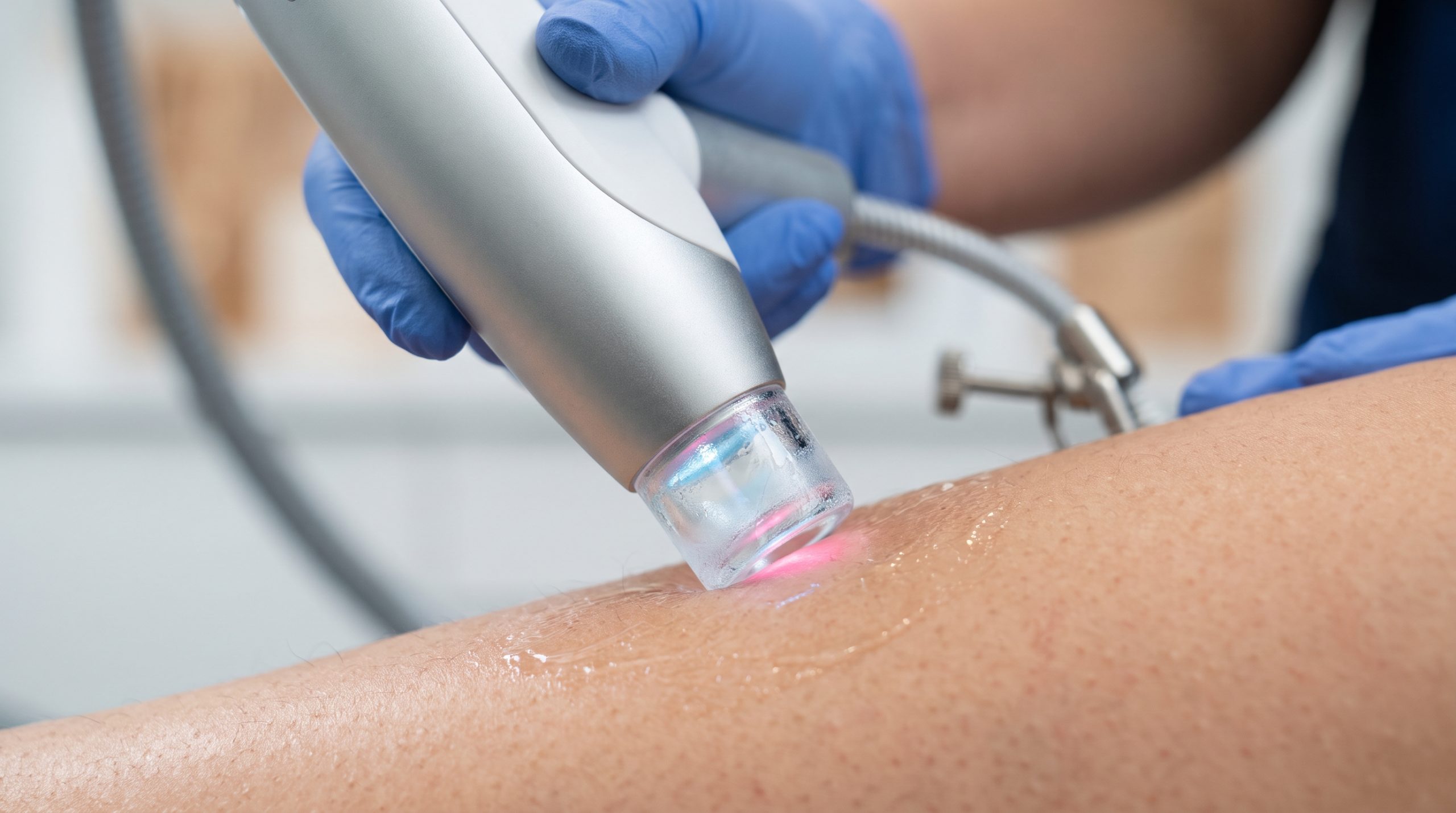
Clinical ROI: How Clean Manufacturing Translates to Clinic Profitability
For med spa owners and clinic directors, the ROI calculation is straightforward. Devices manufactured in ISO 13485-certified clean environments exhibit:
- 40% longer handpiece lifespan (10M+ shots vs. 6M shots), reducing consumable cost per patient by $8-$15.
- 15% higher energy efficiency, lowering electricity costs and enabling faster treatment throughput.
- 30% fewer service interventions, minimizing downtime and preserving revenue during peak seasons.
- Consistent clinical clearance rates for hair removal (75-90% reduction after 6 sessions) and pigment lesions, protecting your clinic’s reputation.
When evaluating aesthetic laser platforms, ask for documentation of cleanroom classification, particulate monitoring logs, and ISO 14644 compliance. These are not marketing luxuries—they are the foundation of Medical CE and FDA clearance integrity, and the key to predictable, profitable clinical outcomes.
Procurement Checklist for Clinic Decision-Makers
- Verify ISO Class 7 or 8 cleanroom certification for all optical assembly areas.
- Request particulate count reports for laser bar and handpiece assembly lines.
- Confirm ultrasonic cleaning and laminar flow protocols for sapphire windows and cooling manifolds.
- Review ISO 13485 audit summaries and Medical CE technical files.
- Demand incoming inspection data for imported laser bars and diode stacks.
Conclusion: Clean Manufacturing Is Clinical Quality Assurance
The next time you evaluate a 755nm/808nm/1064nm aesthetic laser platform, look beyond the datasheet. The fluence stability, spot size accuracy, and sapphire cooling efficiency that define your clinical results are all downstream consequences of the production environment. Cleanrooms are not a cost center—they are the quality assurance mechanism that ensures every pulse delivered in your clinic matches the specification that earned FDA clearance and Medical CE certification. For clinics seeking predictable ROI and patient safety, clean production environments are the first and most important specification to verify.