
资料
Production Verification Test (PVT) Readiness Assessment – Official Clinical Overview & Technical Datasheet
EXECUTIVE SUMMARY
This document serves as the definitive technical reference for the Production Verification Test (PVT) Readiness Assessment protocol, a mandatory quality gate within our medical device manufacturing lifecycle. The PVT phase validates that the manufacturing process consistently produces devices that meet all design specifications, performance criteria, and regulatory safety requirements prior to mass production release. This datasheet outlines the comprehensive assessment framework, critical test parameters, and acceptance criteria required to achieve PVT sign-off for the aesthetic laser platform.
The PVT Readiness Assessment encompasses three core pillars: Hardware Performance Verification, Software Integrity Validation, and Environmental Stress Screening. Successful completion ensures that every unit emerging from the production line adheres to the stringent quality standards expected of a Class II medical device, guaranteeing patient safety, treatment efficacy, and long-term device reliability in clinical environments.
CLINICAL ARCHITECTURE & DESIGN
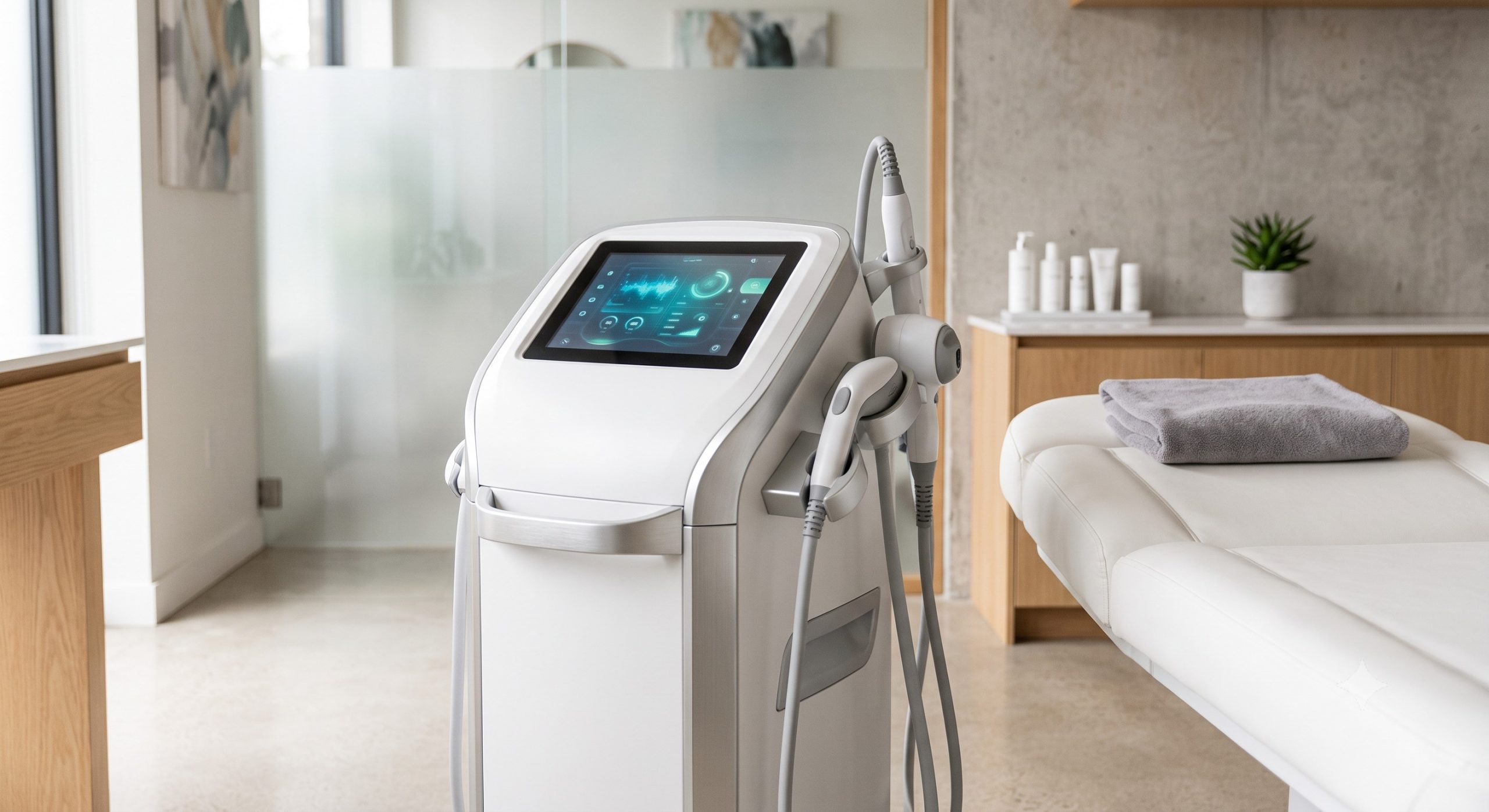
The PVT Readiness Assessment begins with a thorough evaluation of the device’s clinical architecture, focusing on the integration of its core subsystems. The platform is engineered around a multi-wavelength diode laser engine (755nm, 808nm, and 1064nm), a proprietary active cooling system, and an intelligent energy delivery network. The PVT protocol verifies the seamless interoperability of these subsystems under simulated clinical loads.
Key areas of architectural verification include:
– Optical train alignment and beam homogenization, ensuring a consistent and uniform spot profile for predictable clinical outcomes.
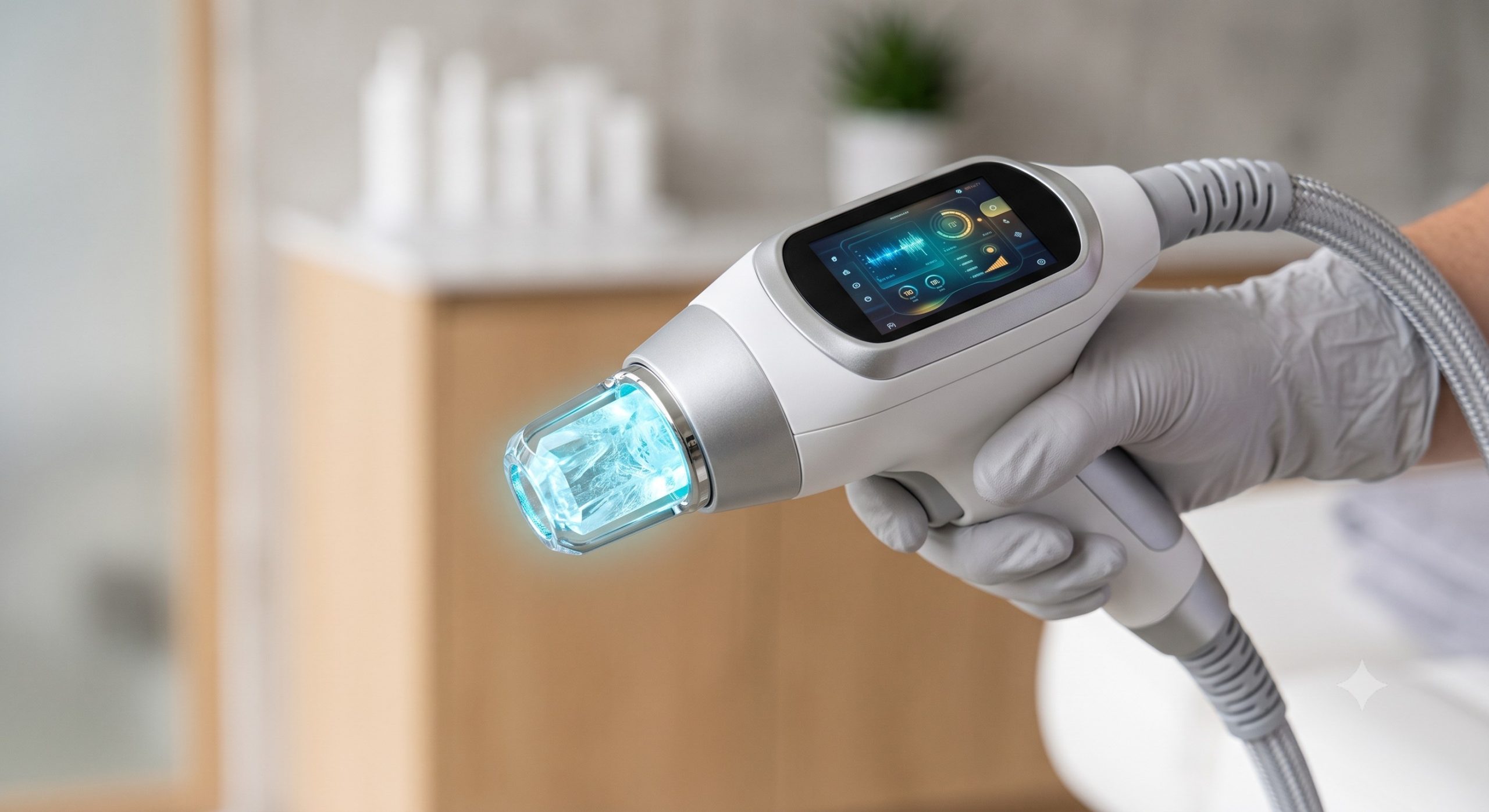
– Thermal management system performance, confirming that the TEC, sapphire contact cooling, water circulation, and forced air convection work in concert to maintain optimal operating temperatures and provide patient comfort.
– Power supply stability under continuous duty cycles, validating that the device can deliver full rated fluence without performance degradation.
INDICATIONS & CAPABILITIES
The PVT process rigorously tests the device’s ability to perform its intended indications reliably. The system is designed for permanent hair reduction, treatment of benign pigmented lesions, and vascular lesion clearance. The PVT assessment verifies that each manufactured unit achieves the established clinical fluence ranges, pulse width parameters, and spot size configurations required for safe and effective treatment across Fitzpatrick skin types I-VI.
A critical component of this phase is the validation of the Smart UI protocols, which include automated treatment presets. The PVT ensures that the software correctly interprets user inputs, selects the appropriate energy parameters based on skin type and indication, and safely enables the device for treatment only when all safety interlocks are satisfied. This verification is essential for preventing user error and ensuring consistent, repeatable clinical results.
COMPLIANCE & STANDARDS
The Production Verification Test is intrinsically linked to our commitment to global regulatory compliance. The PVT Readiness Assessment is designed to provide documented evidence that the manufacturing process can produce devices that meet the requirements of key international standards, including:
– IEC 60601-1 (Medical Electrical Equipment – General Requirements for Basic Safety and Essential Performance)
– IEC 60601-2-22 (Particular Requirements for Laser Equipment)
– ISO 13485 (Medical Devices – Quality Management Systems)
– 21 CFR Part 1040 (FDA Performance Standards for Light-Emitting Products)
The PVT protocol includes specific test cases derived from these standards, ensuring that the final product will successfully navigate the regulatory clearance process and be safe for its intended clinical use. The assessment culminates in a compliance audit that reviews all test data, manufacturing records, and quality control documentation to ensure full traceability.
TECHNICAL SPECIFICATIONS
The following specifications represent the validated performance envelope that every production unit must achieve to pass the PVT. These parameters are measured under rigorous, controlled conditions to ensure reproducibility.
| Parameter | Specification |
|---|---|
| Laser Type / Wavelength | Multi-wavelength Diode: 755nm / 808nm / 1064nm |
| Maximum Output Power | 1200W (Combined) |
| Spot Size (Standard) | 15mm x 15mm (Square Top-hat) |
| Spot Size (Precision) | 6mm x 6mm / 10mm x 10mm |
| Fluence Range | Up to 120 J/cm² |
| Pulse Width Range | 2ms – 400ms |
| Pulse Repetition Rate | 1 – 10 Hz |
| Cooling System | Active TEC + Sapphire Window (-5°C to 5°C) with Water and Air Convection |
| Skin Contact Sensor | Real-time Impedance Monitoring |
| Interface | 15.6-inch Full HD Touchscreen Panel |
| Power Supply | 100-240V AC, 50/60Hz, 1500VA |
| Dimensions (W x D x H) | 45 cm x 60 cm x 110 cm |
| Weight | Approx. 55 kg |
| Compliance | IEC 60601-1, IEC 60601-2-22, ISO 13485, 21 CFR 1040.10 & 1040.11 |
CLINICAL PROTOCOLS
Upon successful completion of the PVT Readiness Assessment, the device proceeds to the Clinical Protocol Validation phase. This phase is designed to confirm that the manufactured devices perform identically to the engineering and clinical trial units under real-world treatment conditions. Standardized clinical protocols for the device include:
– Hair Reduction Protocol: Utilizing the 808nm wavelength with a fluence of 20-60 J/cm², a pulse width of 10-400ms, and a spot size of 15x15mm, targeting melanin in the hair follicle with an emphasis on epidermal cooling.
– Pigment Clearance Protocol: Employs the 755nm wavelength for superficial lesions, with a fluence of 8-25 J/cm² and a small spot size (6x6mm) for precise energy deposition.
– Vascular Treatment Protocol: Uses the 1064nm wavelength with longer pulse widths (20-100ms) and a fluence of 30-80 J/cm², targeting oxyhemoglobin in deeper vessels.
Operational ROI efficiencies are also validated at this stage. The average treatment time, consumable lifespan, and device uptime are all measured to ensure that the system provides a high-return investment for a medical spa or dermatology clinic.
📥 Download Technical Specification
Click the button below to view or download the full official PDF datasheet.