
常见问题
Technical Support FAQ: Resolving Errors and Optimizing Output on Your Aesthetic Laser
Overview
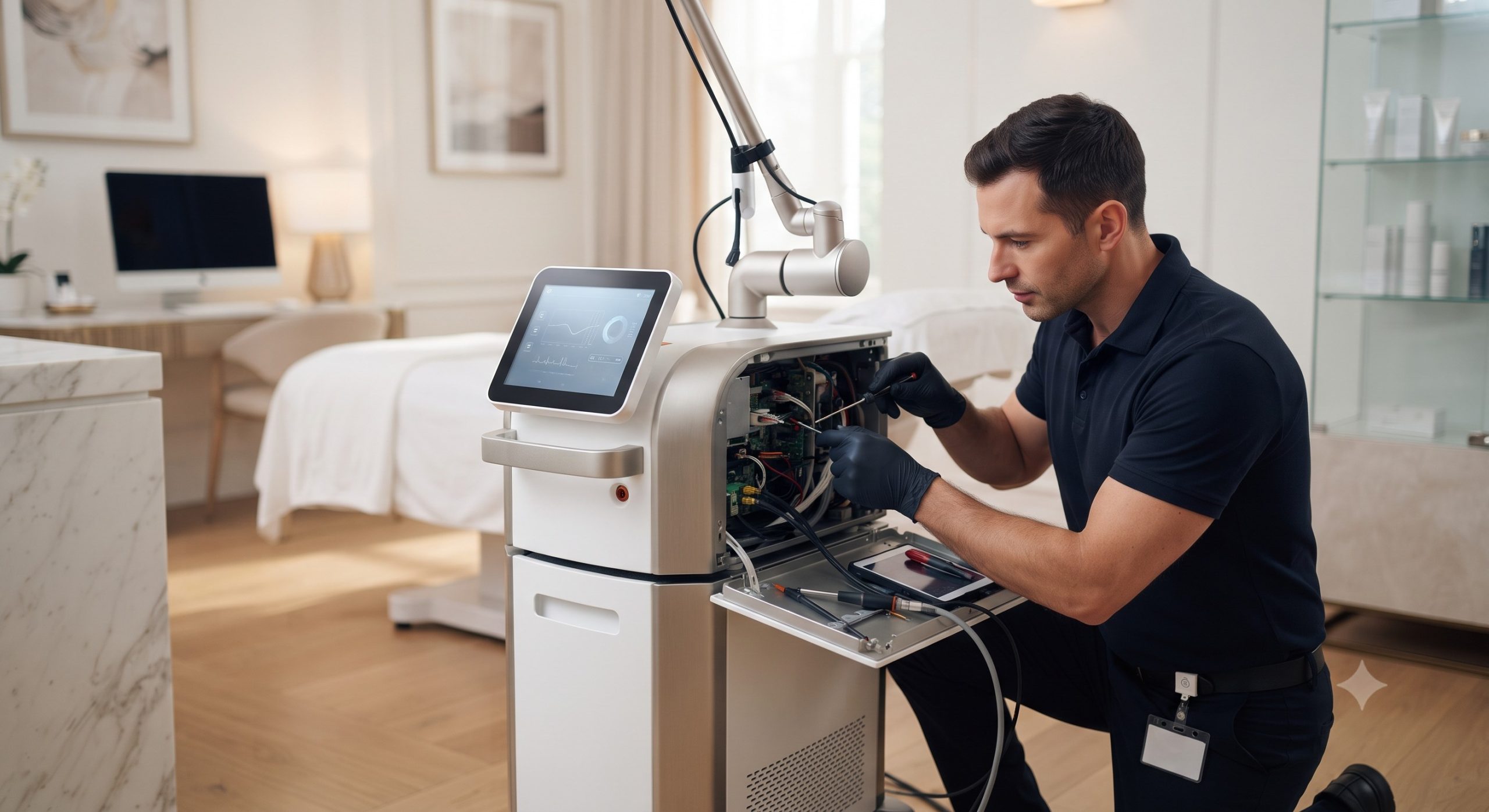
For B2B clinic owners and dermatologists, understanding the “mission-critical” components within your aesthetic laser device is not just a technical exercise—it’s a fundamental business strategy. These core components, such as the laser handpiece, cooling system, and power supply, directly dictate treatment efficacy, patient safety, and your clinic’s operational uptime. This FAQ guide provides expert technical support insights to help you define, maintain, and troubleshoot these vital parts, ensuring your investment delivers consistent clinical results and a strong return on investment (ROI).
Frequently Asked Questions
Q1: What exactly defines a ‘mission-critical’ component in my aesthetic laser manufacturing process?
A ‘mission-critical’ component is any part whose sudden failure would halt clinical operations or compromise patient safety. This includes the laser handpiece, the water circulation system for thermal regulation, and the main power supply. Without these, the device cannot deliver its primary function, leading to cancelled appointments and lost revenue.
Q2: What is the expected lifespan of the laser handpiece, and how do I track it?
The typical lifespan of a diode laser handpiece is approximately 1 to 2 million shots, depending on the manufacturer’s specifications and energy settings. You can track this through the device’s smart user interface, which logs shot counts. Regular monitoring is crucial for budget planning and preventing unexpected downtime, as a depleted handpiece leads to reduced energy output and treatment failure.
Q3: How does the water circulation system impact device performance and longevity?
The water circuit is mission-critical for thermal management, preventing the laser bars from overheating during high-energy treatments. If this system fails, the device will likely shut down to prevent damage, or worse, suffer permanent damage to the expensive optical components. Regular maintenance, including checking for mineral buildup and proper coolant levels, is essential to ensure consistent energy output and a longer operational life.
Q4: What are the first signs that a mission-critical component is failing?
Early warning signs include a noticeable drop in treatment efficacy (patients requiring more sessions), inconsistent energy output, unusual noise from the cooling fans or pump, and error codes on the touchscreen interface. Clinicians should also monitor for longer-than-usual cooldown times between pulses. Addressing these symptoms early can prevent a catastrophic failure and expensive emergency repairs.
Q5: What is the typical ROI payback period when investing in a device with premium components?
Investing in a device with imported, high-grade components typically offers a faster ROI due to enhanced durability and superior clinical outcomes. Clinics can often achieve a full return on investment within 12 to 18 months by leveraging the high throughput, minimal consumable costs, and the ability to treat a wider range of skin types. This efficiency translates to higher patient satisfaction and stronger referrals.
Q6: How do I perform basic troubleshooting to optimize output before calling technical support?
First, always check the water level and ensure the air filters are clean, as these are common culprits for performance dips. Second, verify that the treatment parameters (fluence, spot size, pulse duration) are correct for the specific skin type. Third, perform a test pulse on a calibration device or gel block to visually confirm output uniformity. If output is still suboptimal, document the error codes and contact your technical support team.
Q7: Why are imported laser bars and pumps considered superior for clinical durability?
Imported laser bars and pumps are typically manufactured with higher-grade materials and tighter quality control standards, leading to a longer operational lifespan and greater energy stability. This reliability reduces the frequency of costly replacements and ensures that the energy delivered to the patient remains consistent from the first shot to the millionth. For clinics, this translates to lower long-term maintenance costs and a more predictable business model.
Q8: How does the ‘Smart Touchscreen UI’ help in maintaining mission-critical components?
The smart UI is not just for selecting parameters; it’s a vital diagnostic tool that actively monitors the health of all core components. It provides real-time feedback on system status, sends alerts for routine maintenance (like filter cleaning), and logs error histories. This proactive feature allows clinic staff to perform preventative maintenance and resolve minor issues before they escalate into critical failures.