
常见问题
Manufacturing Process FAQ: Expert Answers for Aesthetic Clinics & Dermatologists
Overview
For B2B aesthetic buyers, understanding the depth of a medical device manufacturer’s production capabilities is critical for ensuring long-term reliability, safety, and profitability. In this comprehensive FAQ, we answer the most pressing questions about our vertically integrated manufacturing process, covering everything from core component sourcing to post-sales clinical support. This transparency is designed to help you make a confident, informed investment.
Frequently Asked Questions
Q1: How vertically integrated is your manufacturing process?
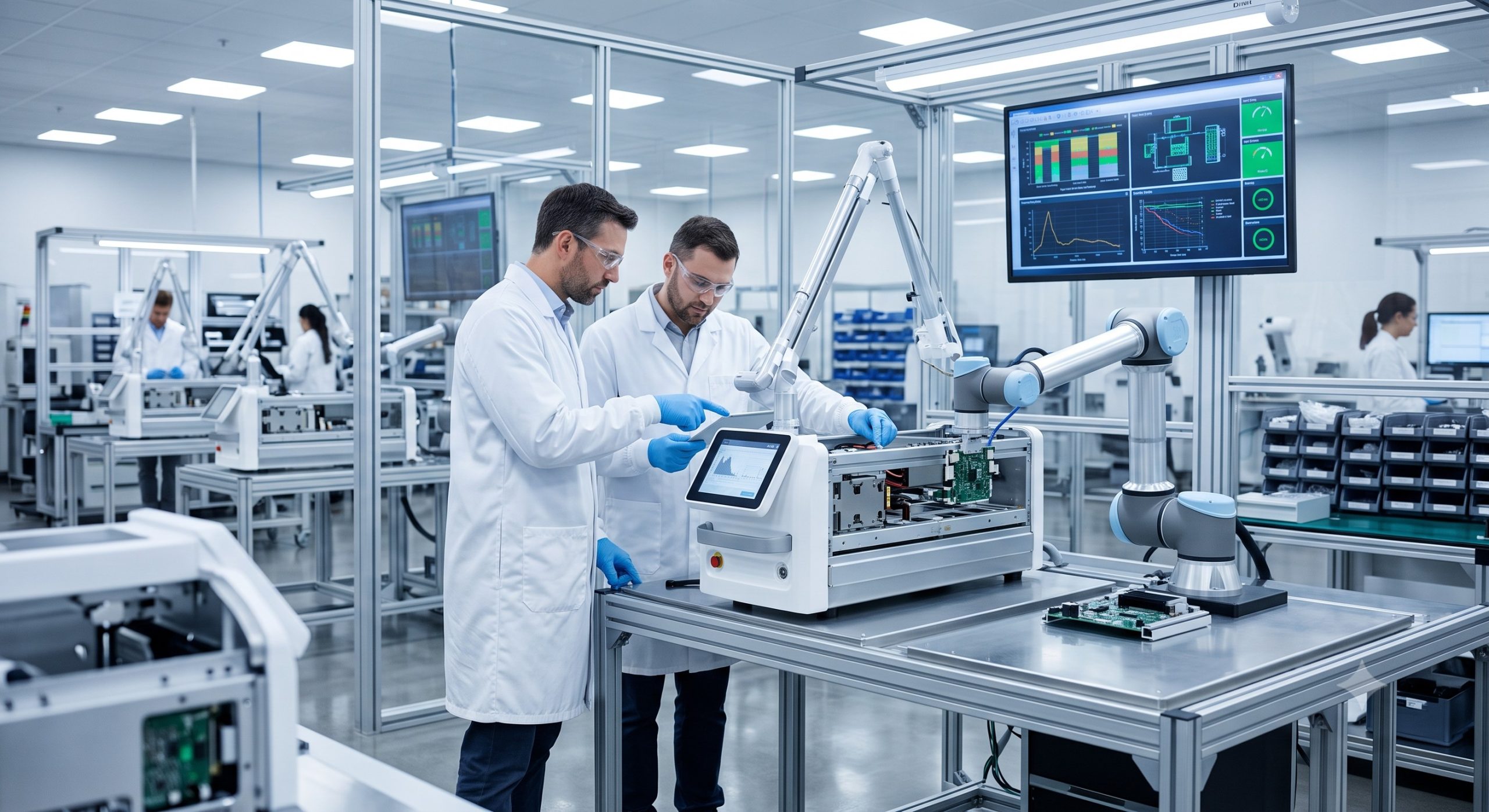
Our manufacturing process is over 90% vertically integrated. This means we control the entire production chain, from the initial R&D and design of optical and mechanical systems to the assembly, calibration, and final quality testing of every device. Unlike competitors who rely on third-party assemblers, our in-house capabilities allow for rigorous quality control at every stage, ensuring unmatched device consistency and reliability.
Q2: What core components are manufactured in-house, and which are sourced?
We manufacture all critical optical, mechanical, and software components in-house, including our proprietary laser cavities, precision cooling systems, and the smart UI interface boards. Premium consumable items, such as the highest-grade medical laser bars and water pumps, are sourced from a select group of German and Japanese suppliers to guarantee performance and longevity. This hybrid approach combines the strictest quality control with the best available component technology.
Q3: Does your vertical integration include the assembly of the handpiece and its consumables?
Yes, the entire assembly of the handpiece, including its sealed optical path and contact cooling tip, is performed in our ISO 13485-certified cleanroom facilities. Because the handpiece is the primary point of clinical contact, assembling it in-house allows us to ensure its energy output and cooling efficiency are perfectly matched to the main console, maximizing treatment safety and efficacy.
Q4: Can you customize devices or software for our specific clinic needs?
Our in-house engineering and software development teams enable a high degree of customization. We can pre-configure devices with specific clinical presets for your dermatologists, adjust treatment parameter ranges, and even customize the UI layout with your clinic’s logo. For larger B2B partnerships, we offer the capability to develop tailored hardware and software solutions to meet unique practice requirements.
Q5: How does vertical integration ensure a faster and more reliable supply chain for us?
By controlling the manufacturing process, we eliminate the delays associated with outsourcing and coordinating multiple external vendors. We maintain a substantial buffer inventory of all key components, allowing us to fulfill orders from stock and deliver a new device within 5-7 business days of purchase. This integrated supply chain also guarantees the continued availability of original consumables and spare parts for the entire lifespan of your device.
Q6: What impact does vertical integration have on device servicing and repairs?
A vertically integrated structure provides superior service support. Our global technical engineers are the original designers of the device’s hardware and software, enabling them to diagnose and resolve issues remotely or on-site with unmatched speed. In the rare event of a failure, we ship replacement parts from our factory directly, ensuring your device’s downtime is minimized and your clinic’s revenue is protected.
Q7: Is the final manufacturing and calibration process the same for every device?
Absolutely. Our automated, in-house calibration processes ensure that every device we manufacture is factory-aligned to deliver the exact same clinical performance. This system is coupled with strict quality checks at each station, from initial component testing to final system burn-in, ensuring that the device you receive performs identically to the units used in our clinical studies, providing predictable and reliable results.