
常见问题
First-Article Inspection FAQ: Expert Answers for Aesthetic Clinics & Dermatologists
Overview
For B2B medical aesthetic buyers, a First-Article Inspection (FAI) is the definitive quality gate before mass production or shipment. It ensures that the manufacturing process for your aesthetic laser device yields a product that meets all specified engineering drawings, performance criteria, and regulatory standards. This FAQ addresses the critical concerns of clinic owners, dermatologists, and procurement specialists regarding the FAI process, from dimensional checks to clinical output validation.
Frequently Asked Questions
Q1: What exactly is a First-Article Inspection (FAI) in the context of medical aesthetic devices?
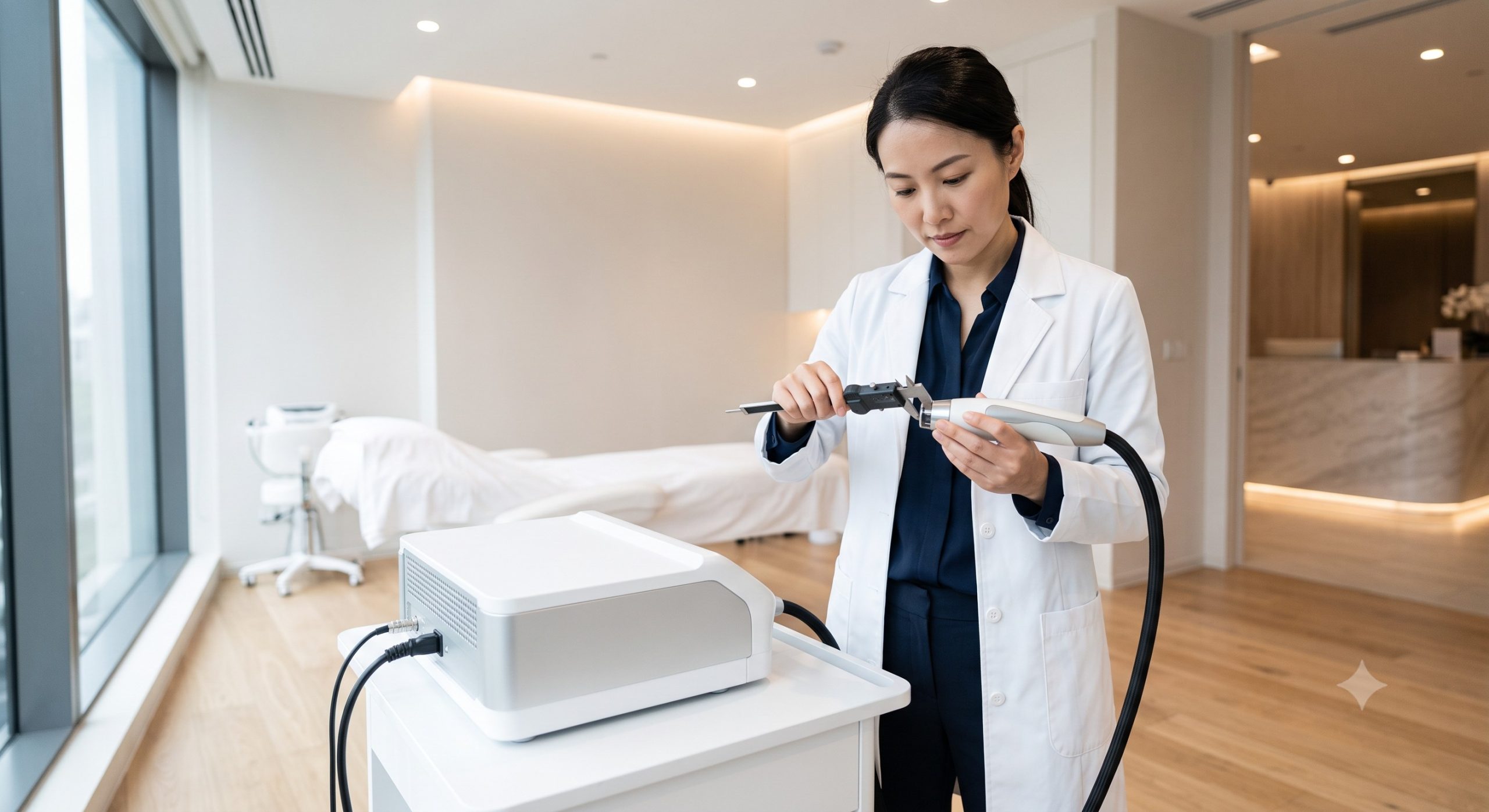
An FAI is a comprehensive, documented verification process where a complete sample unit from a production run is measured, tested, and evaluated against all design specifications. For an aesthetic laser or energy-based device, this involves checking mechanical dimensions, electrical safety, optical output (energy, wavelength, spot size), cooling system performance, and software functionality. The goal is to validate that the production tooling and methods are capable of consistently producing a compliant and safe medical device.
Q2: What key documents and reports should I request as part of the FAI package?
A complete FAI package must include a Dimensional Report, a Material/Component Verification Report, and a Functional Test Report. Crucially, you should receive a Certificate of Conformance (CoC), the completed AS9102 or equivalent FAI form, and a detailed Ballot or Measurement Report. For medical devices, also request the specific test protocols for energy accuracy (e.g., ±5%), cooling system performance, and electrical safety (IEC 60601).
Q3: How does the FAI process ensure the clinical performance and safety of the laser handpiece?
The FAI verifies the handpiece’s core components, such as the laser crystal, pump source, and delivery optics. It includes a functional test measuring output energy, pulse duration, and beam profile against a calibrated reference standard. Additionally, the safety mechanisms, such as the emergency stop, key switch, and contact cooling system integrity, are rigorously validated during the FAI to guarantee patient and operator safety.
Q4: What is the standard timeline for completing a First-Article Inspection?
Typically, the FAI process takes 5 to 10 business days from the receipt of the first-article sample. This timeframe includes physical measurement, functional testing, documentation review, and any necessary corrective actions. For more complex systems like multi-wavelength lasers or platforms with integrated RF, the timeline may extend to 15 days to ensure all subsystems are thoroughly validated.
Q5: What happens if a First-Article Inspection fails? What are the next steps?
If an FAI fails, a Nonconformance Report (NCR) is issued detailing the specific deviations from the specification. The manufacturer must then perform root cause analysis, implement corrective and preventive actions (CAPA), and resubmit a new first article sample for a complete re-inspection. This iterative process ensures that only fully compliant devices proceed to volume production.
Q6: How does the FAI relate to FDA 510(k) clearance and CE marking for aesthetic devices?
An FAI is a critical component of the quality management system (QMS) required for ISO 13485 certification and is pivotal for maintaining regulatory submissions. While the FAI itself does not grant FDA or CE approval, it provides the objective evidence of design and process validation necessary to demonstrate that your device is manufactured in conformity with its cleared or certified specifications. A successful FAI is a prerequisite for market release.
Q7: Can I witness or audit the First-Article Inspection at the manufacturer’s facility?
Yes, as a B2B buyer, you are entitled to request a Source Inspection or a witness audit of the FAI process at the manufacturer’s site. This is a best practice for high-value investments and allows your engineering or quality team to review the measurement setups and test methodologies firsthand. Many top-tier suppliers welcome this to foster transparency and trust.