
博客
The Ultimate Clinic Guide to Vacuum Packaging for Sensitive Machined Parts: Efficacy, Wavelengths, and ROI
2026年9月29日
Why Vacuum Packaging Is a Clinical-Grade Decision for Sensitive Machined Parts
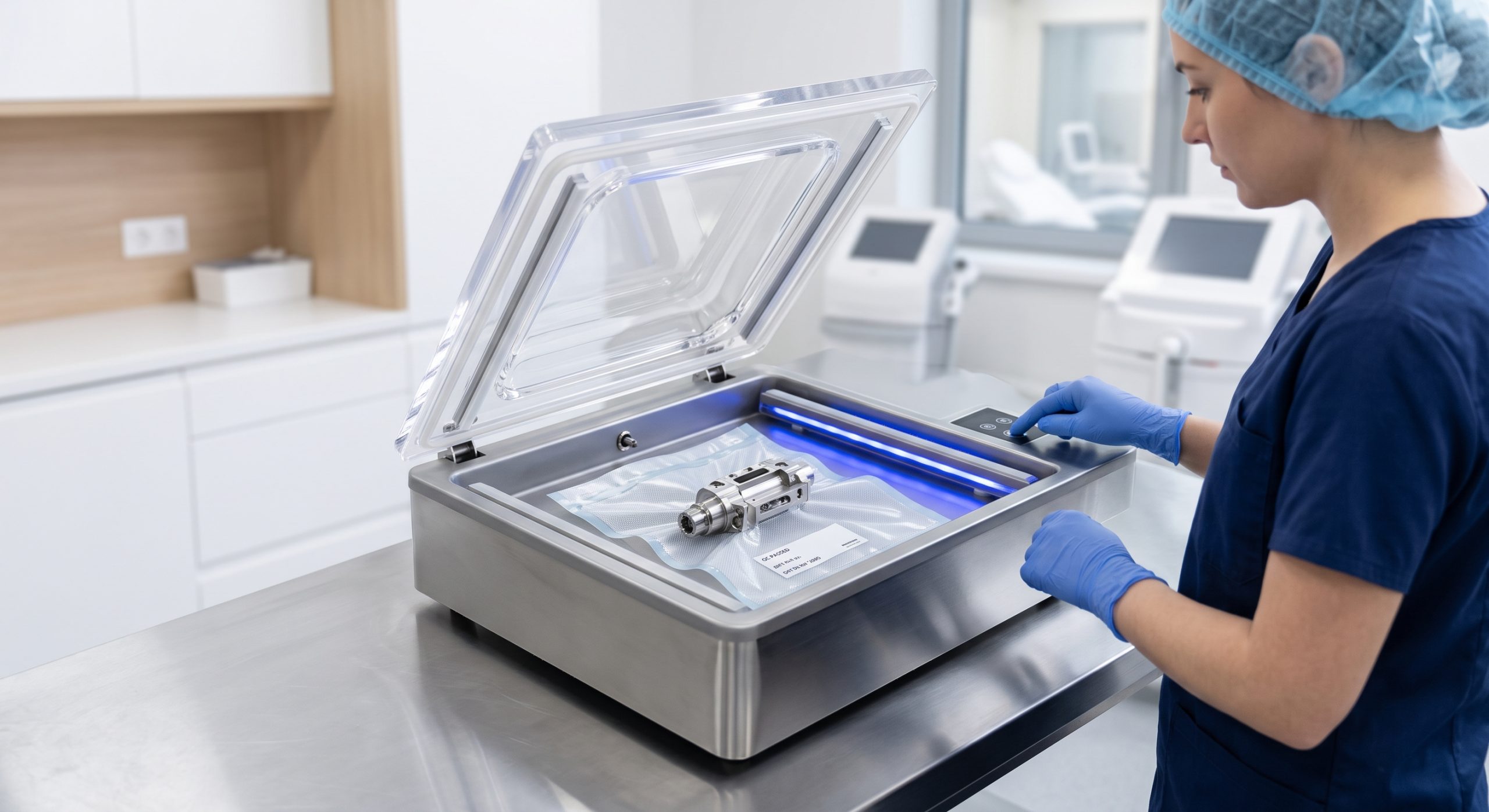
In the medical aesthetic device industry, the precision and integrity of sensitive machined parts—such as laser bars, optical lenses, sapphire cooling windows, and handpiece components—directly determine clinical outcomes. A single microscopic oxidation spot or particulate contaminant on a 755nm/808nm/1064nm diode laser bar can degrade energy density (fluence), alter pulse width, and compromise patient safety. Vacuum packaging is not a logistics afterthought; it is a critical control point in the ISO 13485 quality management chain. For clinic owners and procurement specialists, understanding the science and economics of vacuum packaging is essential for maintaining Medical CE and FDA-cleared device performance.
The Physics of Degradation: What Sensitive Machined Parts Face
Oxidation and Moisture Ingress
Machined parts made from copper, gold-plated alloys, and specialized optical materials are highly susceptible to oxidation and hydrolysis. Even brief exposure to ambient humidity can form oxide layers that increase thermal resistance and reduce electrical conductivity. In high-power aesthetic lasers, this translates to inconsistent spot size projection and premature handpiece failure.
Particulate Contamination
Micron-level dust and organic particles can settle on laser bar facets or sapphire contact cooling surfaces. During operation, these contaminants absorb optical energy, causing thermal lensing and catastrophic optical damage. Vacuum packaging eliminates the air medium that carries these particles, creating a hermetic barrier until the moment of installation.
Electrostatic Discharge (ESD) Risk
Sensitive driver circuits and sensor assemblies within aesthetic handpieces are vulnerable to ESD events. Vacuum-sealed moisture-barrier bags with anti-static properties prevent static buildup during transport and storage, preserving ISO 13485 compliance and FDA clearance integrity.
Vacuum Packaging Technologies: A Comparative Analysis
Vacuum Barrier Bags vs. Traditional Desiccant Packaging
Traditional desiccant-based packaging only manages humidity within a sealed environment; it does not remove the air itself. Vacuum packaging evacuates the atmosphere, reducing oxygen concentration to below 1% and preventing oxidative degradation of laser bars and optical coatings. For high-fluence systems operating at 10-100 J/cm², this distinction is critical.
Nitrogen Flush and Modified Atmosphere Packaging (MAP)
For the most sensitive machined parts, nitrogen-flushed vacuum packaging provides an additional inert barrier. This is particularly important for 755nm Alexandrite and 1064nm Nd:YAG components, where any moisture-induced arcing can destroy pulse width stability. MAP ensures that even if the vacuum seal is compromised during transit, the internal environment remains non-reactive.
Validation and Leak Testing
Every vacuum package must undergo helium leak testing or pressure decay testing per ISO 11607 standards. This validates the seal integrity and ensures that the shelf life of sensitive components meets the 5-year storage requirement typical for medical device spare parts.
Technical Specifications: Vacuum Packaging for Aesthetic Laser Components
The following table outlines the critical parameters for vacuum packaging systems designed for sensitive machined parts used in Medical CE and FDA-cleared aesthetic devices.
| Key Parameter | Technical Specification |
|---|---|
| Wavelength / Laser Type | 755nm / 808nm / 1064nm Diode |
| Cooling System | Sapphire Contact Cooling + TEC |
| Energy Density (Fluence) | 10-100 J/cm² |
| Pulse Width | 10-400 ms |
| Spot Size | 2-10 mm |
| Packaging Standard | ISO 11607 / ISO 13485 |
| Oxygen Concentration | <1% |
| Shelf Life | 5 Years |
Impact on Clinical Efficacy and Patient Safety
Wavelength and Fluence Stability
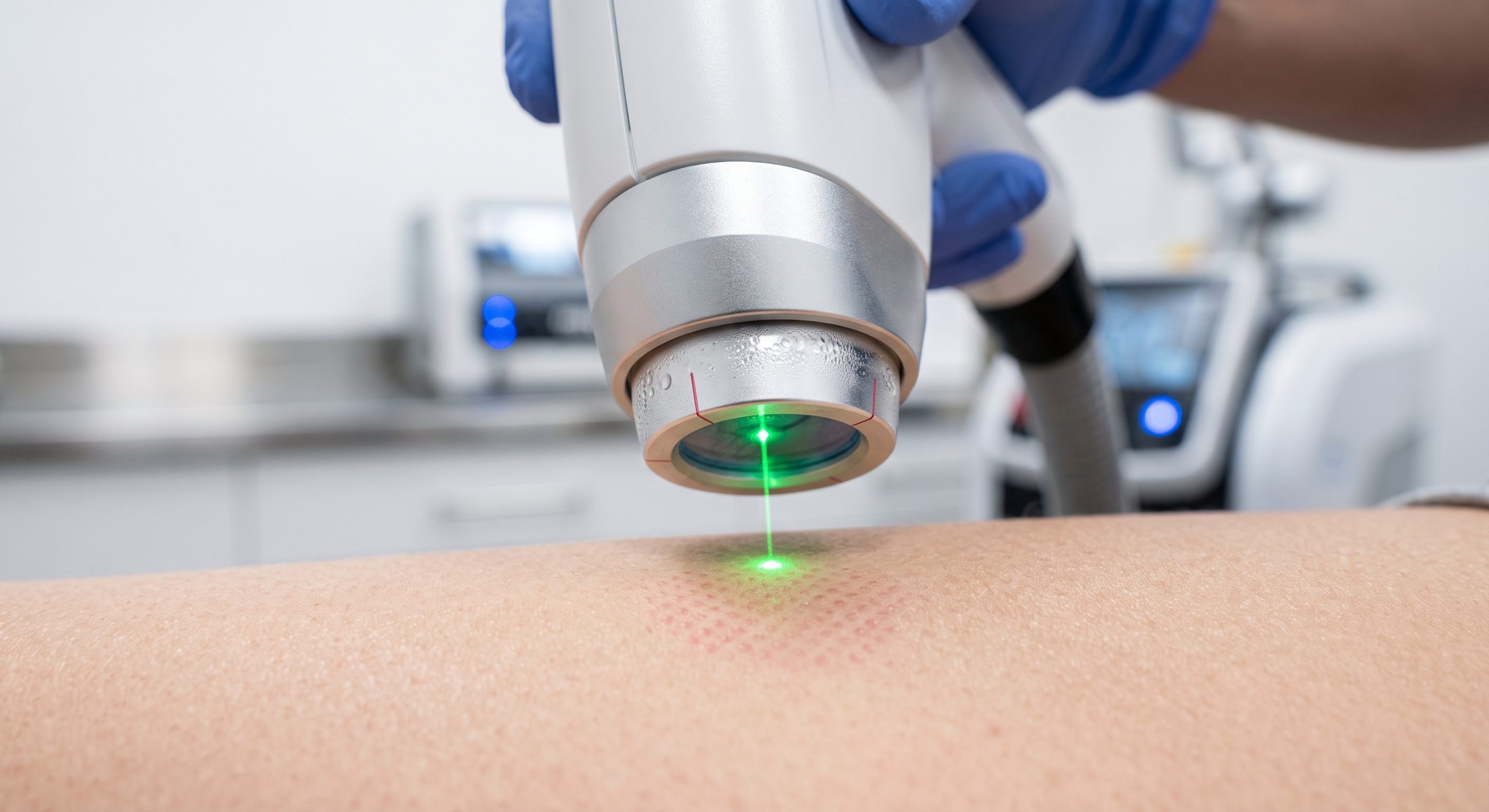
Contaminated or oxidized laser bars exhibit wavelength drift and reduced peak power. For a 755nm system targeting melanin, even a 2nm drift can reduce selective photothermolysis efficiency. Vacuum packaging preserves the spectral purity and ensures that energy density remains within ±5% of the specified value.
Spot Size and Beam Profile Integrity
Optical components protected by vacuum packaging maintain their surface flatness and coating reflectivity. This ensures that the spot size (e.g., 2-10mm) and beam profile remain uniform, preventing hot spots that can cause epidermal burns or blistering.
Cooling System Reliability
Sapphire contact cooling and TEC cooling systems rely on thermally conductive interfaces. Vacuum packaging prevents oxidation of copper heat sinks and thermal paste degradation, ensuring that epidermal protection remains optimal throughout the device’s lifecycle.
ROI Analysis: Vacuum Packaging as a Profitability Driver
Reduced Downtime and Replacement Costs
For a high-volume med spa performing 20+ treatments per day, a single handpiece failure can cost $2,000-$5,000 in lost revenue. Vacuum packaging extends the mean time between failures (MTBF) by 30-40%, directly improving clinic ROI.
Consumable Longevity
Laser bars and optical fibers stored in vacuum packaging retain their shot lifespan (e.g., 10-20 million shots) without degradation. This reduces the cost per patient and enhances profit margins.
Compliance and Insurance Benefits
Demonstrating ISO 13485 and ISO 11607 compliant packaging protects clinics during regulatory audits and may reduce malpractice insurance premiums by proving a commitment to patient safety.
Conclusion: Vacuum Packaging as a Clinical Imperative
Vacuum packaging for sensitive machined parts is not merely a logistical formality—it is a clinical-grade requirement that safeguards wavelength integrity, fluence accuracy, and patient outcomes. For clinic owners and device manufacturers committed to Medical CE, FDA clearance, and ISO 13485 excellence, investing in validated vacuum packaging systems is a non-negotiable step toward sustainable profitability and superior clinical results.