
博客
The Ultimate Clinic Guide to Technical Construction File (TCF): Efficacy, Wavelengths, and ROI
2026年8月21日
The Clinical & Regulatory Backbone: Why Your TCF Matters More Than Ever
In the rapidly evolving landscape of medical aesthetics, regulatory compliance is no longer just a bureaucratic hurdle—it is a cornerstone of clinical excellence and clinic profitability. For practitioners and clinic owners, the Technical Construction File (TCF) serves as the definitive dossier that proves your device meets the essential requirements of the Medical Device Regulation (MDR) 2017/745 and secures its Medical CE marking. This document is not just for regulators; it is a clinical bible that validates the safety, efficacy, and performance of your investment, directly impacting patient outcomes and your return on investment (ROI).
Physical Mechanism & Selective Photothermolysis Deep Dive
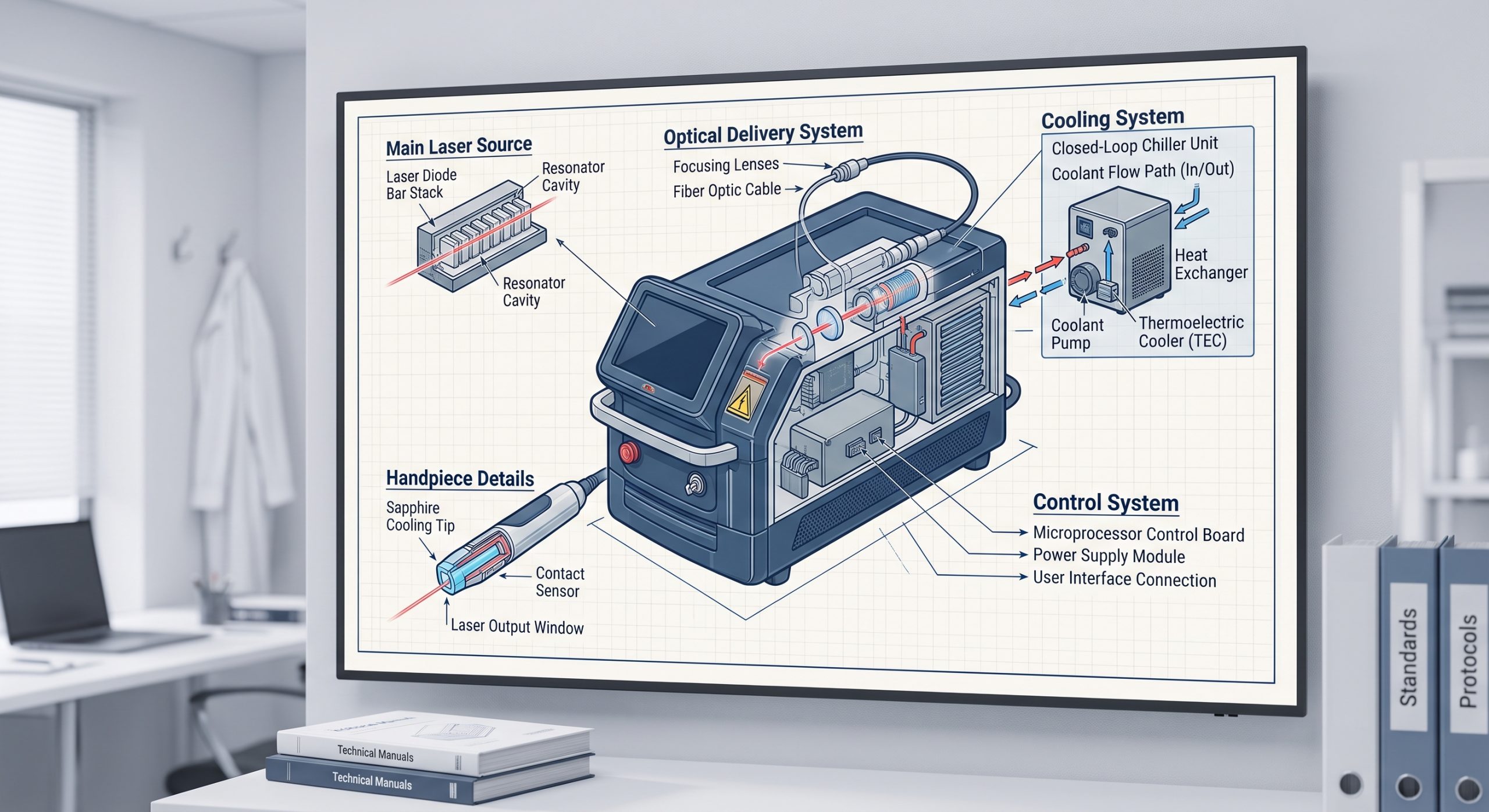
At the heart of any high-quality aesthetic device in your TCF lies the physics of selective photothermolysis. This principle dictates that specific wavelengths are preferentially absorbed by target chromophores—melanin for hair removal or hemoglobin for vascular lesions—while sparing surrounding tissue. The TCF must rigorously document these parameters.
Core Wavelength Synergy: 755nm, 808nm, and 1064nm
A comprehensive TCF details the laser’s multi-wavelength capabilities. The 755nm Alexandrite wavelength is optimal for fine, light-colored hair and superficial pigmentation, offering high melanin absorption. However, for deeper follicular destruction and safer application on darker skin types, the 808nm Diode is considered the ‘gold standard’ due to its deep penetration and high affinity for melanin in the hair bulb. The 1064nm Nd:YAG wavelength penetrates deepest, making it ideal for Fitzpatrick skin types IV-VI and deeper vascular targets. A TCF that validates a triple-wavelength platform demonstrates superior clinical versatility and safety.
Parameter Optimization: Spot Size, Fluence, and Pulse Width
The TCF is a treasure trove of technical metrics that directly influence treatment efficacy. Spot Size is critical; larger spot sizes (e.g., 12mm x 12mm to 15mm x 15mm) allow for faster treatment of large areas like the back or legs and provide deeper penetration by reducing light scattering. Energy Density (Fluence), measured in J/cm², must be precisely calibrated. A TCF will specify a range (e.g., 10-120 J/cm²) to allow operators to tailor treatments. Furthermore, Pulse Width (measured in milliseconds) is the duration of laser exposure. Shorter pulse widths (e.g., 3-10ms) are excellent for small, fine hair, while longer pulse widths (e.g., 20-400ms) are safer for darker skin, allowing the epidermis to cool. The TCF scientifically substantiates these ranges to ensure optimal clearance rates with minimal adverse effects.
| Key Parameter | Technical Specification |
|---|---|
| Wavelengths (Diode Laser) | 755nm / 808nm / 1064nm (Triple-Wavelength Platform) |
| Energy Density (Fluence) | 10 – 120 J/cm² (Adjustable) |
| Pulse Width | 3 – 400 ms (Multi-Selectable) |
| Spot Size | Up to 15mm x 15mm (Large Spot for Deep Penetration) |
| Repetition Rate | Up to 10 Hz (High-Speed Treatment) |
| Cooling System | Sapphire Contact Cooling with TEC (-5°C to +4°C) |
| Applicable Skin Types | Fitzpatrick I-VI |
| Regulatory Compliance | Medical CE, FDA Cleared, ISO 13485 Manufacturing |
Ensuring Patient Safety and Compliance: FDA Clearance & ISO 13485
Your TCF is your shield in an increasingly litigious environment. It provides the evidence required to secure FDA clearance and CE marking. The file must contain comprehensive risk management documents in accordance with ISO 14971 and confirm that the manufacturing processes meet the stringent quality standards of ISO 13485. This includes detailed clinical evaluation reports, biocompatibility testing for the handpiece, and electrical safety testing (IEC 60601). Integrating a robust Sapphire ICE Cooling System is often highlighted in the TCF as a critical safety feature, as it actively cools the epidermis before, during, and after the laser pulse, reducing the risk of thermal injury and enabling higher fluence treatments for better results.
Maximizing Clinic Profitability & Technical ROI
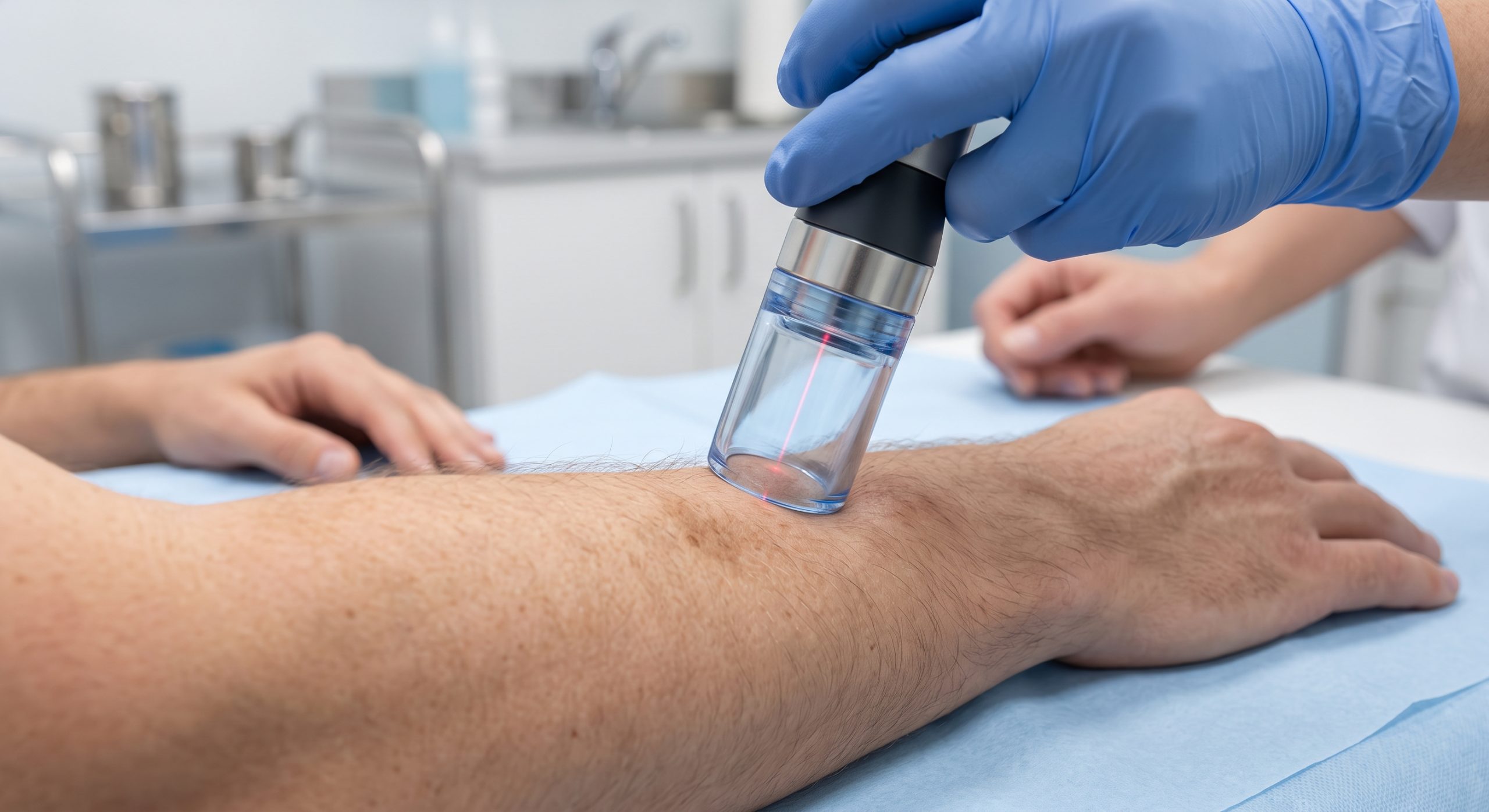
Beyond compliance, the TCF is a powerful tool for demonstrating value to investors and stakeholders. It details the device’s technical performance, which translates directly into clinical throughput and profitability. High-energy output combined with large spot sizes and rapid repetition rates (up to 10Hz) reduces session times, allowing for a higher volume of patients and maximizing the Return on Investment (ROI). Furthermore, the TCF outlines the expected lifespan of critical consumables, such as handpieces (certified for up to 10 million shots) and the internal water cooling circuit, allowing clinics to perform accurate Total Cost of Ownership (TCO) analyses. The ability to treat a broad spectrum of indications—from hair removal and vascular lesions to skin rejuvenation—with a single FDA-cleared platform not only optimizes your asset utilization but also expands your service portfolio, driving revenue growth and solidifying your clinic’s reputation for clinical excellence.