
博客
FDA & Medical CE Compliance: Ensuring Patient Safety with RoHS/REACH Compliant Machined Parts
2026年8月10日
The Critical Intersection of Machining Compliance and Medical Aesthetic Safety
In the high-stakes world of medical aesthetic devices, the difference between a market-leading platform and a regulatory nightmare often comes down to the components the user never sees. For elite clinics and manufacturers, sourcing machined parts—from handpiece casings to internal mechanical supports—requires a rigorous commitment to chemical safety. The European Union’s RoHS (Restriction of Hazardous Substances) and REACH (Registration, Evaluation, Authorisation, and Restriction of Chemicals) regulations are not merely bureaucratic hurdles; they are the backbone of patient safety, device reliability, and global market access. Failure to ensure that your supply chain adheres to these standards can result in costly recalls, legal penalties, and irreversible damage to brand reputation .
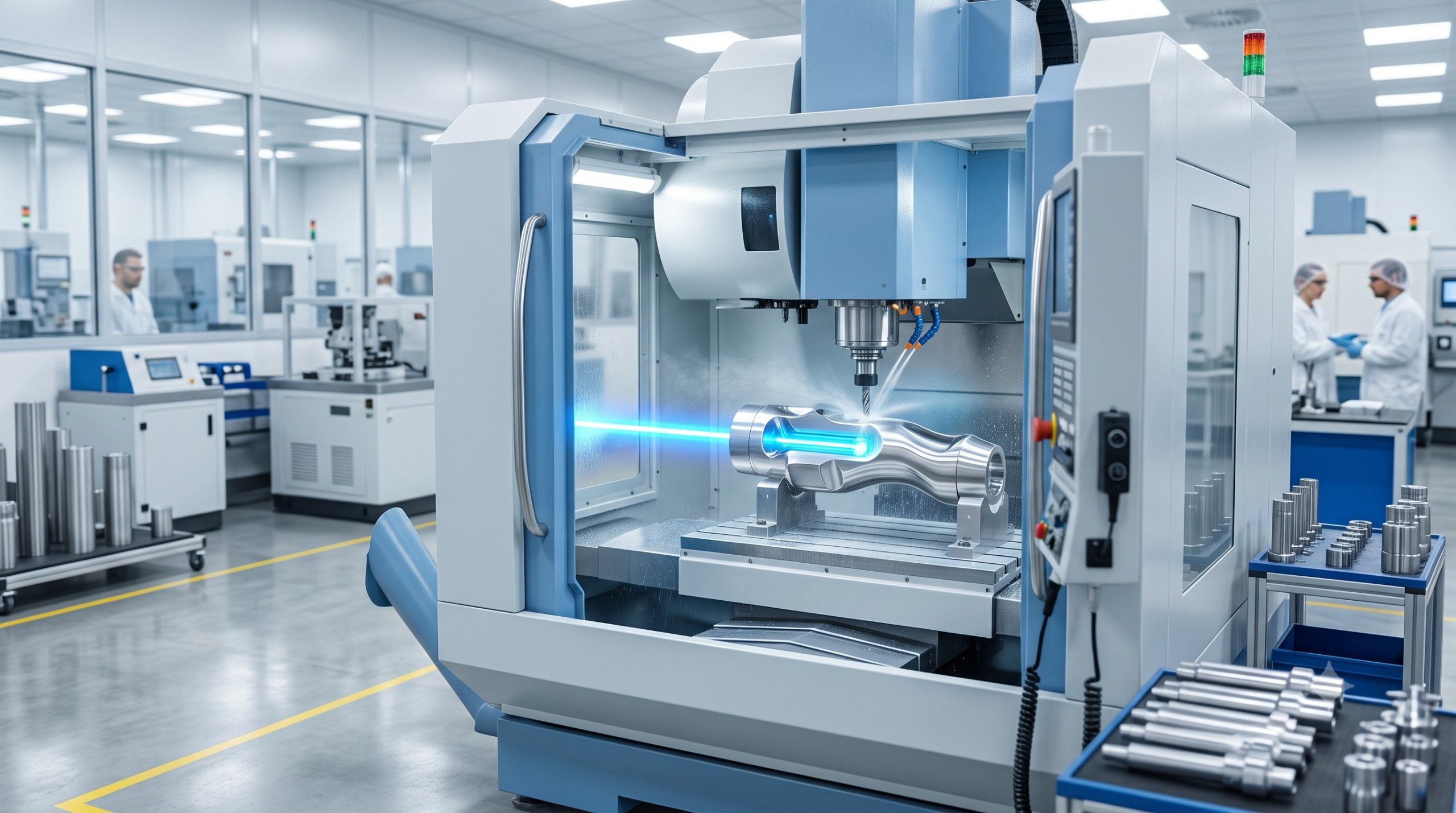
Understanding RoHS and REACH: A Primer for Medical Device OEMs
While often mentioned in the same breath, RoHS and REACH serve distinct but complementary functions in protecting human health and the environment. For manufacturers and importers of medical aesthetic systems, especially those operating within or exporting to the EU, understanding these nuances is paramount.
RoHS Directive (2011/65/EU): Restricting Harmful Elements
RoHS is a product-category-driven directive that specifically restricts the use of ten hazardous substances in electrical and electronic equipment (EEE) . Its primary goal is to limit substances that pose risks during manufacturing and disposal. The restricted substances and their maximum concentration limits in any individual homogenous material are:
- Cadmium (Cd): 0.01% by weight (100 ppm) .
- Lead (Pb), Mercury (Hg), Hexavalent Chromium (Cr6+), PBB, and PBDE: 0.1% by weight (1000 ppm) .
- Four Phthalates (DEHP, BBP, DBP, DIBP): 0.1% by weight (1000 ppm) . Medical devices were required to comply with these phthalate restrictions starting 22 July 2021 .
For a machined part destined for a medical aesthetic device, compliance depends on the material’s composition. For instance, while stainless steel and aluminum brackets generally fall into a ‘REACH only’ category, the moment a part becomes a safety-critical component of a regulated system—such as a load-bearing structure in a high-energy laser platform—it must be verified that it does not contain these restricted substances above the threshold .
REACH Regulation (EC 1907/2006): Managing Chemical Risks
REACH is a broader, substance-driven regulation that applies to virtually all products, including machined metal and plastic parts . It manages the registration, evaluation, authorization, and restriction of chemicals. The key concept for component suppliers is the SVHC (Substances of Very High Concern) Candidate List. If a machined part contains an SVHC above 0.1% weight by weight (w/w), suppliers are obligated to communicate this information to their customers and, in some cases, notify the European Chemicals Agency (ECHA) .
Essential Documentation: The Paper Trail of Compliance
Securing raw materials is only the first step. A robust compliance strategy hinges on a comprehensive ‘paper trail’ that proves material integrity and safety. As one industry expert notes, “If the paperwork is not right, the part is not finished” . A standard compliance documentation package should include:
- EN 10204 Type 3.1 Material Certificate (Mill Test Report): This is the foundational document for metal parts. It traces the chemistry and mechanical properties of the material back to the steel heat, confirming the material grade is correct and test data is from the actual production batch .
- RoHS Test Report / Certificate of Compliance: This verifies that the material and finish of the part do not contain the restricted substances above the limits set by the RoHS Directive .
- REACH SVHC Declaration: This confirms that the part does not contain any SVHCs above the 0.1% threshold, or declares their presence .
- Material Safety Data Sheets (MSDS) / Safety Data Sheets (SDS): For any chemicals used in surface treatments or coatings.
For clinics and manufacturers, the burden of proof is shifting further down the supply chain. While a supplier may provide a self-declaration, many purchasers are now demanding third-party test reports, particularly for high-risk or high-volume components . However, a signed supplier self-declaration can be sufficient if the raw material specification is owned and defined by the buyer, as the supplier has no choice in the material used .
| Key Parameter | Technical Specification |
|---|---|
| Wavelength / Laser Type | 755nm (Alexandrite) / 808nm (Diode) / 1064nm (Nd:YAG) |
| Restricted Substance Thresholds (RoHS) | Cadmium < 0.01%; Lead, Mercury, Cr6+, PBB, PBDE < 0.1% |
| REACH SVHC Obligation | Disclosure if > 0.1% w/w per article |
| Key Quality Documentation | EN 10204 3.1 Material Certificate, RoHS Test Report, REACH Declaration |
| Medical Device Compliance Standards | Medical CE (MDR), FDA 510(k) Clearance, ISO 13485 |
Challenges and Best Practices in the Medical Aesthetic Supply Chain
Auditing Supplier Capability
A common pitfall is relying on a supplier’s general ISO 9001 certification as proof of product compliance. ISO 9001 certifies a factory’s process discipline; it does not mean the parts meet RoHS/REACH regulations . A qualified supplier should be able to provide Mill Test Reports, REACH substance declarations from their steel suppliers, and RoHS test results for any plating or coating involved .
Responsibility for CE Marking and Legal Liability
It is a critical legal distinction that under EU law, the importer (or party placing the product on the market) holds legal responsibility for CE Marking and the Declaration of Conformity. A supplier can provide test data and certificates, but they cannot transfer the legal liability . For machined parts that are safety-critical, they may fall under the CE marking requirements of the Machinery Directive, requiring a Technical Construction File . This file should include drawings, material specs, and test evidence.
Navigating Global Expansion
For medical aesthetic device manufacturers looking beyond the EU, compliance requirements can vary significantly. China RoHS, for example, operates on a mandatory catalogue system, while South Korea’s RoHS is set to expand its scope drastically by 2028 . For a device to achieve Medical CE or FDA clearance, the quality management system must be robust, typically requiring compliance with ISO 13485—a standard for medical devices that emphasizes traceability and risk management throughout the supply chain.

Clinic ROI and Strategic Compliance
For the end-user—the medical spa or clinic—the importance of RoHS and REACH compliance translates directly to operational excellence and patient trust. A device built with non-compliant parts runs a higher risk of malfunction, premature wear, and thermal instability. In a laser device operating at specific parameters like a 1064nm wavelength for deep vascular targets or 755nm for melanin, consistent energy output (fluence) and cooling efficiency (Sapphire ICE) are paramount. If a machined part’s mechanical integrity is compromised by substandard, non-compliant materials, it can lead to inconsistent pulse widths, inaccurate energy density, and safety failures.
From a business perspective, the cost of non-compliance can be devastating. A customs hold due to missing EN 10204 certificates can delay product launches, while a product recall due to lead contamination can destroy a brand’s reputation and lead to significant financial losses . By ensuring your manufacturing partner provides a complete compliance package—including material certifications and REACH declarations—you are protecting your clinic’s investment and ensuring the longevity of your device. As one industry professional stated, the right question is not whether you have more documents, but if you are using the right document for the right situation . A robust supply chain audit, focusing on the documentation capability of the supplier, is a non-negotiable prerequisite for entering the EU market and maintaining the highest clinical standards.
Conclusion
Ensuring that machined parts meet RoHS and REACH standards is a complex but non-negotiable process for elite medical aesthetic OEMs and clinics. It requires a proactive approach to supplier management, a deep understanding of documentation requirements, and a commitment to regulatory excellence. By integrating these compliance checks into the procurement process, manufacturers can safeguard their devices against regulatory action, enhance their reputation for quality, and deliver the safe, effective, and high-performance laser platforms that the aesthetic industry demands.