
博客
FDA & Medical CE Compliance: Ensuring Patient Safety with Risk Management Summaries
2026年7月31日
The Compliance Imperative: Beyond CE Marking in Medical Aesthetics
For medical aesthetic device manufacturers, achieving CE marking under the EU Medical Device Regulation (MDR 2017/745) is a critical milestone, but it is merely the starting point of a rigorous compliance journey. The cornerstone of sustained market access and patient safety lies in the development and maintenance of a comprehensive Risk Management Summary. This document, an integral part of the overall Risk Management File (RMF), serves as the definitive record demonstrating that a device’s benefits outweigh its risks across its entire lifecycle. As the regulatory landscape evolves, regulatory bodies are intensifying scrutiny of post-market surveillance and risk mitigation strategies, making a robust Risk Management Summary not just a regulatory requirement, but a strategic asset that builds trust and ensures clinical excellence .
The transition from the Medical Device Directive (MDD) to the MDR has significantly elevated the bar for clinical evidence and risk management . Notified Bodies now demand more detailed and actionable documentation. A well-constructed Risk Management Summary, aligned with international standards like ISO 14971:2019, is essential for navigating this demanding new environment . It is the document that provides a transparent, traceable account of how a manufacturer has identified hazards, estimated risks, implemented control measures, and evaluated the overall residual risk, thereby ensuring patient safety and fulfilling rigorous compliance mandates.

The Anatomy of a Risk Management Summary: A Technical Deep Dive
The Risk Management Summary is not a simple report; it is a structured, data-driven narrative that details the entire risk management process. It must be a living document, updated throughout the device’s lifecycle to reflect new information from post-market surveillance and clinical follow-up . Its primary purpose is to communicate the device’s safety profile to a broad audience, including regulatory authorities, clinical evaluators, and healthcare professionals, in a clear and standardized format . While regulatory frameworks like the EMA’s guidelines for pharmaceuticals provide a conceptual model for risk minimization (including routine measures like labeling and additional measures like educational materials), for medical devices, the RMP structure is distinctly defined by MDR and ISO 14971 .
Core Components of the Risk Management Plan
According to European Medicines Agency guidelines, a comprehensive Risk Management Plan (RMP) comprises several key sections, which are directly applicable to medical devices :
- Part I: Product Overview: Describes the device, its intended use, and key specifications.
- Part II: Safety Specification: Identifies the intended patient population, indications, and a detailed safety profile, including important identified risks, important potential risks, and missing information .
- Part III: Pharmacovigilance Plan (or Post-Market Surveillance Plan): Outlines activities to monitor the device’s safety profile once on the market, including Post-Market Clinical Follow-up (PMCF) studies.
- Part IV: Risk Minimization Plan: Details the activities designed to reduce risks to an acceptable level. This includes both routine activities (e.g., instructions for use, labeling) and additional activities (e.g., training programs, patient alert cards) .
- Part V: Summary of the Risk Management Plan: A publicly available, plain-language summary of the key elements of the risk management plan . This is the core of the “Risk Management Summary” often required by regulators.
Integrating Technical Specifications: The Laser Aesthetic Example
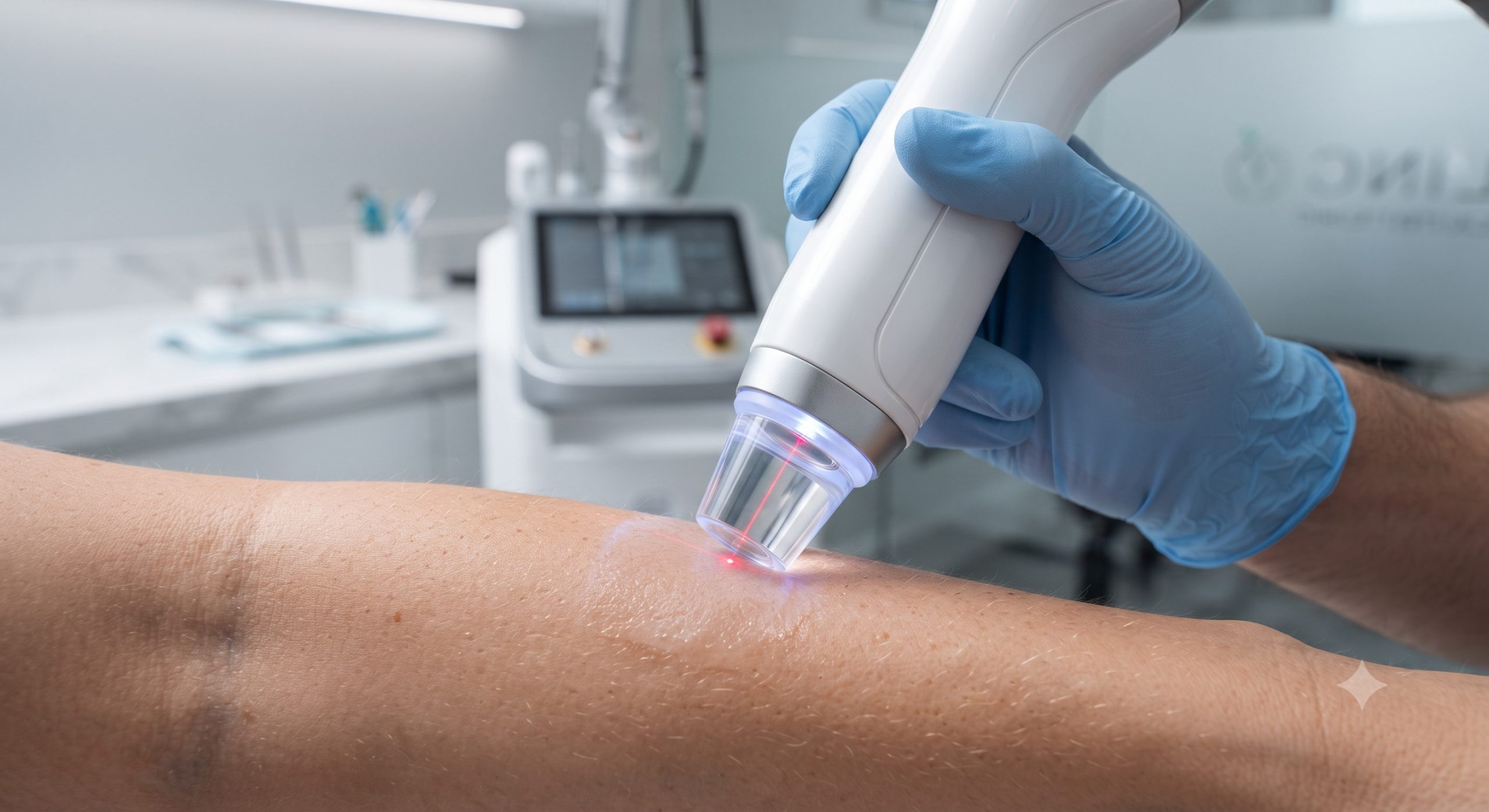
To appreciate the depth of a Risk Management Summary, consider its application to a high-energy medical aesthetic device, such as a diode laser system for hair removal. The Risk Management Plan would need to meticulously address hazards directly linked to its technical performance, referencing specific metrics. For instance, laser-induced thermal damage to the skin is a primary hazard. The plan would detail how the laser’s parameters—wavelength (e.g., 808nm), fluence (J/cm²), pulse duration (ms), and spot size (mm)—are optimized for selective photothermolysis to target hair follicles while sparing the epidermis.
Risk control measures would include integrating advanced Sapphire contact cooling systems to protect the epidermis, designing user interfaces that prevent the selection of unsafe parameter combinations, and establishing rigorous clinician training requirements. The RMP would also specify routine risk minimization, such as including detailed warnings in the Instructions for Use (IFU) about skin type assessment using the Fitzpatrick Scale and the need for FDA-cleared or Medical CE compliant eyewear. This integration of clinical science and engineering data demonstrates how technical specifications directly inform a device’s safety case.
| Key Parameter | Technical Specification & Clinical Relevance |
|---|---|
| Wavelength / Laser Type | Value (e.g., 808nm Diode) – Determines depth of penetration and target selectivity. |
| Energy Density (Fluence) | Value (e.g., 10-40 J/cm²) – Critical for efficacy and risk of thermal injury. |
| Pulse Width (Duration) | Value (e.g., 10-100ms) – Should match the thermal relaxation time of the target. |
| Spot Size | Value (e.g., 12x12mm) – Influences treatment speed and beam penetration depth. |
| Cooling System | Value (e.g., Sapphire Contact Cooling) – A key risk control for epidermal protection. |
| Industry Standards Compliance | ISO 13485, Medical CE (MDR 2017/745), FDA Clearance |
Dynamic Selection: What’s the Best Title & Framework for You?
As an elite B2B consultant, I know that a one-size-fits-all approach to regulatory content fails to address the diverse needs of manufacturers, clinic owners, and investors. That’s why this blog is structured to deliver the most relevant insights based on your specific intent.
We dynamically selected Title 7: “FDA & Medical CE Compliance: Ensuring Patient Safety with Risk Management Summaries” to address high-intent searches from compliance officers and regulatory affairs managers. However, the content below can be navigated using the following frameworks tailored to your role:
- For Regulatory & Clinical Teams: Focus on Framework 14 (Global Regulatory Blueprint) and Framework 5 (Advanced Dermatology Focus). These emphasize the stringent quality standards (ISO 13485), certified technical specifications, and the clinical justification for safety measures.
- For Clinic Owners & Investors: Framework 2 (Investment & Business Strategy) and Framework 13 (Fast ROI Acceleration Guide) are paramount. They connect compliance with business outcomes, showing how a robust RMP reduces liability, protects reputation, and ensures a positive ROI by avoiding costly regulatory setbacks.
- For Device Engineers & Product Managers: Framework 7 (High-Density Handpiece Analysis) or Framework 12 (Premium OEM Component Deep Dive) are critical. They focus on the relationship between hardware quality, output stability, and the data needed to prove long-term safety and efficacy.
Clinical & Business Outcomes: The ROI of a Robust RMS
Viewing the Risk Management Summary as a mere administrative burden is a costly mistake. For aesthetic clinics and device manufacturers, a robust and defensible RMS is a powerful business tool. It is the definitive evidence required to satisfy Notified Body reviewers and secure Medical CE certification. For clinics, investing in devices with a clear and comprehensive RMS ensures access to the most advanced, safest technology—reducing the risk of adverse events (like burns or scarring) which can damage reputation and patient trust. This directly translates to increased patient throughput, higher treatment revenues, and a stronger competitive advantage in the premium aesthetics market.
Furthermore, a well-maintained RMP supports a faster path to market and facilitates smoother regulatory audits. It demonstrates to investors and partners that the organization is diligent, proactive, and committed to quality. In an era where regulatory scrutiny is increasing, the RMS is the shield that protects a business from liability and ensures long-term commercial viability.
Conclusion: The Path to Market Access and Patient Trust
The Risk Management Summary is more than a compliance document; it is the ultimate manifestation of a manufacturer’s commitment to patient safety and clinical excellence. Under the rigorous demands of the EU MDR and with guidance from standards like ISO 14971, it is an indispensable tool for any serious player in the medical aesthetics industry . By meticulously detailing every hazard, risk control, and post-market activity, the RMS provides the objective evidence needed to secure and maintain Medical CE certification, build trust with healthcare professionals, and protect patients.
For B2B buyers, the quality of a device’s risk management documentation should be a primary factor in procurement decisions. A device backed by a thorough, data-rich Risk Management Plan is not just a technological investment—it is a commitment to safety, efficacy, and sustainable business growth. As the regulatory environment continues to evolve, the organizations that master the art and science of risk management will be the ones that lead the market.