
Вопросы и ответы
What Are CTQ Dimensions in Aesthetic Lasers? Clinic Verification FAQ
Overview: Understanding CTQ Dimensions in Aesthetic Devices
In the medical aesthetic industry, Critical-to-Quality (CTQ) dimensions are the measurable parameters that directly impact a device’s ability to deliver safe, effective, and consistent clinical outcomes. For B2B clinic buyers and dermatologists, verifying these dimensions is essential to ensure a positive return on investment (ROI), patient satisfaction, and regulatory compliance. Unlike general specifications, CTQ dimensions like energy stability, spot size accuracy, and cooling efficiency directly influence treatment efficacy and safety margins. This expert FAQ guide breaks down the key CTQ attributes for high-powered aesthetic lasers and provides actionable methods for verification, empowering you to make an informed capital equipment purchase.
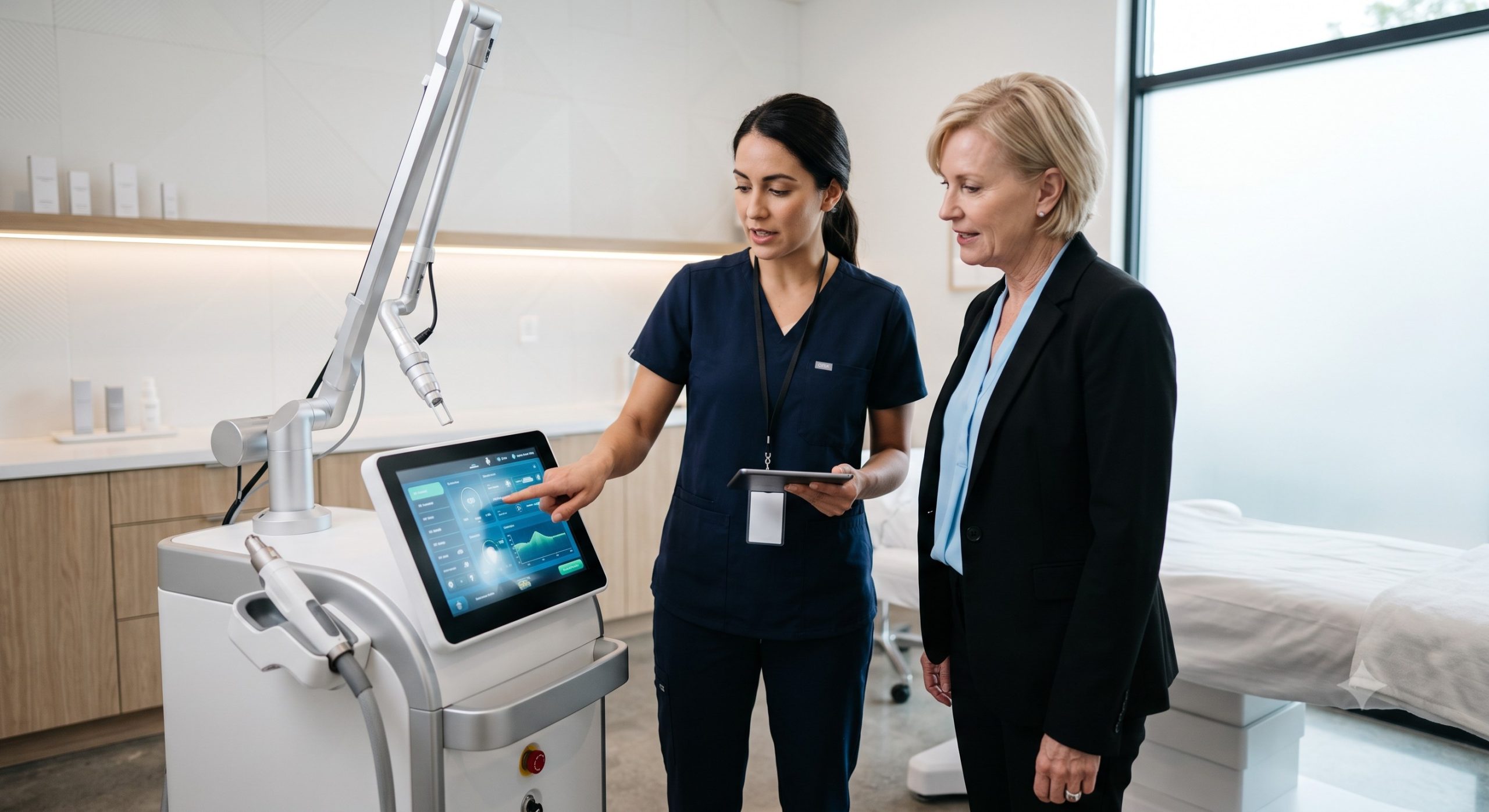
Frequently Asked Questions: CTQ Dimensions & Verification
Q1: What are the core Critical-to-Quality (CTQ) dimensions for an aesthetic laser?
The core CTQ dimensions for an aesthetic laser are energy stability, spot size accuracy, pulse duration consistency, and cooling system efficacy. These four pillars directly determine the device’s ability to achieve selective photothermolysis, the fundamental principle of safe and effective hair removal, tattoo clearance, and skin rejuvenation. Energy stability ensures consistent fluence (J/cm²) with each pulse; spot size accuracy dictates treatment depth and speed; pulse duration controls thermal confinement; and optimal cooling protects the epidermis from thermal injury.
Q2: How do I verify the energy output stability of a laser system before purchase?
To verify energy output stability, request a factory calibration report and perform an on-site test using a clinical-grade energy meter. The report should demonstrate a coefficient of variation (CV) of less than 3% over 10,000 pulses, indicating exceptional stability. During the on-site demonstration, measure the output at maximum fluence and 50% fluence across 200 pulses; the variance should remain within ±5% to ensure reliable clinical results.
Q3: What is the correct method to verify spot size accuracy and its effect on treatment?
Spot size accuracy is verified by measuring the physical beam diameter at the treatment tip and calculating the effective fluence; a mismatch can cause severe burns or undertreatment. We recommend using thermal paper to assess the beam profile, ensuring the footprint matches the stated size (e.g., 15mm, 22mm). A larger spot size (22mm) reduces laser scatter and allows for faster treatment, while smaller spots are needed for precision; verifying the actual spot size ensures that the intended fluence (J/cm²) is delivered to the targeted tissue depth.
Q4: How can I assess the efficacy of the contact cooling system (CTQ) during a demo?
To assess cooling efficacy, verify the sapphire tip temperature reaches -4°C within 30 seconds of activation and maintains this temperature dynamically during a series of test pulses. Use an infrared thermometer to measure the sapphire window temperature before and after a 10-pulse burst at full energy. The temperature should not exceed 10°C, as this demonstrates the system’s ability to protect the epidermis during high-energy treatments. Additionally, test the system’s dynamic cooling coordination—the laser pulse should fire only when the skin is optimally chilled to minimize patient discomfort.
Q5: What verification protocols should I follow for pulse duration and beam profile?
Verifying pulse duration requires a fast photodetector and oscilloscope to confirm the stated pulse width (e.g., 3ms to 300ms) is delivered with minimal distortion; any variance can alter the thermal effect on melanin. Additionally, a beam profiler is used to verify the top-hat energy distribution, which ensures a uniform and safe exposure across the treatment area. Your technical support engineer should demonstrate these capabilities on-site or provide certified third-party test data, which ensures the device meets its medical CE and IEC 60825-1 safety standards.
Q6: How does verifying CTQ dimensions impact my clinic’s ROI and patient retention?
Verifying CTQ dimensions directly reduces your long-term consumable costs and maximizes treatment efficacy, thereby accelerating ROI. Devices that pass rigorous CTQ verification deliver consistent results, reducing the number of touch-up treatments needed and increasing patient satisfaction. A well-verified laser also minimizes unplanned downtime and expensive service calls, ensuring your clinic maintains a high patient throughput and a strong reputation for reliability, resulting in repeat business and referrals.
Q7: What post-sales technical support is available for maintaining CTQ dimensions?
Reputable manufacturers offer annual preventive maintenance (PM) visits, including on-site calibration and energy output verification by certified engineers. Post-sales support should include remote diagnostics, a comprehensive warranty covering the laser bar and handpiece, and a logbook for tracking daily energy tests. Ensure your service agreement provides a clear protocol for calibrating the energy meter and cooling sensors to ensure your device’s CTQ dimensions remain within specification for its entire operational lifespan, typically 7-10 years.