
Вопросы и ответы
Clinic Maintenance Manual: Cleaning, Water Circuits & Upkeep for Your Aesthetic Laser System
Overview
For B2B aesthetic clinic owners and dermatologists, understanding the maintenance and calibration schedule of your laser equipment is critical to ensuring consistent clinical outcomes, patient safety, and long-term return on investment. Calibration and routine upkeep are not just about compliance; they directly impact the efficacy of your treatments. This technical FAQ covers the most pressing questions regarding measurement equipment calibration, water circulation system maintenance, and overall device upkeep, specifically tailored for high-volume aesthetic practices.
Frequently Asked Questions
Q1: How often is the measuring equipment and energy output calibrated for aesthetic lasers?
The energy output of professional aesthetic laser systems should be formally calibrated on an annual basis, or every 1 to 2 million shots, whichever comes first. This rigorous calibration ensures that the energy density delivered to the skin matches the preset parameters on the interface, which is crucial for both safety and efficacy. A comprehensive calibration includes verifying the fluence, pulse duration, and spot size accuracy, typically performed using specialized external power meters by a certified field service engineer to maintain medical CE and FDA compliance.
Q2: What is the typical lifespan of the laser handpiece before requiring replacement?
The typical lifespan of a modern laser handpiece ranges between 2 to 3 million shots, depending on the usage intensity and the specific diode technology employed. While the handpiece itself is durable, the internal diodes and optics degrade over time, affecting output consistency. It is vital to track shot counts and schedule a performance assessment when approaching the recommended service threshold to avoid a drop in clinical efficacy during hair removal or skin rejuvenation procedures.
Q3: What does the water circulation system maintenance schedule entail for high-powered devices?
The water circulation system requires bi-weekly visual checks for coolant levels and a full deionized water replacement every 6 months to prevent scale buildup and ensure optimal thermal regulation. This maintenance is non-negotiable because the water circuit is responsible for dissipating the intense heat generated by the laser bars. Additionally, the inlet filters should be cleaned monthly to maintain proper flow rates, as low water pressure triggers safety interlocks that can interrupt high-throughput treatment sessions.
Q4: How do the imported laser bars and pump durability affect long-term performance?
Premium systems utilize imported laser bars and water pumps, which are engineered for durability and often last for 10,000 operational hours or more before showing signs of wear. The durability of these core components directly dictates the device’s power stability and longevity, minimizing the frequency of major overhauls. Regular software diagnostic tests can assess the health of these components, providing predictive analytics to schedule preventative maintenance rather than reacting to sudden failures.
Q5: How should clinic staff clean the optics and sapphire tip to ensure accurate calibration?
Clinic staff should clean the optics and the sapphire contact cooling window immediately after each patient using a lint-free wipe and 70% isopropyl alcohol solution to maintain optical clarity. A clean sapphire tip is essential not only for hygienic purposes but also to guarantee accurate energy transmission, as debris or residue on the window can scatter the beam and mimic a calibration error. Clinics should implement a strict pre-treatment inspection protocol where the light emission is visually checked against the interface display to ensure the actual output matches the settings before every session.
Q6: What are the signs that an aesthetic laser device needs immediate recalibration?
Immediate recalibration is necessary if you observe a sudden drop in treatment efficacy (e.g., patients reporting less pain or no hair shedding), inconsistent spot size shapes on the skin, or if the device triggers unexpected error codes related to energy monitoring. Clinically, if your standard parameters for a Fitzpatrick skin type III no longer yield the expected results, it is a strong indicator that the internal metering has drifted. In these cases, halt all treatments and contact your technical support team immediately, as using an uncalibrated device presents a high risk of thermal injury.
Q7: Is a calibration certificate included with the annual maintenance contract?
Yes, a detailed calibration certificate with traceable standards is typically provided as part of the annual preventative maintenance contract or service visit. This document is crucial for medical audits and ISO 13485 compliance, offering proof that the device operates within the manufacturer’s rigorous specifications. Ensure that your service agreement explicitly includes this certificate, as it validates the machine’s safety status for dermatology and plastic surgery clinics.
Q8: Can a clinic perform daily self-calibration checks without a field engineer?
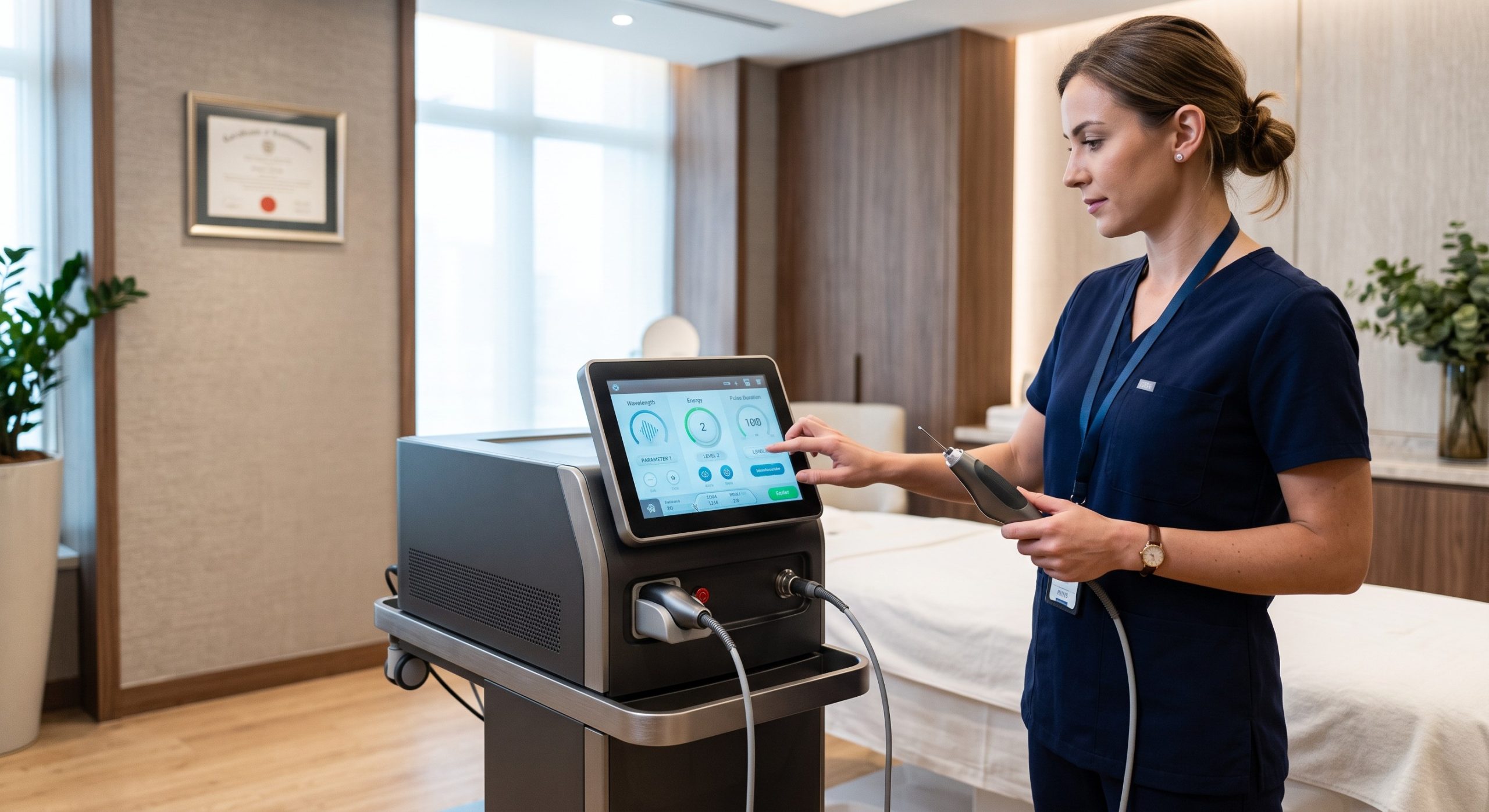
Clinics can and should perform daily ‘system diagnostics’ or ‘self-tests’ built into the smart touchscreen UI to check baseline functionality and sensor integrity. These on-board diagnostics do not replace a full energy calibration but serve as a vital tool for alerting staff to potential issues before they affect patient outcomes. For example, users can verify that the system’s internal energy sensors are reading within an acceptable margin of error using the system’s built-in test mode, ensuring that hardware engineering parameters remain stable between formal service visits.