
Вопросы и ответы
AQL Sampling FAQ: Expert Answers for Aesthetic Clinics & Dermatologists
Overview
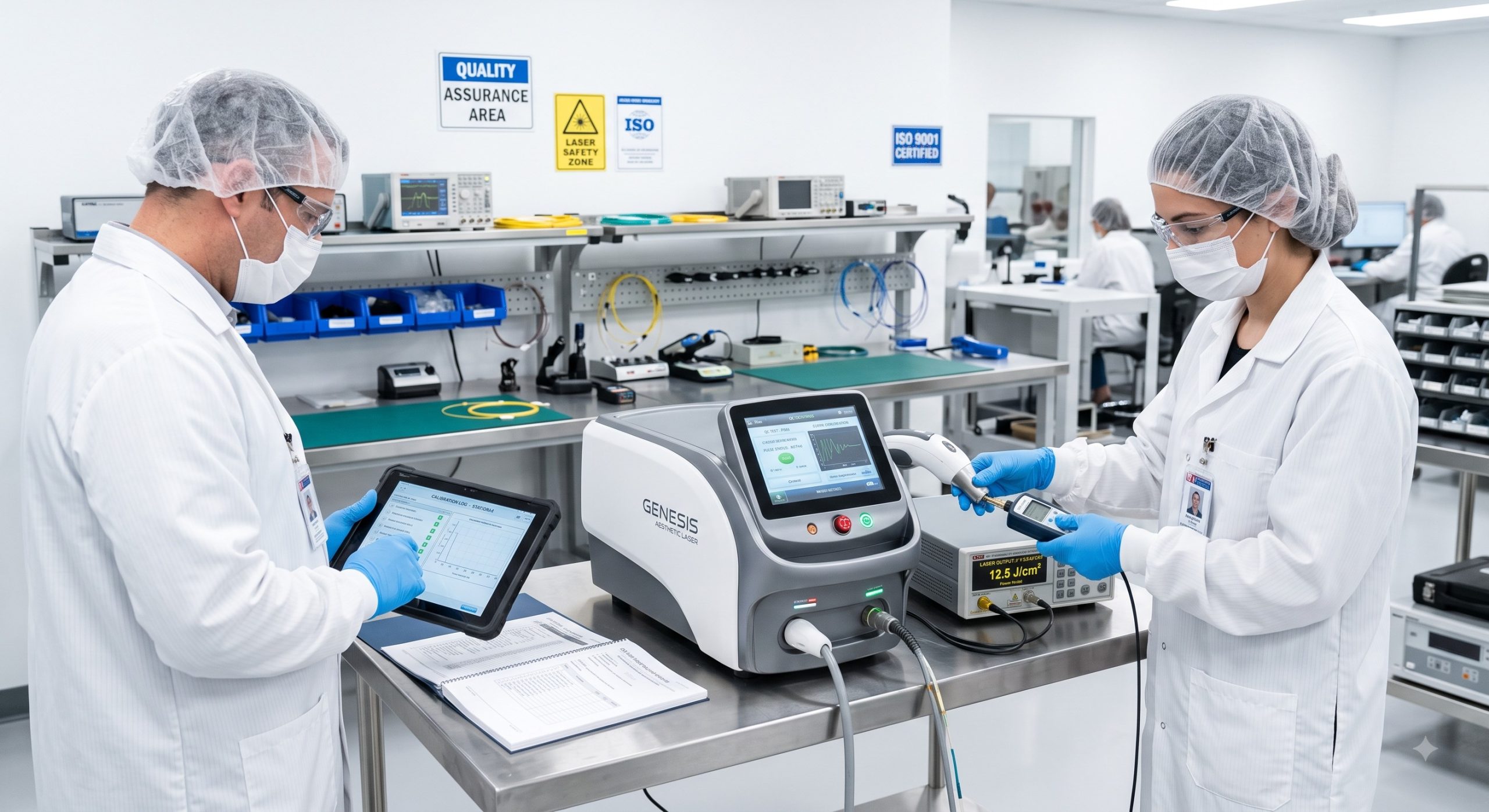
For B2B buyers of medical aesthetic devices, ensuring product quality is non-negotiable. The Acceptable Quality Limit (AQL) sampling plan is the statistical cornerstone of this assurance, helping you verify that a delivered batch meets your specifications without the need for 100% inspection . This FAQ explains how we apply rigorous AQL standards—specifically based on ANSI/ASQ Z1.4 and ISO 2859-1—to protect your clinic’s investment and ensure patient safety . By using a statistically valid plan, we meet global regulatory expectations (including FDA expectations) and provide you with defensible proof of quality .
Frequently Asked Questions
Q1: What specific AQL standard and sampling plan do you use for your medical aesthetic devices?
We primarily utilize the ANSI/ASQ Z1.4-2003 (R2018) standard for attribute sampling plans, which is statistically valid and widely accepted in the medical device industry . For many critical components, we apply a zero-acceptance (c=0) plan, meaning if a single defect is found in the sample, the entire lot is rejected .
Q2: How do you determine the sample size and acceptance numbers for a given production lot?
Sample size is determined by a statistically driven plan referencing the lot size and a defined General Inspection Level, typically Level II . For example, for a lot of 4,000 units at AQL 2.5, the plan dictates a sample size of 200 with an acceptance number of 10 and a rejection number of 11 .
Q3: What AQL levels do you apply for different types of defects?
We assign AQL levels based on defect severity: we use the most stringent AQL (e.g., AQL 0.65) for safety-critical and key performance parameters, while we might allow a more lenient AQL (e.g., AQL 2.5) for minor cosmetic issues . Critical components often invoke a zero-defect (AQL 0) policy .
Q4: Do you follow the normal/tightened/reduced switching rules in your quality system?
Yes, we strictly adhere to the switching rules defined in ANSI/ASQ Z1.4 to maintain a dynamic and responsive quality system . For instance, if 2 out of 5 consecutive lots are rejected, we automatically move to ‘Tightened’ inspection to apply more scrutiny .
Q5: What happens if a batch fails the AQL inspection at your factory?
If a batch fails, it is classified as a major nonconformance, and shipment is blocked . The supplier is required to perform 100% sorting or rework, followed by a corrective action plan (CAPA) with a root cause analysis .
Q6: Do you test 100% of the devices for critical safety functions?
While we use AQL sampling for general attributes, we mandate 100% functional testing of critical safety subsystems, such as emergency stops, safety interlocks, and electrical safety parameters, for every unit produced . This ensures that every device leaving our facility is fundamentally safe .
Q7: What documentation do you provide with the shipment to certify the AQL inspection?
We provide a comprehensive inspection package including a detailed lot inspection report, signed calibration certificates for test equipment, and a certificate of conformance . This documentation provides full traceability and meets the requirements of a robust quality management system (QMS) .
Q8: How does your quality plan support compliance with international regulations like CE or FDA?
Our quality plan is aligned with ISO 13485 standards, and our AQL-based testing is a key component of our Technical File . This provides the objective evidence required by regulatory bodies and Notified Bodies to demonstrate that our devices are manufactured under strict control .