
Блог
The Ultimate Clinic Guide to Preparing for a Notified Body Audit on Chinese Manufacturing Sites: Efficacy, Wavelengths, and ROI
2026年9月2日
The 2026 Compliance Imperative: Turning a Notified Body Audit into a Strategic Asset
For medical aesthetic device distributors and clinic chains sourcing from China, the Notified Body Audit has evolved from a regulatory hurdle into a critical due diligence milestone. With the Medical Devices Regulation (MDR) 2017/745 now fully enforced and the In Vitro Diagnostic Regulation (IVDR) applying pressure across the supply chain, a successful audit on a Chinese manufacturing site is the ultimate validation of a product’s safety, clinical efficacy, and marketability. This guide provides a clinical engineer’s blueprint for navigating these audits, focusing on the technical metrics and compliance standards that matter most to a B2B medical aesthetic device buyer.
The shift from the MDD to the MDR has drastically increased the scrutiny on Notified Bodies. These organizations are now required to conduct unannounced audits and significantly more rigorous physical inspections. For the B2B buyer, this means that a Chinese factory’s ability to pass a Notified Body Audit is the single most reliable indicator of long-term product stability, supply chain security, and patient safety. A failed audit can halt production, delay market entry, and damage brand reputation. Conversely, a well-prepared audit represents a strategic advantage, ensuring that the technology you’re bringing to your clinic—from 808nm diode lasers to 755nm alexandrite equivalents—meets the highest global standards.
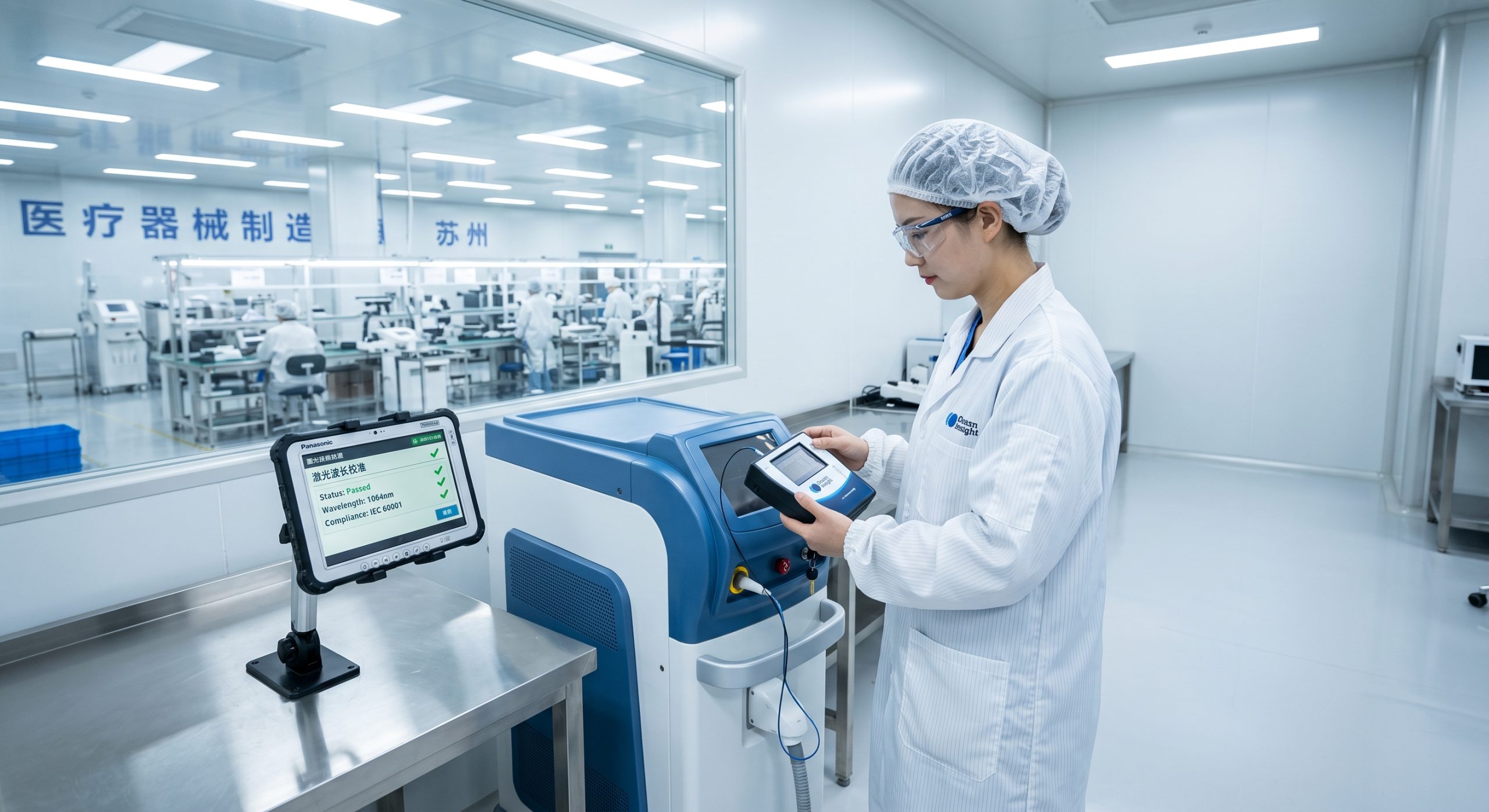
Decoding the Medical CE Technical File: The Blueprint for Audit Preparedness
The Technical File is the cornerstone of any Notified Body Audit. It is the living document that proves your device complies with the MDR’s General Safety and Performance Requirements (GSPR). For a Chinese manufacturing site, this file must be exceptionally comprehensive, demonstrating a deep understanding of both the hardware and its clinical application. The audit team will meticulously dissect this document, tracing every component and claim back to verifiable evidence. A key area of focus is the Risk Management File (compliant with ISO 14971), which must address all potential hazards, from electrical safety (IEC 60601-1) to the clinical risks of thermal injury.
Furthermore, the Technical File must detail the device’s intended purpose and clinical performance. This is where the specificity of the technology becomes critical. For instance, a diode laser designed for hair reduction must provide data on its efficacy across various skin types. This requires a detailed analysis of parameters like Fluence (measured in J/cm²), Pulse Width (in milliseconds), and Spot Size (in mm²). The auditor will not only look for this data but will also scrutinize the clinical evaluation report (CER) to ensure the device’s claims are supported by robust clinical evidence, including equivalence to a legally marketed device where applicable.
Critical Technical Metrics Under the Microscope
During a physical inspection, the Notified Body auditor will want to see the device’s performance verified against its declared specifications. This involves a deep dive into the engineering and physics of the device. For a typical medical aesthetic laser, this means validating the accuracy and stability of its output. The following metrics are non-negotiable and must be traceable through the entire quality management system (ISO 13485).
- Wavelength Accuracy: The device must emit at the precise wavelength claimed (e.g., 755nm, 808nm, 1064nm). The auditor will verify the calibration of the spectrometer used to measure this, ensuring that the laser diode or crystal is performing within tolerance. A shift of even a few nanometers can drastically alter tissue interaction, reducing efficacy for selective photothermolysis.
- Energy Density (Fluence) and Stability: The delivered energy must be consistent pulse-to-pulse. The auditor will review the quality control (QC) data for pulse-to-pulse stability, typically measured as a percentage. A high-quality device will demonstrate a stability of ±5% or better. This is crucial for predictable clinical outcomes and preventing adverse events.
- Pulse Width (Duration): The pulse duration determines the thermal confinement time. For hair removal, a pulse width in the range of 5-30ms is typical to target melanin in the hair follicle while minimizing damage to the surrounding epidermis. The auditor will verify the factory’s ability to calibrate and measure this parameter accurately, often using a fast-response photodetector.
- Spot Size and Energy Density Correlation: The relationship between spot size and energy density is inversely proportional; as spot size increases, the energy per unit area decreases. The Technical File must document this relationship and the factory’s method for ensuring that the user interface (UI) accurately reflects this. A larger spot size (e.g., 10mm x 10mm) allows for faster treatment times but requires higher peak power to maintain effective fluence.
Audit Deep Dive: ISO 13485 and the Manufacturing Quality System
While the Technical File demonstrates product compliance, a successful audit hinges on the factory’s ability to consistently manufacture the device to that standard. This is where ISO 13485:2016 comes into play. This is the internationally recognized standard for a Quality Management System (QMS) specific to medical devices. The Notified Body auditor will spend a significant portion of their time assessing the factory’s QMS. They will follow a product from raw material receipt through to final release, ensuring that every process is validated, controlled, and documented. This includes reviewing the factory’s:
- Supplier Management: Auditors will scrutinize how the factory qualifies and monitors its critical suppliers, particularly for the laser diodes, optical elements, and cooling components. A lapse in supply chain quality can directly impact device performance and safety.
- Incoming Inspection: The factory must have a robust system for inspecting components upon arrival. For example, the optical power output of each laser bar must be verified and documented to ensure it meets the required specifications for the final assembly.
- Production and Process Controls: This is the heart of the audit. The factory must demonstrate that they have established and validated manufacturing processes, including assembly procedures, soldering techniques, and optical alignment. The auditor will check that operators are trained and following written instructions, and that process parameters are monitored and controlled.
- Final Release and Functional Testing: Every finished device must undergo rigorous functional testing before release. This includes testing the laser’s output power, energy, pulse width, and safety interlocks. The factory must be able to prove they have the necessary calibrated test equipment (e.g., power meters, oscilloscopes) and that they use them correctly.
| Audit-Focused Parameter | Key Requirement for Compliance |
|---|---|
| Wavelength Accuracy (e.g., 755nm/808nm/1064nm) | Calibration must be within ±2nm, verified by a certified spectrometer. |
| Energy Density (Fluence) Stability | Must be within ±5% pulse-to-pulse stability to ensure predictable clinical outcomes. |
| Pulse Width Consistency | Must be validated and calibrated (e.g., 5-30ms), with documentation to prove accuracy. |
| Epidermal Cooling System | TEC/Sapphire contact cooling must maintain a stable skin temperature of 5-10°C to prevent burns. |
| Electrical Safety (IEC 60601-1) | Must pass dielectric strength and leakage current tests with full traceability. |
Navigating the Physical Inspection: Hardware, Cooling, and Electrical Safety
The physical inspection is the most tangible part of the audit. The auditor will walk the production floor and examine the device itself, focusing on areas that directly impact patient safety and device longevity. This includes a thorough review of the cooling system, which is paramount for high-power aesthetic devices like diode lasers. The auditor will assess the integrity of the Sapphire contact cooling mechanism and the internal water/air cooling circuits. They will be looking for evidence of leaks, proper flow rates, and temperature stability to ensure the handpiece can maintain a safe and comfortable treatment temperature (typically in the range of 5°C to 10°C for contact cooling).
Electrical safety is another critical area. The auditor will review the device’s compliance with IEC 60601-1 (Medical Electrical Equipment – General Requirements for Basic Safety and Essential Performance). This involves checking the device’s construction, such as the quality of the internal power supply, grounding, and protective earthing. They will also examine the software’s role in safety, ensuring that the device’s user interface prevents unsafe parameter settings (e.g., setting a fluence too high for a specific skin type). The audit will confirm that the factory has conducted proper electrical safety tests (e.g., dielectric strength, leakage current) on all devices, which is vital for obtaining FDA clearance and Medical CE certification.
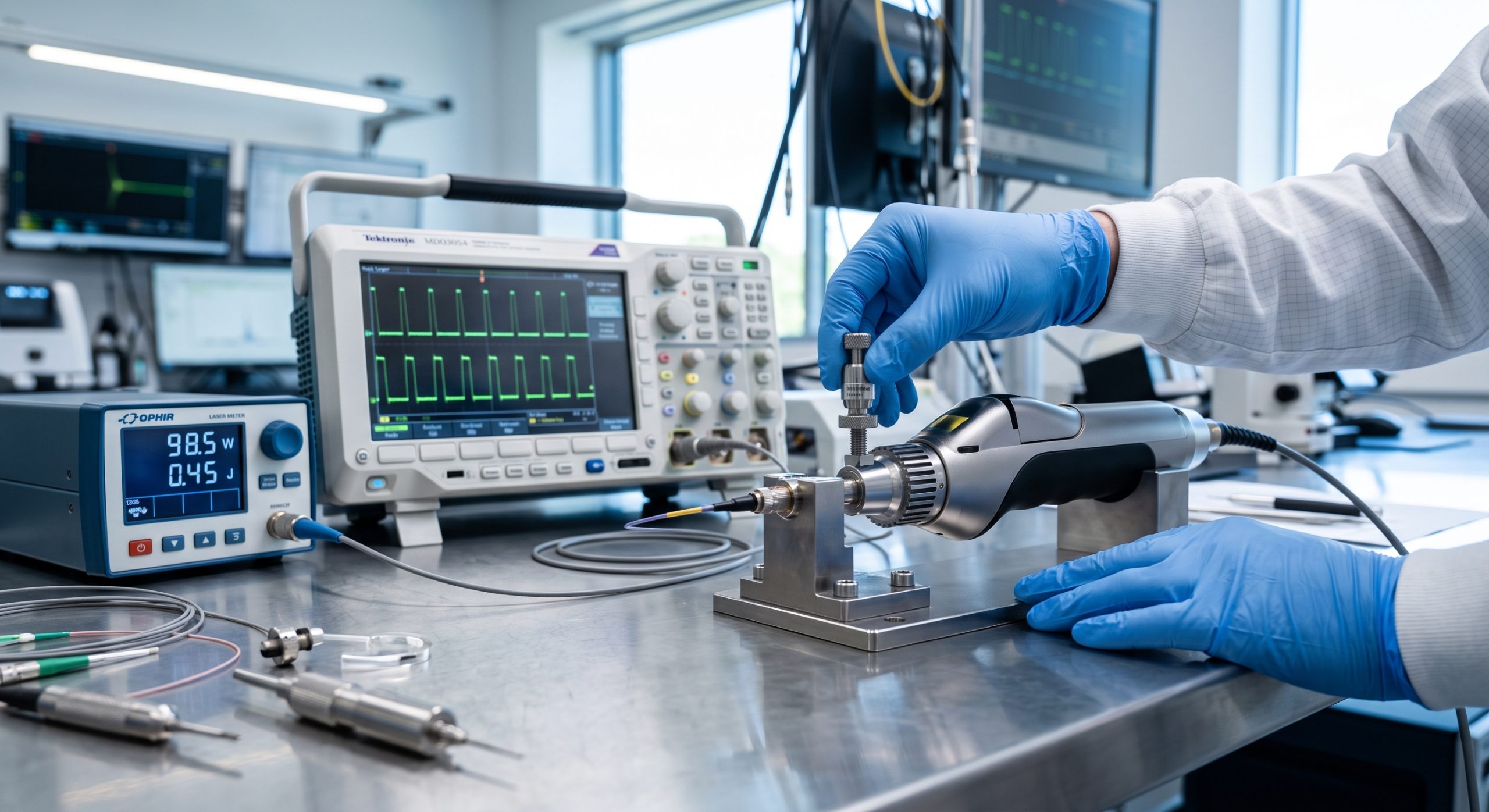
The B2B ROI of a Successful Audit: More Than Just a Certificate
For the B2B buyer, a factory’s proficiency with the Notified Body Audit process is a key performance indicator. It reveals the manufacturer’s commitment to quality, their understanding of the clinical application of their technology, and their ability to deliver a reliable, safe, and effective product. A successful audit is a powerful competitive differentiator. It enables you, the distributor or clinic owner, to market your devices with confidence, backed by the highest regulatory standards. It ensures your clinic can leverage the latest technology—from the 755nm wavelengths for fine hair to the deep-penetrating 1064nm for darker skin types—with peace of mind.
Ultimately, the investment of time and resources in preparing for a Notified Body Audit is an investment in clinical excellence and business sustainability. It protects your brand, builds trust with your clients, and maximizes the return on your medical aesthetic device investment. By partnering with a Chinese manufacturer that treats the audit as a strategic process rather than a compliance checkbox, you are securing a long-term, profitable relationship built on a foundation of quality, safety, and clinical performance.
Conclusion: Turning Compliance into a Clinical Advantage
Navigating a Notified Body Audit on a Chinese manufacturing site is a complex but essential journey. It demands a meticulous approach to clinical data, manufacturing processes, and hardware verification. For the informed B2B buyer, the audit process is not just about obtaining Medical CE or FDA clearance; it is about validating the core scientific principles behind the technology—the selective photothermolysis that delivers superior results, the engineering that ensures patient safety, and the quality control that guarantees consistent performance. This ultimately translates into a superior product that drives clinic profitability and patient satisfaction.