
Блог
The Ultimate Clinic Guide to Out-of-Box Audit (OBA) Stations: Efficacy, Wavelengths, and ROI
2026年11月2日
Why Out-of-Box Audit (OBA) Stations Define Modern Aesthetic Laser Procurement
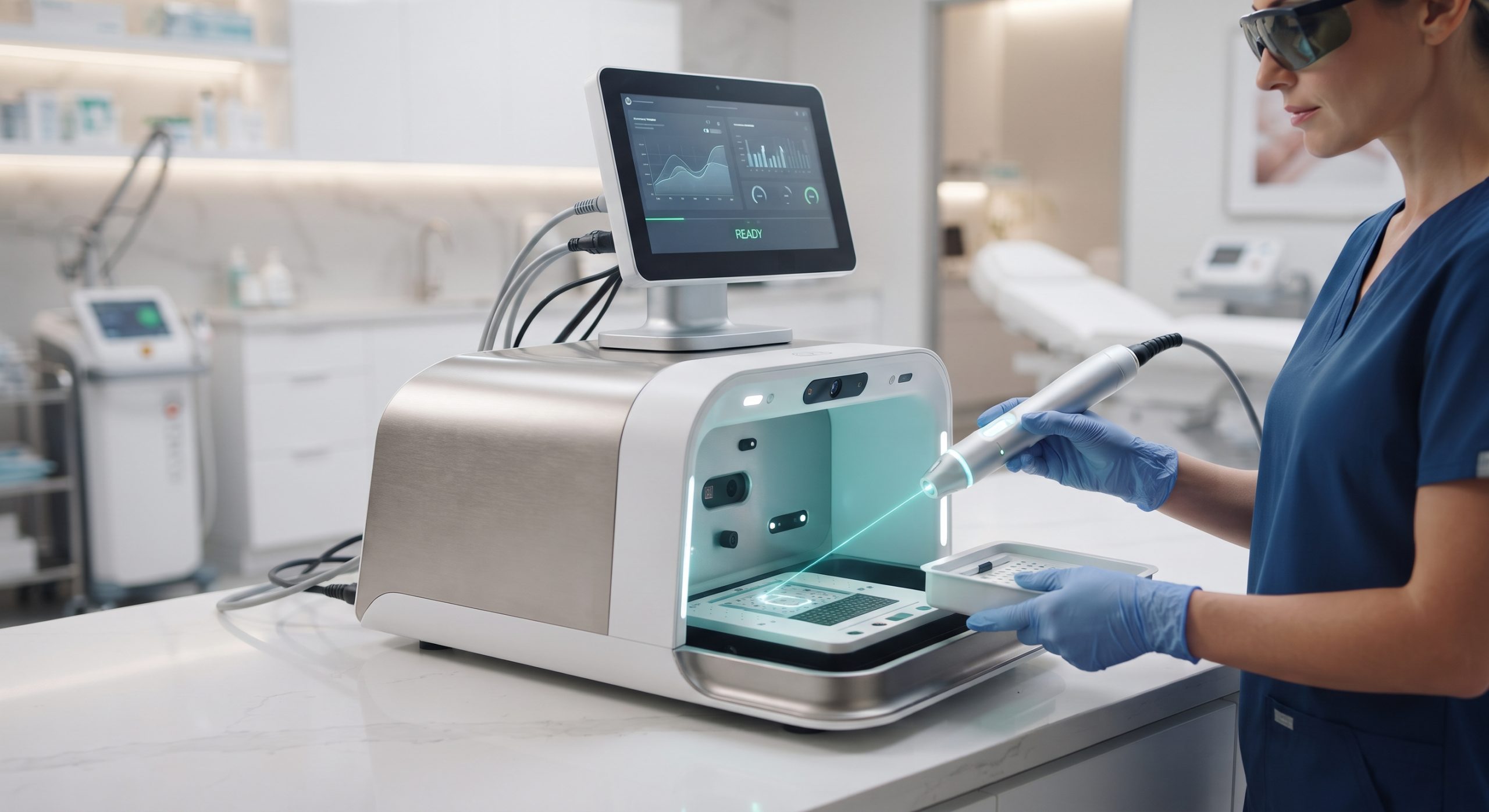
In the high-stakes world of medical aesthetics, the difference between a profitable laser service line and a clinical liability often comes down to what happens in the first sixty minutes after a crate is opened. An Out-of-Box Audit (OBA) station is the structured, protocol-driven workflow through which a clinic verifies that a newly delivered diode laser, IPL system, or multi-wavelength platform meets its manufacturer-declared optical, thermal, and electrical specifications before the first patient is ever treated. For clinic owners, medical directors, and biomedical engineers, the OBA is not a formality — it is the single highest-leverage risk-management and ROI-protection step in the device lifecycle.
This guide dissects the complete OBA workflow for high-performance 755nm/808nm/1064nm diode laser platforms, from incoming inspection and optical verification through fluence, pulse width, and spot size validation, and on to regulatory documentation aligned with Medical CE, FDA clearance, and ISO 13485 quality management systems.
The Physical Mechanism: What an OBA Station Actually Verifies
An OBA station is built around the principle that selective photothermolysis depends on predictable energy delivery. If the delivered energy density (fluence) deviates from the declared value, clinical outcomes drift and complication risk rises. The OBA workflow therefore verifies four physical domains.
1. Optical Output Verification
Using a calibrated power meter and beam profiler, technicians confirm that the handpiece emits the declared wavelengths — typically 755nm for melanin-selective hair removal and pigmented lesions, 808nm for deep follicular penetration and high-volume hair reduction, and 1064nm for vascular targets and darker Fitzpatrick skin types. Wavelength drift beyond ±5nm is a red flag for laser bar or fiber coupling defects.
2. Fluence and Pulse Width Calibration
Delivered fluence (measured in J/cm²) must be verified across the full clinical range — commonly 5–120 J/cm² for diode hair removal — and pulse width must be confirmed within the millisecond window (e.g., 10–400ms) that governs thermal confinement in follicular and epidermal tissue.
3. Spot Size and Beam Homogeneity
Spot size directly affects treatment speed and depth of penetration. Large spot sizes (e.g., 12×12mm or 12×20mm) reduce session time but demand excellent beam homogeneity; hot spots create burns while cold zones produce patchy clearance. OBA stations map the beam profile to confirm uniformity.
4. Cooling and Thermal Safety Systems
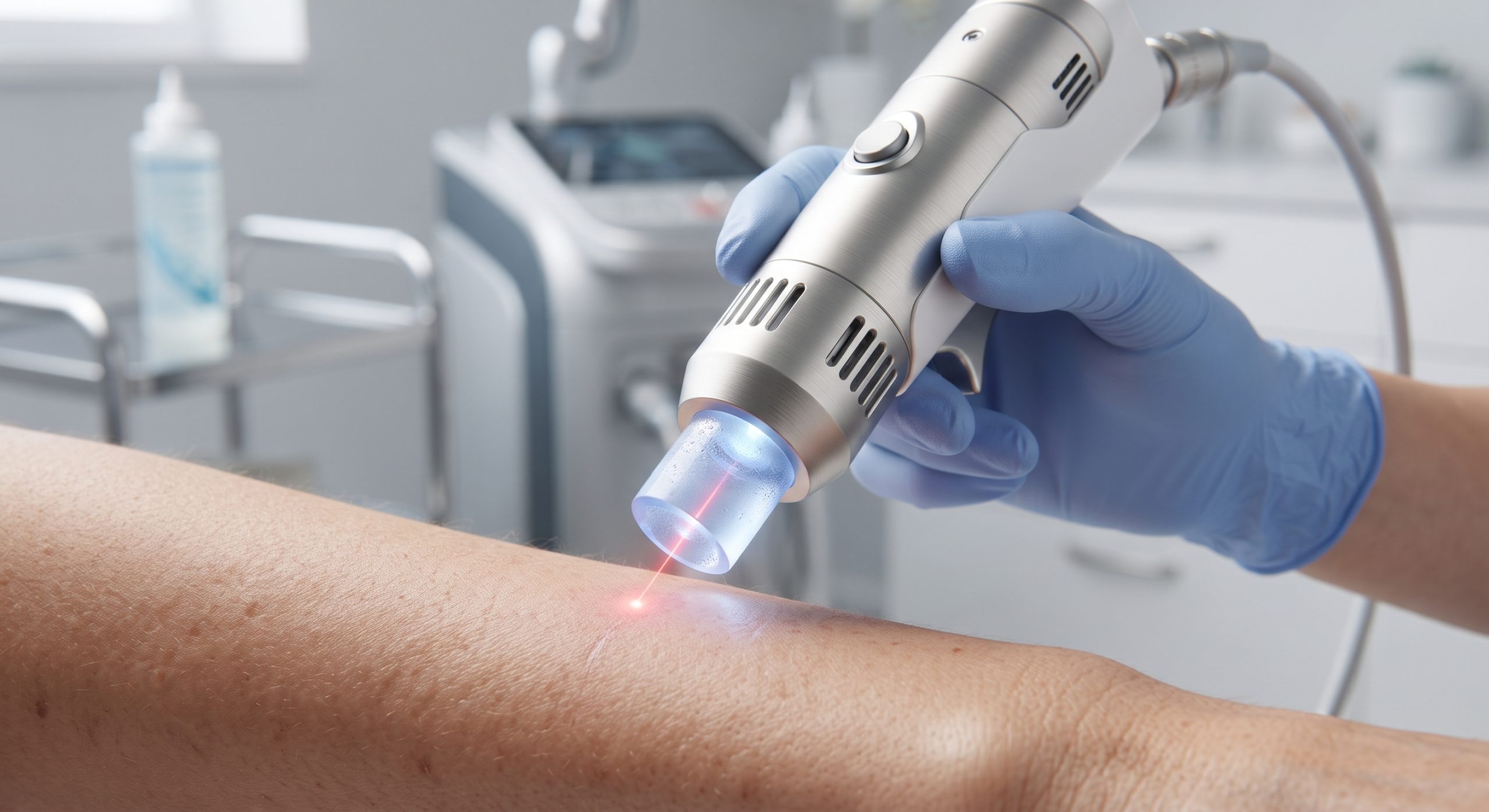
Sapphire contact cooling, thermoelectric (TEC) chillers, and integrated skin temperature sensors are validated to ensure epidermal protection. A failed cooling circuit is the most common cause of post-inflammatory hyperpigmentation and burns in Fitzpatrick IV–VI patients.
Critical Output Metrics: OBA Acceptance Matrix
The following matrix represents the pass/fail criteria a rigorous OBA station should apply to a premium multi-wavelength diode platform before clinical release.
| Key Parameter | Technical Specification |
|---|---|
| Wavelength / Laser Type | 755nm / 808nm / 1064nm Diode Platform |
| Cooling System | Sapphire Contact Cooling + TEC Chiller |
| Fluence Range | 5–120 J/cm² (verified at OBA) |
| Pulse Width | 10–400ms, calibrated per preset |
| Spot Size | 12×12mm to 12×20mm, beam homogeneity >90% |
| Frequency | 1–10Hz for high-throughput sessions |
| Compliance | Medical CE, FDA Clearance, ISO 13485 |
ROI vs Alternatives: Why the OBA Protects Capital
A diode laser platform represents a significant CapEx commitment. The OBA station converts that commitment into a defensible asset in three ways.
- Warranty enforcement: Out-of-spec findings documented at the OBA trigger immediate warranty claims rather than costly post-warranty repairs.
- Consumable and handpiece lifespan protection: Verifying laser bar output and cooling integrity at intake prevents premature handpiece degradation and reduces lifetime cost of ownership.
- Insurance and compliance defensibility: A documented OBA with traceable calibration records strengthens Medical CE and FDA compliance posture and satisfies clinic audit requirements under ISO 13485 supplier expectations.
Clinics that skip the OBA routinely absorb 15–30% higher first-year service costs and face higher complication exposure — a direct hit to per-treatment profitability.
Indications and Fitzpatrick Scale Deployment
With verified output parameters, the OBA station can now map device capability to clinical indications across the Fitzpatrick scale.
- Types I–III: 755nm and 808nm deliver highly efficient hair reduction and pigmented lesion clearance at moderate fluence.
- Types IV–V: 1064nm with longer pulse widths and aggressive sapphire cooling provides safer vascular and hair-removal coverage.
- Type VI: Strict reliance on 1064nm, conservative fluence, and verified epidermal cooling is mandatory; OBA data on cooling performance is clinically decisive here.
Each indication should be paired with a validated parameter preset derived from the OBA acceptance matrix, ensuring reproducibility across operators.
Clinic ROI and Conclusion
The Out-of-Box Audit station is the operational bridge between procurement and clinical excellence. By systematically verifying wavelengths (755nm/808nm/1064nm), fluence, pulse width, spot size, and sapphire contact cooling performance against Medical CE, FDA, and ISO 13485 benchmarks, clinics eliminate the hidden costs of underperforming hardware before they reach the treatment room. The result is faster treatment throughput, safer Fitzpatrick I–VI coverage, longer handpiece life, and a measurably stronger return on capital. For any med spa or dermatology practice scaling its laser service line, the OBA station is not optional infrastructure — it is the foundation of a profitable, compliant, and reputation-protecting aesthetic business.