
Блог
The Ultimate Clinic Guide to Desiccant Policies for Ocean Freight: Efficacy, Wavelengths, and ROI
2026年7月10日
Introduction: Why Desiccant Policies Are the Silent Guardian of Your Aesthetic Device Investment
For high-value medical aesthetic devices, the journey from the manufacturing floor to your clinic is fraught with peril. While clinicians focus on parameters like 755nm, 808nm, and 1064nm wavelengths and ISO 13485 certified manufacturing, the logistics of ocean freight introduce a significant threat: moisture-induced corrosion. The failure to implement a robust desiccant policy for ocean freight is a primary cause of premature handpiece failure, degraded optical performance, and voided warranties. This guide explores the technical necessity of advanced desiccant protocols, linking them directly to the longevity of your equipment and, ultimately, your clinic’s ROI.
Physical Mechanism: Understanding the Threat of Moisture to Metal Components
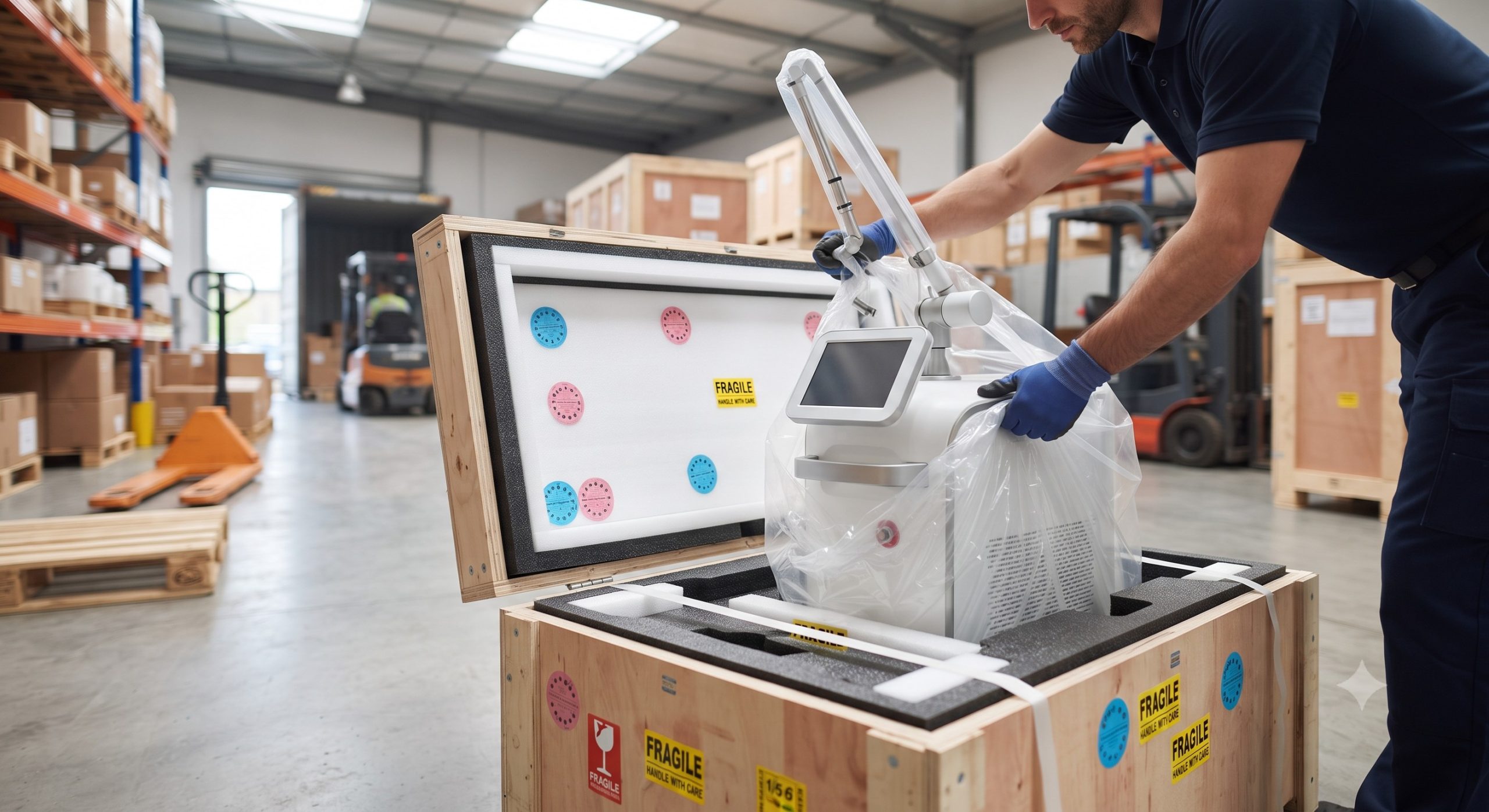
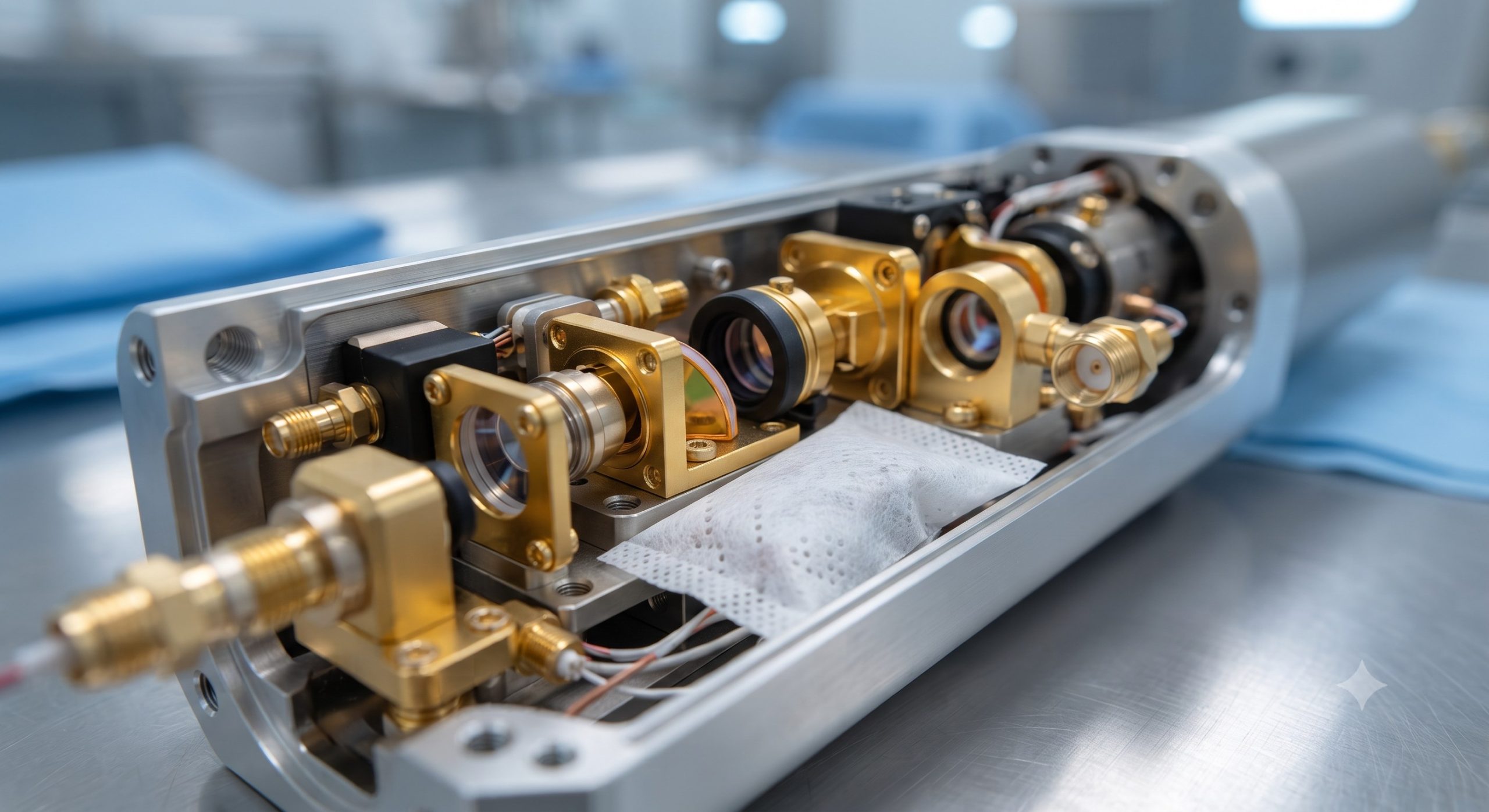
Ocean freight exposes equipment to extreme humidity, temperature fluctuations, and salt-laden air. These conditions accelerate galvanic corrosion on exposed metal components, including connectors, power supplies, and the all-important laser bars housed within handpieces. A proper desiccant policy goes beyond simply throwing silica gel packets into a crate. It involves a scientifically calculated mass of desiccant required to maintain a Relative Humidity (RH) below 40% for the entire duration of transit. This is critical because humidity absorption can directly impact the impedance of sensitive electronics and cause micro-pitting on gold-plated optical mounts, degrading beam quality and reducing the effectiveness of energy density (Fluence) and pulse width over time.
Specifications & Material Compatibility
An elite desiccant policy for medical aesthetics takes into account the specific vapor transmission rates of the packaging. For a standard sea freight journey of 30-45 days, calculating the desiccant demand is paramount. The standard calculation, based on MIL-D-3464E standards, considers the moisture barrier properties of the packaging. For a typical crate containing a premium diode laser system, the policy dictates a specific amount of Clay or Molecular Sieve desiccant bags, often supplemented with humidity indicator cards that provide visual confirmation of safe conditions upon arrival. This rigorous approach not only protects the visible metal but ensures the internal TEC (Thermoelectric Cooler) sapphire cooling components remain functional, preventing the catastrophic failure that leads to out-of-warranty repairs.
| Component Protection Focus | Desiccant Policy Objective | Relevance to Clinical Performance |
|---|---|---|
| Laser Diode Bars (e.g., 808nm) | Prevent moisture condensation on the semiconductor facets. | Maintains peak optical power output and energy fluence (J/cm²) for consistent hair reduction results. |
| Gold-Plated Electrical Connectors | Eliminate galvanic corrosion and maintain low impedance. | Ensures stable pulse width and high-frequency firing, enhancing treatment speed and patient comfort. |
| Sapphire Cooling Plate & Water Circuit | Prevent microbial growth and scale buildup inside internal cooling loops. | Ensures consistent epidermal cooling (0°C to 4°C), crucial for treating Fitzpatrick Skin Types IV-VI safely. |
| Internal Power Supply & Motherboard | Protect high-voltage circuits from moisture shorts. | Prevents system errors and ensures the device meets stringent Medical CE and ISO 13485 electrical safety standards. |
Clinic ROI: The Cost of Non-Compliance
Ignoring desiccant policies has a direct, calculable impact on clinic profitability. The average cost to repair a water-damaged laser engine or handpiece can exceed $3,000. Furthermore, the downtime of a primary device, such as a diode laser, can cost a high-throughput clinic $500-$1,000 per day in lost revenue. A structured desiccant policy ensures that upon arrival at your med spa, the device meets the stringent technical specifications required for FDA clearance and Medical CE compliance. More importantly, it ensures the Laser Bars emit a consistent, calibrated wavelength (e.g., 808nm) from the first treatment to the hundred-thousandth shot. This consistency translates directly to clinical efficacy—providing optimal Fitzpatrick Scale coverage for patients I-VI—and justifies the high-ticket pricing of your services, securing a faster ROI.
Implementation: Integrating Desiccant Policies into Your Procurement Audit
As a clinic owner or manager, the desiccant policy should be a non-negotiable part of the logistics review with your supplier. Ensure your procurement checklist demands a time-dependent desiccant schedule, a detailed final visual inspection protocol, and ISO 11607 compliant packaging. By treating this logistical detail with the same importance as the clinical spot size and pulse width parameters on your device, you safeguard not just the hardware, but the reputation and profitability of your entire aesthetic practice.