
Блог
The Ultimate Clinic Guide to Barcode-Driven Receiving: Efficacy, Wavelengths, and ROI
2026年6月30日
Introduction: The Inefficiency Epidemic in Clinic Supply Chains
In the high-stakes environment of a modern medical aesthetics clinic, operational efficiency is as critical as clinical efficacy. For many practices, the process of receiving, verifying, and logging high-value consumables and capital equipment remains a manual, error-prone bottleneck. This administrative drag not only wastes valuable staff time but also introduces significant risks, from inventory shrinkage to the use of non-compliant or counterfeit products. Barcode-driven receiving emerges as the definitive solution for modernizing incoming inspection, bringing the precision of a clinical laboratory to the supply closet. By integrating automated data capture with your inventory management system, your clinic can achieve unprecedented accuracy, traceability, and cost control.
Physical Mechanism: The Clinical Need for Precision Tracking
The clinical outcomes of aesthetic treatments—whether hair removal, skin rejuvenation, or pigmentation correction—are predicated on the precise delivery of energy. A laser system’s wavelength (e.g., 755nm for fair skin, 808nm for optimal melanin absorption, and 1064nm for deeper penetration in darker skin types) must be matched with the correct fluence (energy density in J/cm²) and pulse width (duration in milliseconds) to achieve selective photothermolysis. Just as a clinician must precisely dial in these parameters, the clinic’s operational team must precisely account for the consumables that enable these treatments. A single mis-keyed entry or misplaced batch of disposable tips can halt a full day of high-revenue procedures.
The Cost of Manual Data Entry
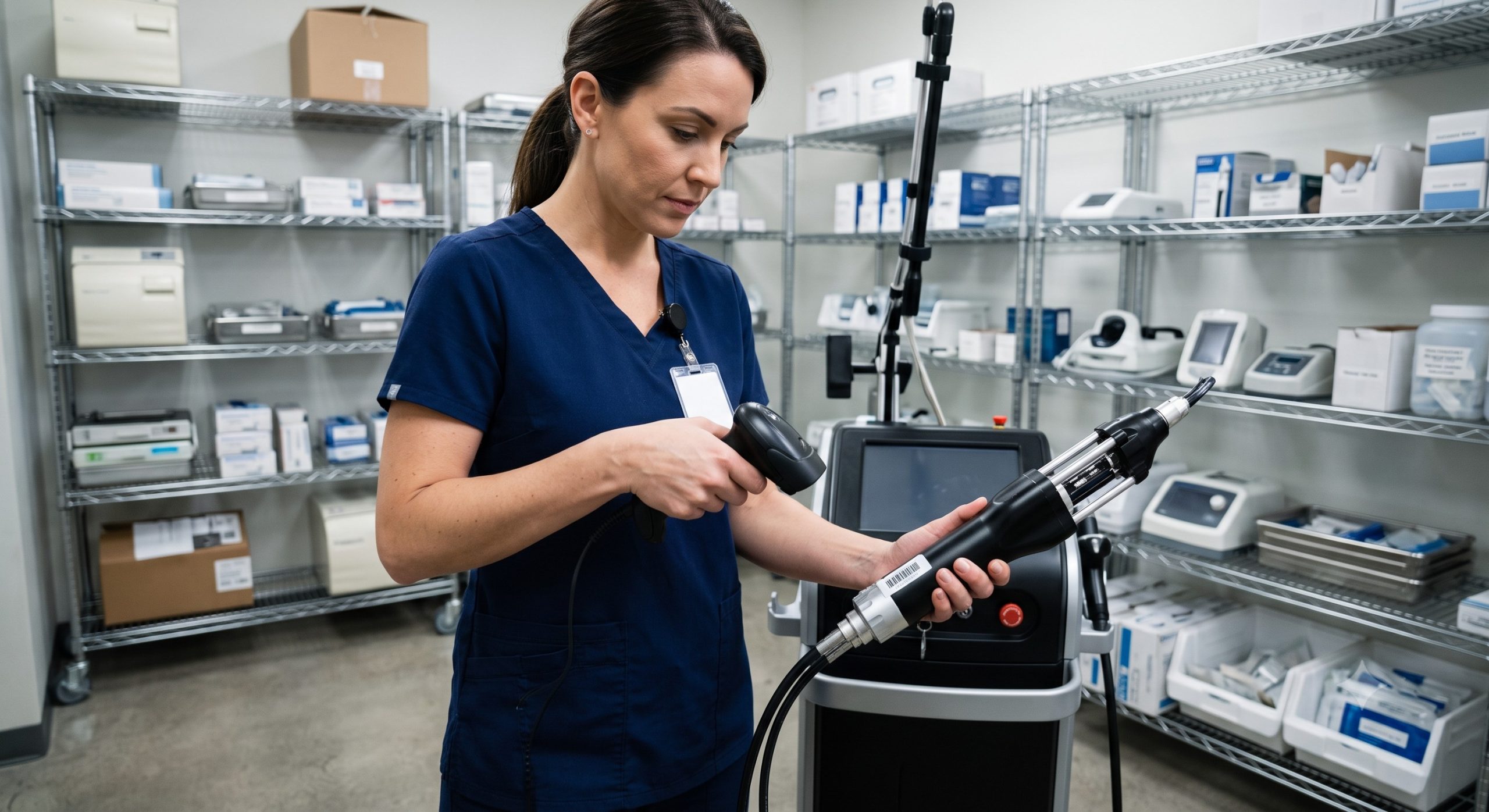
Manual receiving processes are inherently fragile. They are susceptible to human error, including transposition errors in lot numbers and expiration dates, which can lead to the use of expired or recalled products. In a regulated environment, this is a critical compliance failure. Barcode-driven receiving automates this data capture, eliminating typos and ensuring that every item is instantly and accurately logged against its purchase order. This creates a real-time, auditable chain of custody, from the manufacturer’s dock to your treatment room. This level of traceability is no longer a luxury; it is a fundamental requirement for clinics operating under ISO 13485 quality management systems or those seeking Medical CE and FDA clearance for their operational processes.
Technical Specifications: Understanding the Barcode Ecosystem
Implementing a barcode-driven receiving system requires more than just a scanner; it requires a comprehensive understanding of the data standards and hardware that drive it. The most common symbology in medical supplies is the GS1-128 barcode, which can encode critical data like Global Trade Item Numbers (GTIN), batch/lot numbers, and expiration dates. Modern systems leverage 2D barcodes (e.g., Data Matrix or QR codes) which can hold far more information and are more resilient to damage. This capability allows for the automated verification of key attributes, ensuring that the received 808nm diode handpiece has the correct serial number, or that the cooling cartridges are within their optimal shelf life.
| Data Point | Clinical/Operational Significance |
|---|---|
| GTIN (Global Trade Item Number) | Uniquely identifies the product (e.g., 808nm Diode Handpiece), ensuring correct item is received. |
| Batch/Lot Number | Enables precise traceability for quality control and recall management, critical for ISO 13485 compliance. |
| Expiration Date | Prevents use of expired consumables, safeguarding treatment efficacy and patient safety. |
| Serial Number | Tracks individual high-value assets (e.g., laser bars, handpieces) for warranty and maintenance audits. |
Structured Data Capture: The Clinical Audit Trail
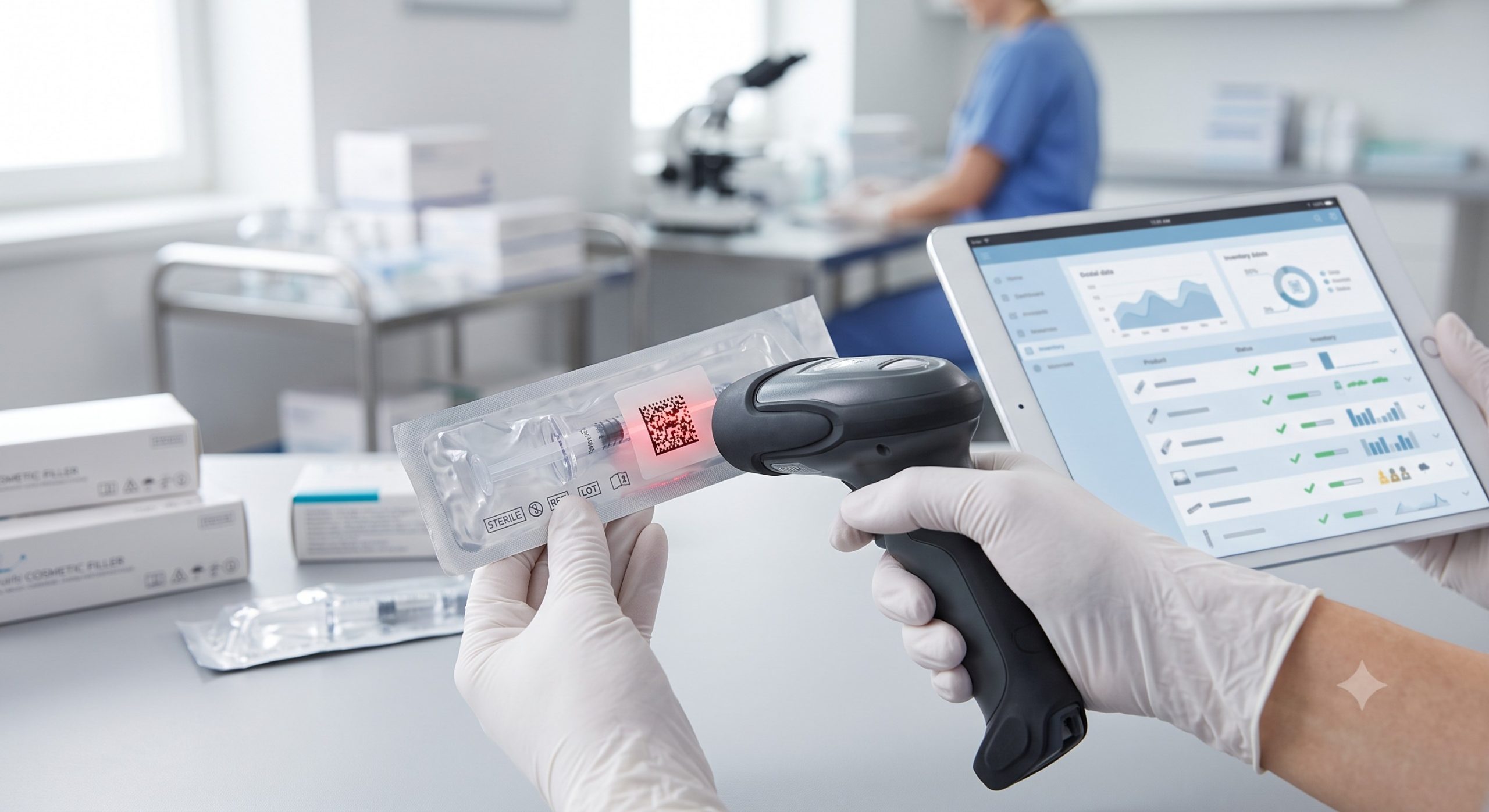
Integrating a barcode scanner with your practice management software (PMS) or electronic health records (EHR) system creates a powerful data ecosystem. When a package arrives, staff can scan each item, and the system will automatically update inventory levels, update the purchase order status, and log the receipt with a timestamp and user ID. This automated data capture creates a detailed audit trail, which is invaluable for financial reconciliation and for tracking the lifetime cost of ownership of high-value assets like laser handpieces. For example, knowing exactly when a new imported laser bar was installed and its specific serial number allows for precise tracking of its shot count and warranty status.
Clinical Integration: From Receiving to Treatment Room
The benefits of barcode-driven receiving extend far beyond the stockroom. By tracking inventory with precision, clinics can ensure that the correct spot size and handpiece are always available for scheduled procedures. This minimizes downtime and maximizes clinical throughput. Furthermore, it facilitates the quarantine and recall of defective or expired products, a critical patient safety function. In the event of a product recall, a clinic with a robust barcode system can instantly locate every affected item in its inventory, ensuring patient safety and regulatory compliance. This system provides the data backbone for a culture of safety, mirroring the precision we demand from our Sapphire ICE cooling systems and laser output.
Maximizing Clinic Profitability: The ROI of Barcode-Driven Receiving
The transition to barcode-driven receiving offers a compelling return on investment (ROI) for clinics of all sizes. The direct cost savings come from reduced labor hours spent on manual data entry and reconciliation, and a significant reduction in inventory shrinkage due to loss, theft, or expirations. By preventing stockouts, clinics can maintain a continuous stream of revenue from high-demand treatments. The ROI is further amplified when the system is integrated with automated reorder alerts. This ensures that you never miss a sale because you ran out of a popular aesthetic laser tip or a specific cooling gel, directly impacting your med spa’s profitability. The data generated also empowers smarter purchasing decisions, allowing clinics to negotiate better bulk pricing and consolidate suppliers.
Conclusion: From Receiving to Revenue
Barcode-driven receiving is not merely an administrative upgrade; it is a strategic investment in the safety, efficiency, and profitability of your medical aesthetics practice. By automating incoming inspection, clinics can eliminate errors, create a robust traceability chain, and free up staff to focus on patient care rather than paperwork. In an era where data is king, this technology transforms your inventory from a cost center into a strategic asset, ensuring that your clinical team has the right tools, at the right time, to deliver superior results. It is an essential step in modernizing your clinic and building a scalable, data-driven business.