
Recurso
Guia de Resumo do Planejamento Avançado da Qualidade do Produto (APQP) - Visão Geral Clínica Oficial
DEVICE IDENTIFICATION
PRODUCT NOMENCLATURE: Advanced Product Quality Planning (APQP) Summary Guide
DOCUMENT TYPE: Technical Reference & Clinical Integration Whitepaper
REVISION: 2.0
CLASSIFICATION: OEM Internal & Authorized Distributor Use
This document serves as the definitive technical datasheet and clinical overview for the APQP framework as applied to the development, manufacturing, and deployment of high-performance medical aesthetic laser systems. It delineates the systematic approach to product quality planning, ensuring that patient safety, treatment efficacy, and regulatory compliance are embedded into every phase of the product lifecycle.
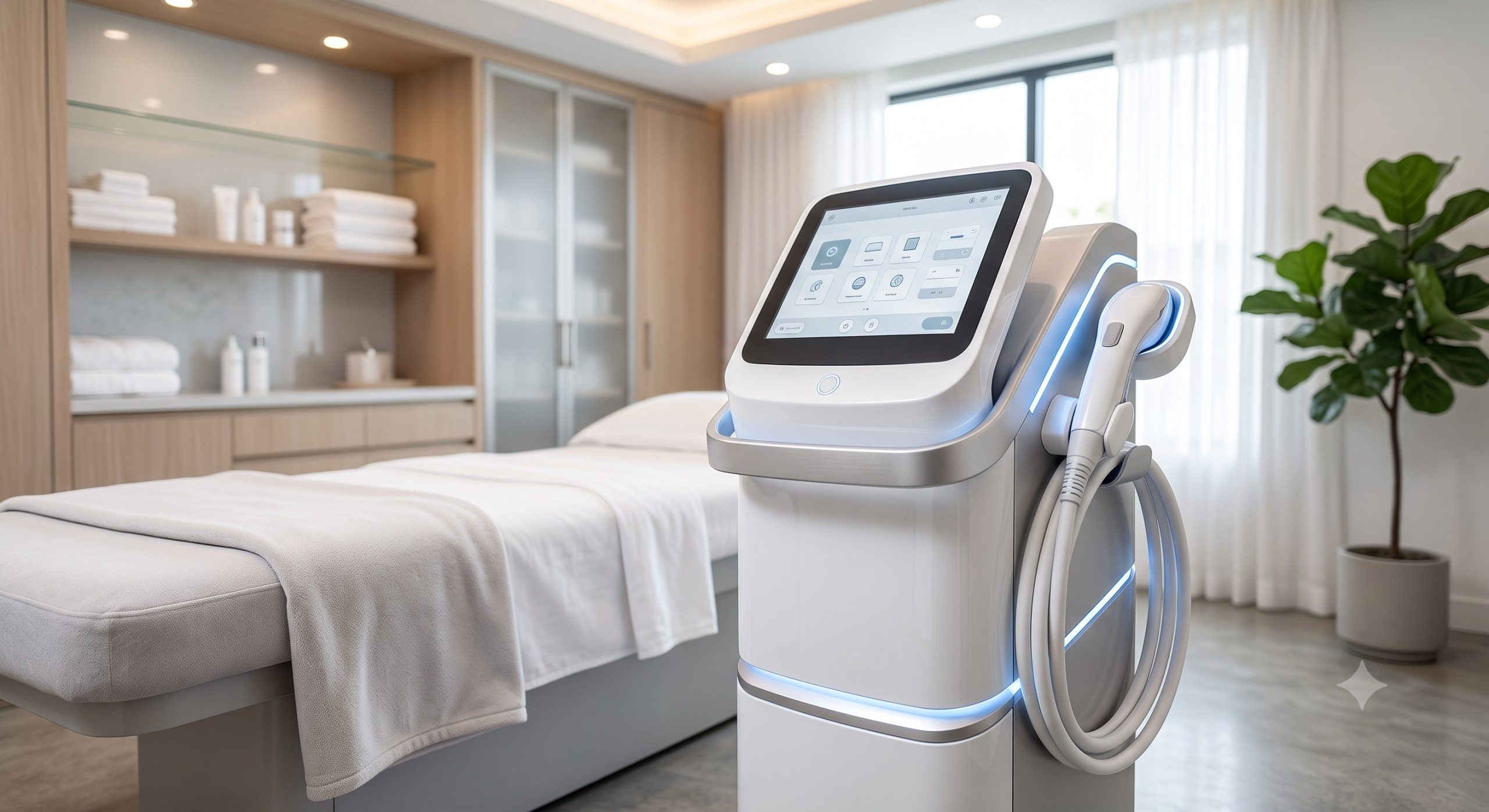
INTERNAL HARDWARE TOPOLOGY
The APQP process begins with a comprehensive understanding of the device’s internal architecture. This phase, designated as ‘Plan and Define’, involves a rigorous analysis of customer requirements and technical feasibility. The hardware topology comprises several critical subsystems:
1. OPTICAL SOURCE SUBSYSTEM: High-density laser diode arrays or solid-state gain media, characterized by precise wavelength stability and power output linearity.
2. THERMAL MANAGEMENT SYSTEM: A closed-loop fluid-cooled cold plate coupled with thermoelectric coolers (TECs) and sapphire contact cooling, ensuring stable junction temperatures and consistent energy delivery.
3. CONTROL & MONITORING ELECTRONICS: Real-time feedback control systems for energy fluence, pulse duration, and repetition rate, with integrated safety interlocks and fault detection mechanisms.
4. USER INTERFACE & CONNECTIVITY: Touchscreen control panels with embedded treatment protocol libraries and wireless data logging capabilities for traceability.
EPIDERMAL PROTECTION MECHANISMS
A cornerstone of the design phase (Design Failure Mode and Effects Analysis – DFMEA) is the integration of advanced patient safety features. The ‘Sapphire ICE’ contact cooling technology is utilized to actively cool the epidermis during laser emission, providing a protective thermal barrier. This mechanism significantly reduces the risk of thermal injury (erythema, edema, burns) while enabling the use of higher fluences for deeper target structures. Real-time temperature monitoring at the skin-cooling interface ensures that the contact temperature remains within a narrow, clinically safe range. Furthermore, the system incorporates a skin contact sensor that disables laser emission unless full, uniform contact is established, preventing accidental misfiring.
TREATMENT ADVANTAGES
Implementation of the APQP framework yields significant clinical advantages:
* REDUCED TREATMENT VARIABILITY: Standardized manufacturing processes result in highly predictable energy outputs, minimizing the impact of unit-to-unit variation on clinical outcomes.
* ENHANCED PATIENT COMFORT: Optimized cooling parameters and pulse shaping reduce the sensation of pain during treatment, improving patient tolerance and satisfaction.
* IMPROVED EFFICACY: Precise control over fluence and pulse duration allows for selective photothermolysis of target chromophores (e.g., melanin, hemoglobin, hair follicles) with minimized collateral thermal damage to surrounding tissues.
* ACCELERATED TREATMENT THROUGHPUT: High pulse repetition rates and large spot sizes enable the rapid coverage of treatment areas, optimizing clinic workflow efficiency.
SPECIFICATION MATRIX
| Parameter | Specification |
|---|---|
| Laser Type / Wavelength | Diode: 755nm, 808nm, 1064nm (Selectable) |
| Spot Size | 15 x 15 mm (Standard) / 10 x 24 mm (High-Fluence) |
| Cooling System | TEC + Sapphire Contact + Air + Water Circulation |
| Maximum Fluence | Up to 120 J/cm² (Dependent on wavelength) |
| Pulse Duration | 1 – 400 ms (Customizable) |
| Repetition Rate | Up to 10 Hz |
| Power Consumption | 220-240 VAC, 50/60 Hz, 2000 VA |
| Dimensions (W x D x H) | 45 cm x 60 cm x 110 cm |
| Weight | Approx. 95 kg (System Cart) |
| Handpiece Weight | Approx. 650 g (Including Cable) |
REGULATORY COMPLIANCE
The APQP process is intrinsically linked to global regulatory standards. The design and manufacturing controls are aligned with the requirements of ISO 13485:2016 (Medical devices — Quality management systems). The device is engineered to meet the essential safety and performance requirements of the Medical Device Regulation (MDR) 2017/745 for CE marking and the FDA 21 CFR Part 1040.10 and 1040.11 standards for laser products. Verification and Validation (V&V) testing is conducted according to IEC 60601-1 (General requirements for basic safety and essential performance) and IEC 60825-1 (Safety of laser products).
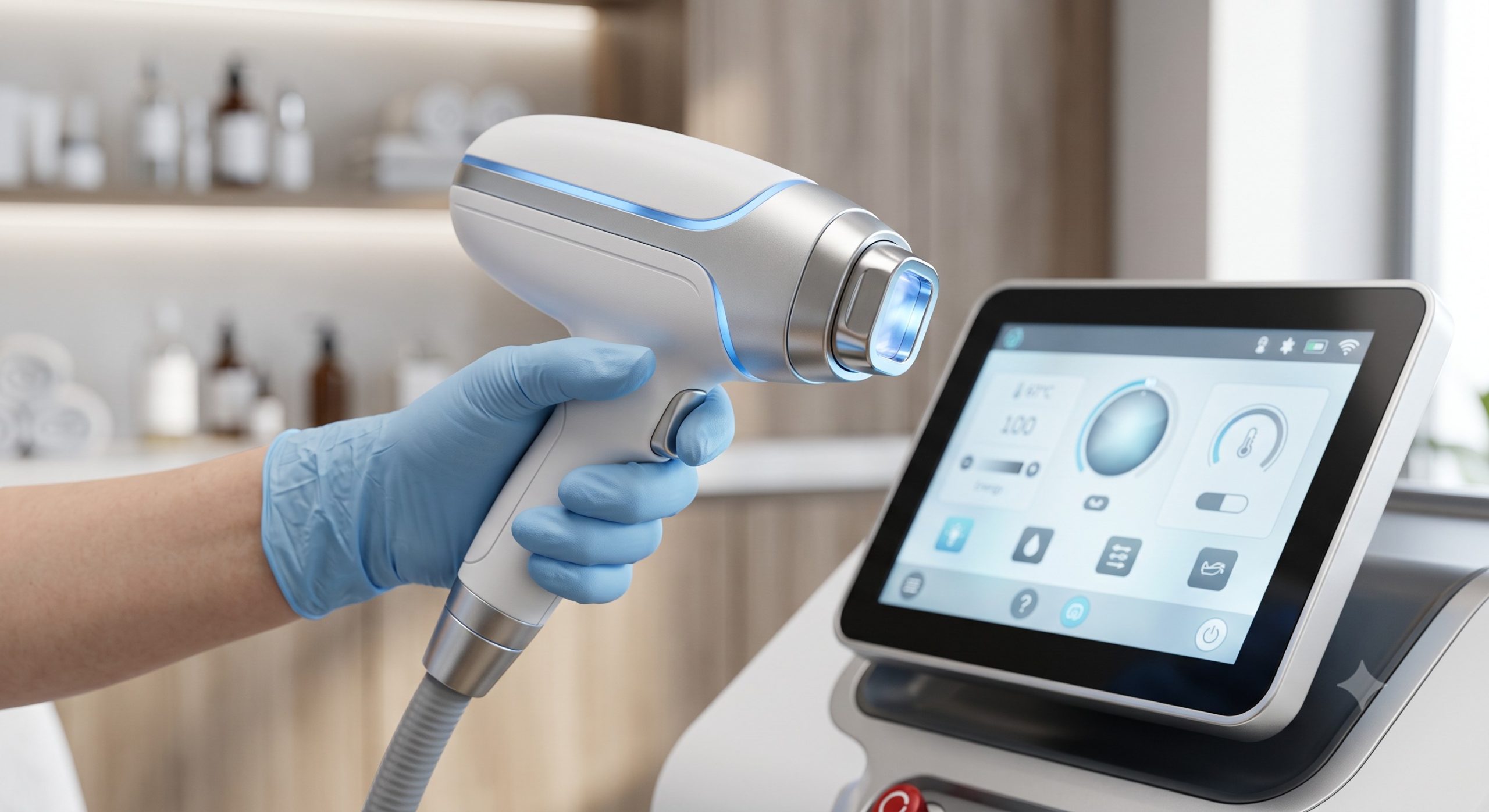
📥 Download Technical Specification
Click the button below to view or download the full official PDF datasheet.