
Blog
VCI Packaging vs. Desiccants: Which is Better for Export? A Deep Dive into Corrosion Prevention
2026年10月9日
The Hidden Threat: Why Export Packaging Fails
For medical aesthetic device manufacturers and distributors, exporting high-value equipment—such as diode laser systems operating at 755nm, 808nm, and 1064nm—presents a critical logistical challenge. The enemy is not just physical shock, but humidity and corrosion. A single compromised laser bar or corroded handpiece can cost thousands in replacement and reputational damage. This guide objectively compares VCI (Vapor Corrosion Inhibitor) packaging against traditional desiccants to determine the superior methodology for protecting your export shipments.
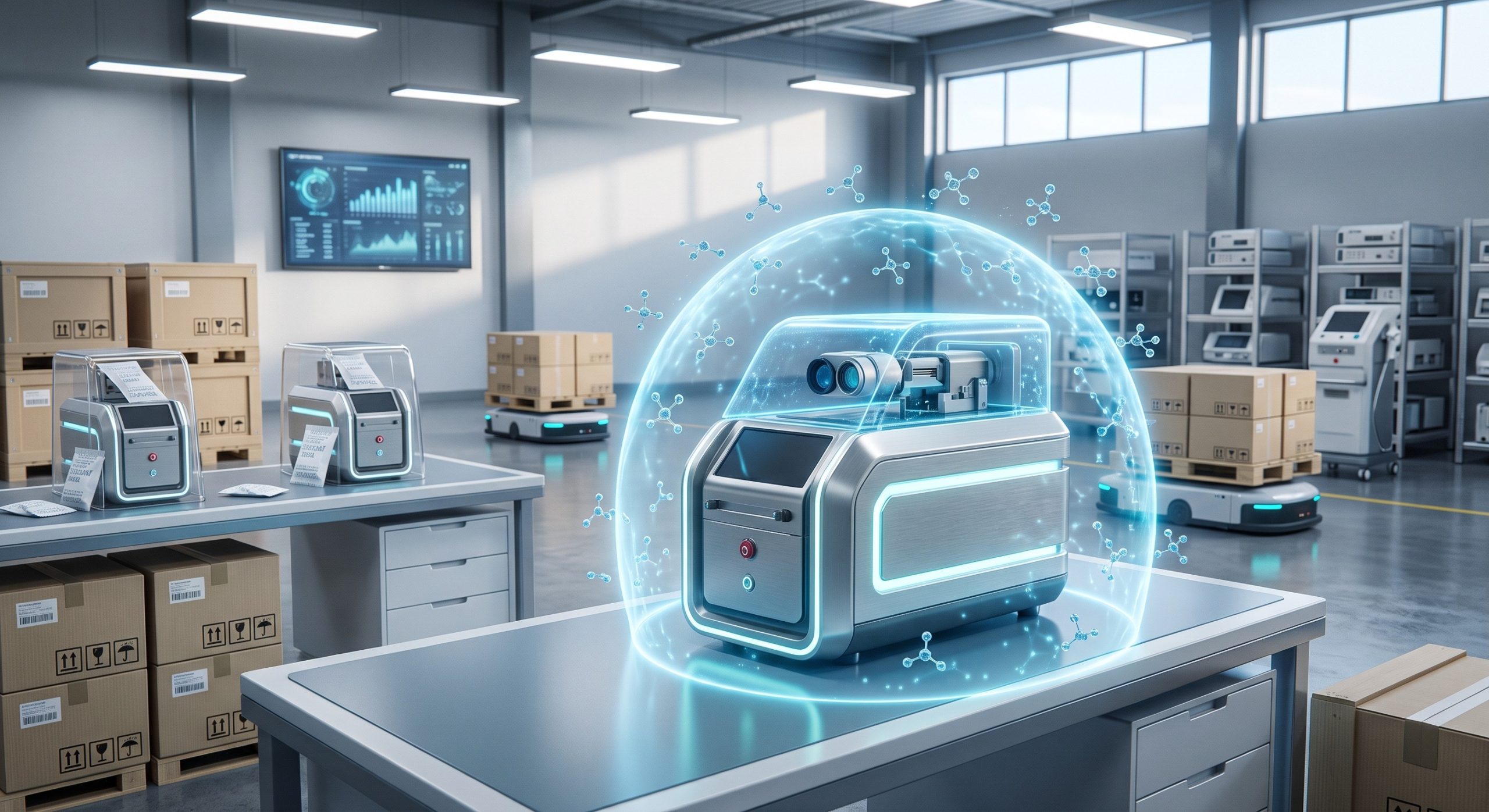
Understanding the Mechanisms: VCI vs. Desiccants
To make an informed decision, we must analyze the chemical and physical principles behind each method.
Desiccants: The Absorption Approach
Desiccants, such as silica gel or clay, function by absorbing moisture from the enclosed air. They are passive agents. Their effectiveness is limited by the volume of the container and the duration of the journey. Once saturated, they cease to protect. For a medical CE certified device shipped via sea freight for 30+ days, desiccants often reach their maximum absorption capacity before arrival, leaving the equipment vulnerable to condensation as temperatures fluctuate.
VCI Packaging: The Emission Approach
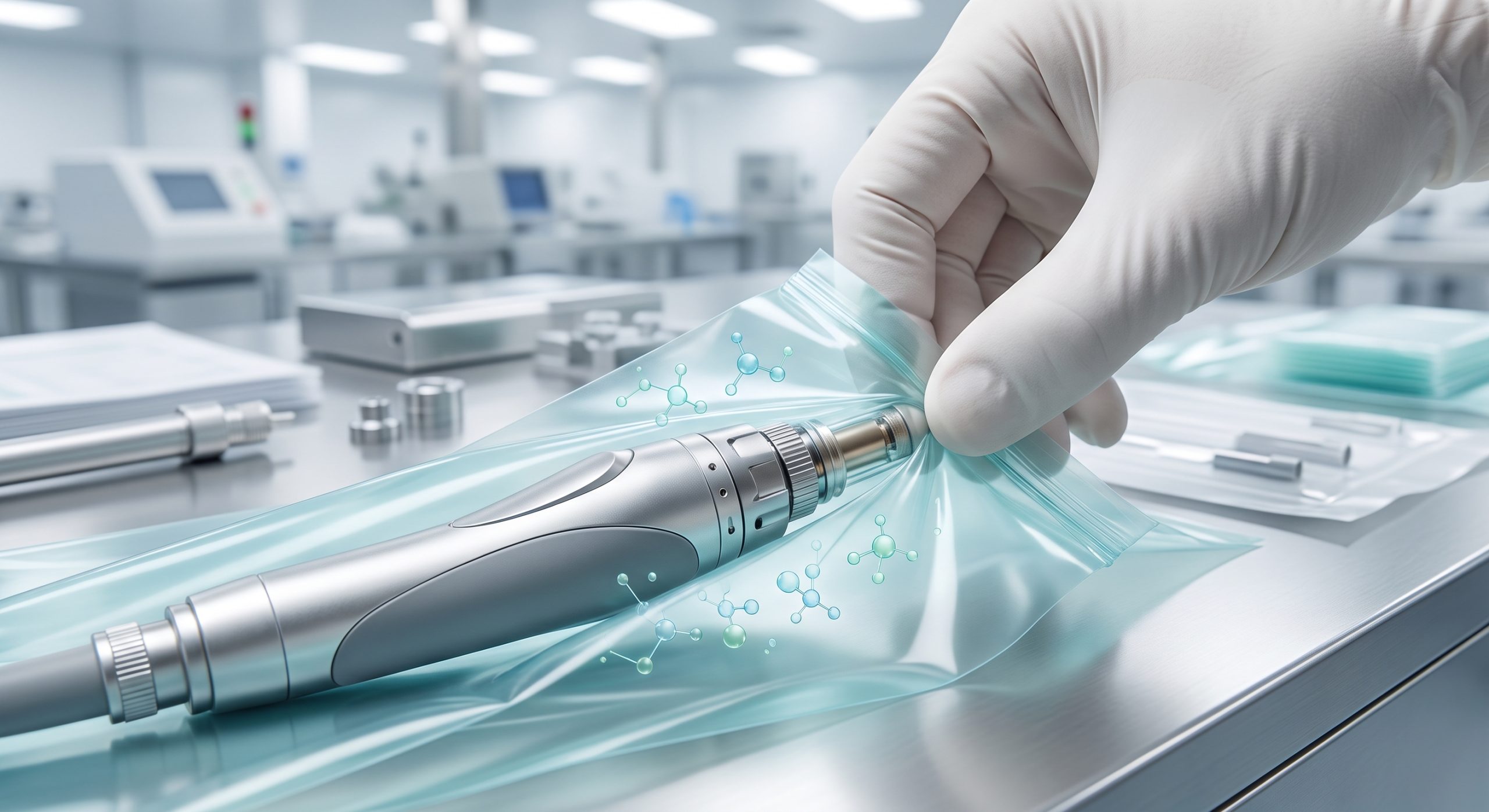
VCI packaging utilizes a different science. The VCI film or paper emits vapor corrosion inhibitors that form a molecular layer on the metal surfaces of the equipment. This layer is hydrophobic and passivates the metal, preventing the electrochemical reaction that causes rust. Unlike desiccants, VCI molecules continuously replenish themselves, offering active protection for the entire duration of the shipment, even in high-humidity environments.
Performance Metrics: A Comparative Analysis
When evaluating protection for sensitive components like epidermal cooling systems and imported laser bars, the following metrics are crucial:
1. Protection Duration & Reliability
- Desiccants: Short-term protection (typically 7-30 days depending on quantity). Requires frequent replacement or oversized quantities.
- VCI Packaging: Long-term protection (up to 24 months). Protects against salt spray, humidity, and sulfur contamination.
2. Application Complexity
- Desiccants: Requires calculation of headspace volume and sealing the barrier bag. If the bag is opened for inspection, protection is lost.
- VCI Packaging: Simple. The VCI film itself acts as the packaging material or liner. Protection resumes once the package is closed again.
3. Component Compatibility
For a diode laser system, the optical fibers and electronic control boards are sensitive. VCI packaging is engineered to be safe for multi-metals, including copper, aluminum, and steel, which are common in heat sinks and power supplies. Desiccants, if they burst, can cause particulate contamination on optical lenses.
Technical Specifications for Export Protection
The following table outlines the key technical parameters to consider when selecting your export packaging strategy for aesthetic laser systems.
| Key Parameter | Technical Specification |
|---|---|
| Protection Mechanism | Desiccants: Absorption; VCI: Vapor Phase Emission |
| Duration of Protection | Desiccants: 7-30 days; VCI: 12-24 months |
| Effective Against | Desiccants: Moisture; VCI: Moisture, Salt, Sulfur, Galvanic Corrosion |
| Application Method | Desiccants: Sachet in Box; VCI: Impregnated Film/Paper/Bag |
| Compatibility with Optics | Desiccants: Risk of Dust; VCI: Clean, No Particulate |
| Standard Compliance | Desiccants: General; VCI: ISO 13485 & ISO 11607 Compliant |
| Cost Per Unit (Relative) | Desiccants: Low; VCI: Medium (15-20% higher) |
| TCO Impact | Desiccants: High (Risk of Corrosion); VCI: Low (Prevents Failure) |
Integrating Packaging with Medical Device Standards
For devices requiring FDA clearance or Medical CE marking, the packaging must comply with ISO 13485 and ISO 11607 standards for sterile and non-sterile packaging. VCI packaging is often preferred here because it eliminates the risk of desiccant dust entering the clean room environment or contaminating the cooling circuit.
Furthermore, when exporting to regions with extreme humidity (e.g., Southeast Asia, Middle East), desiccants are virtually useless unless combined with a vacuum-sealed foil bag. This increases labor costs and waste. VCI bags offer a drop-in solution that requires no vacuum sealing, simplifying the turnkey med spa setup for your international distributors.
ROI Analysis & Final Verdict
From a clinic ROI perspective, the cost of VCI packaging is typically 15-20% higher than standard desiccants on a per-unit basis. However, the Total Cost of Ownership (TCO) is significantly lower. A single corroded handpiece or a laser bar failure due to moisture can cost $5,000 to $15,000 in replacement parts, not to mention the loss of a high-ticket service revenue if the device is down for repair.
Strategic Recommendations:
- For Short-Haul, Air Freight (7-14 days): Desiccants may suffice if the barrier bag is vacuum sealed and the device is not sensitive to static.
- For Long-Haul, Sea Freight (30+ days): VCI packaging is the only reliable choice. It protects against condensation caused by temperature fluctuations and salt-laden air.
- For High-Value Equipment: Always use VCI film. The active protection ensures the device arrives in clinical-ready condition, maintaining the Fitzpatrick scale treatment efficacy and patient safety standards.
Conclusion: While desiccants absorb moisture, they do not prevent corrosion once they are saturated. VCI packaging actively inhibits the electrochemical process of rust, making it the superior, cost-effective, and compliant choice for exporting medical aesthetic devices.