
Blog
Maximizando a rentabilidade do Med Spa: uma análise completa do ROI de suítes de metrologia controladas pelo clima
2026年7月8日
Introduction: The Hidden Profitability Lever in Precision Aesthetics
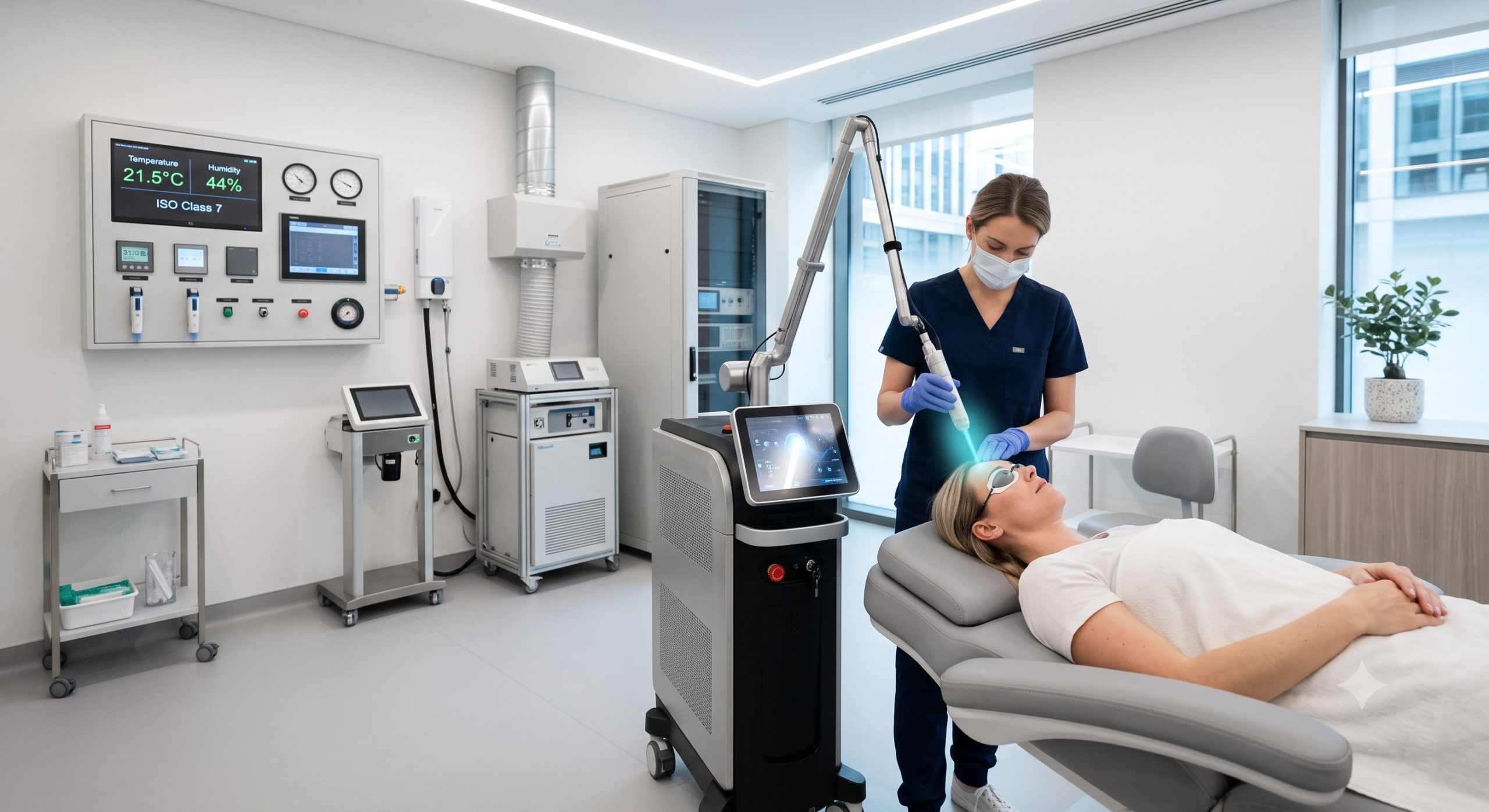
In the rapidly evolving landscape of medical aesthetics, clinics face a persistent challenge: maintaining equipment accuracy and treatment consistency while maximizing operational throughput. The most overlooked variable affecting both clinical outcomes and financial performance is environmental control—specifically, the integration of climate-controlled metrology suites. This comprehensive analysis demonstrates how maintaining precise temperature and humidity parameters directly impacts treatment efficacy, device longevity, and your practice’s bottom line, making it a non-negotiable element for any serious aesthetic clinic .
Clinical Foundation: Why Environmental Control Matters
The physics of selective photothermolysis requires absolute precision. Aesthetic lasers and energy-based devices operate within narrow tolerance windows where output consistency is paramount. Fluctuations in ambient temperature and humidity can significantly alter device performance, leading to unpredictable energy delivery and compromised clinical outcomes. Climate-controlled suites maintain conditions ideal for both laser operation and patient comfort, typically between 18-22°C and 40-60% relative humidity, preserving the integrity of sensitive optical components and cooling systems .
The Impact on Key Parameters
Optimal environmental conditions directly affect critical device parameters including energy density (Fluence), pulse width, and spot size. When a device’s internal temperature rises due to inadequate environmental control, the energy output can drift, potentially requiring recalibration and reducing treatment predictability. For patients, this inconsistency translates to increased discomfort, longer recovery times, and suboptimal clearance rates. Routine temperature and humidity monitoring should be considered part of best practices for maintaining treatment efficacy and safety, especially when delivering high-energy fluences .
Technical Specifications and Performance Metrics
Core Technical Parameters
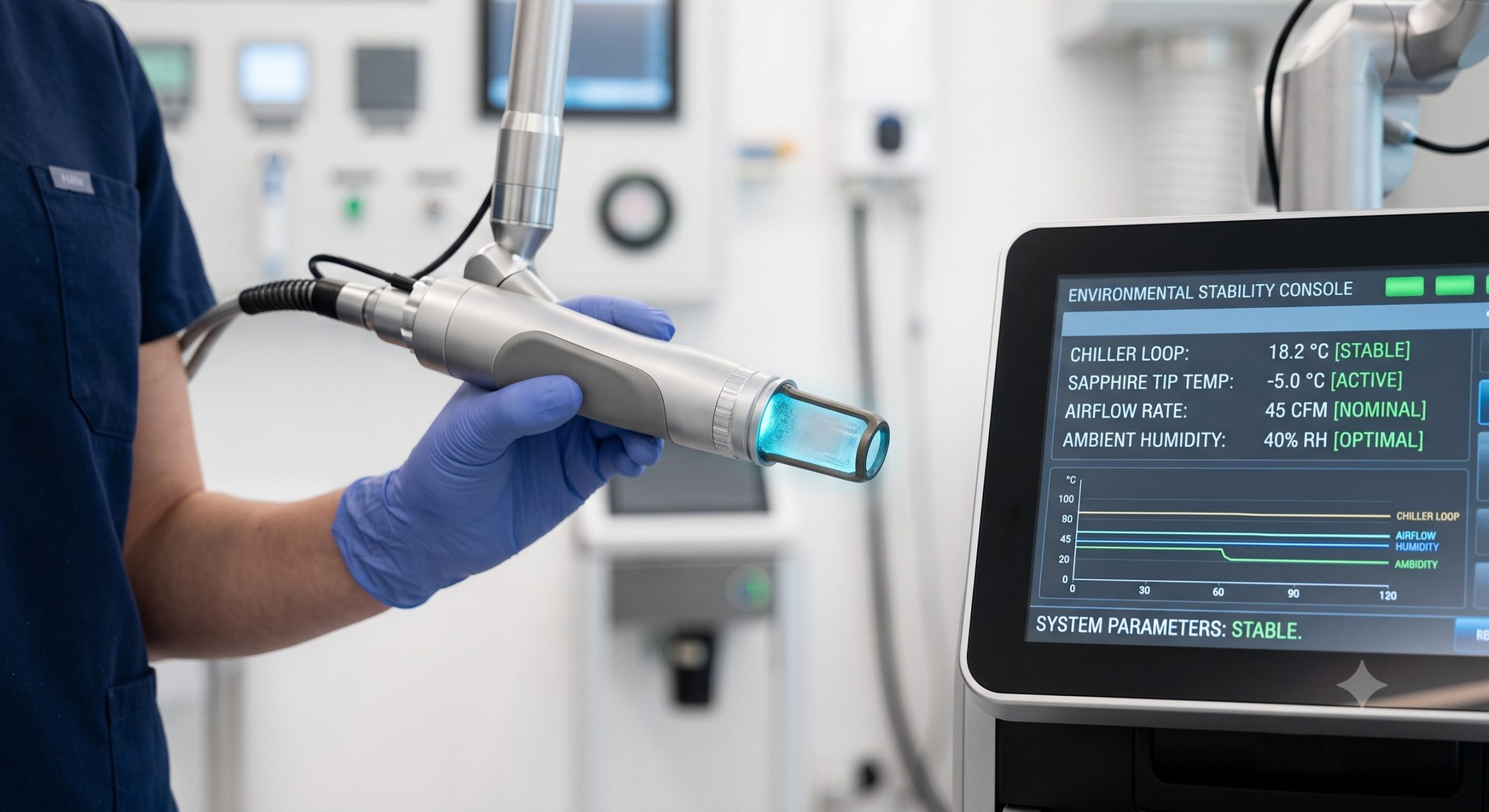
To maintain consistent output across thousands of pulses, a climate-controlled environment supports the stability of several key laser parameters. These include managing heat generation from diode bars, maintaining the efficiency of cooling circuits, and preserving the integrity of handpiece optics. The data below represents the target specifications for high-performance aesthetic devices operating under controlled conditions .
| Key Parameter | Clinical Significance | Target Value |
|---|---|---|
| Ambient Temperature | Maintains optical component stability and cooling efficiency | 18-22°C |
| Relative Humidity | Prevents condensation and ensures consistent energy delivery | 40-60% |
| Energy Density (Fluence) | Directly impacts clinical efficacy and safety | Stable within ±5% of set value |
| Pulse Width | Critical for selective targeting in different skin types | Consistent variance < 10% |
| Cooling System Efficiency | Protects epidermis and enhances patient comfort | Sapphire plate temperature maintained at 0-4°C |
| Device Warm-Up Time | Reduces downtime and maximizes treatment slots | < 5 minutes |
| Output Stability over 1M Shots | Indicates long-term reliability and low maintenance | Energy variance < 10% |
Business Case: ROI and Operational Efficiency
Investing in a climate-controlled metrology suite is not merely a clinical best practice—it is a strategic business decision with quantifiable returns. Clinics that implement environmental controls report fewer device malfunctions, reduced downtime for maintenance, and enhanced patient satisfaction due to predictable, comfortable treatment experiences. This translates into higher treatment throughput, fewer cancellations, and improved word-of-mouth referrals, ultimately maximizing profitability .
Regulatory and Quality Assurance Considerations
From a regulatory standpoint, maintaining environmental control is essential for compliance with quality management systems such as ISO 13485. Many manufacturers specify operational temperature and humidity ranges for their devices; operating outside these ranges may void warranties and compromise patient safety. For clinics, this underscores the importance of metrology-grade environmental control not just for performance, but for legal and insurance audits . Adherence to environmental standards is a key component of delivering consistent, high-quality aesthetic care.
Conclusion: Climate Control as a Strategic Imperative
Climate-controlled metrology suites are no longer a luxury—they are a necessity for any practice committed to clinical excellence, patient safety, and long-term financial success. By stabilizing device performance, enhancing treatment predictability, and reducing long-term operational costs, these environments lay the groundwork for sustainable growth. In an era where differentiation and precision are the pillars of a successful practice, investing in environmental control is an investment in your brand’s reputation and profitability.