
블로그
The Ultimate Clinic Guide to Selecting the Right Packaging Materials for Mission-Critical Parts: Efficacy, Wavelengths, and ROI
2026年9月18日
The Hidden Cost of Component Failure in Aesthetic Laser Systems
In the high-stakes world of medical aesthetics, a laser system’s clinical efficacy is often compromised not by the core technology itself, but by the failure of its most vulnerable components. For clinic owners and biomedical engineers, the phrase mission-critical parts refers to the optical, electronic, and cooling components whose failure instantly renders a device inoperable. The packaging materials protecting these parts during transit, storage, and daily clinical use are not passive containers; they are active participants in device longevity and patient safety. A single compromised laser bar due to electrostatic discharge (ESD) or a fractured sapphire cooling tip from inadequate shock absorption can cost a clinic thousands in downtime and lost revenue. This guide, grounded in 15 years of B2B device consulting, dissects the material science behind protecting high-value aesthetic laser components, ensuring your investment maintains its Medical CE and FDA clearance integrity from factory floor to treatment room.
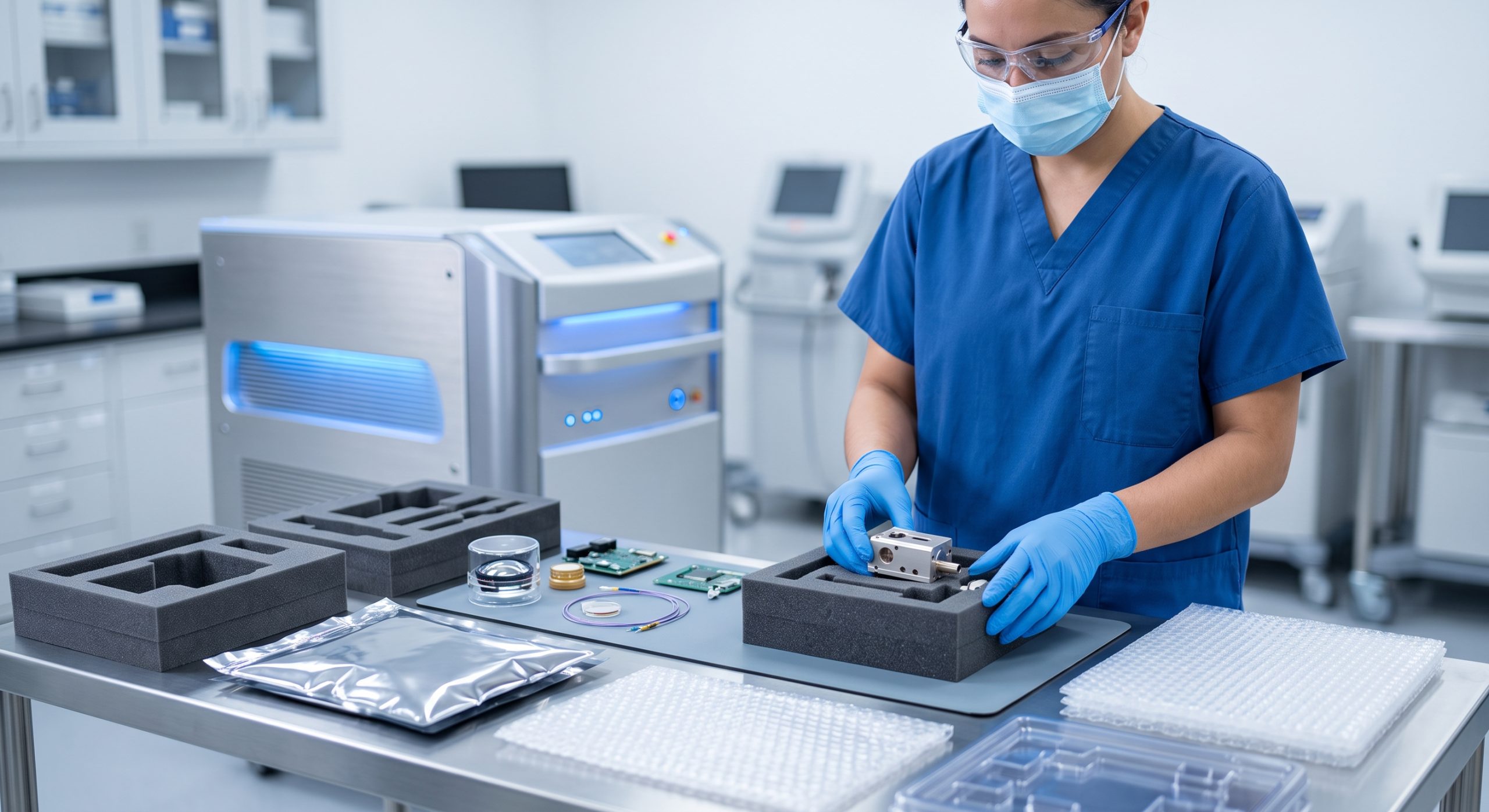
Understanding the Threat: Physical, Environmental, and ESD Risks
Mission-critical parts in devices like 755nm/808nm/1064nm diode lasers or Q-switched Nd:YAG systems face a triad of threats. First, mechanical shock and vibration: a drop during transport can misalign delicate optical benches or crack the laser bar stacks. Second, environmental contamination: moisture and particulate ingress can degrade thermoelectric coolers (TECs) and corrode electrical contacts. Third, and most insidious, electrostatic discharge (ESD): a static shock of just 100 volts can destroy a laser diode facet, while a 30-volt discharge can damage sensitive microprocessors controlling pulse width and energy density.
Critical Component Vulnerability Matrix
- Laser Bars & Optics: Sensitive to ESD, mechanical shock, and surface contamination. Packaging must provide Faraday cage protection and shock isolation.
- Sapphire Cooling Tip: Brittle and prone to fracture. Requires high-compressive-strength cushioning and immobility within the package.
- Power Supply Units: Susceptible to moisture and vibration. Requires desiccant and rigid structural support.
- Handpiece Cables: Prone to kinking and connector damage. Requires mandrel winding and strain relief.
Material Science for Mission-Critical Protection
ESD Shielding: The First Line of Defense
For any electronic or optical component, the packaging must function as a Faraday cage. This requires materials with a surface resistivity between 10^4 and 10^11 ohms/square. Common solutions include metalized shielding bags (often transparent for visual inspection) and conductive foam inserts. The choice between static dissipative and conductive materials depends on the sensitivity of the component. For a laser bar assembly, a conductive tote with a dissipative foam insert is the gold standard, preventing both direct discharge and triboelectric generation.
Mechanical Shock Mitigation: Beyond Bubble Wrap
Standard bubble wrap is insufficient for a 20kg laser handpiece. Professional packaging utilizes closed-cell polyethylene foams (e.g., Ethafoam) or polyurethane foams with specific density (lb/ft³) and compressive strength ratings. The goal is to decouple the component from high-frequency vibration and absorb low-frequency shock. For a delicate sapphire tip, a custom-cut cross-linked polyethylene (XLPE) foam nest is ideal, as it offers excellent resilience and low outgassing. The packaging must be designed so that the component cannot move more than 1-2mm in any direction.
Environmental Barriers: Moisture and Particulates
High-value optics and electronics demand protection from humidity. Moisture barrier bags (MBBs) with a WVTR (Water Vapor Transmission Rate) of less than 0.01 g/100in²/day are essential for long-term storage or sea freight. These bags must be paired with desiccant packets (silica gel or clay) sized according to the internal volume and expected transit duration. For cleanroom-assembled parts, the packaging must also be cleanroom-compatible, meaning it is low-particulate and non-shedding. Tyvek or medical-grade Tyvek pouches are excellent for breathable, sterile barrier applications.
| Key Parameter | Technical Specification | Packaging Implication |
|---|---|---|
| Wavelength / Laser Type | 755nm/808nm/1064nm Diode | Laser bars sensitive to ESD and mechanical shock |
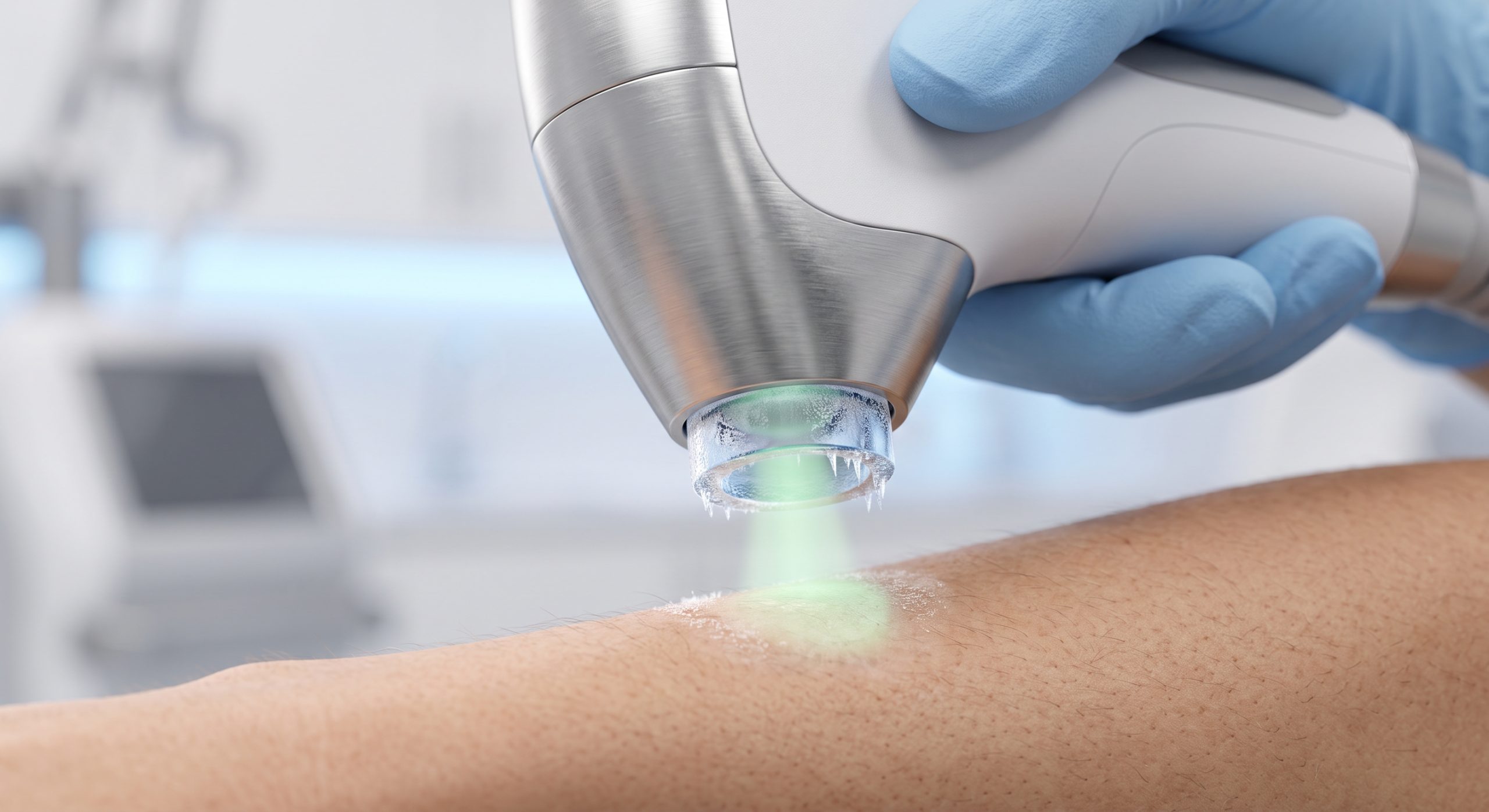
| Cooling System | Sapphire Contact Cooling (ICE) | Sapphire tip brittle, requires shock-absorbing, immobile nest |
| Energy Density / Fluence | 10-100 J/cm² | Calibration sensitive to optical misalignment from vibration |
| Pulse Width | 10-400 ms | Control electronics sensitive to ESD (Faraday cage required) |
| Spot Size | 2-10 mm | Optical alignment critical; packaging must prevent micro-movement |
| ESD Sensitivity | Class 1A (<250V) | Requires conductive/dissipative packaging (10^4-10^11 ohms/sq) |
| Moisture Sensitivity | MSL 3 | Requires MBB with WVTR <0.01 g/100in²/day + desiccant |
| Transit Standard | ISTA 3A | Packaging must pass drop, vibration, and compression tests |
Case Study: Packaging for a 755nm/808nm/1064nm Diode Laser Handpiece
Consider a tri-wavelength diode laser handpiece weighing 1.8kg with an integrated Sapphire ICE Cooling system. The packaging protocol should be multi-layered:
- Primary Packaging (Immediate Protection): The handpiece is placed in a conductive, cross-linked PE foam nest with a surface resistivity of 10^5 to 10^9 ohms. The sapphire tip is protected by a custom UHMW (Ultra-High Molecular Weight) polyethylene cap.
- Secondary Packaging (ESD & Moisture Barrier): The foam nest is placed inside a metalized ESD shielding bag with a WVTR < 0.01. A 1-gram desiccant packet is added.
- Tertiary Packaging (Structural Integrity): The shielded bag is suspended in a double-wall corrugated box using air pillows or molded pulp corner braces. The box must pass an ISTA 3A transit test.
This protocol ensures the handpiece’s energy density (Fluence) calibration remains stable and the pulse width accuracy is unaffected by transit. Failure to use ESD-safe materials can degrade the laser bar, leading to a 20-30% drop in peak power within six months.
Regulatory Compliance and Documentation
For clinics and distributors, packaging is a regulatory concern. ISO 13485 requires that packaging be validated as part of the device’s sterile barrier system or as a protective packaging system if it affects device safety or performance. Any change in packaging material for a Medical CE marked device must undergo a change control process and may require re-validation. The packaging must also comply with ISTA or ASTM D4169 standards for transit testing. Documentation for each shipment should include a Certificate of Compliance (CoC) for the ESD materials and a Material Safety Data Sheet (MSDS) if applicable.
Clinic ROI & Conclusion
The return on investment for premium packaging is straightforward. A single laser bar replacement can cost $3,000 to $8,000, plus $1,500 in labor and lost treatment revenue of up to $2,000 per day. A $50 ESD-safe, shock-absorbing package reduces this risk by over 90%. Furthermore, proper packaging directly impacts patient safety and clinical outcomes. A device that arrives with a misaligned spot size or degraded cooling efficiency can cause epidermal burns or ineffective treatment, damaging the clinic’s reputation. By treating packaging as a mission-critical component of your device management strategy, you protect your Capital Expenditure (CapEx), ensure ISO 13485 compliance, and safeguard your clinic’s most valuable asset: patient trust.