
블로그
The Science of Comfort: Sapphire ICE Cooling Systems in Industrial Directives Every Global OEM Should Know
2026年8月25日
Introduction: The Cooling Challenge in High-Energy Medical Devices
For global OEMs manufacturing aesthetic and surgical laser systems, patient comfort and epidermal safety are not optional—they are regulatory prerequisites. As energy densities increase to achieve superior clinical outcomes for hair reduction, vascular lesions, and pigmented lesions, the risk of epidermal thermal injury escalates proportionally. This is why Sapphire ICE Cooling Systems have emerged as the gold standard in thermal management. This technical blog dissects the industrial directives that govern the design, manufacturing, and compliance of these cooling systems, ensuring your devices meet the stringent demands of Medical CE marking, FDA 510(k) clearance, and ISO 13485 certification.
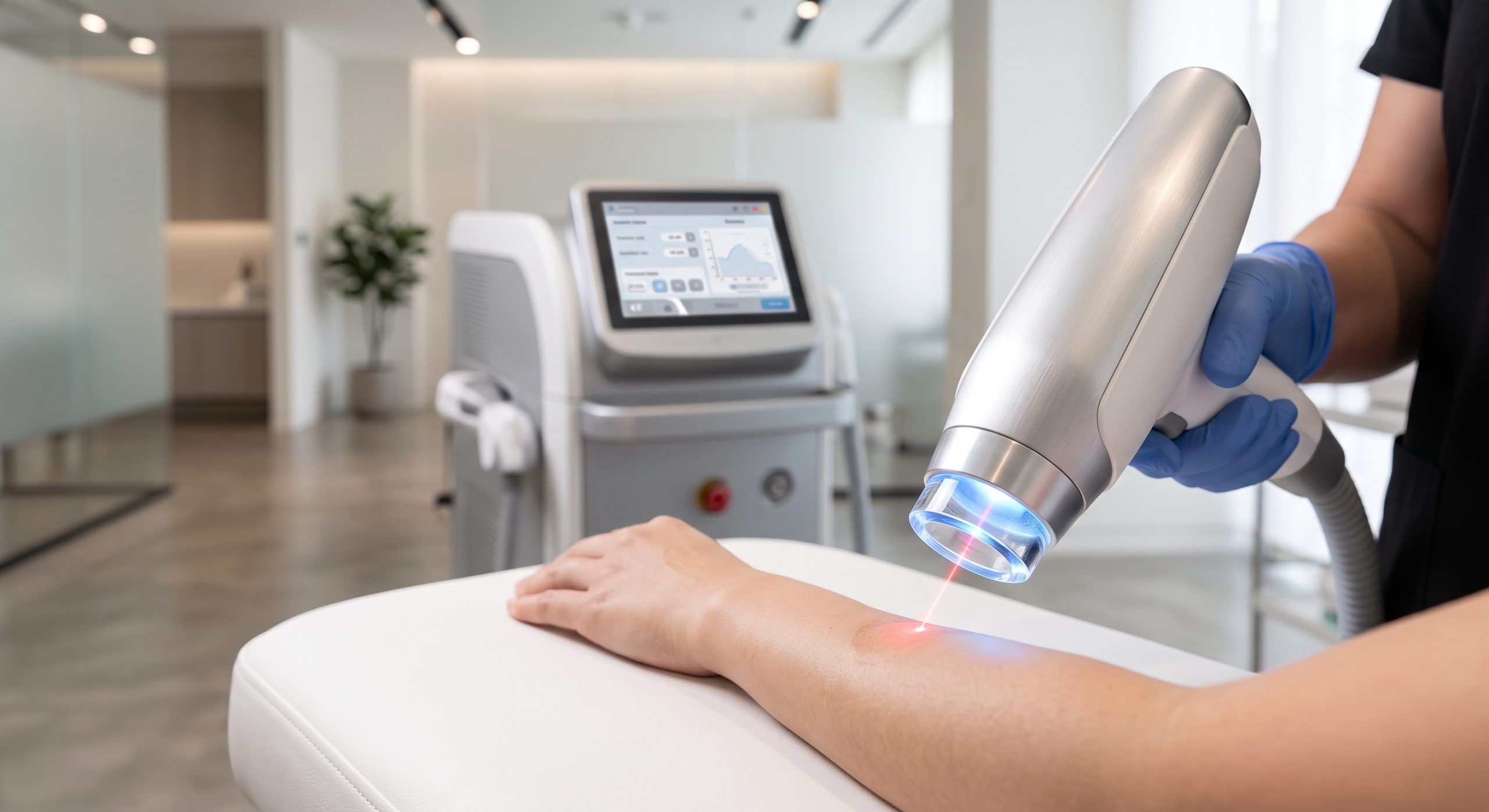
Industrial Directives for Medical Device Cooling: A Regulatory Overview
Designing a cooling system for a Class II or Class III medical laser device requires adherence to a complex web of global directives. Unlike consumer electronics, medical cooling systems are classified as critical subsystems that directly impact patient safety. The primary directives every OEM must navigate include:
1. Medical Device Regulation (MDR) 2017/745 – Annex I (General Safety and Performance Requirements)
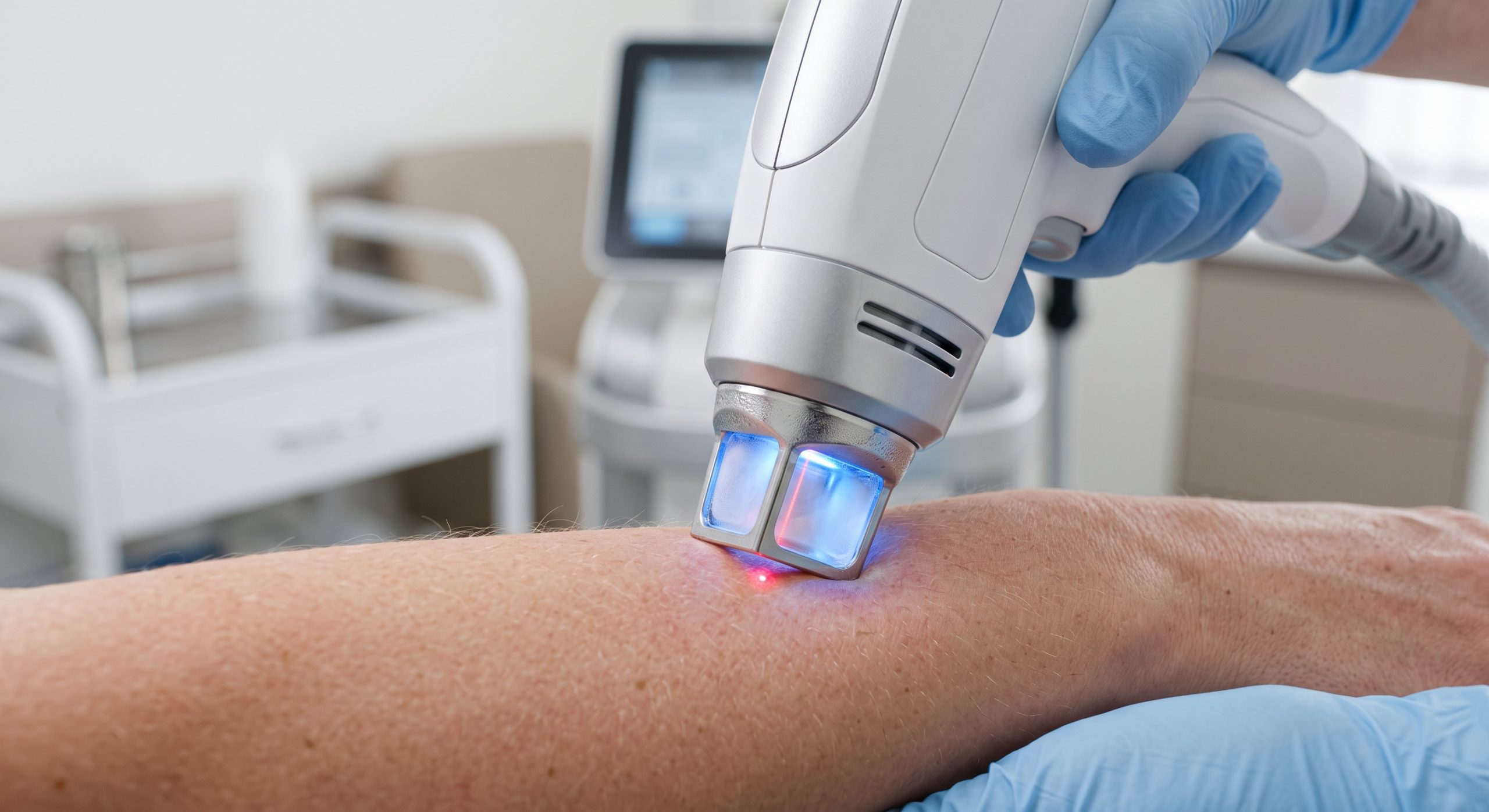
Under MDR, the cooling system falls under the umbrella of risk management (ISO 14971). The system must mitigate the risk of burns. The Sapphire contact cooling plate must maintain a consistent surface temperature between 0°C and 4°C to induce vasoconstriction and provide analgesia, without causing cold injury. OEMs must provide clinical evidence that the cooling mechanism maintains efficacy across varying Fitzpatrick Skin Types (I-VI).
2. FDA Guidance on Laser Products (21 CFR 1040.10/11)
The FDA mandates that the cooling system must be fail-safe. If the TEC (Thermoelectric Cooler) or water circulation pump fails, the device must automatically reduce output energy or cease operation to prevent adverse events. This directive ensures that the Sapphire window temperature is actively monitored and controlled via a closed-loop feedback system.
3. IEC 60601-2-22: Surgical, Therapeutic, and Diagnostic Laser Equipment
This specific standard dictates the safety requirements for laser devices. It covers the maximum allowable temperature of the applicator surface. For OEMs, this means that the imported laser bars and the cooling system must be electrically isolated and thermally efficient to pass the rigorous leakage current and temperature rise tests.
The Physics of Selective Photothermolysis and Cooling Efficiency
To understand the importance of these industrial directives, one must revisit the principle of Selective Photothermolysis. The goal is to heat the target chromophore (melanin in hair follicles or hemoglobin in vessels) to a temperature that causes irreversible damage, while preserving the epidermis. The thermal relaxation time (TRT) of the epidermis is short—approximately 3-10 ms. Without active cooling, the epidermis absorbs enough energy to cause burns. Sapphire ICE Cooling provides a thermal sink that extracts heat from the skin’s surface faster than the laser deposits it. The industrial directive here ensures that the cooling rate is optimized for the wavelength used.
Parameter Optimization for Safe Energy Delivery
Compliance with industrial directives forces OEMs to define precise operational windows. For a typical 808nm Diode Laser system, a clinic must be able to adjust fluence (J/cm²) and pulse width (ms) based on skin type and treatment area. The cooling system must adapt to maintain a stable epidermal temperature. The table below illustrates the critical specifications that must be documented and validated to meet global standards.
| Key Parameter | Technical Specification | Industrial Directive Reference |
|---|---|---|
| Wavelength / Laser Type | 755nm Alexandrite / 808nm Diode / 1064nm Nd:YAG | FDA 21 CFR 1040.10 |
| Cooling System Type | Sapphire Contact Cooling with TEC (Thermoelectric Cooler) | IEC 60601-2-22 |
| Epidermal Temperature Threshold | 0°C to 4°C (Maintained) | MDR 2017/745 Annex I |
| Flow Rate (Water-Cooled) | ≥ 1.5 L/min @ 60 PSI | IEC 60601-1 |
| Thermal Relaxation Time Matching | 3-10 ms (Epidermis) | Selective Photothermolysis Principle |
| Laser Bar Certification | RoHS & REACH Compliant | EU Directives 2011/65/EU & 1907/2006 |
| Handpiece Durability | ≥ 1,000,000 Shots (Sapphire) | ISO 13485:2016 |
Key Industrial Directives for Component Selection and Manufacturing
OEMs often utilize imported laser bars and high-grade Sapphire glass to ensure optical clarity and thermal conductivity. However, these materials come with their own set of supply chain and quality directives.
1. RoHS and REACH Compliance
The cooling system, including the TEC modules and solder materials, must be compliant with RoHS (Restriction of Hazardous Substances) and REACH (Registration, Evaluation, Authorisation, and Restriction of Chemicals). This ensures that the materials used do not contain toxic substances like lead or cadmium, which is crucial for medical devices entering the EU market.
2. ISO 13485:2016 – Quality Management Systems
This directive requires that the manufacturing process for the cooling handpiece is validated and traceable. The spot size and handpiece geometry must be consistently reproduced to ensure the contact cooling surface is perfectly flat. Any deviation of 0.1mm can alter the cooling efficiency, leading to patient complaints or serious injury.
3. Clinical Evaluation and Post-Market Surveillance
Under MDR, OEMs must collect clinical data that proves the cooling system maintains its performance over the lifetime of the device. The industrial directive dictates that the lifetime cost of ownership (TCO) must be transparent, including the replacement cycles of the Sapphire windows and TEC modules.
Compliance Testing and Verification Protocols
Before a device can achieve Medical CE or FDA clearance, it must pass specific verification tests relating to the cooling mechanism. These tests are defined by the industrial directives and ensure the device’s integrity.
1. Thermal Safety Tests (IEC 60601-1)
OEMs must prove that the handpiece surface temperature cannot exceed 43°C in normal use and 50°C in single-fault conditions. This is achieved by simulating continuous firing at maximum energy settings (e.g., 20 J/cm² for hair removal) and monitoring the temperature curve of the Sapphire cooling tip.
2. Flow Rate and Pressure Tests (Water-Cooled Systems)
For devices utilizing advanced water-cooling circuits, the industrial directive mandates a minimum water pressure and flow rate to avoid vapor lock or pump failure. The system must detect low flow and issue an alert, disabling the laser emission if necessary.
3. Electromagnetic Compatibility (EMC)
The cooling system’s motors and pumps can generate electromagnetic interference (EMI). The device must pass EMC tests (IEC 60601-1-2) to ensure it doesn’t interfere with other medical equipment in a clinical environment.
Clinical Implications of Non-Compliance
Failing to adhere to these industrial directives has severe consequences. Beyond legal penalties and forced recalls, the clinical impact is detrimental. Non-compliant cooling systems lead to:
- Epidermal Burns: Resulting in hypo/hyperpigmentation, especially in darker Fitzpatrick Skin Types (IV-VI).
- Treatment Inefficacy: If the cooling is too aggressive (sub-zero temperatures), it can freeze the target tissue, reducing the effective energy delivered to the dermal papilla, leading to poor clearance rates.
- Increased Liability: Clinics will lose trust in the OEM, leading to reputational damage and litigation.
Cost Implications and ROI of Compliant Cooling Systems
While high-quality Sapphire ICE cooling systems increase the initial CapEx, they significantly reduce the OpEx related to consumables and patient complications. Investing in a water-cooled system with a robust lifetime reduces the need for frequent handpiece replacement. For the clinic, a comfortable treatment increases patient retention and allows for higher energy delivery, reducing the number of sessions required. The ROI analysis shows that a clinic with a well-cooled device can treat 30-40% more patients per day due to faster treatment speeds and fewer comfort breaks.
Procurement Checklist for OEMs
When procuring cooling components for your aesthetic laser devices, ensure the supplier provides documentation verifying:
- Material Compliance: Certificates of conformity for RoHS/REACH.
- Performance Data: Cooling capacity (Watts) and COP (Coefficient of Performance) under varying ambient temperatures.
- Lifetime Testing: MTBF (Mean Time Between Failures) for pumps and TECs.
Conclusion: The Future of Cooling in Aesthetic Medicine
The industrial directives governing Sapphire ICE Cooling Systems are designed to protect the patient and ensure the clinical efficacy of the treatment. For the global OEM, these are not bureaucratic hurdles but blueprints for engineering excellence. By integrating fail-safe temperature sensors, high-conductivity materials, and robust fluidics, OEMs can deliver devices that satisfy FDA and Medical CE requirements while providing clinics with the tools to achieve exceptional results across all skin types. As technology evolves, we anticipate directives will increasingly focus on smart cooling algorithms that pre-cool the skin based on the patient’s real-time thermal feedback. Staying ahead of these directives is the only way to ensure market leadership and patient safety.