
블로그
Inside the Hardware: Epidermal Cooling and Imported Laser Bars of Diode Laser Hair Removal OEM
2026年11月6日
The Hidden Engineering Behind Clinical Consistency in Vertically Integrated OEM Platforms
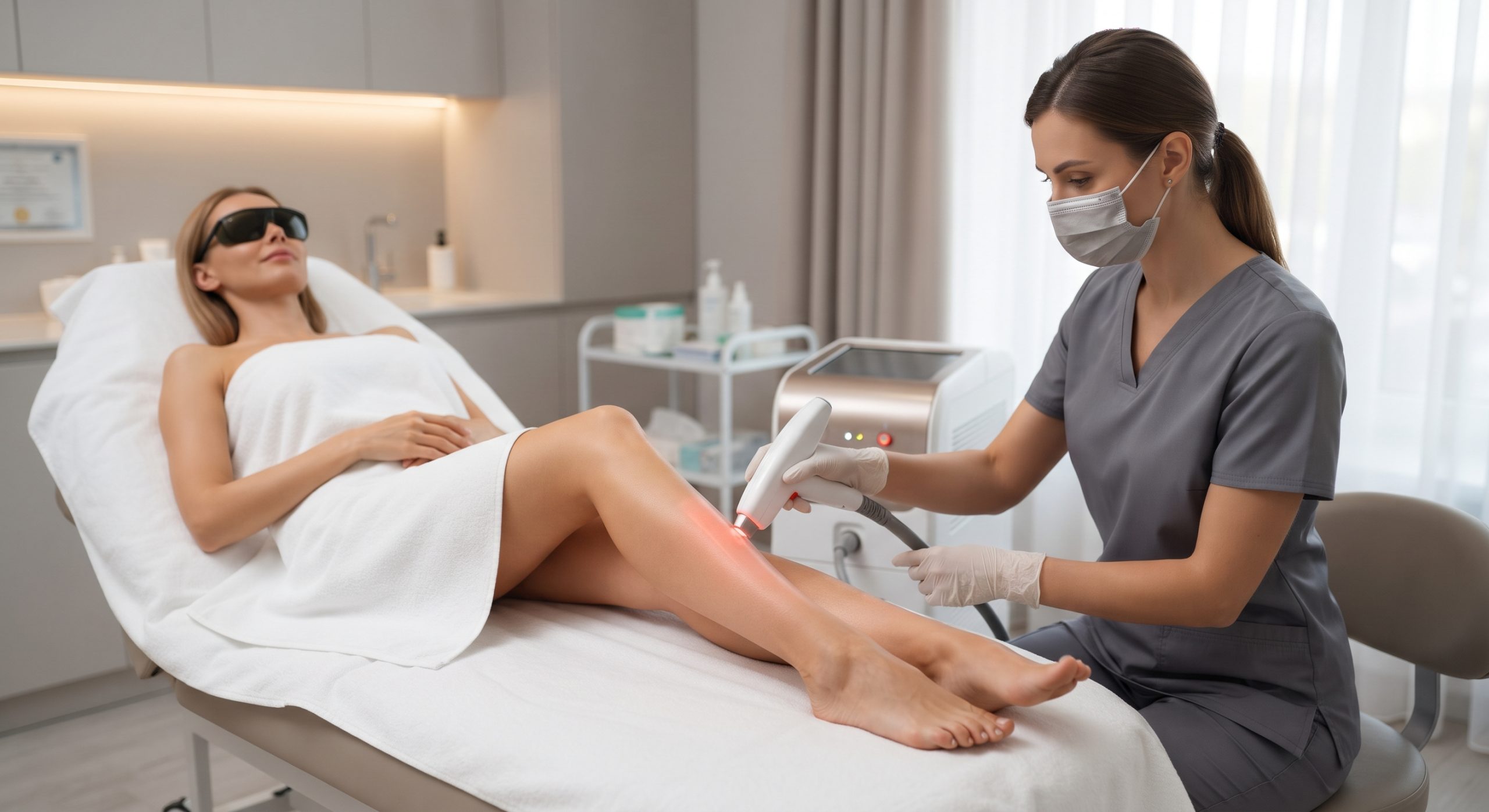
For clinic owners and distributors evaluating a diode laser hair removal OEM platform, the marketing surface often emphasizes wavelength counts and peak power figures. Yet the true determinants of clinical stability, patient comfort, and long-term return on investment reside in the internal hardware architecture — specifically the laser bar provenance, the power supply topology, and the epidermal cooling engineering. This deep-dive examines the component-level specifications that separate a durable clinical workhorse from a high-maintenance liability, with reference to ISO 13485 manufacturing discipline, Medical CE conformity, and FDA clearance pathways.
Why Imported Laser Bars Dictate Clinical Stability and Shot Yield
The laser bar is the emissive heart of any diode platform. In vertically integrated OEM manufacturing, the choice between low-cost domestic bars and imported laser bars from established semiconductor foundries directly governs output power degradation, emission homogeneity, and handpiece shot lifespan. Premium imported bars typically exhibit power decay of less than 5% over 20 million shots, whereas inferior bars can lose 15–20% of rated output within the first 5 million pulses — a decline that silently erodes fluence consistency and clinical clearance rates.
Key Hardware Differentiators to Audit
- Bar-to-Bar Wavelength Binning: Tight binning (±3nm) ensures reproducible 755nm/808nm/1064nm emission across production lots.
- Facet Coating Quality: Catastrophic optical damage (COD) resistance determines maximum reliable peak power per bar.
- Stack Integration and Thermal Interface: Micro-channel cooling and indium solder bonding directly affect duty cycle stability.
Internal Power Supply and Pump Specifications: The Stability Backbone
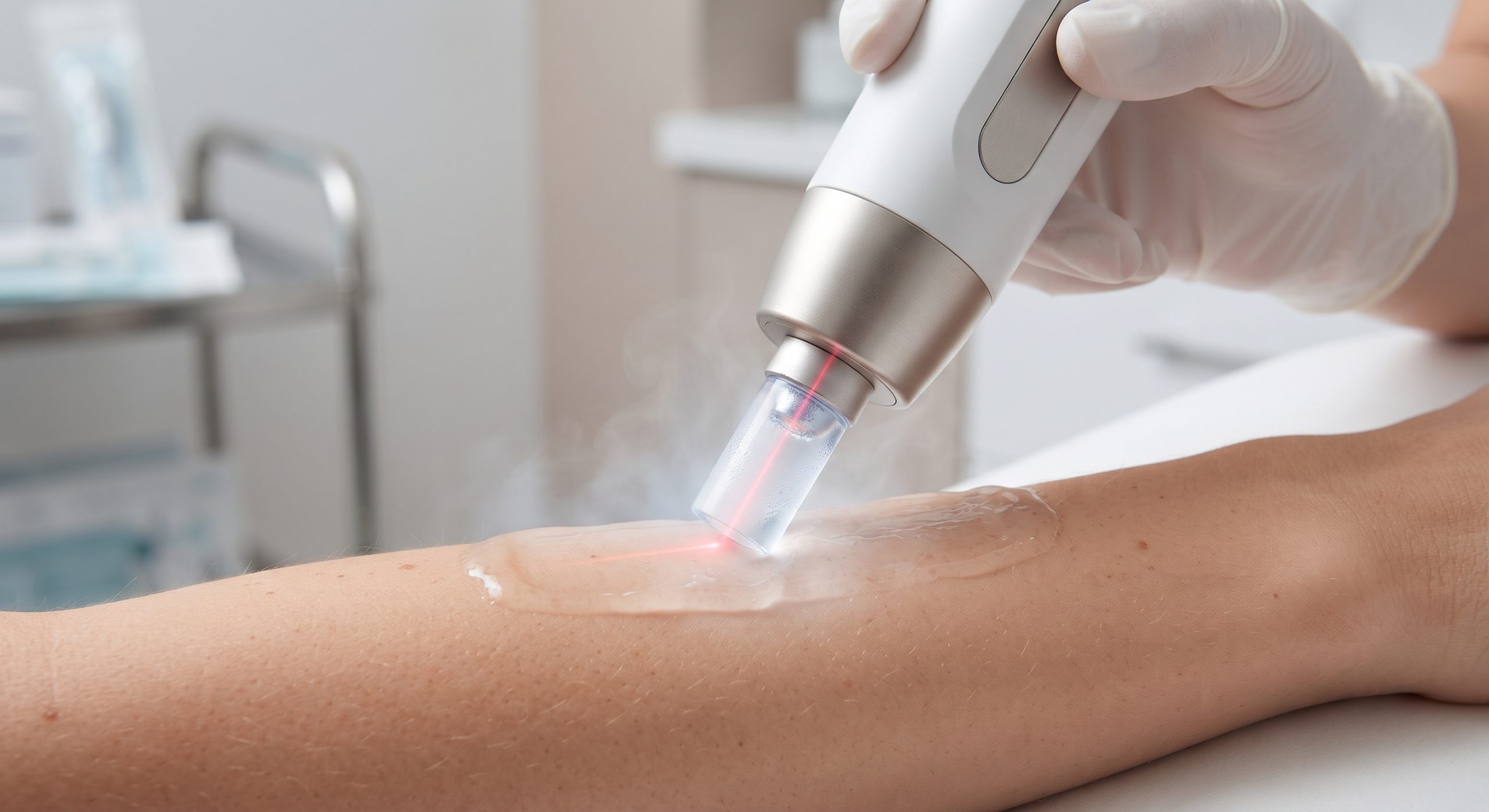
A diode platform delivering 1200W–2400W of total optical output demands a switching power supply capable of ripple suppression and transient load handling. High-grade OEMs specify medical-grade PSUs with <1% output ripple, active PFC (power factor correction), and dual-redundant water pump circuits. The cooling loop — typically a closed-circuit deionized water system with a thermoelectric (TEC) pre-cooler — must sustain sapphire contact cooling at 0–5°C at the tip even under continuous high-frequency firing.
Complete Parameter List
The specification matrix below summarizes the core metrics procurement teams should verify against factory test reports before commercial deployment.
| Key Parameter | Technical Specification |
|---|---|
| Wavelength / Laser Type | 755nm / 808nm / 1064nm Diode (Imported Bars) |
| Total Optical Output | 1200W – 2400W |
| Spot Size | 12mm × 12mm to 24mm × 24mm |
| Energy Density / Fluence | Up to 120 J/cm² |
| Pulse Width | 10ms – 400ms |
| Repetition Rate | 1Hz – 20Hz |
| Cooling System | Sapphire Contact Cooling + TEC (0–5°C) |
| Power Supply | Medical-Grade PSU, <1% Ripple, Active PFC |
| Cooling Circuit | Closed-Loop Deionized Water, Dual Redundant Pumps |
| Compliance | ISO 13485, Medical CE, FDA Clearance Pathway |
Consistent Output Verification: From Factory Bench to Treatment Room
Verification of consistent output requires more than a single power-meter reading at installation. Best-practice OEM audits include:
- Burn-paper and thermal camera profiling to confirm spot size uniformity across the 12mm × 12mm to 24mm × 24mm range.
- Pulse-to-pulse energy variance testing at 10Hz and 20Hz repetition rates, targeting <3% coefficient of variation.
- Cooling recovery testing after sustained 30-minute high-fluence protocols.
These checks protect clinics against the hidden cost of under-delivered fluence, which manifests clinically as inconsistent hair follicle clearance and reduced patient satisfaction.
Final Appraisal: Procurement Priorities for Vertically Integrated Buyers
When negotiating with a vertically integrated diode laser hair removal OEM, prioritize documented laser bar provenance, PSU and pump specifications, and third-party verified output stability reports over headline wattage claims. Platforms engineered around imported laser bars, medical-grade power supplies, and robust sapphire cooling deliver measurably lower total cost of ownership, stronger Medical CE and FDA audit readiness, and superior long-term clinical outcomes across Fitzpatrick skin types I–VI.