
블로그
A Dermatologist’s Guide to Tech Files for NA Importers: Spot Sizes, Fluence, and Tissue Interaction
2026年8月20日
Introduction: The Clinical Foundation of North American Importer Confidence
For North American (NA) medical aesthetics importers, the decision to onboard a new device transcends simple cost analysis. It is a rigorous evaluation of clinical efficacy, patient safety, and regulatory adherence. In an environment where FDA clearance and Medical CE marks are non-negotiable, the true differentiator lies in the depth and transparency of the device’s technical file (Tech File). This blog post provides a dermatologist-level guide to understanding the critical parameters that build trust with NA importers, focusing on the precise physics of selective photothermolysis and the clinical realities of treating diverse skin types.
By demystifying the engineering and clinical data behind a device, manufacturers can establish a foundation of trust that is paramount for long-term business partnerships in the competitive US and Canadian markets.
Transparent Tech Files: The Importer’s Due Diligence Protocol
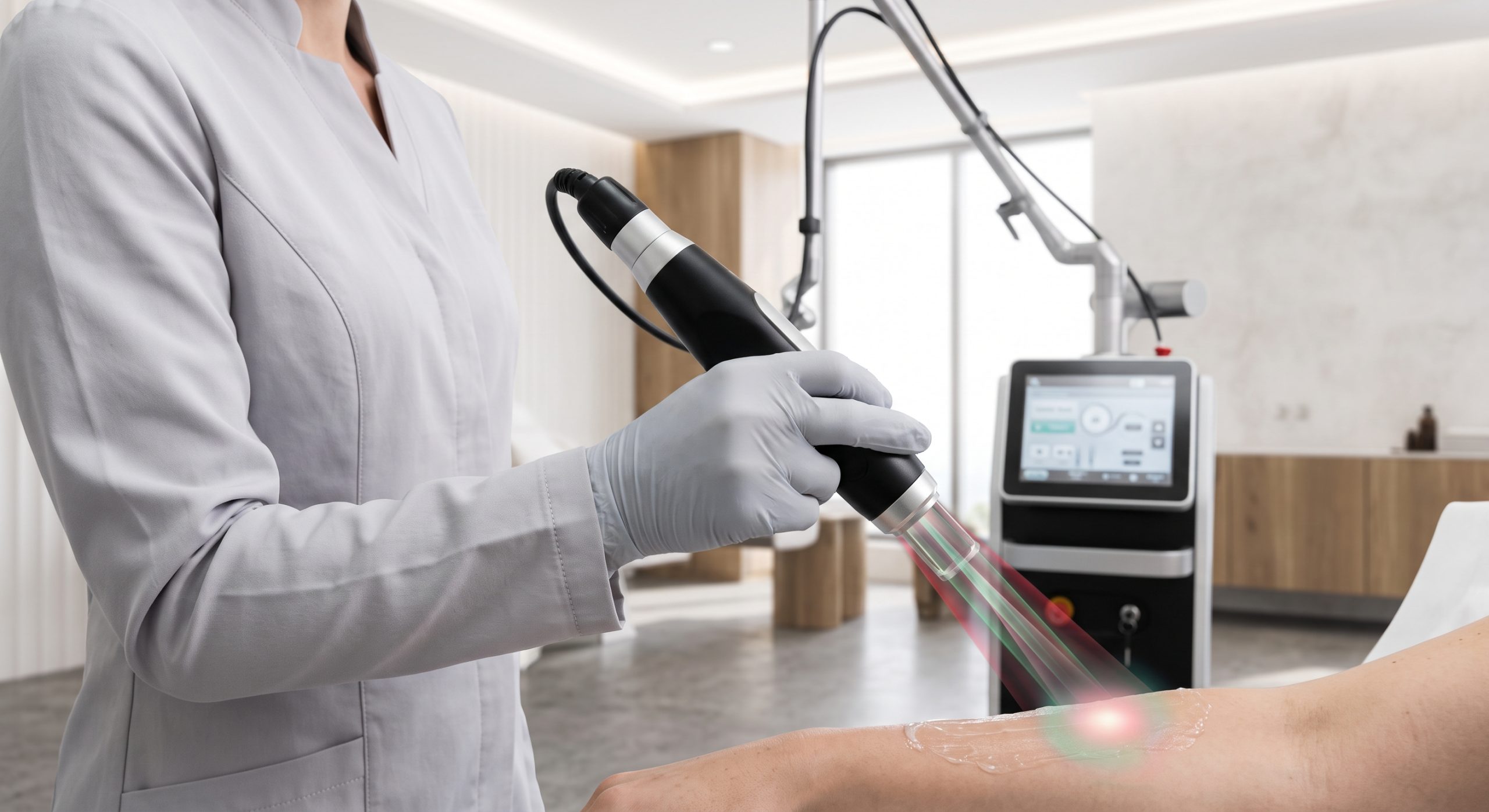
In the B2B medical device landscape, a Tech File is more than a collection of documents; it is the device’s ‘birth certificate’ and ‘clinical resume’. For NA importers, a transparent and well-organized Tech File is the primary tool for mitigating risk and ensuring compliance with the FDA and Health Canada regulations. Key components include:
- Design and Manufacturing Specifications: Details on ISO 13485 certified production processes, component sourcing (e.g., imported laser bars), and quality control benchmarks.
- Clinical Performance Data: Objective evidence of efficacy and safety, including tissue interaction studies, fluence and pulse width validation, and spot size performance metrics.
- Risk Management: A comprehensive analysis of potential complications (e.g., burns, scarring, dyspigmentation) and the engineering controls (like cooling systems) designed to mitigate them.
- Post-Market Surveillance: Protocols for tracking device performance and adverse events in the field, demonstrating a commitment to ongoing safety.
Selective Photothermolysis & Parameter Optimization
At the heart of any effective aesthetic laser is the principle of selective photothermolysis. This is the science of using specific wavelengths, pulse durations, and fluences to target a chromophore (e.g., melanin in hair or hemoglobin in a vessel) while minimizing damage to the surrounding tissue. An importer evaluating a device must have confidence that the manufacturer understands and can deliver on these principles. A transparent Tech File will clearly state the device’s capabilities across these parameters, enabling a clinician to tailor treatments for maximum efficacy and safety.
Hardware Integrity: The Laser Bar and Power Supply
The core of any diode laser is its laser bar. For NA importers, the provenance and quality of this component are critical. High-quality, imported laser bars (e.g., from leading manufacturers in the US or Europe) are associated with superior beam quality, energy stability, and a longer operational lifespan. The Tech File should specify the laser bar’s origin and power output stability. The internal power supply and cooling pump are equally important for consistent clinical performance, ensuring that the device delivers the specified energy density with every pulse. Inconsistent output can lead to suboptimal results or, worse, patient injury, undermining the clinic’s reputation and profitability.
Epidermal Cooling: Sapphire and TEC Technologies
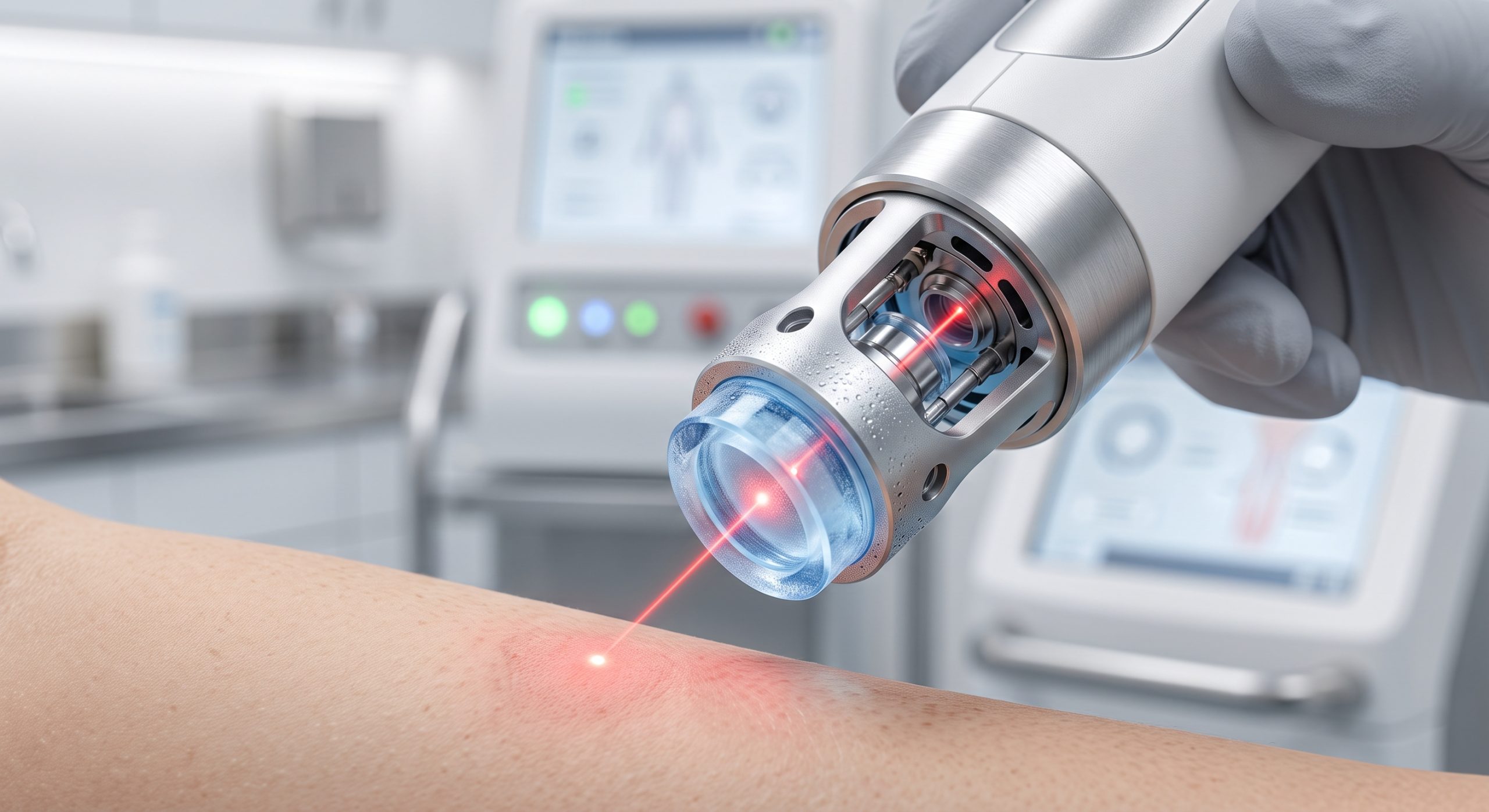
Protecting the epidermis is paramount for safe and comfortable treatments. Advanced Sapphire contact cooling and Thermoelectric Coolers (TEC) are standard in high-quality devices. A transparent Tech File will detail the cooling system’s specifications, including its temperature range (e.g., -4°C to 10°C) and response time. For clinics, this translates directly to patient comfort, allowing for higher fluences to be used for better results without the risk of epidermal burns, expanding the treatable patient base.
| Key Parameter | Technical Specification & Significance |
|---|---|
| Wavelengths (Diode) | 755nm (Alexandrite), 808nm (Diode), 1064nm (Nd:YAG) – Allows for customized treatment across all Fitzpatrick Skin Types. |
| Fluence (Energy Density) | Typically 1-50 J/cm² – Adjustable to deliver optimal energy for hair reduction or vascular lesions without damaging surrounding tissue. |
| Pulse Width | Typically 5ms-400ms – Variable pulse durations to enable ‘selective photothermolysis’ and safe treatment of fine to coarse hair and vascular targets. |
| Spot Size | Typically 10x20mm to 10x30mm – Larger spot sizes increase treatment speed and penetrate deeper into the dermis for more effective results. |
| Cooling System | Sapphire Contact Cooling (e.g., -4°C to 10°C) / TEC – Protects epidermis, enhances patient comfort, and allows for higher fluences. |
| Regulatory & Quality | FDA Clearance, Medical CE, ISO 13485 Certified Manufacturing – Validates safety, efficacy, and consistent quality standards. |
Safe Application per Fitzpatrick Skin Scale
A cornerstone of medical aesthetic training is the Fitzpatrick Skin Scale, which classifies skin types based on their reaction to UV radiation. A device’s ability to safely and effectively treat a broad range of skin types (e.g., Fitzpatrick I-VI) is a major selling point and a key validation of its engineering. The Tech File should provide clear, evidence-based treatment protocols for each skin type, correlating specific parameters (wavelength, fluence, pulse width, spot size) with the targeted indication. For instance, treating darker skin types (Fitzpatrick IV-VI) requires a longer wavelength (e.g., 1064nm) to bypass the epidermal melanin and a longer pulse width to allow for more gradual heating, reducing the risk of post-inflammatory hyperpigmentation.
Synergy of 755nm, 808nm, and 1064nm Wavelengths
Multi-wavelength platforms offer unparalleled versatility, allowing clinics to address a wide range of indications and patient demographics with a single device. The 755nm (Alexandrite) wavelength is ideal for fine, light-colored hair on lighter skin types. The 808nm (Diode) wavelength is the “gold standard” for deep, effective hair reduction across a broad spectrum of skin types. The 1064nm (Nd:YAG) wavelength penetrates the deepest, making it the safest and most effective choice for darker skin types and vascular lesions. A transparent Tech File will provide robust clinical data demonstrating the efficacy and safety of each wavelength independently, solidifying the importer’s trust in the device’s multi-modality capabilities.
Regulatory Compliance: FDA, Medical CE, and ISO 13485
For NA importers, the path to market is paved with regulatory hurdles. A device’s Tech File must demonstrate full compliance with the regulatory bodies. FDA clearance (e.g., 510(k) or De Novo) is a mandatory requirement for the US market, while the Medical CE mark signifies adherence to European health, safety, and environmental protection standards. However, compliance goes beyond just holding these certificates. The manufacturing facility must be certified to ISO 13485, an international standard for quality management systems in medical device manufacturing. This certification is a powerful indicator of a manufacturer’s commitment to consistent, high-quality production and post-market surveillance, providing importers with the assurance that the devices they purchase will be reliable and safe.
Quantified Clinical Clearance Rates
Ultimately, clinical outcomes are the most powerful form of validation. A transparent Tech File will include or reference peer-reviewed clinical studies or well-designed internal trials that demonstrate a device’s efficacy. For hair removal, this often includes data on hair reduction percentages (e.g., “80-90% reduction after 3-5 sessions”) measured at specific time points (e.g., 3, 6, and 12 months post-treatment). These studies should be conducted on diverse patient populations (different Fitzpatrick skin types and hair colors) to prove the device’s versatility and safety. Such data not only builds trust with importers but also becomes a powerful marketing tool for the end-user clinic, allowing them to set clear patient expectations and justify their service pricing.
Conclusion: Trust Through Clinical Transparency
Building trust with North American importers is a process of rigorous due diligence and clinical transparency. By providing a comprehensive, well-structured Tech File that details everything from the core principles of selective photothermolysis to the specifics of hardware components and regulatory compliance, manufacturers can confidently navigate the B2B landscape. This transparency not only facilitates the sales process but also establishes a foundation for a long-term partnership built on a shared commitment to safety, efficacy, and patient satisfaction. For the discerning NA importer, a transparent Tech File is not just a document; it is the ultimate mark of a reliable and clinically-focused partner.