
Resource
Risk Management Summary Sample for Medical Parts – Official Clinical Overview & Technical Datasheet
EXECUTIVE SUMMARY
This document provides a comprehensive risk management summary sample for medical parts utilized within high-power aesthetic laser systems. As a core component of the device lifecycle per ISO 14971:2019, this summary outlines the hazard identification, risk estimation, risk control measures, and residual risk evaluation for all critical subsystems, including the optical delivery handpiece, thermal management assembly, and patient-applicator interface. The analysis confirms that all residual risks are acceptable when balanced against the substantial clinical benefits of selective photothermolysis, and that the risk management process is fully documented and traceable for regulatory submissions.
CLINICAL ARCHITECTURE & DESIGN
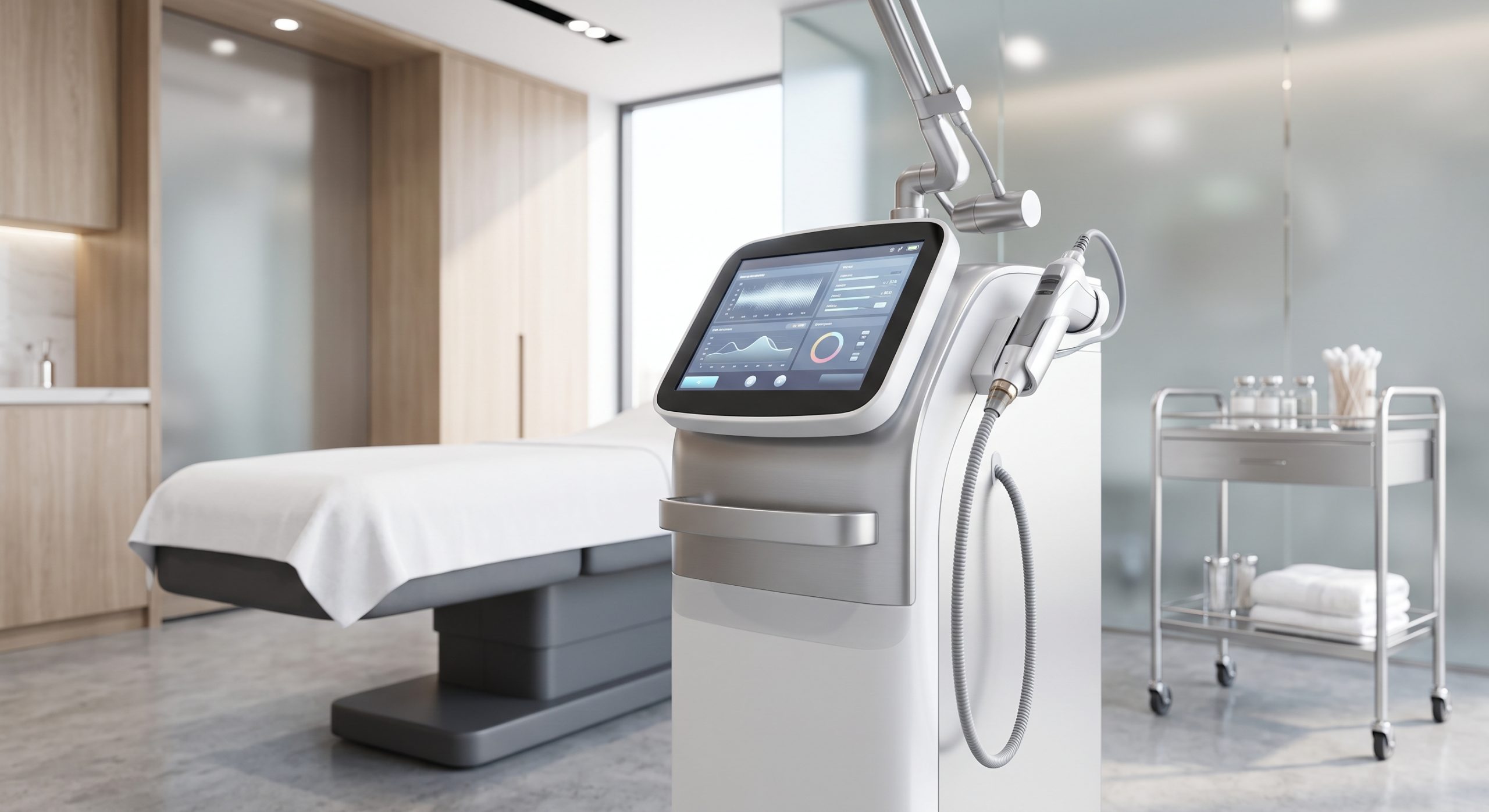
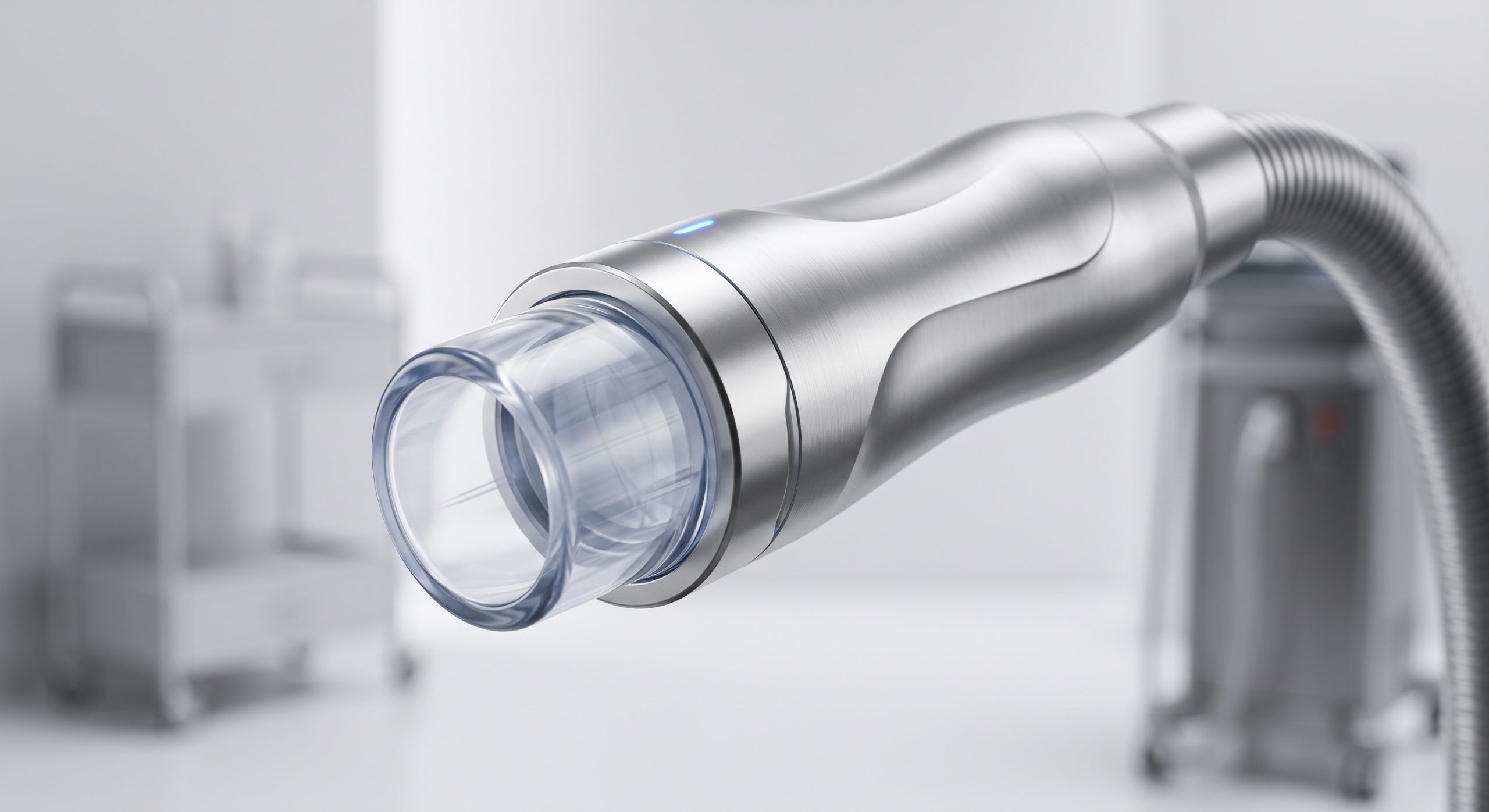
The system architecture is engineered around a closed-loop risk control framework. At the hardware level, redundant safety interlocks are implemented across the laser power supply, the cooling circuit flow sensors, and the handpiece contact detection mechanism. The applicator tip integrates a real-time temperature monitoring thermistor that directly modulates fluence output to prevent epidermal overheating. From a software perspective, the treatment delivery protocol requires dual confirmation of patient skin type and pulse width settings prior to enabling the emission trigger. These architectural choices ensure that the device operates within the defined safety limits for intended use, which encompasses the clearance of benign pigmented lesions and unwanted hair across Fitzpatrick skin types II-IV.
KEY INDICATIONS & CAPABILITIES
The intended clinical applications guide the risk management priorities. For hair reduction, the nominal parameters are calibrated to achieve thermal necrosis of the hair follicle bulb while maintaining a minimum safety margin at the dermo-epidermal junction. For vascular lesion clearance, the pulse duration is tailored to the thermal relaxation time of targeted chromophores. Risk control measures are specifically adapted for each indication; for example, the device automatically restricts the maximum fluence when the system detects a higher baseline skin melanin index, thereby mitigating the risk of post-inflammatory hyperpigmentation. Contraindications, such as recent sun exposure or the presence of active infections, are clearly presented via the user interface to ensure proper patient screening.
COMPLIANCE & STANDARDS
The risk management file is constructed in full alignment with ISO 14971:2019, ISO 13485:2016, and IEC 60601-2-22 (particular requirements for laser equipment). A formal risk management plan, hazard analysis, and risk traceability matrix are maintained. The usability engineering process (IEC 62366-1) was applied to reduce use-related errors, particularly during parameter selection and handpiece placement. The device conforms to FDA 21 CFR Part 1040 performance standards and holds CE marking under the Medical Device Regulation (MDR) 2017/745. All critical components, including optical windows and cooling seals, are biocompatible per ISO 10993-1.
TECHNICAL SPECIFICATIONS
The device employs a multi-wavelength diode laser architecture. Nominal wavelengths include 755nm (Alexandrite equivalent) for superficial targets, 808nm for deep dermal absorption, and 1064nm for optimized penetration in darker skin types. The maximum output power is rated at 1200W, delivered through a spot size of 15mm x 15mm for rapid coverage. The cooling subsystem uses a cascade of thermoelectric coolers (TEC) in tandem with a conductive sapphire contact tip and forced air convection, capable of maintaining the epidermal surface at 2°C during active emission. The integrated power supply provides high stability of ±2% to ensure consistent clinical outcomes.
| Parameter | Specification |
|---|---|
| Laser Type / Wavelength | Diode Laser: 755nm / 808nm / 1064nm |
| Spot Size | 15mm x 15mm (Standard Applicator) |
| Maximum Output Power | 1200W |
| Cooling System | TEC + Sapphire Contact Tip + Forced Air Convection |
| Epidermal Temperature (Nominal) | 2°C |
| Power Supply Stability | ±2% |
| Intended Skin Types | Fitzpatrick II – IV |
| Pulse Duration Range | 5ms – 400ms |
CLINICAL PROTOCOLS
Standard treatment protocols are embedded within the device software and align with the identified risk controls. For a typical hair reduction session, the practitioner is guided through a stepwise preparation sequence: (1) perform a visual skin assessment using the Fitzpatrick scale; (2) select the appropriate applicator preset corresponding to the treatment area; (3) confirm contact using the integrated impedance sensor; (4) initiate a test pulse to evaluate patient response; and (5) deliver the full treatment pulse train. The system logs every treatment session, including selected parameters, patient ID, and any system warnings. In the event of a cooling malfunction, the laser emission is automatically suspended, and a visual alarm is triggered on the main interface. This integrated protocol ensures that the clinical user operates the device strictly within the evaluated risk boundaries, maximizing patient safety and treatment efficacy.
📥 Download Technical Specification
Click the button below to view or download the full official PDF datasheet.