
よくある質問
テクニカルサポートに関するよくある質問:美的レーザーでのエラーの解決と出力の最適化
Overview
As a clinic owner or dermatologist, the performance and uptime of your aesthetic laser system are directly tied to patient satisfaction and your bottom line. Understanding the technical nuances of your device—from troubleshooting common errors to optimizing energy output—is essential. This comprehensive FAQ is designed to provide expert, actionable answers to the most critical technical support questions we receive from B2B clients.
Frequently Asked Questions
Q1: What are the most common error codes on an aesthetic laser and how do I resolve them?
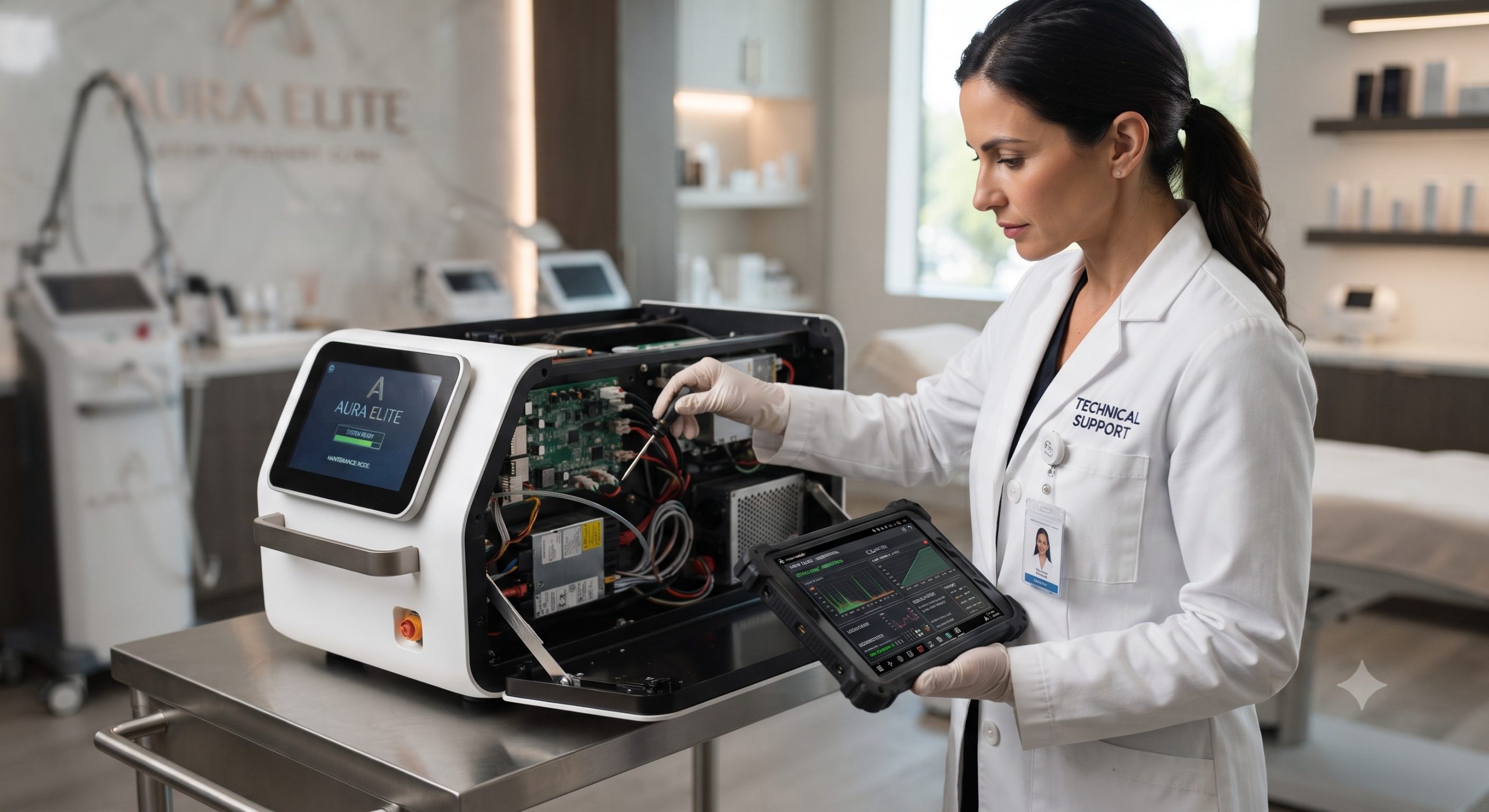
The most common errors typically relate to water flow, temperature regulation, or energy delivery. For instance, an ‘E-01 Water Flow’ error usually indicates a blocked water filter or a pump issue, often resolved by checking the external water circuit and cleaning the inlet filter. An ‘E-02 Over-Temperature’ alert means the system is too hot and you should allow it to cool for 10-15 minutes and ensure the air vents are unobstructed. Always cross-reference the specific error code with your user manual before attempting any internal fixes.
Q2: How do I optimize laser output parameters for different skin types and stubborn pigments?
Optimizing output involves adjusting fluence (energy density), spot size, and pulse duration to target specific chromophores without damaging surrounding tissue. For darker skin types (Fitzpatrick IV-VI), you should start with a lower fluence and use a larger spot size to scatter energy, reducing the risk of post-inflammatory hyperpigmentation. For stubborn, deeper pigments, increasing the pulse duration allows the energy to be delivered more slowly, heating a larger volume of tissue for more effective clearance.
Q3: What is the typical handpiece lifespan and what is the replacement schedule?
The typical lifespan of an aesthetic laser handpiece is between 100,000 and 500,000 shots, depending on the model and energy levels used. You should monitor the shot count and plan for a replacement when the handpiece reaches 80-90% of its maximum rated life to avoid unexpected downtime. Failing to replace a worn handpiece will lead to a significant drop in output energy, resulting in suboptimal treatment results and patient dissatisfaction.
Q4: How do I properly maintain the water circulation system to ensure thermal regulation?
The water circulation system is critical for cooling the laser chamber and the patient’s epidermis, and it requires regular maintenance. You should check and clean the water filters every 2-4 weeks to prevent blockages and maintain optimal flow rate. It is also recommended to replace the distilled or deionized water in the system every 3-6 months to prevent the growth of algae and bacteria, which can corrode internal components and compromise thermal regulation.
Q5: What should I do if I observe a drop in output energy from the laser handpiece?
A drop in output energy is often the first sign of a failing flash lamp or a contaminated optical window. First, inspect the handpiece’s optical window for any debris or coating residue and clean it gently with a lint-free swab and isopropyl alcohol. If the issue persists, it likely indicates that the flash lamp has reached the end of its life and needs replacing; the system will typically need a recalibration to ensure the new lamp delivers the correct energy output.
Q6: Is there a way to improve the high-throughput treatment efficiency in a busy clinic?
Yes, using a larger spot size is the most effective way to improve treatment efficiency for large body areas. By using a spot size of 15mm or larger, you can cover more surface area per pulse, significantly reducing the total treatment time per session. This not only increases the number of patients you can see daily but also improves patient comfort by completing the procedure faster.
Q7: What is the protocol for integrating this laser with other aesthetic devices in a clinical workflow?
The ideal protocol is to schedule the laser treatments at least 2-4 weeks apart from other energy-based devices like radiofrequency or ultrasound to prevent skin irritation. You can, however, combine a laser session with a topical numbing cream or a cold air cooling system for immediate comfort. For a comprehensive approach, you can perform a laser treatment for pigmentation and then follow up with a non-ablative skin tightening device 30 days later to maximize collagen remodeling without over-stressing the skin.