
ブログ
The Ultimate Clinic Guide to Utilizing Traveler Documents to Monitor Floor Production: Efficacy, Wavelengths, and ROI
2026年7月17日
Introduction: The Overlooked Data Asset in Medical Aesthetics
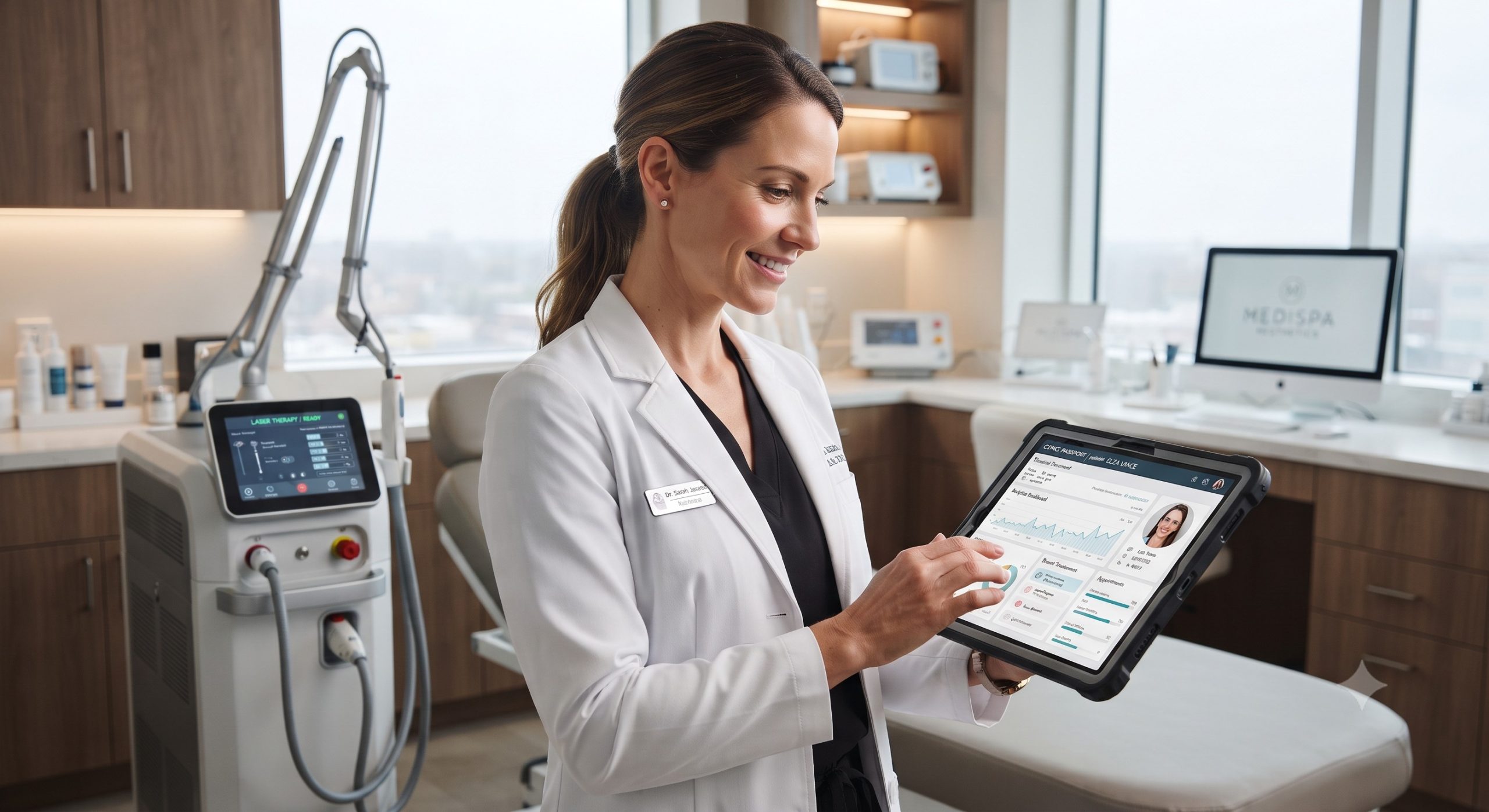
In the high-stakes environment of a modern medical aesthetics clinic, the focus is often placed squarely on the laser device itself: the peak power, the cooling system, and the advertised wavelength. However, for a clinic owner or medical director aiming for operational excellence and maximum profitability, a critical piece of the puzzle is often overlooked: the ‘traveler document’. In the context of a medical aesthetics clinic, a traveler document is a comprehensive, patient-specific or batch-specific record that accompanies a treatment or consumable through the clinical workflow. This article serves as The Ultimate Clinic Guide to Utilizing Traveler Documents to Monitor Floor Production, detailing how this administrative tool can become a powerful lever for clinical efficacy, regulatory compliance, and financial ROI. We will explore how integrating data from traveler documents with device performance metrics, such as the 808nm Diode Laser parameters, can lead to a more efficient and profitable practice. For a medical aesthetics practice, a traveler document is not just paperwork; it is a ‘black box’ recorder that captures the vital signs of your floor production, enabling you to optimize everything from the Fluence (J/cm²) selected for a Fitzpatrick Skin Type III patient to the Shot Count of a handpiece before it needs replacement. This holistic view is essential for long-term success.
The Clinical Imperative: Moving Beyond the Device
Aesthetic clinics are rapidly evolving into sophisticated medical facilities, where the standard of care is defined by both clinical outcomes and operational efficiency. The traveler document acts as the central nervous system for this evolution. It ensures that every treatment adheres to the established protocol, especially when dealing with high-throughput procedures like laser hair removal using a 755nm/808nm/1064nm multi-wavelength platform. By meticulously recording the parameters for each session, you create a data set that allows for unparalleled precision in treatment optimization.
Enhancing Clinical Precision with Data Capture
At its core, the traveler document is a clinical tool. It forces the operator to document the exact settings used for each patient, creating a feedback loop that connects clinical outcomes to specific technical metrics. Consider the following data points that a robust traveler document should capture for every laser treatment:
- Device and Handpiece Identification: Logging the specific laser device and its corresponding handpiece (e.g., an Imported Laser Bar handpiece) ensures traceability for maintenance and quality control.
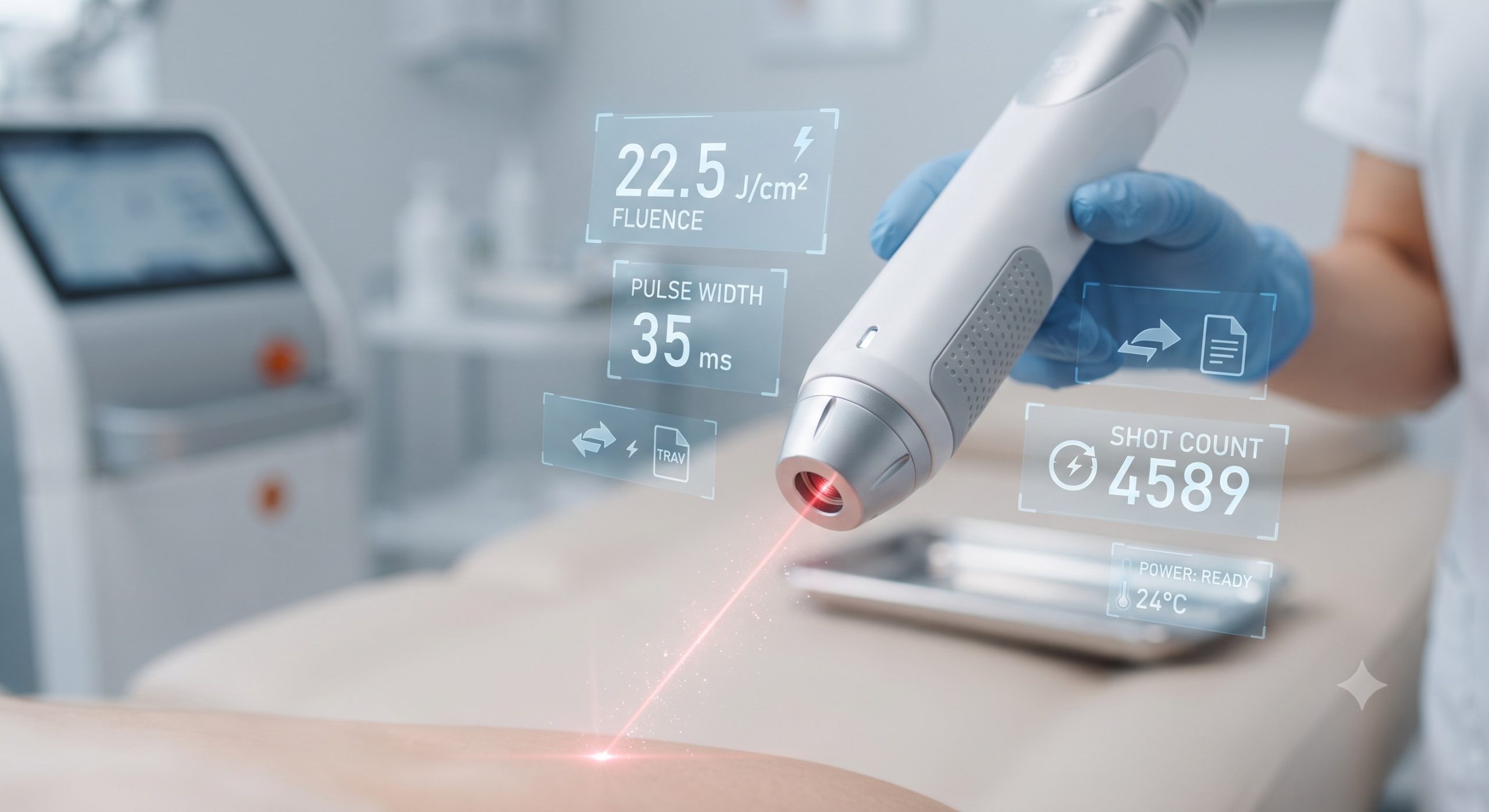
- Technical Output Metrics: Recording the exact Wavelength (e.g., 808nm), Spot Size (e.g., 12mm x 12mm), Energy Density/Fluence (e.g., 10-12 J/cm²), and Pulse Width (e.g., 10-30ms) used. This data is invaluable for determining the optimal settings for individual patients based on their Fitzpatrick Skin Type and hair color.
- Cooling System Performance: Documenting the effectiveness of the cooling mechanism, such as the temperature of the Sapphire ICE Cooling Systems or the TEC (Thermoelectric Cooler) efficiency. This is a key patient comfort metric.
- Total Shot Count: Tracking the cumulative number of laser pulses delivered by the handpiece. This is a direct indicator of handpiece wear and tear, directly impacting the Lifetime Cost of Ownership (TCO) of your equipment.
| Key Parameter | Technical Specification | Clinical Impact |
|---|---|---|
| Wavelength / Laser Type | 755nm, 808nm, 1064nm (Diode) | Targets melanin and hemoglobin; optimized for various skin types. |
| Spot Size | 12mm x 12mm (Variable) | Larger spot sizes accelerate treatment speed and reduce session time. |
| Energy Density / Fluence | 1-40 J/cm² (Adjustable) | Precise energy delivery ensures efficacy while minimizing adverse effects. |
| Pulse Width | 5-400ms (Adjustable) | Allows for selective heating of hair follicles based on their thermal relaxation time. |
| Cooling System | Sapphire Contact Cooling (-5°C to 5°C) | Protects epidermis, enabling safe and comfortable treatments at higher fluences. |
| Handpiece Lifespan | 1 Million Shots (Typical) | Key factor in calculating the long-term cost per patient and TCO. |
Optimizing Floor Production and ROI
The true power of utilizing traveler documents lies in the synthesis of clinical data and operational data. This is where we move from a simple record-keeping exercise to a strategic business intelligence tool. By analyzing the data from all traveler documents, a clinic can gain actionable insights into its ‘floor production’—the efficiency and profitability of its clinical operations.
Comparative Analysis: Device Efficiency and Throughput
One of the most impactful uses of this data is in comparing the performance of different lasers or handpieces. For instance, your clinic may have a legacy IPL system and a newer Diode Laser platform. By analyzing the traveler documents, you can quantify the speed and effectiveness of each. With the diode’s Large Spot Sizes, a technician can cover a treatment area much faster, reducing session duration from 45 minutes to 20 minutes. This accelerates Treatment Speed, allowing for more appointments per day, which is the cornerstone of maximizing Med Spa Profitability. The data confirms that the diode laser not only offers better clinical results due to Selective Photothermolysis but also drives a superior Clinic ROI. For clinic upgrades, such as Integrating {keyword} for Painless Treatments, the data from traveler documents provides the empirical evidence needed to justify the capital expenditure.
Consumable Management and TCO Analysis
High-quality aesthetic lasers are significant investments. A key component of managing this investment is monitoring consumables. Traveler documents provide a clear audit trail for handpiece usage. When a handpiece’s shot count approaches its specified end-of-life (e.g., a 1 million shot lifespan), the clinic can proactively plan for a replacement, avoiding unexpected downtime. This data enables a precise calculation of the Consumable Cost per Patient. For example, if a handpiece costs $5,000 and lasts for 50,000 shots, each shot costs $0.10. If a typical full back treatment uses 500 shots, the consumable cost for that treatment is $50. This level of granularity is essential for accurate pricing models and for understanding the true Lifetime Cost of Ownership and Handpiece Durability.
Regulatory Compliance and Quality Assurance
In an industry governed by strict standards, the traveler document serves as a non-negotiable component of a clinic’s quality management system. Adherence to FDA & Medical CE Compliance and ISO 13485 standards for medical devices requires meticulous record-keeping. The traveler document provides the paper trail necessary to demonstrate that the clinic is operating its medical devices according to the manufacturer’s specifications and within safe clinical protocols. This includes verifying that the device’s output, as documented on the traveler, matches the calibrated settings. For instance, if a machine is set to deliver 12 J/cm² but the traveler document shows it was used for a treatment that should have required 15 J/cm², it flags a potential issue that needs investigation, ensuring Patient Safety. This is especially critical when Treating Fitzpatrick Skin Types I-VI Safely, as a miscalculation in fluence can lead to burns or hyperpigmentation. The document acts as a vital record for Clinic Audit Protection, providing proof of due diligence.
Advanced Clinical Workflows: The Data-Driven Clinic
The future of medical aesthetics lies in Data-Driven Evaluation. By digitizing and analyzing traveler documents, clinics can transform from reactive to predictive. This data can be used to refine treatment protocols for specific demographics, improve patient education by setting realistic expectations based on past outcomes, and even market the clinic’s expertise. A clinic that can demonstrate a high Quantified Clinical Clearance Rate for specific skin types and indications will have a significant competitive advantage. The data captured in a traveler document is the foundation upon which this Clinical Validation is built.
Conclusion: The Strategic Necessity of the Traveler Document
In conclusion, the traveler document is far more than an administrative form. It is a strategic asset that underpins clinical excellence, operational efficiency, and financial profitability. By systematically Utilizing Traveler Documents to Monitor Floor Production, a clinic can optimize laser parameters like Wavelength, Spot Size, and Fluence to achieve superior outcomes. It allows for precise management of consumable costs, maximizing the ROI on high-value capital equipment, and ensures unwavering compliance with medical regulations. For the forward-thinking clinic owner, investing in a robust system for managing and analyzing traveler document data is one of the most impactful decisions they can make. It moves the clinic from artisanal practice to a data-driven, highly profitable medical business, ensuring long-term success in the competitive field of medical aesthetics.