
ブログ
The Ultimate Clinic Guide to Tracking Environmental Conditions During the Assembly Process: Efficacy, Wavelengths, and ROI
2026年7月30日
Introduction: The Overlooked Variable in Device Reliability
In the high-stakes world of medical aesthetics, the clinical efficacy of a device is often attributed solely to its laser source or software algorithms. However, for the discerning clinic owner or medical director, the fundamental question isn’t just about the peak power or cooling mechanism; it is about precision reproducibility. The most advanced 808nm diode laser bar or the most sophisticated 1064nm Nd:YAG crystal is rendered ineffective if the assembly process isn’t controlled down to the molecular level. This is where Tracking Environmental Conditions During the Assembly Process becomes the silent sentinel of quality and return on investment (ROI).
For B2B buyers, the decision to integrate a new aesthetic platform—such as a high-power diode laser for hair reduction or a picosecond device—is an investment in long-term clinical outcomes. The hidden variable that separates a market-leading Class IIb Medical CE device from a budget alternative is often the environmental rigor of its manufacturing. This guide provides an authoritative, data-driven look at why monitoring particulate count, temperature, and humidity during assembly is not a luxury, but a clinical necessity for ensuring consistent energy density (Fluence measured in J/cm²) and pulse width (measured in milliseconds).
At the heart of modern aesthetic engineering, the battle against entropy is won in cleanrooms. We will explore the specific technical metrics that environmental controls protect, the industry standards that mandate them, and the tangible ROI benefits for your clinic. By understanding the assembly chain, you gain the power to ask the right questions before you purchase, ensuring your investment delivers the photothermolysis effects your patients expect.
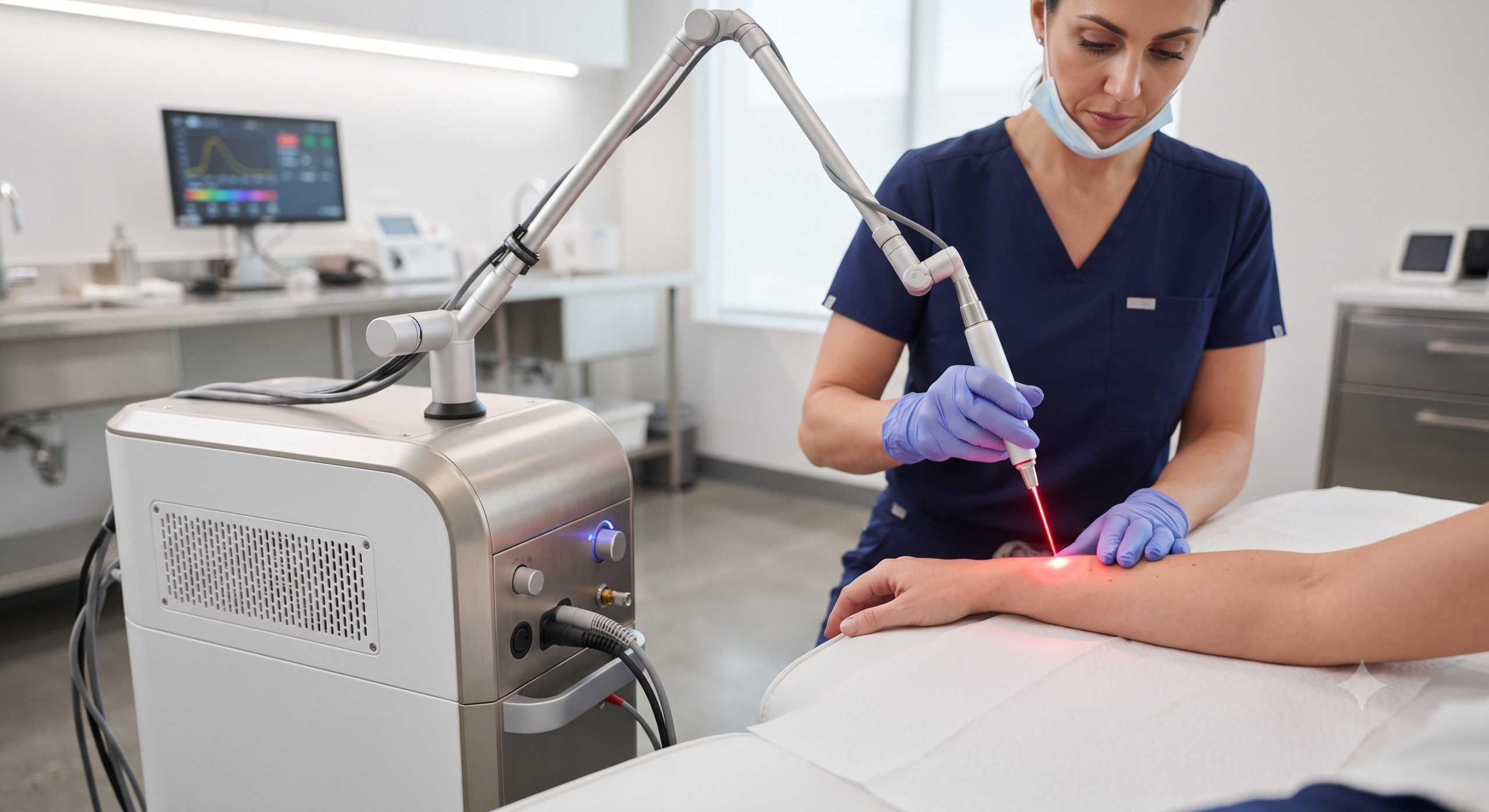
The Physics of Failure: Why Environmental Control Matters
Optical Precision and Contamination
The science of selective photothermolysis relies on the precise delivery of light. Aesthetic lasers depend on high-quality optical components—mirrors, lenses, and gain mediums. Tracking Environmental Conditions During the Assembly Process is critical because microscopic dust particles (often as small as 0.3 microns) can absorb laser energy and cause thermal damage to the very coatings designed to reflect or transmit that energy. If a 755nm Alexandrite or 808nm Diode resonator is assembled in an environment with high particulate counts, the optical efficiency drops. This leads to a phenomenon known as ‘clipping,’ where the spot size becomes irregular, affecting the fluence delivered to the tissue. For your clinic, this translates to inconsistent treatment outcomes and potential hot spots that increase the risk of patient burns or Post-Inflammatory Hyperpigmentation (PIH).
Humidity and High-Voltage Systems
Aesthetic devices operate on extremely high voltages to pump the laser diodes. Humidity is the enemy of high-voltage electronics. Tracking Environmental Conditions During the Assembly Process ensures that the relative humidity is maintained below specific thresholds (often < 30% to 50% depending on the specific ISO class). High humidity during assembly can lead to the absorption of moisture on circuit boards, causing parasitic capacitance and arcing. For an intense pulsed light (IPL) or diode device, this results in unstable pulse width delivery and reduced peak power. In a clinical setting, this translates to a shorter lifespan for the handpiece, increased Total Cost of Ownership (TCO), and unpredictable service intervals that can disrupt your med spa’s revenue stream.
Temperature Stability in Alignment
Thermal expansion is a physical reality. Laser cavities and the alignment of optics are calibrated to a specific temperature. Tracking Environmental Conditions During the Assembly Process with strict temperature monitoring ensures that the optical path remains stable during the curing of adhesives or the setting of mounts. If the temperature fluctuates during assembly, the device may be ‘in spec’ at 20°C but will drift out of alignment during operation at 30°C. This directly impacts the penetration depth of the 1064nm wavelength, which is crucial for treating deeper vascular lesions or hair follicles in Fitzpatrick Skin Types IV-VI.
Industry Standards: ISO 13485 and Medical CE Compliance
Regulatory Expectations
For a device to bear the Medical CE mark or receive FDA clearance, the manufacturer must demonstrate a controlled manufacturing environment. ISO 13485—the international standard for medical device quality management systems—explicitly requires manufacturers to control the work environment to ensure product conformity. This isn’t just a suggestion; it is a regulatory requirement. When a supplier claims ISO 13485 compliance, they are legally obligated to document environmental monitoring during the assembly of critical components. As a clinic buyer, requesting documentation of Environmental Conditions During the Assembly Process is a key due diligence step that separates reliable OEMs from assembly shops that jeopardize your clinical reputation.
Cleanroom Classification and Particulate Control
High-stakes assembly often takes place in Cleanrooms classified under ISO 14644-1. For the production of laser handpieces, you often see ISO Class 7 or Class 8 (or better) cleanroom standards. This means the air is filtered to remove airborne particles down to specified sizes. Tracking Environmental Conditions During the Assembly Process in these rooms involves monitoring temperature, humidity, and differential pressure, alongside active particle counters. This rigorous environment protects the high-voltage capacitors and the ‘golden’ optical path from degradation. When you invest in a device from a facility with certified cleanrooms, you are buying peace of mind that the energy density you set on the screen is the exact energy delivered to the target chromophore.
| Key Parameter | Technical Specification & Impact |
|---|---|
| Wavelength / Laser Type | 755nm (Alexandrite) / 808nm (Diode) / 1064nm (Nd:YAG) – Ensures broad patient applicability. |
| Energy Density (Fluence) | Typically 5 – 40 J/cm² (User adjustable); Precision requires stable output from clean assembly. |
| Pulse Width (Duration) | Milliseconds (e.g., 10ms – 400ms); Critical for thermal relaxation time; impacted by electronic stability. |
| Cooling System | Sapphire Contact Cooling (e.g., -5°C to 5°C); Environmental control ensures efficient heat exchange. |
| Cleanroom Standard | ISO Class 7 or better (ISO 14644-1); Ensures < 352,000 particles per cubic meter > 0.5 microns. |
| Quality Management | ISO 13485 Certified; Mandates environmental monitoring for regulatory compliance. |
The Clinical ROI: How Assembly Quality Protects Your Investment
Consistency Reduces Retreatment Rates
The ultimate clinical metric is the clearance rate. A device built in a carefully controlled environment ensures that the fluence and pulse duration remain stable over millions of shots. If a device’s output degrades by 10% faster due to environmental contamination during assembly, your clinic will need to increase fluence manually to achieve the same results—increasing the risk of side effects—or perform more sessions, reducing patient satisfaction. Tracking Environmental Conditions During the Assembly Process maximizes the shot count and consistency of the handpiece, ensuring you get a predictable number of treatments from each consumable (like the laser bars or flashlamps), thus optimizing your per-treatment profit margins.
Extending Handpiece Lifespan and Warranty ROI
Handpieces are expensive consumables. Diodes experience thermal stress. Moisture ingress or poor thermal conduction due to improper potting (which occurs in uncontrolled environments) drastically shortens the life of the imported laser bar. By requiring manufacturers to adhere to strict environmental protocols, you ensure the thermal management systems (like the Sapphire ICE cooling or thermoelectric coolers) are assembled with optimal thermal transfer materials free of voids (bubbles) that could cause hot spots. This directly correlates to a longer useful life of your handpiece, a lower CapEx and OpEx, and a higher eventual resale value for the equipment.
Risk Management and Insurance Liability
In the medical field, patient safety is paramount. A device that fails due to internal shorts or optical misalignment can cause adverse events. For a clinic, this leads to malpractice claims and reputational damage. Tracking Environmental Conditions During the Assembly Process is part of a robust Risk Management strategy. Devices assembled in a controlled environment undergo fewer random failures, reducing the risk of patient injury. This builds trust with your medical insurer and allows you to market a ‘gold standard’ of safety to your patient base, justifying the premium pricing associated with high-end aesthetic treatments.
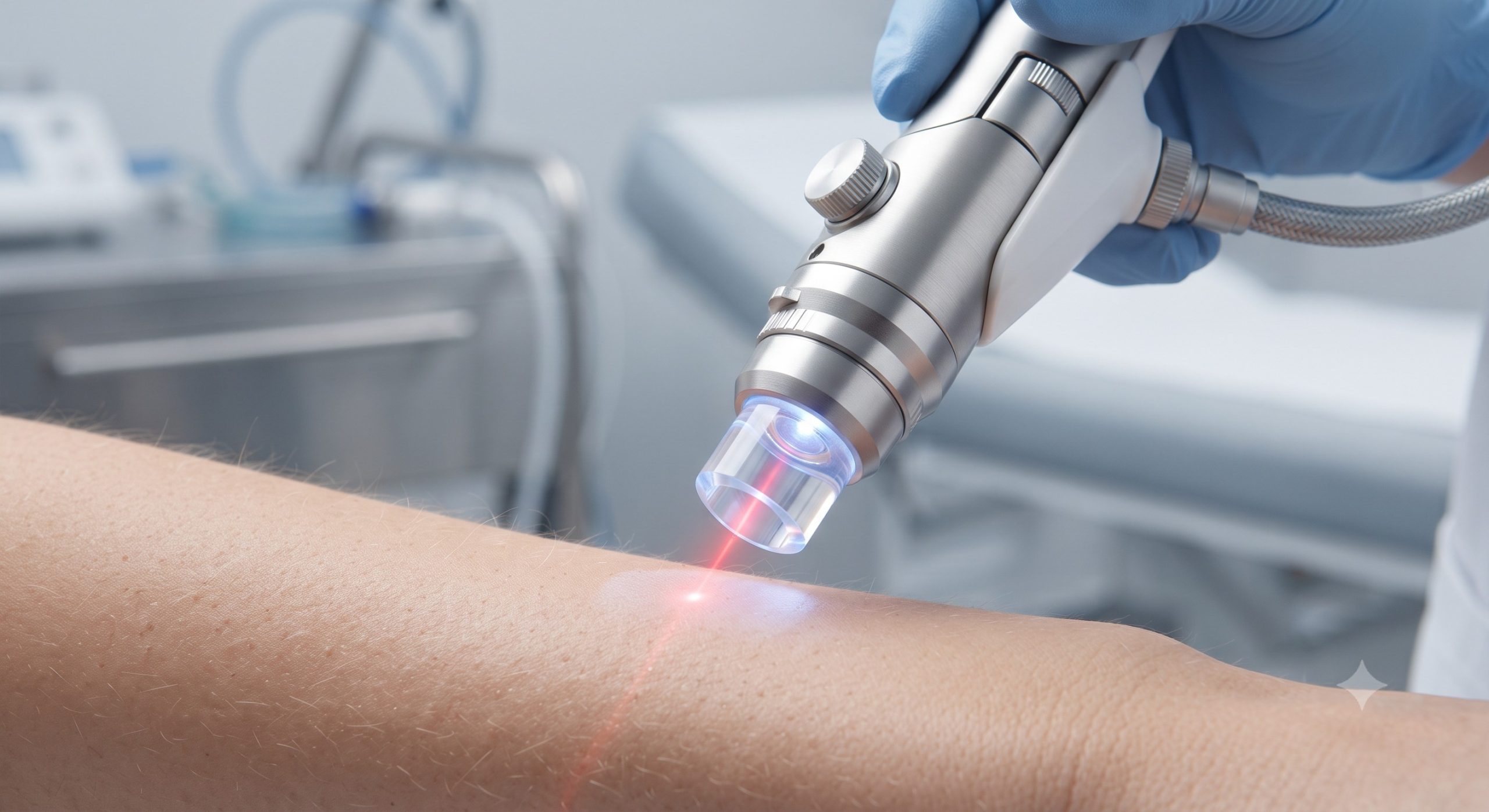
Conclusion: The Environmental Standard is the Clinical Standard
As we have explored, Tracking Environmental Conditions During the Assembly Process is not merely a technical checkbox for engineers; it is the bedrock of clinical efficacy, patient safety, and clinic profitability. The advanced capabilities of multi-wavelength platforms—offering 755nm, 808nm, and 1064nm for versatile treatments—are only realized when the internal components are pristine and precisely aligned.
For the B2B buyer looking to upgrade their med spa or dermatology practice, your evaluation criteria must extend beyond the marketing brochure. You must audit the source. Inquire about the manufacturer’s cleanroom facilities, ask to see the environmental monitoring logs, and ensure they adhere to ISO 13485 and Medical CE standards. By prioritizing environmental controls in your procurement process, you secure a device that delivers consistent, high-fluence results, reduces downtime, and maximizes your ROI over its lifetime. In the competitive world of aesthetics, quality is a standard that can only be guaranteed through rigorous process control.
Invest smartly. Demand precision from the start of the production line to the treatment room.