
ブログ
FDA & Medical CE Compliance: Ensuring Patient Safety with Overcoming Technical Barriers to Trade in the EU Market
2026年8月12日
Introduction: The New Era of Medical Device Regulation in the EU
For medical aesthetic device manufacturers, the European Union market represents a significant opportunity. However, the transition from the Medical Devices Directive (MDD) to the Medical Device Regulation (MDR) (EU) 2017/745 has fundamentally altered the regulatory landscape . This change, coupled with new trade measures like the International Procurement Instrument (IPI), creates a complex web of technical barriers to trade . Overcoming these obstacles requires not just regulatory knowledge but a deep commitment to clinical excellence and stringent quality management. This blog serves as a comprehensive guide for industry leaders seeking to navigate these challenges and secure their position in the EU market.
Success in the EU hinges on demonstrating that your devices meet the highest standards of safety and performance. This is primarily achieved through compliance with the MDR, which mandates rigorous clinical evaluation, robust post-market surveillance, and a quality management system that aligns with ISO 13485 . The days of simple CE marking under MDD are over; the MDR requires a more profound, data-driven approach to demonstrating device safety and clinical benefit . As the EU Commission and Member States tighten enforcement, non-compliance is not an option. This article will dissect the specific technical and clinical requirements that constitute the primary trade barriers and provide a roadmap for achieving and maintaining compliance.
Decoding the Regulatory Framework: MDR and Its Impact on Market Access
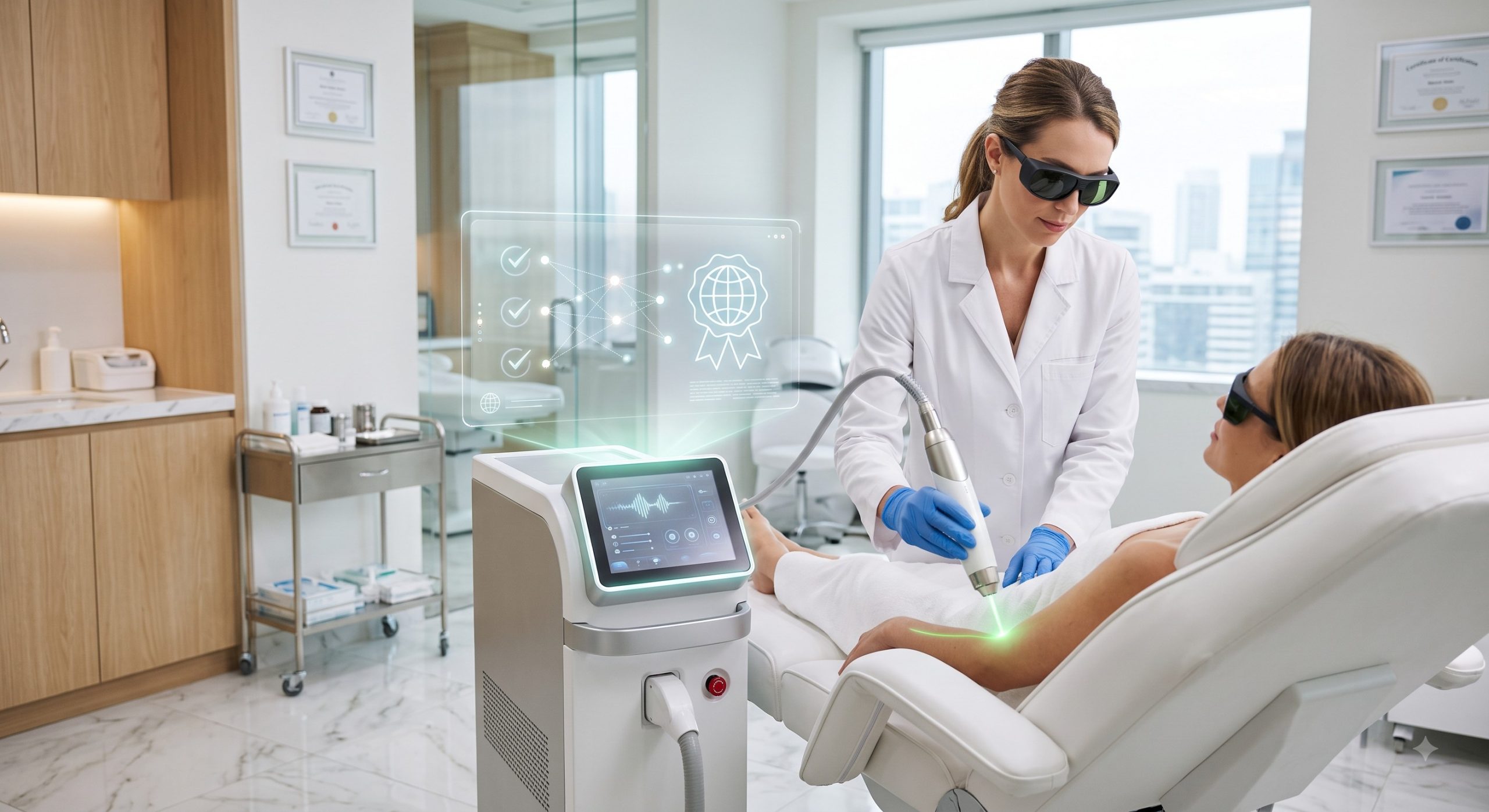
The European Medical Device Regulation (MDR) was designed to ensure a high level of health and safety protection for patients and users . While its goals are laudable, its implementation has created significant hurdles for manufacturers, particularly those from outside the EU. The MDR introduces more stringent requirements for clinical evidence, technical documentation, and post-market clinical follow-up (PMCF) . For aesthetic lasers and energy-based devices, this means that previous certifications or FDA clearances are no longer sufficient; a new, more rigorous conformity assessment is required.
Key Regulatory Hurdles: Technical and Clinical Demands
Navigating the MDR involves several critical areas that directly impact device design, testing, and clinical evaluation. Understanding these is the first step in overcoming technical barriers to trade.
- General Safety and Performance Requirements (GSPR): Annex I of the MDR outlines essential requirements covering biological, chemical, physical, and electrical safety. For a laser device, this includes biocompatibility testing per EN ISO 10993, electrical safety per IEC 60601-1, and electromagnetic compatibility (EMC) .
- Clinical Evaluation and Clinical Evidence: Under MDR, clinical evaluation is a systematic, ongoing process to generate, collect, analyze, and assess clinical data . The Clinical Evaluation Report (CER) must demonstrate conformity with relevant GSPRs. A major challenge is the stricter approach to demonstrating equivalence to an existing device. The ‘continuous access agreement’ requirement makes it nearly impossible to rely on competitor data, compelling manufacturers to generate their own clinical data .
- Technical Documentation: The technical file must be comprehensive and include detailed device descriptions, manufacturing information, risk management (ISO 14971), and the aforementioned clinical data. The notified body will scrutinize this documentation in detail, and incomplete or poorly structured files are a primary cause of delays .
- Post-Market Surveillance (PMS) and Post-Market Clinical Follow-up (PMCF): The MDR places a heavy emphasis on the full lifecycle of the device. Manufacturers must have robust PMS systems in place to collect and analyze data from devices in the field. PMCF studies are required to confirm the safety and performance of the device throughout its lifetime, often generating data that supplements the initial clinical evaluation .
| Regulatory Requirement | Key Standard / Action | Objective |
|---|---|---|
| General Safety & Performance (GSPR) | EN ISO 10993 (Biocompatibility), IEC 60601-1 (Electrical Safety), EN 55032/55035 (EMC) | Ensure material and electrical safety for patients and users |
| Clinical Evaluation | Clinical Evaluation Report (CER), Clinical Evaluation Plan (CEP), Equivalence Demonstration | Provide valid clinical data to prove safety and performance in intended use |
| Risk Management | ISO 14971, MDR Annex I, Interface with PMS/PMCF | Identify, evaluate, and control all potential risks throughout the device lifecycle |
| Post-Market Surveillance (PMS) | PMS Plan, PMS Report, PSUR (for higher classes), PMCF Plan | Monitor device performance and safety after market release, identify new risks |
| Quality Management System | ISO 13485 | Establish and maintain a systematic approach to quality and regulatory compliance |
| Trade Compliance (Public Procurement) | International Procurement Instrument (IPI) Regulation (EU) 2025/1197 | Comply with rules and restrictions for participating in EU public tenders >€5 million |
Beyond MDR: The Impact of IPI and Market Dynamics
While MDR is a significant regulatory barrier, recent political and trade developments have introduced new obstacles. The EU’s adoption of the International Procurement Instrument (IPI) specifically targets non-EU economic operators, including those from China, in the public procurement of medical devices . This measure, effective June 2025, restricts participation in tenders valued over €5 million for a wide range of medical devices, including many aesthetic and hospital-grade technologies. This is a direct and intentional technical barrier to trade that requires strategic planning to navigate.
Furthermore, internal trade barriers within the EU, while not directly targeting external manufacturers, contribute to the overall complexity of the market. A 2025 European Investment Bank survey highlighted that 62% of EU firms found divergent national laws a significant challenge to intra-EU trade, underscoring that the single market is not as seamless as it appears on paper . This fragmentation means that even with a CE mark, market access strategies must consider local national requirements and reimbursement policies.
Clinical and Technical Specifications for Aesthetic Devices
For medical aesthetic device manufacturers, the technical parameters of their equipment are a central pillar of the technical documentation. To meet the MDR’s rigorous demands, these parameters must be precisely defined, validated, and supported by clinical evidence.
Precision in Parameters: From Energy Density to Cooling Systems
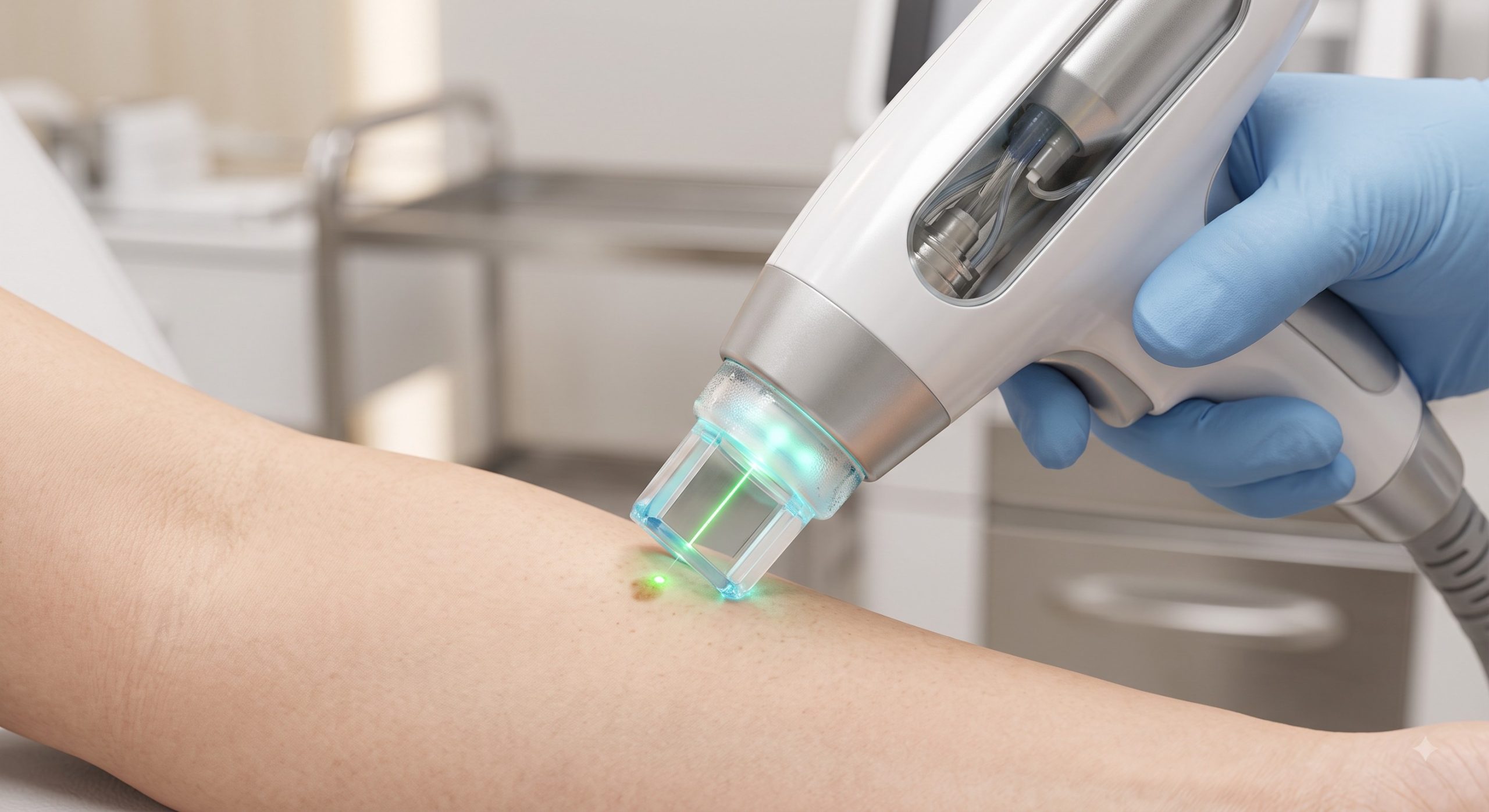
The MDR requires that manufacturers fully characterize the device’s output and its interaction with tissue. This is particularly critical for high-energy devices like lasers and intense pulsed light (IPL) systems. Key parameters to define and validate include:
- Wavelength & Laser Type: The specific wavelength (e.g., 755nm, 808nm, 1064nm) must be chosen for its target chromophore (e.g., melanin for hair or hemoglobin for vascular lesions). The device must demonstrate stability and accuracy at its specified wavelength.
- Energy Density (Fluence) & Spot Size: Measured in Joules per square centimeter (J/cm²), fluence directly influences treatment efficacy. The spot size is equally critical, as larger spot sizes allow for deeper penetration and faster treatment, but require higher energies. The technical documentation must define the range and accuracy of these parameters.
- Pulse Width: The duration of the laser pulse must be optimized to be shorter than the thermal relaxation time of the target (selective photothermolysis). For hair removal, pulse widths are often in the millisecond (ms) range to heat and destroy the hair follicle while minimizing damage to surrounding tissue.
- Cooling Systems: To prevent epidermal injury, effective cooling is mandatory. Systems like Sapphire contact cooling or cryogen spray cooling must be integrated and their performance validated. This not only ensures patient comfort but is a critical safety feature that must be detailed in the risk management file.
In summary, compliance with MDR means that every technical claim made about your aesthetic device—from its cooling efficiency to its laser output—must be substantiated with objective, verifiable, and clinically relevant data. The days of vague marketing claims are over; the EU market demands engineering rigor and scientific proof.
Strategic Recommendations for Market Entry and Expansion
Overcoming these technical barriers to trade requires a proactive, strategic, and well-resourced approach. The following key strategies will help manufacturers navigate the EU market successfully.
- Early Engagement with a Notified Body: Notified bodies are at the heart of the MDR conformity assessment. Engaging with them early in the product development cycle is crucial to understand their specific interpretation of the requirements and to avoid costly design or testing changes later.
- Investing in a Robust Quality Management System: A quality system certified to ISO 13485 is a prerequisite for MDR compliance. The system must be an integral part of the company’s operations, not a separate ‘paper exercise.’ It should seamlessly connect design controls, risk management, and post-market surveillance .
- Building a Comprehensive Clinical Evidence Strategy: The MDR places the burden of proof firmly on the manufacturer. For new devices, this often means conducting new clinical investigations. For established technology, it may involve a well-justified reliance on literature and PMCF data. A clear clinical evaluation plan (CEP) is essential from the start .
- Considering Local Partnerships and Supply Chain Diversification: The IPI measures create a clear incentive for manufacturers to consider establishing a presence within the EU or partnering with EU-based distributors to mitigate public procurement restrictions. Building a resilient supply chain is more critical than ever .
Conclusion: Turning Barriers into a Competitive Edge
The technical barriers to trade in the EU market are substantial but not insurmountable. While the MDR has increased the cost and complexity of bringing a medical device to market, it has also raised the bar for quality, safety, and clinical evidence. This creates a significant competitive advantage for companies that are willing to invest in genuine innovation and rigorous compliance. The stringent requirements serve as a filter, removing less serious players and rewarding those dedicated to patient safety and clinical excellence. By embracing these regulations as a framework for building better, more reliable medical aesthetic technologies, manufacturers can not only overcome trade barriers but also establish a reputation for quality that resonates globally. The EU market remains a key strategic objective for medical device leaders, and a commitment to MDR compliance is the cornerstone of any successful entry strategy.
To succeed, a forward-looking approach is essential—one that integrates regulatory strategy into every stage of product development, from initial design to post-market surveillance. By doing so, companies can protect their patients, their reputation, and their bottom line.