
Risorsa
Documento di riferimento sull'architettura della fototermolisi selettiva: ruoli di team interfunzionali durante la transizione NPI
SELECTIVE PHOTOTHERMOLYSIS ARCHITECTURE REFERENCE DOCUMENT: CROSS-FUNCTIONAL TEAM ROLES DURING NPI TRANSITION
EXECUTIVE SUMMARY
This document delineates the structured, phase-gated operational framework governing New Product Introduction (NPI) transitions for medical aesthetic devices. It establishes the formal architecture of cross-functional team roles—encompassing Clinical Affairs, Regulatory, Systems Engineering, Manufacturing Operations, and Field Service—designed to mitigate transition risks, ensure regulatory continuity, and compress time-to-market. The content serves as the definitive reference for Original Equipment Manufacturers (OEM) deploying the Selective Photothermolysis architecture, and outlines the accountability matrix and handshake protocols essential for maintaining quality system integrity (21 CFR Part 820 / ISO 13485) during the transfer from Design & Development to Production & Commercialization.
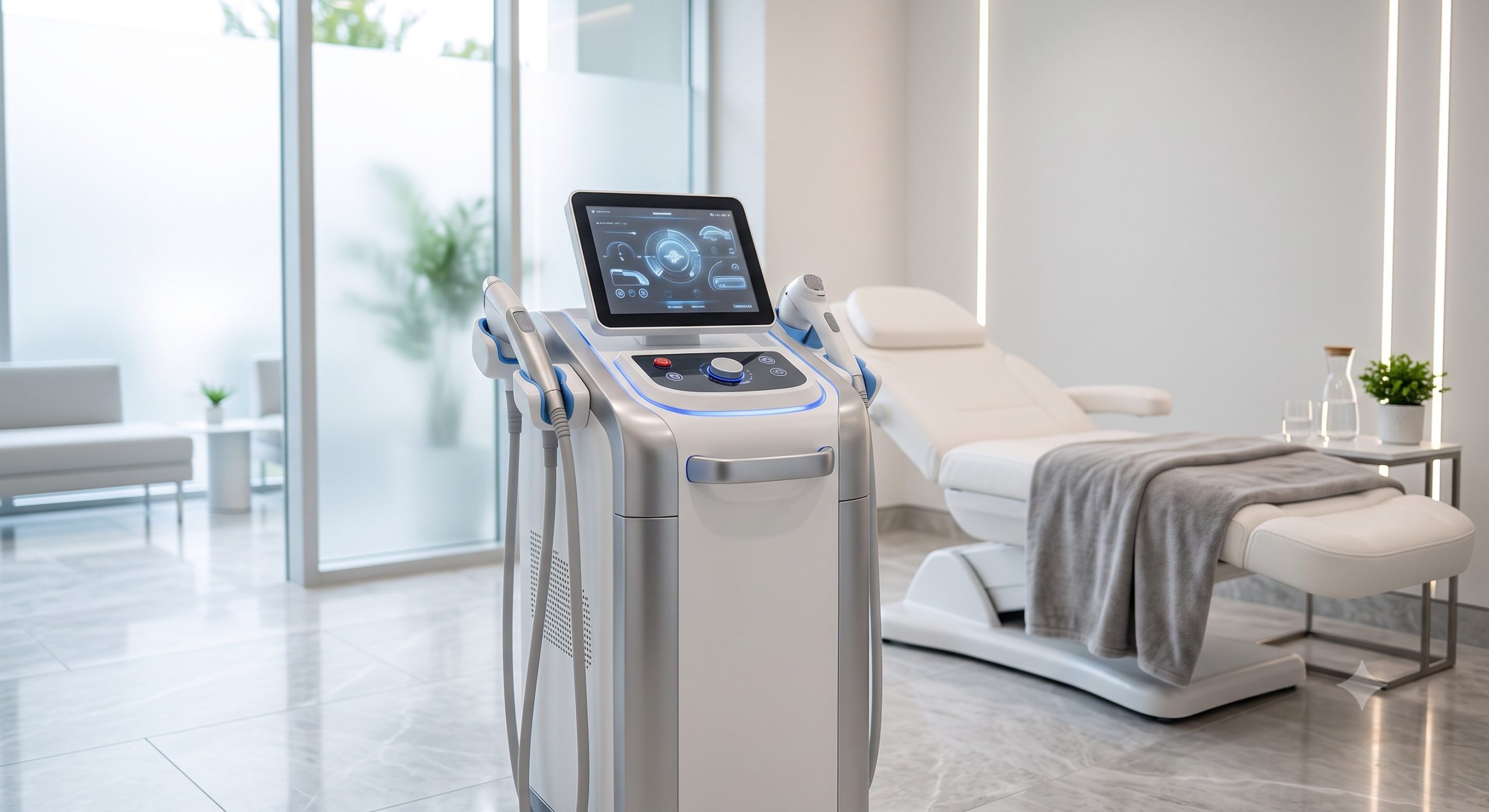
CLINICAL ARCHITECTURE & DESIGN PHILOSOPHY
The NPI transition is initiated upon the closure of Design History File (DHF) deliverables. The Systems Engineering Team, led by the Principal Systems Architect, executes a final risk assessment (DFMEA / PFMEA) to validate that the device’s fluence delivery (specifically within the 808nm diode and multi-wavelength 755/808/1064nm emission profiles) remains within the intended therapeutic window. Concurrently, the Clinical Affairs Team finalizes the clinical evaluation report (CER) by analyzing data from the pivotal validation studies. This phase mandates a mandatory design review (PDR/CDR level) where the cross-functional leads formally sign-off on the Design Outputs and establish the baseline for the Device Master Record (DMR). The role of the Quality Engineering (QE) lead is pivotal during this stage to ensure that all critical-to-quality (CTQ) parameters—such as spot size integrity and sapphire cooling tip temperature curves—are translated into actionable production controls.
KEY INDICATIONS, CAPABILITIES & ROLE SYNERGY
Within the NPI framework, the Marketing and Medical Affairs teams collaborate to finalize the Indications for Use (IFU). This process is not purely clinical but inherently operational, as the IFU dictates the labeling, packaging, and user training collateral. For this system, the platform is engineered to support full-body aesthetic treatments including hair reduction, vascular lesions, and skin rejuvenation. The Regulatory Affairs team leverages the finalized IFU and performance data to file for the necessary 510(k) clearances or CE Marking (MDR) amendments. A critical role during this transition is the NPI Project Manager (PM), who acts as the single point of accountability to orchestrate the “Design Transfer Meeting,” ensuring that the R&D Design Inputs are successfully reconciled with the Manufacturing Process Inputs. This cross-pollination of roles ensures that the multi-wavelength configurations and handpiece variants are seamlessly integrated into the Manufacturing Execution System (MES).
TECHNICAL SPECIFICATIONS (CORE OUTPUT REGISTER)
| Parameter | Specification |
|---|---|
| Laser Type / Wavelength | 808nm Diode / 755/808/1064nm (Selectable) |
| Spot Size | Standard: 15x15mm, Optional: 12x12mm, 10x10mm |
| Cooling System | TEC + Sapphire Plate + Water Circulation + Wind |
| Pulse Duration (ms) | 5 – 400 (Continuous Adjustable) |
| Energy Density (J/cm²) | 0.5 – 120 (Dependent on Wavelength) |
| Repetition Rate (Hz) | 1 – 10 (Burst mode capable) |
| Electrical Interface | 100-240V AC, 50/60Hz, 1600VA |
| Weight | Approx. 45kg (Chassis with Cart) |
The Parameter Register listed above outlines the absolute operational constraints of the Optical Engine. The engineering teams (Electrical, Mechanical, and Software) are responsible for validating these specifications against the production test equipment. During the NPI transition, the Manufacturing Engineering (ME) team develops the Golden Units for correlation studies, ensuring that the production line replicates the performance of the R&D prototype. The Field Service Engineering (FSE) team concurrently develops the Service Manual and diagnostic protocols, focusing on the thermal dissipation design and water cooling circuit logic to ensure clinical uptime post-launch.
PRODUCTION HANDOFF & COMPLIANCE STANDARDS
The formal handoff is governed by a Production Part Approval Process (PPAP) or an equivalent First Article Inspection (FAI). The role of the Supply Chain Manager is to certify the raw material sources (particularly for the diode laser bars and sapphire windows) against the approved vendor list (AVL). The Quality Assurance (QA) team performs a rigorous audit of the production line, verifying that the Environmental Stress Screening (ESS) and burn-in procedures are compliant with the design life requirements. This phase also involves the Training Department, which transitions from training the training staff to certifying the manufacturing operators on the assembly of the Smart UI Touchscreen and the robust mechanical chassis.
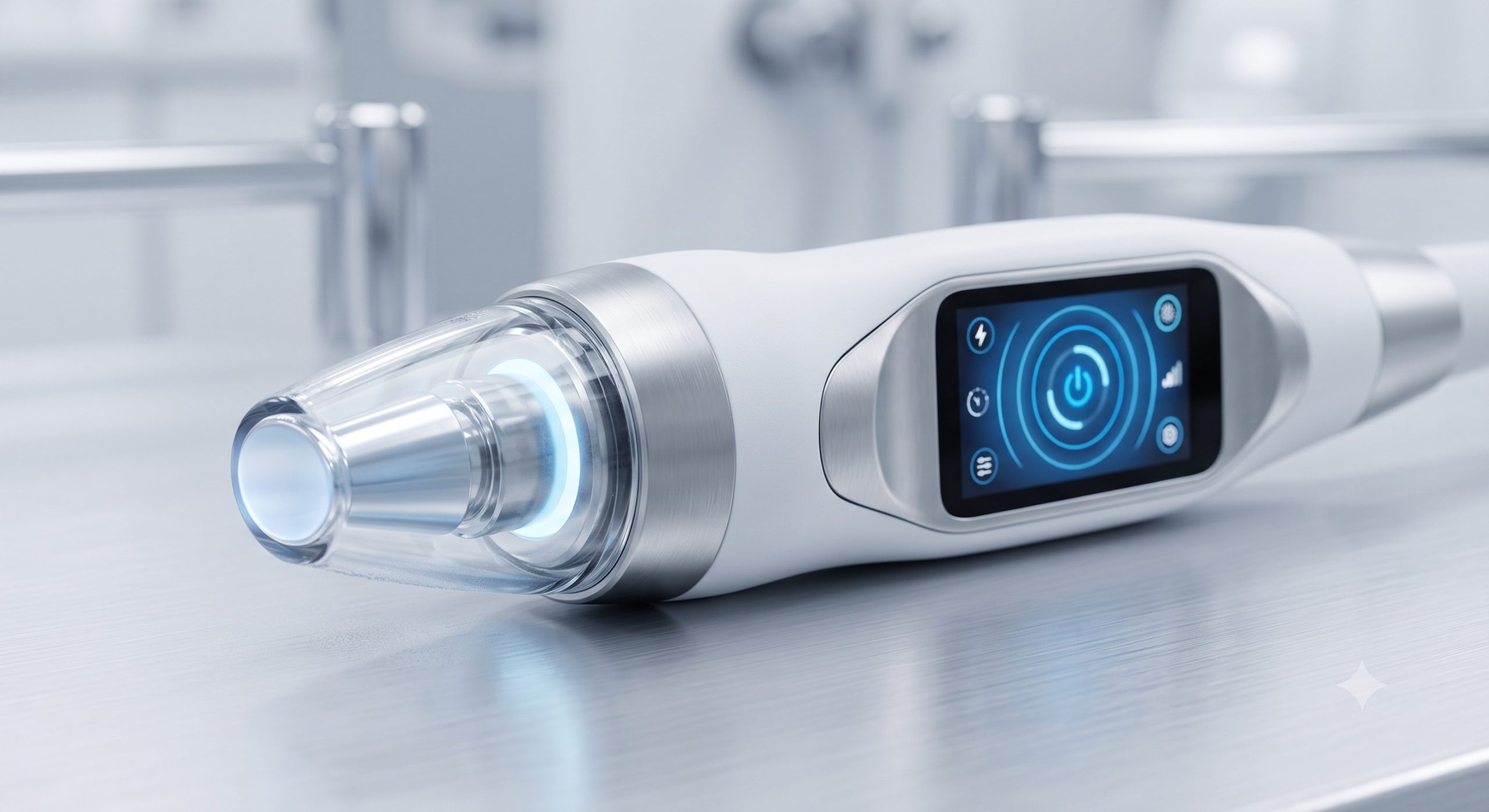
CLINICAL PROTOCOLS, USER TRAINING & REGULATORY COMPLIANCE
To finalize the NPI transition, the Clinical Applications Team shifts its focus from clinical trials to the development of the Commercial Training Curriculum. This includes establishing the recommended workflow for Med Spas and Dermatology Clinics, optimizing the Painless Epidermal Cooling Engine (Sapphire Ice Cooling) usage protocols. The team constructs detailed treatment schematics and parameter setting matrices for diverse skin types (Fitzpatrick I-VI) and body areas. Furthermore, the Regulatory and Legal teams ensure that the final labeling, marketing materials, and technical datasheets bear the correct compliance marks (FDA Class II, CE, IEC 60601-1, and IEC 60825-1). The document concludes with the formal closure of the transition milestone, marking the device as commercially ready for global distribution.
📥 Download Technical Specification
Click the button below to view or download the full official PDF datasheet.