
FAQ
Technical Support FAQ: Resolving Errors and Optimizing Output on Climate Control in Metrology Suites
Climate Control in Metrology Suites: B2B Technical Support FAQ
For B2B clinic buyers and dermatologists investing in precision metrology suites, climate control is not a facility afterthought—it is a core determinant of measurement integrity, part acceptance rates, and long-term equipment ROI. This FAQ addresses the highest-intent pre-sales and post-sales questions about how climate control in metrology suites affects tight-tolerance parts, written for procurement teams, clinical engineers, and aesthetic device manufacturers who require verifiable performance data.
Frequently Asked Questions
Q1: How does climate control in metrology suites affect tight-tolerance parts?
Climate control in metrology suites directly determines whether tight-tolerance parts can be measured within sub-micron accuracy, because thermal expansion of both the part and the measuring instrument alters dimensional readings. A 1°C temperature fluctuation can shift a 100 mm steel component by approximately 1.2 µm, which exceeds the tolerance band for many precision aesthetic device components. Consequently, suites must maintain 20°C ± 0.1°C and 45% ± 5% relative humidity to satisfy ISO 1 and ISO 14644-1 cleanliness and stability requirements.
Q2: What temperature and humidity specifications should B2B buyers require for a metrology suite?
The recommended baseline for tight-tolerance part metrology is 20°C ± 0.1°C with a humidity range of 45% ± 5% RH, verified by continuous data logging. This specification minimizes thermal drift in granite surface plates, laser interferometers, and CMM probes. Buyers should also require a recovery rate of under 60 seconds after door openings and a spatial uniformity of ± 0.05°C across the entire measurement volume.
Q3: Which ISO and FDA compliance standards govern climate control in metrology suites?
Climate control in metrology suites is governed by ISO 14644-1 for cleanroom classification, ISO 1 for reference temperature, and ISO 13485 for medical device quality management, with FDA 21 CFR Part 820 requiring validated environmental conditions for device production. Compliance audits typically demand 12 months of continuous temperature and humidity records, calibration certificates for all sensors, and a documented deviation protocol. Non-compliance can invalidate measurement traceability and trigger 483 observations during FDA inspections.
Q4: How does the water circulation system interact with climate control to stabilize tight-tolerance parts?
The water circulation system works with HVAC climate control to remove residual heat from laser bars, pumps, and metrology stages, stabilizing tight-tolerance parts at the point of measurement. Chilled water loops should maintain ± 0.05°C stability and use deionized water with conductivity below 5 µS/cm to prevent scaling. Regular filter replacement every 3 months and quarterly thermal imaging of the circuit are essential to prevent hot spots that distort part geometry.
Q5: What is the ROI and payback period for installing precision climate control in a metrology suite?
The typical payback period for precision climate control in a metrology suite is 18 to 30 months, driven by reduced scrap rates, fewer re-measurements, and higher part acceptance yields. Clinics and device manufacturers report scrap reduction from 8% to under 1.5%, which on a $500,000 annual production volume translates to roughly $32,500 in annual savings. Additional ROI comes from extended equipment lifespan, lower calibration frequency, and avoided regulatory penalties.
Q6: How does operator training and the smart touchscreen UI help manage climate control parameters?
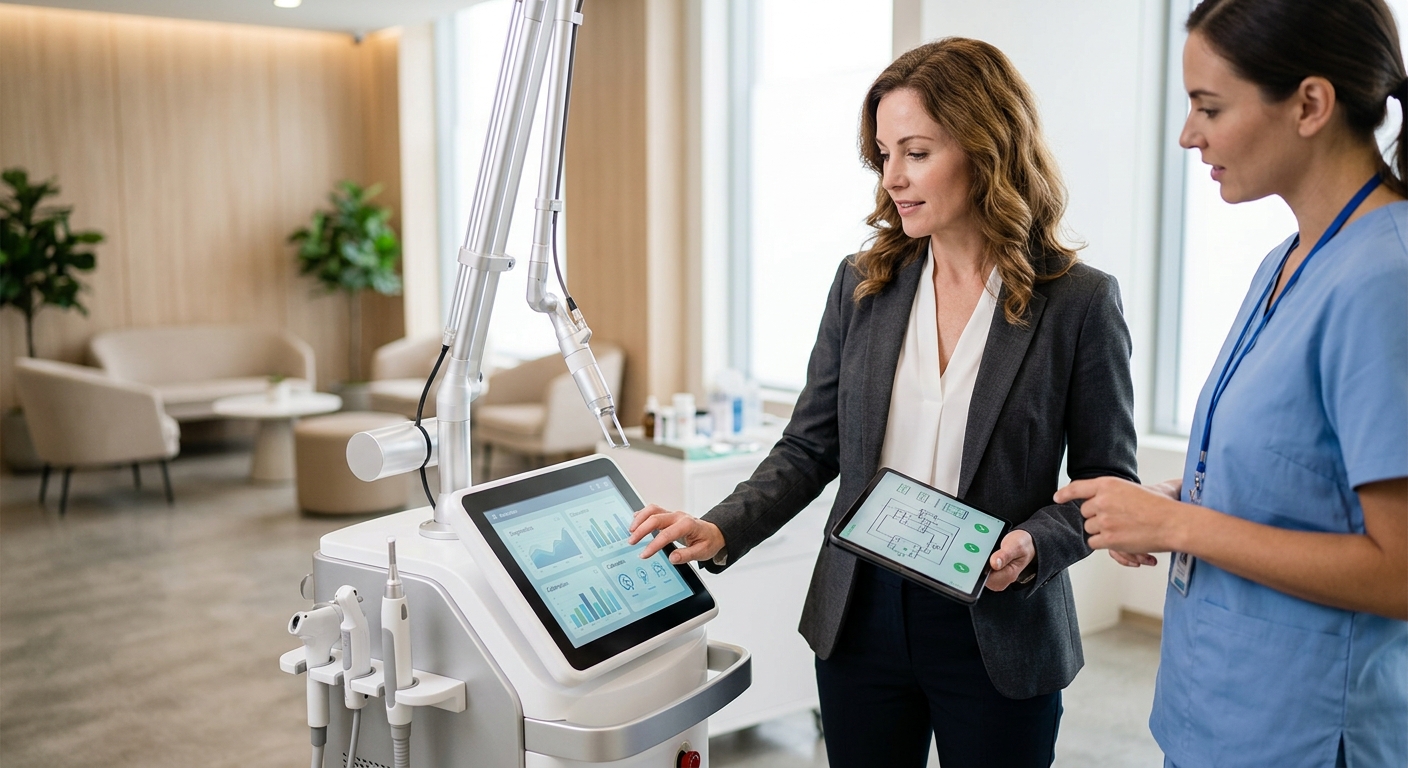
Operator training on the smart touchscreen UI enables technicians to monitor real-time temperature, humidity, and water circuit status without leaving the measurement interface. Modern systems provide preset protocols for different part materials, automatic alerts when thresholds drift, and one-touch logging for audit trails. Training should cover alarm response, sensor calibration verification, and escalation procedures, typically delivered in a 2-day on-site session with certification.
Q7: What post-sales technical support and global logistics are available for climate control systems?
Comprehensive post-sales support for climate control systems includes 24/7 remote diagnostics, guaranteed 48-hour spare parts dispatch, and on-site service within 5 business days for B2B clients. Global logistics should cover climate-controlled shipping containers, customs documentation for refrigerant gases, and installation supervision by certified engineers. Buyers should confirm the availability of local service partners and the mean time to repair, which should not exceed 72 hours.
Q8: What maintenance protocols prevent climate control failures that damage tight-tolerance parts?
Preventive maintenance every 90 days is required to prevent climate control failures, including HEPA filter replacement, refrigerant pressure checks, sensor recalibration, and water circuit flushing. Neglecting these protocols leads to temperature drift beyond ± 0.5°C, which can render tight-tolerance parts non-conforming and void warranty coverage. A documented maintenance log with timestamped readings is also mandatory for ISO 13485 and FDA audit readiness.