
Blog
The Ultimate Clinic Guide to Translating Technical Specs into English-Language Compliance Packs: Efficacy, Wavelengths, and ROI
2026年8月26日
The Compliance Bottleneck: Why Technical Translation Is a Clinical Imperative
For medical aesthetic clinics operating in English-speaking markets, the pathway to acquiring new technology is often obstructed by a silent adversary: the compliance pack. It is a universal pain point. You have identified a high-demand device, yet the manufacturer provides a data sheet riddled with ambiguous Chinese-to-English translations, incomplete electrical safety ratings, and a notable absence of clinically relevant metrics. This is not merely an administrative hurdle; it is a clinical and financial liability. An incomplete or poorly translated compliance pack delays regulatory submission, complicates insurance procurement, and, most critically, leaves the clinic exposed to risk. This guide provides a comprehensive framework for translating raw technical specifications into a robust, English-language compliance portfolio that satisfies regulatory bodies, protects your practice, and enables you to market your services with absolute confidence.
Deconstructing the Core Physical Mechanisms: From Specs to Clinical Reality
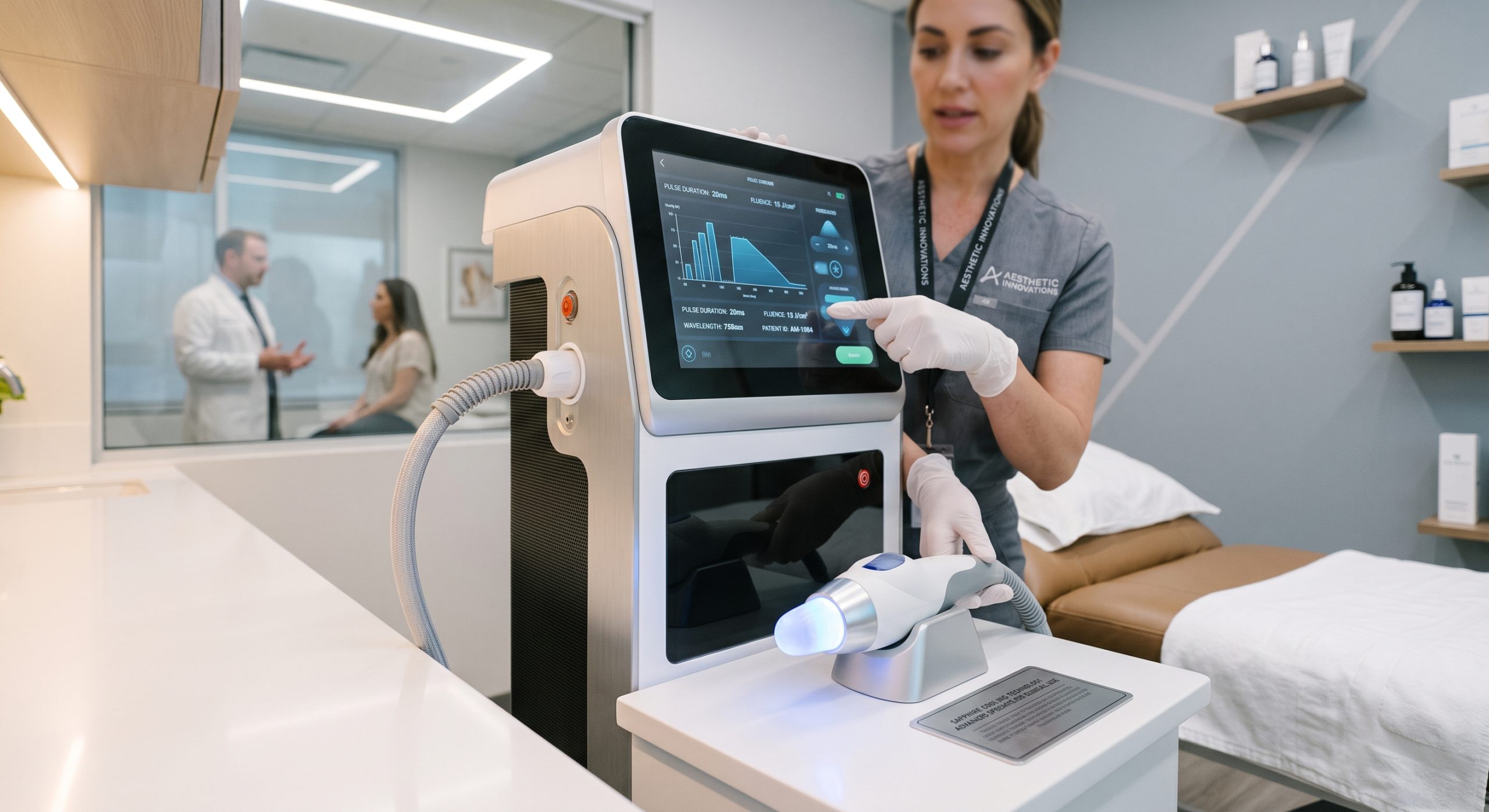
To translate specs effectively, you must first understand the clinical physics behind the numbers. The cornerstone of modern aesthetic energy-based devices is the principle of selective photothermolysis. The compliance pack must clearly demonstrate that the device is engineered to deliver energy with the appropriate wavelength, pulse duration, and fluence to selectively damage target chromophores (e.g., melanin in hair follicles or hemoglobin in vessels) without causing collateral thermal damage to the surrounding epidermis. This understanding is the foundation upon which a credible regulatory submission is built.
Decoding Critical Technical Metrics for Compliance
Every number on a spec sheet has a direct clinical implication. The English translation must preserve this meaning. Here is the clinical breakdown of the essential parameters you must meticulously verify and articulate in your compliance documentation:
- Wavelength (nm) & Target Specificity: Compliance packs must articulate the specific chromophore absorption. For hair reduction, the synergistic combination of 755nm (Alexandrite), 808nm (Diode), and 1064nm (Nd:YAG) is the gold standard. The 808nm wavelength represents the ‘sweet spot’ for deep, effective melanin absorption across a wide range of skin types. The 755nm offers high absorption for fine, light hair, while 1064nm provides deep penetration with minimal epidermal absorption for safe treatment of darker skin types (Fitzpatrick IV-VI). The translation must explain this rationale, not just list the numbers.
- Energy Density (Fluence) – J/cm²: This is the actual energy delivered per unit area. It is the clinical ‘dose’. The compliance pack must specify the range (e.g., 5-30 J/cm²) and link this to efficacy and safety. Inaccurate translation of fluence directly impacts treatment protocols and patient outcomes.
- Pulse Width (Duration) – ms: This is the time the laser is in contact with the tissue. It must be shorter than the thermal relaxation time (TRT) of the target to confine the heat. The translation must state the adjustable pulse durations available, and ideally, a clinical recommendation mapping these settings to specific hair characteristics and skin types.
- Spot Size (mm²): The spot size directly affects treatment speed and penetration depth. Large spot sizes (e.g., 12x12mm or larger) accelerate treatment throughput and allow for deeper energy penetration due to reduced scatter. This must be accurately translated as a key efficiency metric.
- Repetition Rate (Hz): This dictates the speed of energy delivery. A higher repetition rate means faster treatment sessions, enhancing clinic profitability. It is a critical business metric to emphasize in your translated technical specifications.
Safety Systems: The Backbone of Regulatory Approval
Regulatory bodies like the FDA and those requiring Medical CE certification are less concerned with the device’s marketing claims and more concerned with its safety profile. Therefore, your translated compliance pack must give equal weight to safety and efficacy. The two most critical areas are cooling and electrical/thermal safety.
Epidermal Protection Systems: Sapphire ICE Cooling
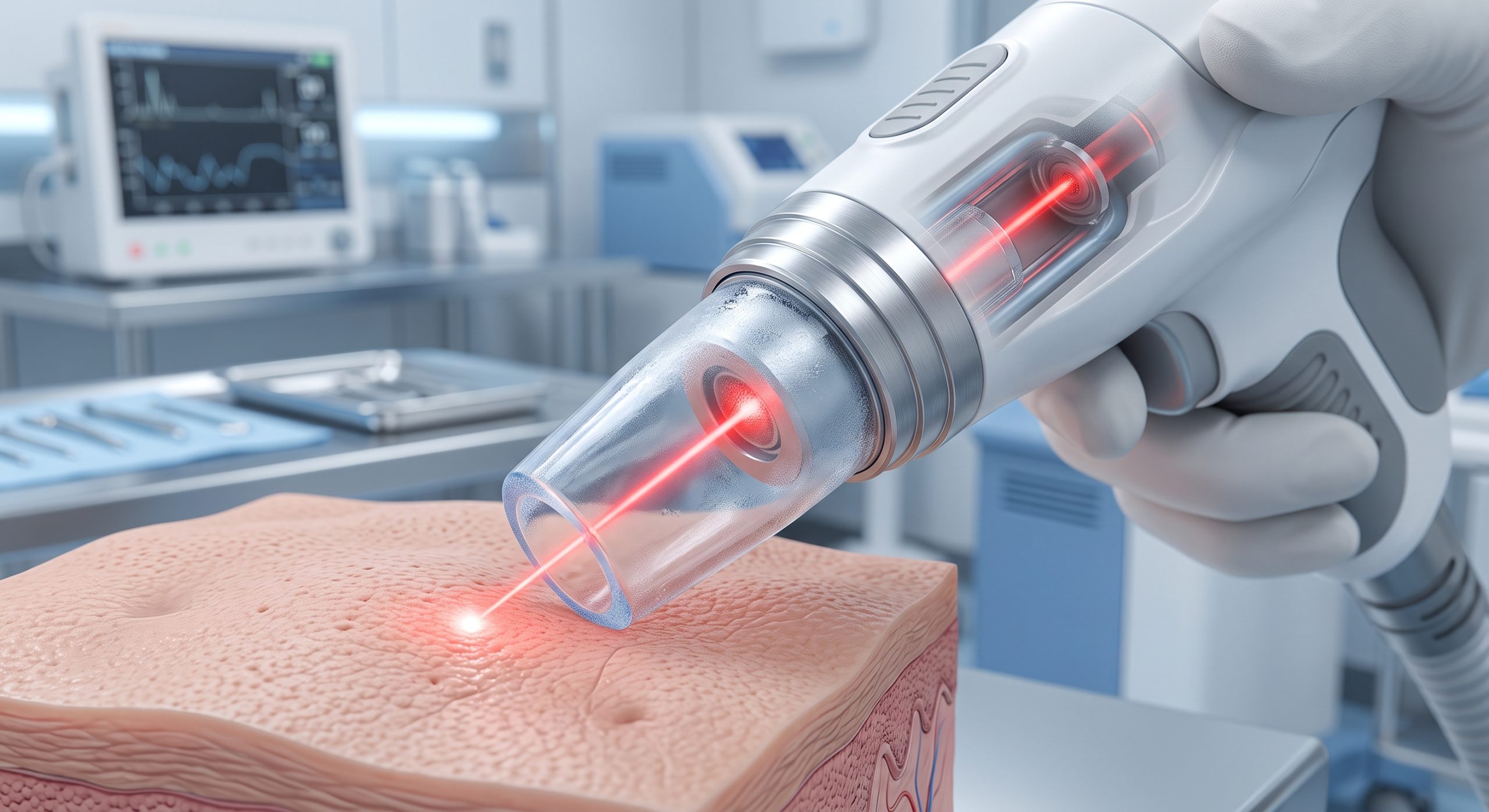
The most advanced safety feature in modern devices is contact cooling. The translation of this section is paramount. The component is not merely a ‘cooling tip’; it is a Sapphire Contact Cooling system. The compliance narrative must detail how this high-thermal-conductivity sapphire plate cools the epidermis prior to, during, and after the laser pulse. The English translation should articulate the temperature range (e.g., -5°C to 5°C) and how it creates a protective thermal buffer. This is a key selling point for patient comfort and safety, and it provides a competitive advantage in the compliance review process.
Power Output and System Stability
Compliance packs must include a detailed breakdown of the internal hardware components to prove system stability and longevity. This includes specifying the imported laser bars used in the handpiece, the power supply specifications, and the water/air cooling circuit maintenance schedule. A device with a proven high shot-count lifespan (e.g., exceeding 10 million pulses) offers a superior return on investment, a fact that must be clearly stated in the English translation to build trust with clinic buyers.
| Key Parameter for Compliance | Translating Specs to Clinical Impact |
|---|---|
| Wavelength & Clinical Target | 808nm Diode (Primary Hair Reduction), 755nm (Fine/Light Hair), 1064nm (Darker Skin Types & Deep Vessels) |
| Cooling System Specification | Advanced Sapphire Contact Cooling with temperature range of -5°C to 5°C for epidermal protection, enabling high-fluence, safe treatments. |
| Energy Density (Fluence) & Pulse Width | Adjustable Range: 5-30 J/cm², Pulse Width: 10-400 ms, allowing for customizable treatments based on hair density and skin type. |
| Hardware & Compliance Certifications | Imported Laser Bars (10M+ shot lifespan), Medical CE, FDA Clearance, ISO 13485 Certified Manufacturing. |
The Blueprint: Translating Compliance for Global Markets
Navigating international regulations requires a strategic approach. The English compliance pack is the master document from which all other submissions are derived. It must demonstrate adherence to rigorous standards like ISO 13485 for quality management and provide evidence of medical CE marking (for Europe) and FDA clearance (for the US). The translation of these certifications is non-negotiable; they must be stated verbatim and accompanied by clear explanations of what the certification covers.
Standardized Risk and Benefit Communication
One of the most stringent requirements of any compliance pack is the communication of safety and efficacy. This involves articulating the treatment expectations for different Fitzpatrick Skin Types (I-VI). The translation must explicitly state the contraindications and the parameters that ensure safe treatment for each skin type. It is not enough to state the machine has ‘different modes’; you must provide a clinical rationale mapping the settings (e.g., fluence, pulse width, spot size) to specific patient categories.
Clinical ROI: Translating Specs into Business Profitability
The ultimate purpose of the compliance pack is to provide the business case for the investment. A well-translated technical document serves as a sales enabler. It can be used to train staff, reassure patients, and, most importantly, it positions the clinic as a premium, safety-conscious provider. This translates directly into higher patient throughput and profitability. The investment in a premium, compliant device—one with advanced hardware and a clear specification sheet—minimizes costly downtime, reduces the risk of adverse events, and ensures the maximum return on investment over the device’s lifetime. In essence, the compliance pack is the clinical translation of the device’s value proposition.