
Blog
The Ultimate Clinic Guide to EU Market Readiness Pack for Machined Parts: Compliance, ISO 13485, and Supply Chain Strategy
2026年7月3日
Introduction: The New Clinical Standard for Precision Components
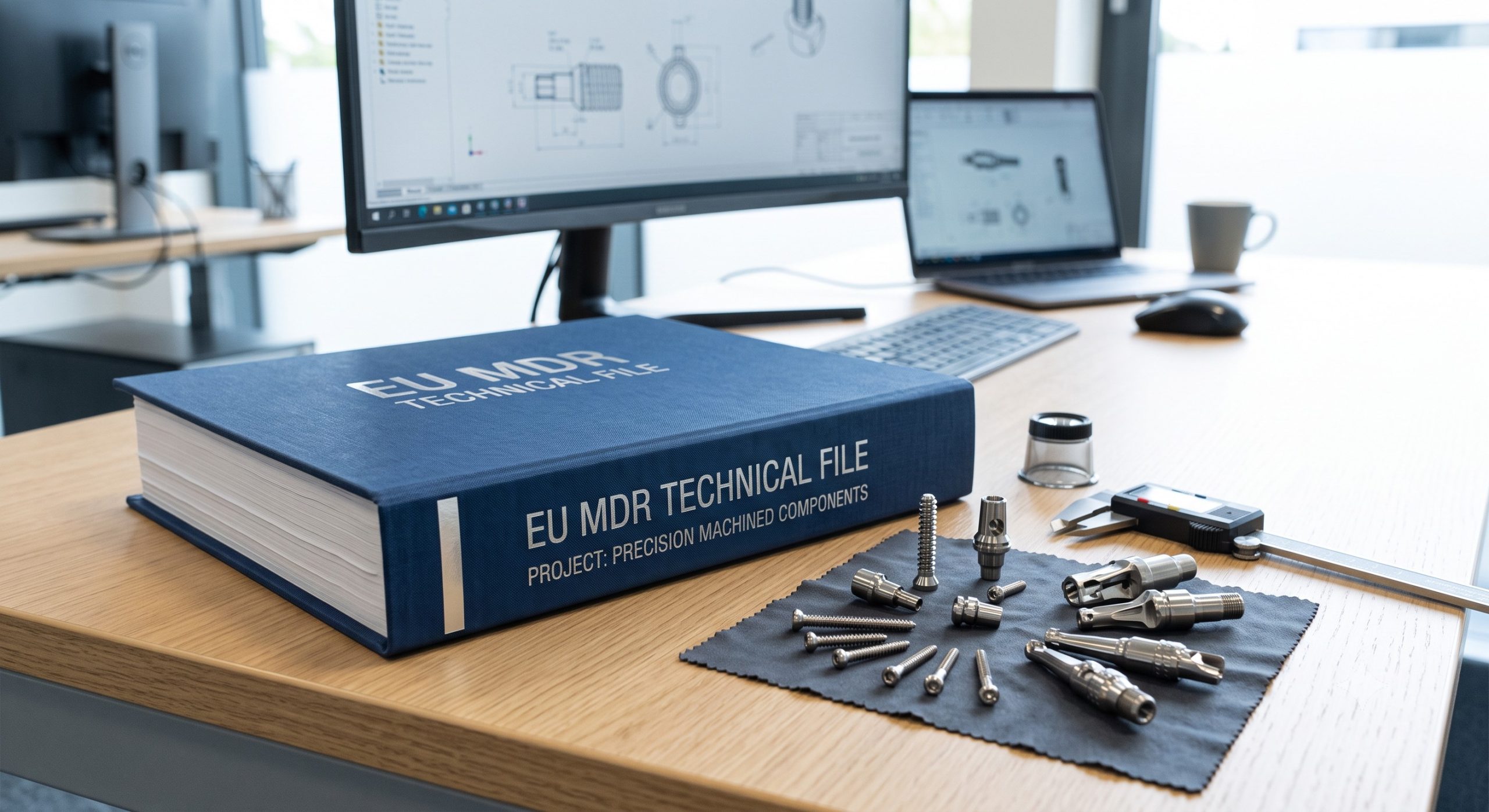
For medical device manufacturers, the journey to the European market is no longer just about a CE mark; it is about comprehensive, verifiable compliance. A robust EU Market Readiness Pack for Machined Parts is the cornerstone of a successful regulatory strategy under the Medical Device Regulation (EU) 2017/745 (MDR). This technical dossier is not merely a checklist but a dynamic, living document that bridges the gap between precision engineering and clinical safety. As the MDR shifts the paradigm towards greater transparency and life-cycle oversight, the readiness pack for critical components—such as orthopedic screws, surgical handpieces, and aesthetic laser tips—must meet unprecedented levels of scrutiny .
Decoding the MDR: From Directives to a Stringent Regulatory Framework
The transition from the Medical Device Directives (MDD) to the Medical Device Regulation (MDR) represents a fundamental shift in regulatory philosophy. Unlike directives, which were transposed into national laws with some variation, the MDR is directly applicable across all EU member states, creating a harmonized and more stringent environment. For suppliers of machined parts, this means the onus is on the manufacturer to provide exhaustive evidence of safety, performance, and quality throughout the entire supply chain .
Key MDR Requirements Impacting Machined Parts
- Enhanced Clinical Evidence: While the machined part itself may not be a finished medical device, it is a critical component that impacts the clinical performance of the final product. The manufacturer must demonstrate through rigorous clinical evaluation how the part contributes to the device’s overall safety and efficacy, utilizing standards like ISO 10993 for biocompatibility and ISO 14971 for risk management .
- Technical Documentation (TD) Overhaul: The Technical File for a finished medical device must now include far more detailed information about suppliers and sub-suppliers. This mandates that the readiness pack for machined parts provides full transparency on material specifications, manufacturing processes, and dimensional tolerances .
- Post-Market Surveillance (PMS) and Vigilance: The manufacturer’s responsibility extends to the entire lifecycle of the device. The readiness pack must support post-market activities, allowing for traceability of parts back to their production batches, which is crucial for handling vigilance reports or field safety corrective actions (FSCAs) .
Defining the EU Market Readiness Pack for Machined Parts
An EU Market Readiness Pack is a comprehensive, structured collection of documents that proves a machined component is fit for its intended purpose and can be safely integrated into a finished medical device. It serves as the primary source of evidence for a Notified Body during conformity assessment. The pack is not a static PDF; it must be a dynamic repository that evolves with the product. Based on industry standards for technical files, a complete pack should include the following core sections :
1. Technical & Design Documentation
- Detailed Engineering Drawings: Dimensional and geometric tolerances (e.g., ensuring ±0.01 mm precision for implantable screws or optical components ).
- Material Specifications & Certificates: Full disclosure of materials (e.g., medical-grade titanium, stainless steel, or PEEK) with batch-specific material certificates (EN 10204 3.1 or 3.2).
- Design History & Risk Management File: A comprehensive risk analysis (e.g., FMEA) that identifies and mitigates potential hazards related to part failure, fatigue, or corrosion, aligned with ISO 14971 .
2. Manufacturing & Quality Control Data
- Process Validation Reports: Validation of critical manufacturing processes (e.g., CNC machining, heat treatment, passivation) through IQ/OQ/PQ protocols to ensure consistency .
- Inspection & Testing Reports: Records of final inspections (e.g., CMM, optical measurement) and non-destructive testing (NDT) that confirm compliance with defined specifications .
3. Regulatory & Compliance Certificates
- Supplier Declaration of Conformity and ISO 13485 Compliance: While parts themselves may not be certified under ISO 13485 if they are production machinery, the component supplier’s adherence to a robust Quality Management System (QMS) like ISO 9001 is critical . The readiness pack must include evidence of the supplier’s quality controls to support the manufacturer’s own ISO 13485 certification .
- Material Compliance Declarations: Evidence that the materials are free from restricted hazardous substances (e.g., REACH, RoHS, and specific CMR substances as per MDR Annex I, Chapter II, Section 10.4.1) .
| Key Component of Readiness Pack | Technical Specification & Requirement |
|---|---|
| Dimensional Tolerances | Critical dimensions must meet ±0.01 mm tolerance, verified by CMM and optical inspection per ISO 2768 . |
| Material Compliance | Full traceability to ASTM F136 (Ti6Al4V ELI) or 316L stainless steel, with ISO 10993 biocompatibility and REACH/RoHS certificates . |
| Process Validation | Validation of manufacturing steps (e.g., CNC, Heat Treat, Passivation) per IQ/OQ/PQ protocols to ensure consistent output . |
| Risk Management | Documented per ISO 14971:2019 including FMEA, addressing clinical risks of component failure or fatigue . |
| Supply Chain Transparency | Declaration of country of origin for materials and manufacturing to comply with EU IPI measures, ensuring no more than 50% of materials originate from non-EU restricted regions for large tenders . |
The Strategic Role of the Supplier in the EU Market
Recent geopolitical shifts have added a new layer of complexity to sourcing machined parts for the EU market. The EU’s International Procurement Instrument (IPI) has introduced measures that restrict access of medical devices and components originating from certain non-EU countries for large public procurement contracts (exceeding €5 million) .
Furthermore, even if a component is manufactured outside the EU, the successful bidder must guarantee that no more than 50% of the materials originate from restricted territories. This makes the EU Market Readiness Pack not just a regulatory necessity but a critical business tool for proving origin of materials and demonstrating a secure, compliant supply chain . This aspect is vital for aesthetic device manufacturers, where handpiece and consumable supply chains are often globalized.

Conclusion: The Readiness Pack as a Clinical and Business Imperative
In the current regulatory landscape, the EU Market Readiness Pack for Machined Parts is the definitive proof of a manufacturer’s commitment to quality, safety, and compliance. Moving beyond a simple checklist, it is a strategic asset that underpins clinical confidence, facilitates seamless Notified Body audits, and ensures resilience in a complex supply chain. For clinics and device manufacturers, working with suppliers who can provide a comprehensive and transparent readiness pack is not just about achieving a CE mark—it is about ensuring long-term market access and patient safety in the EU.