
Blog
Inside the Hardware: Epidermal Cooling and Imported Laser Bars of Out-of-Box Audits (OBA)
2026年9月16日
The Critical Gap Between Factory Specs and Clinical Reality
In the high-stakes world of B2B medical aesthetics, a device’s journey from the manufacturing line to the treatment room is fraught with risk. For clinic owners and practitioners, the promise of a new diode laser or Q-switched Nd:YAG system is one of higher patient throughput and superior clinical outcomes. However, the unboxing event is not merely a ceremonial occasion; it is the first and most critical point of quality assurance. An Out-of-Box Audit (OBA) is a systematic, protocol-driven inspection designed to verify that a device’s physical integrity, optical performance, and safety mechanisms match the manufacturer’s Technical Data Sheet (TDS) and international regulatory filings. Without a rigorous OBA, clinics risk deploying a system with compromised laser bars, degraded cooling efficiency, or misaligned optical pathways—flaws that can lead to suboptimal clinical results, patient discomfort, and significant financial loss.
The Physics of Preservation: Why Hardware Integrity Dictates Clinical Success
The efficacy of any aesthetic laser is governed by the principle of Selective Photothermolysis. This requires the precise delivery of a specific wavelength (e.g., 755nm for melanin absorption, 808nm for deep hair follicle penetration, or 1064nm for vascular and deep dermal targets) at a specific energy density (fluence) and pulse width. Any degradation in the optical train—from the laser bar to the fiber optic cable and the handpiece—directly impacts these parameters. An OBA is not a simple visual check; it is a forensic-level verification of the device’s ability to generate and transmit energy. Imported laser bars, often sourced from tier-one suppliers like Coherent or DILAS, are the heart of a diode system. During an OBA, technicians must verify the bar’s output power stability and spectral width to ensure that the delivered fluence does not deviate by more than ±5% from the set value. A compromised bar can lead to a ‘hot spot’ or a ‘cold spot’ in the treatment area, resulting in burns or ineffective hair reduction.
The Paramount Importance of Epidermal Cooling
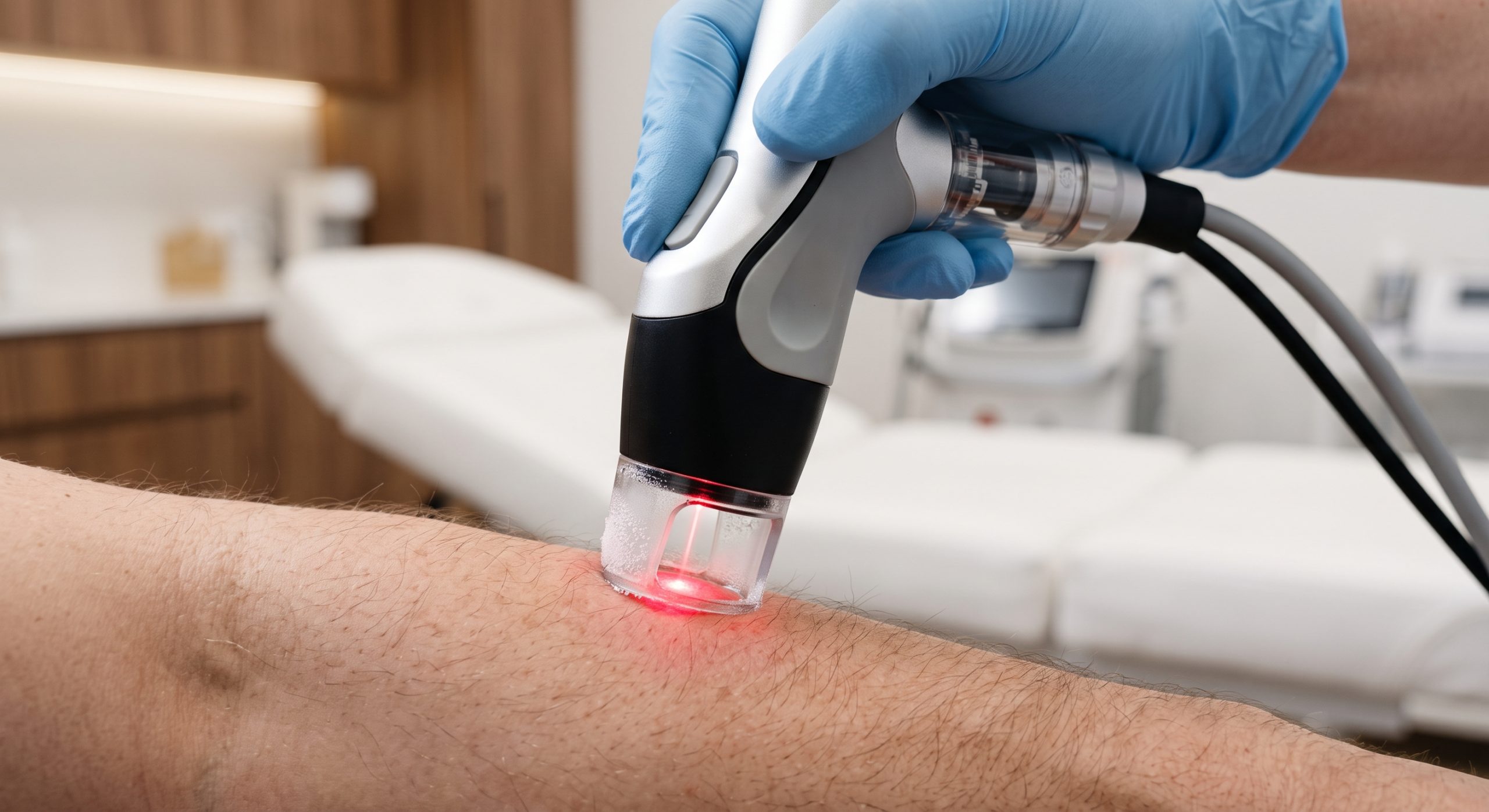
Modern high-fluence treatments are only tolerable because of advanced epidermal cooling mechanisms. The primary goal is to protect the stratum corneum and basal layer while allowing therapeutic energy to reach the target chromophore. Systems utilizing Sapphire Contact Cooling (often integrated into the handpiece tip) or Thermoelectric Coolers (TEC) must be audited for their cooling rate (typically to -5°C to 5°C) and thermal recovery time. An OBA must confirm that the cooling system reaches its setpoint within a specified time and maintains it throughout a simulated 30-minute treatment. Failure to do so can result in epidermal burns, post-inflammatory hyperpigmentation (PIH), and a catastrophic hit to a clinic’s reputation. The audit verifies the integrity of the coolant circulation loop, the refrigerant charge, and the sapphire window for any micro-cracks that could compromise thermal transfer.
| Key Parameter | Technical Specification |
|---|---|
| Wavelength / Laser Type | 755nm / 808nm / 1064nm Diode |
| Cooling System | Sapphire Contact Cooling (-5°C to 5°C) |
| Energy Density (Fluence) | 10 – 50 J/cm² (Adjustable) |
| Pulse Width | 10 – 400 ms |
| Spot Size | 2 – 15 mm (Interchangeable Tips) |
| Repetition Rate | 1 – 10 Hz |
| Laser Bar Source | Imported (e.g., Coherent / DILAS) |
| Compliance | Medical CE, FDA Cleared, ISO 13485 |
Audit Protocol: A Step-by-Step Verification of Core Parameters
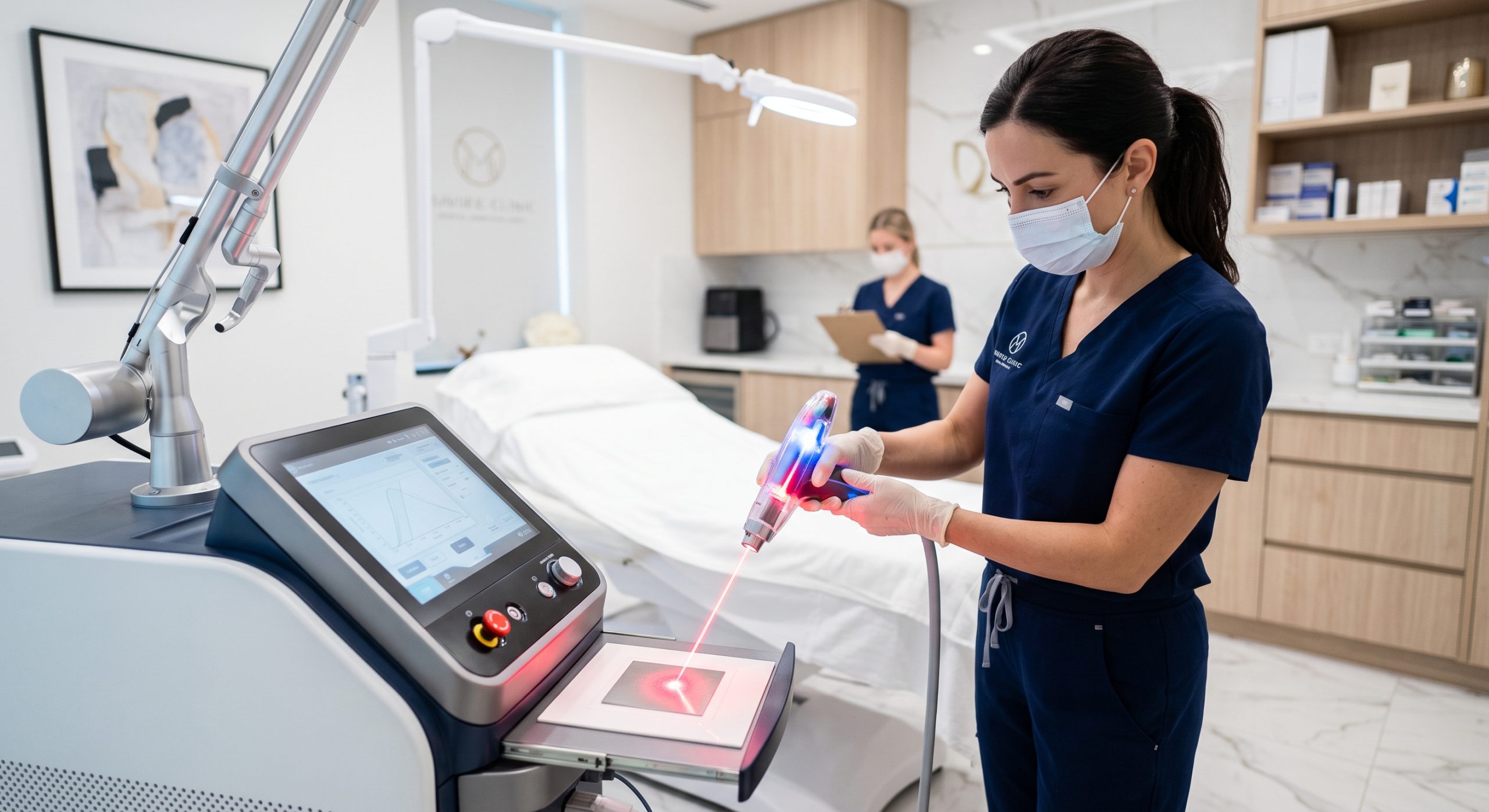
A comprehensive OBA must follow a structured, documented protocol. The first step is a visual and physical inspection of the crating and the device for any signs of transit damage, paying close attention to the handpiece assembly, foot pedal, and interlock connections. The second step involves a power and energy calibration check using an external, calibrated laser power meter and energy meter. This is where the integrity of the imported laser bars is truly tested. Technicians must measure the output at the handpiece tip across a range of settings (e.g., 10 J/cm² to 50 J/cm²) and compare it to the device’s internal readout. A deviation of greater than ±10% is a critical failure. Third, the pulse width and repetition rate must be verified with an oscilloscope or a dedicated pulse analyzer to ensure they match the prescribed treatment protocols for different indications, such as hair removal, vascular lesions, or pigmented lesions. Finally, the safety systems, including emergency stop, tip contact sensors, and skin cooling interlocks, must be tested to ensure they function within milliseconds. This level of scrutiny is not just best practice; it is a requirement for maintaining Medical CE and FDA 510(k) compliance and is a cornerstone of the ISO 13485 quality management system.
Parameter Optimization and Clinical Implications
The OBA is also an opportunity to verify the device’s ability to deliver the correct parameters for the full range of Fitzpatrick skin types (I-VI). For darker skin types (IV-VI), the audit must confirm that the device can reliably deliver longer pulse widths (e.g., 20-400ms) and lower fluences to safely bypass epidermal melanin and target the deeper hair follicle or vascular structure. The spot size of the handpiece is another critical variable; a smaller spot size (e.g., 2-5mm) is often used for precise work on pigmented lesions, while a larger spot size (e.g., 10-15mm) is preferred for rapid hair removal. An OBA should verify that the spot size at the treatment plane matches the specification and that the energy distribution across the spot is uniform (a ‘flat-top’ beam profile is ideal). Any discrepancy here can lead to inconsistent results and patient dissatisfaction. The audit report becomes a legally defensible document that protects the clinic in the event of an adverse event, proving that the device was performing to specification at the time of deployment.
The Strategic Value: Mitigating Risk and Ensuring ROI
For the clinic owner, the OBA is a vital business strategy. A failed OBA can save a clinic from months of frustration, refunded treatments, and costly repairs. It provides leverage with the supplier to demand a replacement or a full refund before the device is ever used on a patient. Furthermore, a documented OBA establishes a baseline for the device’s performance, which is invaluable for future preventative maintenance and troubleshooting. In the competitive B2B aesthetic market, where consumable costs (like handpiece shot counts) and downtime directly impact profitability, an OBA is a non-negotiable step for any clinic serious about delivering flawless, safe, and effective treatments. It transforms the unboxing from a moment of uncertainty into a milestone of quality assurance, ensuring that the technology you invest in delivers the clinical excellence and financial return your patients and your business demand.