
Blog
Inside the Hardware: Epidermal Cooling and Imported Laser Bars of Custom Pack-Out Solutions for Fragile OEM Components
2026年9月28日
Build Quality vs Clinical Stability: The Hidden Variable in Aesthetic Laser Performance
In the competitive landscape of medical aesthetics, clinic owners and practitioners frequently focus on surface-level specifications—wavelengths, spot sizes, and energy density—when evaluating a new device. However, the true determinant of long-term clinical success and patient satisfaction often lies in the unseen: the quality of internal components and the integrity of the custom pack-out solutions for fragile OEM components. A laser system is only as reliable as its weakest link. When sensitive laser bars, power supplies, and cooling systems are subjected to the rigors of global shipping and daily clinical use, the difference between a premium device and a liability is the engineering of its protective packaging and internal stabilization.
This technical deep dive examines the critical role of specialized pack-out solutions in maintaining the clinical efficacy of high-performance aesthetic platforms, specifically focusing on diode laser systems operating at 755nm, 808nm, and 1064nm. We will explore how the protection of fragile OEM components directly impacts selective photothermolysis, epidermal cooling efficiency, and ultimately, your clinic’s ROI.

The Physics of Fragility: Why OEM Components Require Specialized Protection
The core of any high-powered aesthetic laser is the laser bar or stack. These semiconductor devices are precision-engineered to emit coherent light at specific wavelengths. In a typical 808nm diode laser system, the laser bars are mounted on micro-channel coolers to manage the intense heat generated during operation. Even a microscopic shift in the alignment of these bars—caused by shock or vibration during transport—can lead to a significant drop in energy density (fluence) at the tissue level.
Critical Internal Components and Their Vulnerabilities
- Laser Bars & Stacks: Susceptible to mechanical shock, electrostatic discharge (ESD), and thermal cycling. A compromised bar can result in uneven beam profiles, leading to hot spots and potential patient burns.
- Power Supply Units (PSUs): High-voltage capacitors and transformers are sensitive to moisture and physical impact. A damaged PSU can cause unstable pulse widths, directly affecting the predictability of selective photothermolysis.
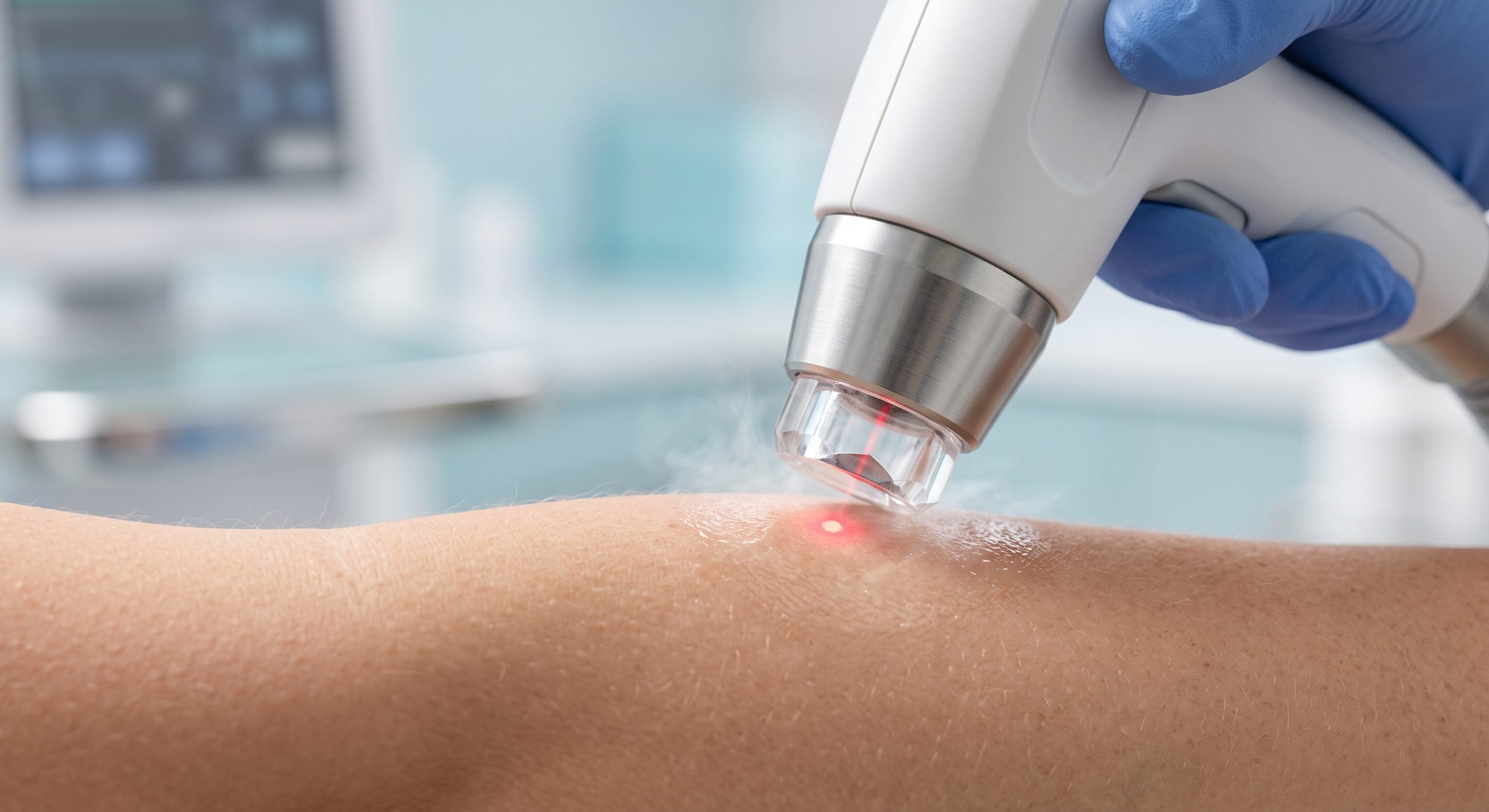
- Sapphire Cooling Windows: The integrity of the sapphire tip is paramount for both epidermal protection and efficient heat transfer. Fractures or micro-cracks introduced during shipping can compromise the contact cooling system, increasing the risk of epidermal injury.
The custom pack-out solution serves as the first line of defense. It is not merely a box; it is an engineered environment that mitigates shock, controls humidity, and prevents ESD damage during global transit. For clinic owners, understanding this supply chain nuance is crucial for procurement—it ensures that the device arriving in your treatment room performs exactly as it did on the factory test bench.
Technical Specifications: Parameters That Depend on Component Integrity
The following table outlines the key technical parameters of a premium diode laser platform. Note how each specification is directly reliant on the physical integrity of the internal OEM components and the efficacy of the pack-out solution that delivered them.
| Key Parameter | Technical Specification |
|---|---|
| Wavelength / Laser Type | 755nm / 808nm / 1064nm Diode |
| Spot Size | 15mm x 15mm to 25mm x 25mm (Variable) |
| Energy Density / Fluence | Up to 120 J/cm² (Adjustable) |
| Pulse Width | 10ms – 400ms (Adjustable) |
| Cooling System | Sapphire Contact Cooling (0°C – 5°C) + TEC |
| Laser Bar Lifespan | >10,000,000 Shots (with proper protection) |
| Compliance | Medical CE, FDA Cleared, ISO 13485 |
Parameter Interdependence: Fluence, Pulse Width, and Spot Size
For effective hair removal and vascular lesion treatment, the relationship between fluence (J/cm²), pulse width (ms), and spot size (mm) must be precisely controlled. A misaligned laser bar due to inadequate shock protection can cause the actual fluence delivered to the skin to be 20-30% lower than the displayed value. This leads to suboptimal clinical outcomes, requiring additional treatment sessions, which erodes patient trust and clinic profitability.
Furthermore, the epidermal cooling system—whether sapphire contact cooling or TEC—relies on a robust internal water circuit. A pack-out solution that fails to protect the pump or chiller lines can introduce air bubbles or leaks, crippling the cooling capacity and making treatments painful and risky, especially for patients with Fitzpatrick Skin Types IV-VI.
Clinical Implications: Safety, Efficacy, and the Fitzpatrick Scale
The ability to safely treat a diverse patient population is a hallmark of a well-engineered device. Custom pack-out solutions that protect the integrity of the 755nm, 808nm, and 1064nm wavelengths ensure that practitioners can confidently select the optimal wavelength for each Fitzpatrick skin type.
- 755nm (Alexandrite): Highly absorbed by melanin, ideal for lighter skin types (I-III) and finer hair. Requires stable, high-peak power for effective clearance.
- 808nm (Diode): The workhorse wavelength, offering a balance of melanin absorption and depth penetration. Effective for a broad range of skin types (I-IV) when paired with robust cooling.
- 1064nm (Nd:YAG): Deeper penetration and lower melanin absorption, making it the safest option for darker skin types (IV-VI). Its efficacy is entirely dependent on high fluence and efficient epidermal cooling.
When an OEM component is compromised due to poor packaging, the device’s ability to deliver these wavelength-specific parameters is diminished. This not only reduces the clinical clearance rates but also increases the risk of adverse events such as post-inflammatory hyperpigmentation (PIH) or burns.
Clinic ROI & Conclusion: The Long-Term Value of Protection
Investing in a premium aesthetic laser is a significant capital expenditure (CapEx). However, the total cost of ownership (TCO) is heavily influenced by the device’s reliability and the lifespan of its consumables. A custom pack-out solution is not an added cost; it is an insurance policy for your investment.
Clinics that prioritize devices with robust OEM component protection experience:
- Reduced Downtime: Fewer component failures mean more treatment days and higher revenue.
- Lower Consumable Costs: A handpiece with a protected laser bar and intact sapphire window will achieve its full rated shot lifespan (e.g., 10 million shots vs. 5 million).
- Consistent Clinical Results: Patients receive the full prescribed fluence, leading to higher satisfaction and better retention rates.
- Compliance Assurance: Maintaining the device in its original, certified condition is essential for meeting Medical CE, FDA clearance, and ISO 13485 standards during clinic audits.
In conclusion, the next time you evaluate a diode laser platform, look beyond the user manual. Ask about the custom pack-out solutions for fragile OEM components. It is the invisible engineering that ensures your device delivers the safe, effective, and profitable treatments your patients expect. For clinic owners and practitioners, understanding this supply chain detail is not just technical trivia—it is a strategic business decision that protects your patients, your reputation, and your bottom line.